El Monte
 Log in
Log in
Log in

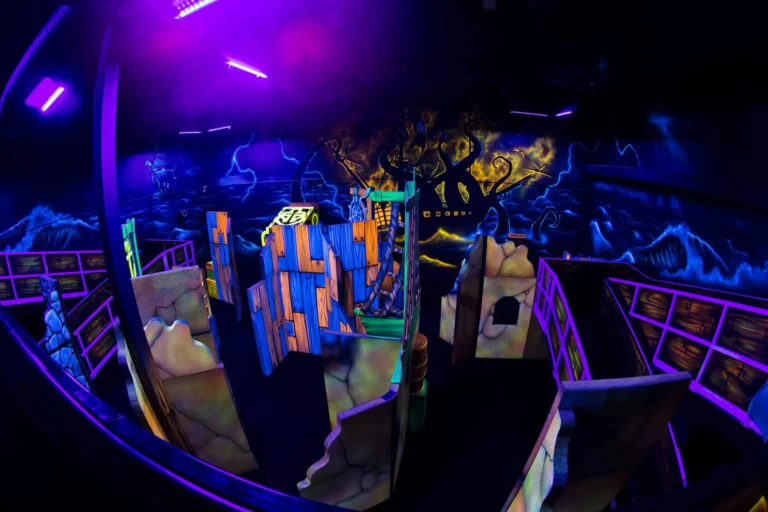
QC Family Entertainment sits on 44th Avenue in Moline, Illinois, in the Quad Cities area. The venue houses 24 traditional bowling lanes plus 8 VIP Boutique lanes with leather couches and projector screens, a two-story Pandora Laser Tag arena spanning 3,500 square feet with room for up to 24 players per game, and over 65 arcade games with redemption prizes. Cosmic Bowling runs Friday and Saturday nights, and laser tag rounds cost $8 per person.
Beyond the games, the facility offers over 5,000 square feet of private event space, three party rooms, a full-service restaurant and bar with an in-house chef, and a dedicated party planning team that handles everything from children’s birthday parties to corporate events. The staff assigns a personal server to each party and works closely with guests to customize catering, beverages, and entertainment. A current arcade promotion gives $10 in bonus credits when loading $20 onto a game card.
 Indoors
Malibu Jack’s Quad Cities is located at 858 Middle Road in Bettendorf, Iowa, right in the Quad Cities area.
The park offers a wide range of indoor attractions including go-karts, laser tag (arena holds up to 25 players), an 18-hole tropical mini golf course, bowling, a Twist N Shout roller coaster, a drop tower, bumper cars, a dark ride, a motion theater, and a Bounce Beach zone for children ages 10 and under. Birthday packages start at $11.99 per person and include party space, game cards, and redemption points. Group rates are available for parties of 25 or more with 2–4 hour all-access passes covering eight attractions.
Jack’s Sandbar restaurant and bar serves pizza, burgers, and adult beverages on-site. The venue also offers arcade games, weekday specials (half-price laser tag on Thursdays, half-price mini golf on Tuesdays, etc.), and Play Card bonus deals. The park is well-suited for birthdays, corporate events, field trips, team-building, holiday parties, and family outings. The events team works directly with organizers to customize the experience, and the indoor setting ensures weather-independent fun year-round.
IndoorsTBK Bank Entertainment Center is located just off Interstate 80 in Bettendorf, Iowa, on the Iowa side of the Quad Cities.
This two-story family entertainment center is a one-stop destination for fun, anchored by the “Pirates Revenge” laser tag arena ($8/mission), 32 Brunswick bowling lanes, two immersive escape rooms ($25/person), and the largest arcade in the Quad Cities with over 60 games and VR experiences. Birthday party packages start at $24.99 per person and include a dedicated host, activity time, arcade play, and food, while custom packages can be built for corporate outings, team-building events, and private celebrations.
Beyond the games, the venue features a full-service sports bar and restaurant (The Dish Bar & Grill), banquet and meeting spaces, and a dedicated events team that handles all the details. Special offers like the Unlimited Play pass ($35/person) and Kids Bowl Free program add extra value, making it a versatile destination for families, friends, and colleagues alike.
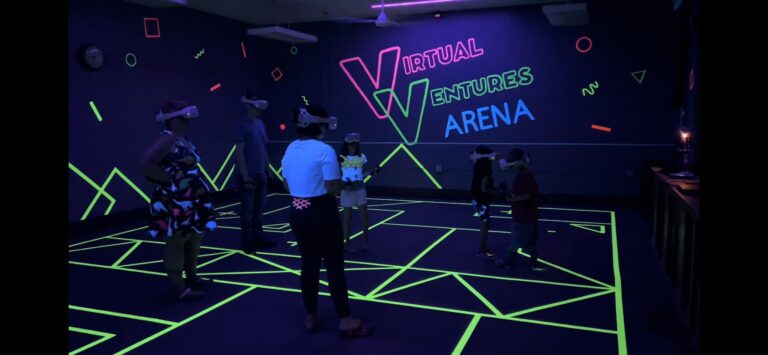
IndoorsVirtual Ventures is located in West Davenport, Iowa, on the third floor of The Wellness Center on Locust Street. This free-roam virtual reality game center offers a wide range of multiplayer experiences including zombie survival shooters, VR laser tag, archery defense games, and immersive escape rooms — all designed for 2 to 6 players who physically navigate the digital worlds with their own bodies. The facility features a single large arena with full-body tracking and haptic vests, with games powered by platforms like HeroZone and VEX Play.
Beyond the games, Virtual Ventures provides private party packages for birthdays, corporate team-building events, and adults-only after-hours sessions, all with the option to bring your own food and drinks. The center includes a VIP lounge with air hockey and foosball, a banquet table for catering, and a dedicated staff focused on creating a memorable experience from the moment guests arrive. The club was founded by Michael Elliott in 2022 and continues to partner with software developers to offer fresh, engaging VR content.
Indoors
Laser tag is a fast‑paced, team‑oriented game that blends technology with the excitement of a mock combat sport. Participants wear lightweight vests equipped with infrared sensors and wield hand‑held phasers that emit invisible laser beams. When a player’s sensor receives a beam, the vest registers a hit and displays the score in real time. The game can be played in a darkened arena, a wooded park, or any designated space where safe, non‑lethal “fire” is permitted. Because the equipment relies on infrared rather than projectiles, laser tag is safe for all ages, requires no protective gear beyond the vest, and can be set up quickly for a single session or an entire weekend tournament.
The versatility of laser tag lies in its ability to accommodate a wide range of imaginative scenarios. Common formats include:
These scenarios can be tailored to the venue’s size, the participants’ skill level, and the event’s theme, making laser tag suitable for casual play, competitive leagues, or themed parties.
Laser tag offers a surprising array of physical, mental, and social advantages. The following points illustrate why the activity is more than just a pastime:
Collectively, these benefits make laser tag an attractive option for schools, community centers, and corporate wellness programs seeking a dynamic, enjoyable activity.
Researchers in kinesiology and cognitive science have examined laser tag as a hybrid of physical exercise and video‑game play. Studies indicate that the combination of movement and real‑time decision making triggers the release of endorphins and dopamine, producing both physiological and psychological rewards. Experts highlight the “exergaming” effect, where participants experience the motivational pull of gaming while achieving measurable fitness outcomes.
Industry analysts note that the market for laser tag equipment and venues has grown steadily, driven by advances in sensor accuracy, wireless connectivity, and immersive lighting. The integration of mobile apps for score tracking and scenario customization has expanded the appeal beyond traditional arcades, positioning laser tag as a flexible entertainment platform adaptable to urban centers, suburban malls, and even pop‑up events.
Laser tag’s appeal crosses demographic boundaries. Children discover the thrill of pretend combat, teenagers appreciate the competitive edge, and adults enjoy the blend of nostalgia and fitness. Families often attend together as a bonding activity, while fitness enthusiasts incorporate it into high‑intensity interval training (HIIT) sessions.
For younger participants, laser tag serves as an energetic alternative to screen time. The sensory‑rich environment—darkened rooms illuminated by neon corridors and pulsing sound effects—captures imagination while encouraging physical movement. Age‑appropriate rules, such as lower speed settings on phasers and simplified scoring, ensure safety and confidence building. Many venues offer “starter packs” that include brief tutorials, making the experience accessible for first‑timers.
The adaptable nature of laser tag makes it a popular choice for a variety of celebrations and gatherings.
Parents increasingly select laser tag venues for birthday celebrations because the activity delivers built‑in entertainment, eliminates the need for extensive party planning, and provides a safe environment for children to run and play. Packages typically include private arena time, themed décor, and optional catering, allowing the birthday child to feel like a true commander of the battlefield.
Graduates looking for a memorable send‑off often opt for laser tag as a high‑energy group activity. The competitive spirit aligns well with the sense of achievement associated with graduation, and the social nature of the game fosters camaraderie among classmates. Some venues offer customized “team colors” or graduation‑themed mission objectives to personalize the experience.
Businesses leverage laser tag for employee engagement, leadership development, and morale boosting. The game’s emphasis on strategy, communication, and quick decision making mirrors workplace challenges, making it an effective team‑building exercise. Corporate packages may include facilitator‑led debriefs that translate in‑game performance into actionable insights for collaboration, conflict resolution, and role allocation within the organization.
Laser tag can be enjoyed in a variety of settings, each offering distinct advantages.
Dedicated indoor facilities are the most common venues. These arenas feature controlled lighting, sound systems, and modular obstacle courses that can be rearranged to fit different scenarios. Climate control ensures comfort year‑round, and the enclosed space allows for precise sensor calibration, resulting in accurate hit detection. Large cities often host flagship arenas with multiple levels, fog machines, and themed sections such as sci‑fi corridors or post‑apocalyptic ruins.
For those who prefer open air and natural terrain, outdoor laser tag provides a fresh experience. Parks, forests, and abandoned industrial sites become battlegrounds where trees, fences, and elevation changes add tactical depth. Portable laser tag kits—comprising solar‑charged vests and rugged phasers—enable event organizers to set up temporary courses for festivals, school field days, or community fairs. The outdoor format encourages longer gameplay sessions, as participants can cover greater distances without the constraints of a confined arena.
Some operators blend indoor and outdoor elements, offering “laser tag parks” where participants move between a climate‑controlled hub and an adjoining outdoor map. This hybrid approach maximizes versatility, allowing organizers to tailor events to weather conditions and group preferences.
Laser tag has evolved from a novelty arcade attraction to a multifaceted activity embraced by individuals, families, schools, and corporations alike. Its core technology—infrared‑based, safe, and adaptable—supports a broad spectrum of scenarios, from free‑for‑all brawls to elaborate mission‑driven campaigns. The physical exertion, cognitive challenges, and social interaction inherent to laser tag deliver measurable health and team‑building benefits, a fact affirmed by both scientific research and industry analysis.
Whether celebrated in a dimly lit indoor arena, a sun‑dappled forest clearing, or a custom pop‑up venue, laser tag offers a dynamic platform for birthdays, graduations, corporate retreats, and everyday recreation. Its inclusive design welcomes players of all ages and abilities, ensuring that anyone can step into the arena, grab a phaser, and experience the exhilaration of strategic, high‑energy play. As technology continues to refine sensor accuracy and integrate digital scoring, laser tag is poised to remain a vibrant, engaging pastime for years to come.



 4401 44th Ave, Moline, IL 61265, United States