
 El Monte
 Log in
Log in
Log in

Action Valley Paintball is located in East Moline, Illinois, just off Route 5 and Route 92 in the Quad Cities area.
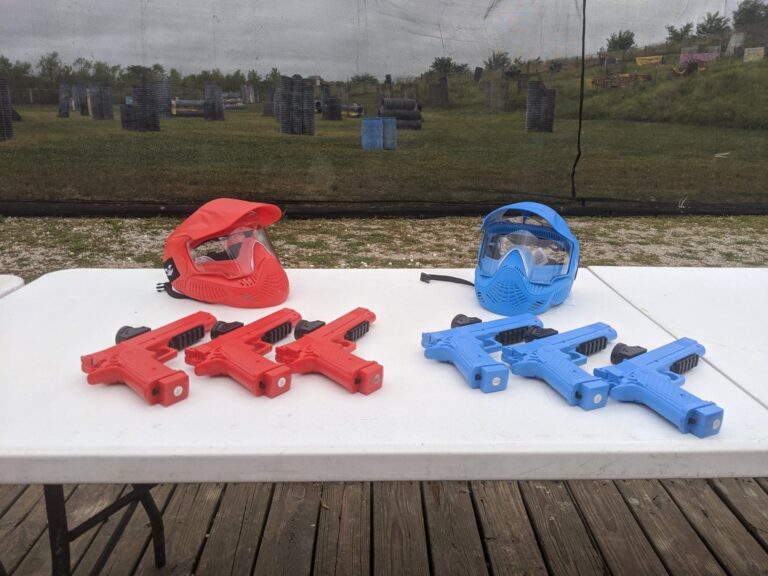
The club offers traditional paintball on hyperball and attack-the-hill fields, with a speedball field under development. For younger or less experienced players, .50 caliber low-impact paintball (ages 8+) and GellyBall (ages 5+) provide gentler alternatives. Private parties are available in 2 or 4-hour time slots for groups up to 45 people, with rental equipment included. Open play runs Saturdays and Sundays during regular business hours.
A membership program rewards regular visitors with discounted paint and waived field fees. The facility is well-suited for birthday parties, corporate team-building, youth groups, and casual outings with friends. All players must sign a waiver, and those under 16 need a parent or guardian to do so. Field-paint-only policy applies, and proper attire (no tank tops or cut-off sleeves) is required for safety.
 Outdoors
Paintball is a fast‑paced, team‑oriented sport in which participants fire small gelatin capsules—known as paintballs—through pneumatic or CO₂‑powered markers. Each paintball is filled with a non‑toxic, water‑based dye that bursts on impact, leaving a visible mark on the opponent’s clothing or skin. The basic premise mirrors that of a simulated combat scenario: players move through a defined field, seek cover, and attempt to “eliminate” opponents by striking them with a paintball.
The equipment is relatively simple but highly specialized. A standard paintball marker weighs between 1 and 2 kilograms and can fire anywhere from 300 to 900 feet per second, depending on the model and the pressure supplied by the air source. The projectiles themselves are 0.68 cm (0.27 in) in diameter, with a mass of roughly 3 grams. Modern markers are equipped with electronic firing systems that allow for semi‑automatic or fully automatic fire, though most organized games impose limits on rate of fire to preserve safety and fairness.
Beyond the hardware, paintball also embraces a set of unwritten cultural norms: respect for teammates, adherence to the spirit of fair play, and a focus on strategy over brute force. These elements combine to make paintball a hybrid of sport, game, and tactical exercise.
While local fields may tweak regulations to suit their terrain or the preferences of their members, the core rules of paintball are universally recognized and enforced by most governing bodies, such as the National Paintball League (NPL) and the International Paintball Federation (IPF). The following points outline the most common standards:
Mandatory Protective Gear
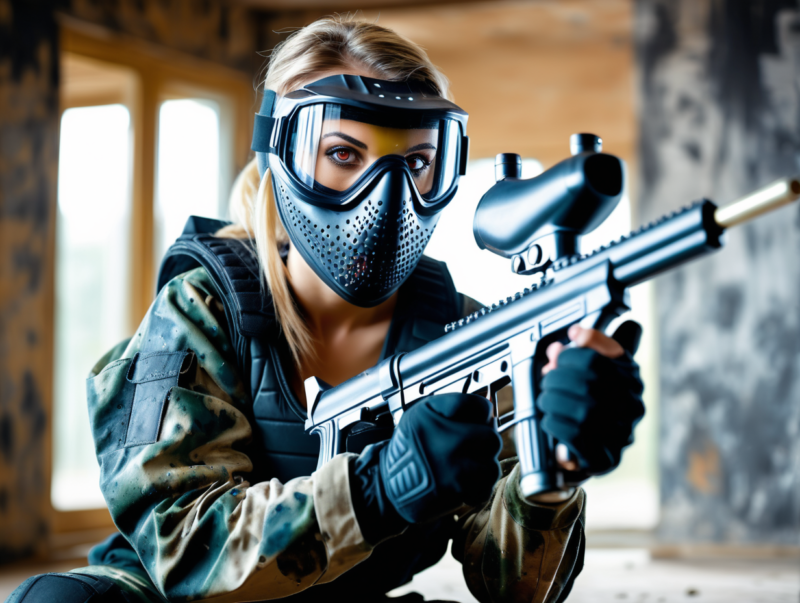
Every player must wear a full‑face mask that meets ANSI Z87.1 or equivalent standards. In addition, players are required to don chest protectors, gloves, and appropriate clothing that covers the arms and legs. The purpose is to prevent eye injuries and skin abrasions, which are the most common paintball‑related hazards.
Barrel Blocking
When not actively engaged in a game, the marker’s barrel must be blocked with a barrel sock or a similar device. This prevents accidental discharge and is enforced with strict penalties, often immediate disqualification.
Minimum Engagement Distance
Many fields enforce a minimum shooting distance—typically 10 feet (3 m) for standard paintballs and 7 feet (2 m) for low‑impact or “soft” rounds—to reduce the risk of severe bruising.
Elimination Protocol
A player is considered eliminated when a paintball breaks on any part of the body, including the mask, or when a marker is visibly damaged. Some formats, such as “Last Man Standing,” may allow a player to continue after a “hit” if a teammate can retrieve the marker and re‑arm them within a set time window.
No Physical Contact
Paintball is a non‑contact sport. Tackling, pushing, or any form of physical interference is prohibited and can lead to immediate ejection from the field.
Field Boundaries
Players must stay within the designated playing area. Crossing the boundary line, whether intentionally or accidentally, results in a penalty. In “capture the flag” and similar scenarios, a “safe zone” may be established where elimination is not permitted; however, players cannot linger there indefinitely.
Air Supply Regulations
Markers must be powered by approved air sources—high‑pressure compressed air (HPA) or CO₂. The pressure limit is generally capped at 4500 psi (310 bar) for safety reasons.
By adhering to these rules, paintball maintains a balance between excitement and safety, allowing participants of varying skill levels to enjoy the sport without excessive risk.
Paintball’s versatility lies in its ability to adapt to a multitude of game scenarios, each designed to test different tactical skills and strategic thinking. Below are some of the most popular formats encountered on both indoor and outdoor fields.
Speedball is the sport’s most regimented format, typically played on a compact, symmetrical field marked with inflatable bunkers. Teams of three to seven players compete in short, high‑intensity matches that emphasize fast movement, quick decision‑making, and precise shooting. Rounds usually last five minutes, with the winning team being the first to reach a set number of eliminations or the team with the most hits when time expires.
In contrast to speedball, woodland or scenario play utilizes expansive, natural terrain—forests, hills, abandoned buildings, or even abandoned industrial sites. Games can span several hours or even days, with objectives ranging from “capture the flag” to “search and rescue” missions. The large environment encourages the use of camouflage, stealth, and long‑range marking.
A popular themed game in which a small group of “survivors” attempts to evade a larger horde of “zombies.” Once a survivor is hit, they become a zombie, adding a dynamic of shifting alliances and escalating difficulty. The format tests endurance, teamwork, and adaptability.
A central objective point—often a raised platform or a fortified bunker—is contested by all teams. Possession of the hill grants points over time, incentivizing both offensive pushes and defensive holds. This scenario highlights coordinated assaults and the ability to maintain a fortified position under fire.
One player is designated as a VIP (Very Important Person) and must be escorted from a starting point to a safe extraction zone while avoiding elimination. The VIP is usually equipped with a larger marker or a paintball‑proof vest, adding a layer of strategy for both protectors and attackers.
These scenarios illustrate how paintball can be tailored to suit competitive leagues, casual weekend outings, corporate team‑building exercises, or even educational simulations.
Beyond its intrinsic entertainment value, paintball offers a spectrum of benefits that reach into physical fitness, mental acuity, and social development.
The sport demands constant movement—running, crouching, climbing, and sprinting—providing a cardiovascular workout comparable to high‑intensity interval training (HIIT). The unpredictable nature of the field forces players to develop agility and reflexes, while the weight of the marker and protective gear builds muscular endurance, particularly in the shoulders, arms, and core.
Paintball replicates many elements of real‑world tactical decision‑making. Players must assess terrain, anticipate opponent actions, allocate resources (ammunition and air), and communicate efficiently under pressure. Studies have shown that such rapid problem‑solving can improve situational awareness and enhance executive function, skills transferable to professional environments.
Because success hinges on coordinated effort, paintball serves as an effective team‑building platform. Participants learn to delegate roles—scout, sniper, support—and to trust teammates’ judgments. Leadership qualities emerge as individuals take charge of planning attacks, organizing defenses, and managing morale, making the sport a microcosm of organizational dynamics.
The adrenaline surge from a well‑executed ambush, combined with the physical exertion, triggers endorphin release, which can reduce stress and improve mood. The controlled, rule‑bound environment offers a safe outlet for competitive instincts, allowing participants to vent aggression constructively.
In educational settings, paintball has been employed to teach principles of physics (ballistics, momentum), biology (human anatomy and protective equipment), and even history (recreating battle scenarios). The immersive nature of the activity can deepen retention of theoretical concepts by situating them in a hands‑on context.
Collectively, these advantages make paintball more than a leisure activity; it is a multifaceted tool for personal development and group cohesion.
Paintball’s demographic diversity has expanded dramatically since its inception in the early 1980s. Today, the sport draws participants from a wide age range, varied socioeconomic backgrounds, and multiple professional sectors.
Youth and Teens – Many junior leagues cater to players aged 12–17, offering supervised, lower‑impact games that emphasize safety and sportsmanship. Schools and youth organizations increasingly adopt paintball for physical education and leadership training.
College Students – Campus clubs host regular matches, often integrating speedball competitions that align with collegiate league structures. The social aspect of the sport appeals to students seeking an energetic outlet outside the classroom.
Corporate Teams – Companies utilize paintball for team‑building retreats, capitalizing on its ability to simulate high‑stakes decision‑making in a low‑risk setting. Executive coaching programs frequently incorporate paintball scenarios to assess leadership styles and group dynamics.
Military and Law Enforcement – While not a substitute for formal combat training, paintball provides a cost‑effective platform for practicing tactics, communication, and stress inoculation. Specialized “tactical paintball” units use realistic markings and scenario planning to fine‑tune operational procedures.
Recreational Adults – A substantial portion of the player base consists of adults aged 25–45 who view paintball as a weekend hobby, a way to stay active, or a social gathering with friends and family.
Senior Enthusiasts – In recent years, “golden‑age” leagues have emerged, offering slower‑paced games with reduced velocity paintballs, allowing older participants to enjoy the sport without compromising safety.
The universal appeal stems from paintball’s blend of physical challenge, strategic depth, and social interaction—attributes that resonate across generations and occupations.
Scientific and professional perspectives on paintball are generally favorable, albeit nuanced, focusing on safety, physiological impact, and market growth.
Biomedical researchers have evaluated the injury profile of paintball, concluding that the incidence of serious injuries is low when standard protective gear is employed. A 2022 study published in the Journal of Sports Medicine reported that 96 % of recorded injuries were minor abrasions or contusions, with eye injuries representing less than 1 % of cases—an outcome attributed to mandatory mask usage. The study emphasized the importance of regular equipment inspection and adherence to minimum engagement distances to further mitigate risk.
Exercise physiologists have examined paintball’s cardiovascular and muscular demands, finding that a typical 30‑minute session can raise heart rate to 150–170 bpm, comparable to vigorous cycling or basketball. The intermittent sprint‑pause pattern mirrors the “interval training” model, supporting improvements in aerobic capacity and anaerobic power.
Cognitive psychologists note that the rapid decision‑making required in paintball activates prefrontal cortex regions associated with executive function. A 2021 experiment at a university recreation center measured participants’ reaction times before and after a series of paintball matches; results demonstrated a statistically significant reduction in response latency, suggesting enhanced processing speed under stress.
Market analysts within the outdoor recreation sector forecast continued expansion of the paintball industry. The Global Paintball Market Report (2024) projects a compound annual growth rate (CAGR) of 6 % through 2030, driven by rising interest in experiential leisure activities, growth in indoor arena infrastructure, and increasing corporate adoption for training. Experts point to advances in marker technology—such as smart sensors that track shot accuracy and ammunition usage—as catalysts for attracting a tech‑savvy clientele.
Some environmentalists have raised concerns about the impact of biodegradable versus traditional polymer paintballs on ecosystems. However, industry standards now require paintballs to be made from non‑toxic, fully biodegradable materials, and leading manufacturers have adopted “green” production processes. A consensus among experts is that responsible field management—such as regular cleanup and proper waste disposal—keeps ecological footprints minimal.
Overall, the scientific community endorses paintball as a safe, physically demanding sport with measurable benefits, while industry leaders remain optimistic about its sustainable growth.
Paintball can be enjoyed across a spectrum of environments, each offering distinct tactical challenges and logistical considerations. Selecting the appropriate venue depends on player preferences, weather conditions, and the desired style of gameplay.
Woodland and Natural Terrain
These venues are often situated in forests, hillsides, or abandoned agricultural land. The varied topography—trees, rock outcrops, streams—creates natural cover and encourages long‑range engagements. Because terrain is irregular, players must adapt quickly to shifting sightlines and concealment opportunities.
Airsoft‑Style Scenario Parks
Larger properties (20–50 acres) host multi‑day scenario events with elaborate storylines, props, and role‑playing elements. Fields may include mock villages, tunnels, and fortified structures. The scale allows for large team sizes (up to 100 players) and complex objectives such as “weapon caches” or “hostage rescue.”
Speedball Arenas
Although predominantly indoor, many outdoor speedball fields exist in purpose‑built complexes with inflatable bunkers arranged in a symmetrical layout. The flat, open surface and standardized bunker placement facilitate quick matches, tournament play, and spectator viewing.
Hybrid Locations
Some fields combine open fields with built‑up obstacles—such as wooden forts, metal towers, and sandbags—offering a blend of natural cover and constructed structures. These venues cater to both casual players and competitive teams seeking a balanced environment.
Outdoor play is subject to temperature, precipitation, and wind. Paintball markers can experience performance fluctuations in extreme cold (reduced air pressure) or heat (increased paintball expansion). Reputable fields provide weather‑proof markers, heated paintball hoppers, and on‑site medical staff to address any environmental hazards.
Urban Speedball Centers
These facilities feature multi‑level bunkers, tight corridors, and high‑visibility lighting, simulating close‑quarters combat. The controlled climate ensures consistent marker performance and allows for year‑round operation. Many centers host league nights, corporate events, and birthday parties.
Theme‑Based Indoor Mazes
Designed around cinematic or historical motifs—such as “Space Station,” “Medieval Castle,” or “Zombie Lab”—these arenas incorporate props, sound effects, and lighting to enhance immersion. The confined space emphasizes tactical communication and quick reflexes.
Multi‑Purpose Sports Complexes
Some arenas share space with laser tag, archery, or trampoline parks, offering cross‑disciplinary experiences. Portable bunkers can be rearranged to generate new layouts, keeping the gameplay fresh for repeat visitors.
Training Facilities
Professional and law‑enforcement agencies often use specialized indoor ranges equipped with high‑precision markers, video analysis systems, and scenario scripting software. These venues prioritize realism and debriefing over recreational fun.
Paintball has evolved from a niche hobby into a globally recognized sport that blends physical exertion, strategic thinking, and community building. Understanding the fundamentals—what paintball is, the core rules governing its safe play, and the variety of scenarios it can accommodate—provides a solid foundation for newcomers and seasoned veterans alike. The sport’s multifaceted benefits span health, cognition, teamwork, and stress relief, making it an attractive option for individuals, corporations, and training institutions.
A diverse array of participants—youth, students, professionals, military personnel, and seniors—find common ground on the field, united by a shared enthusiasm for challenge and camaraderie. Scientific research validates paintball’s safety profile and highlights its


 17406 IL-5 IL-92 and, East Moline, IL 61244, United States