Log in
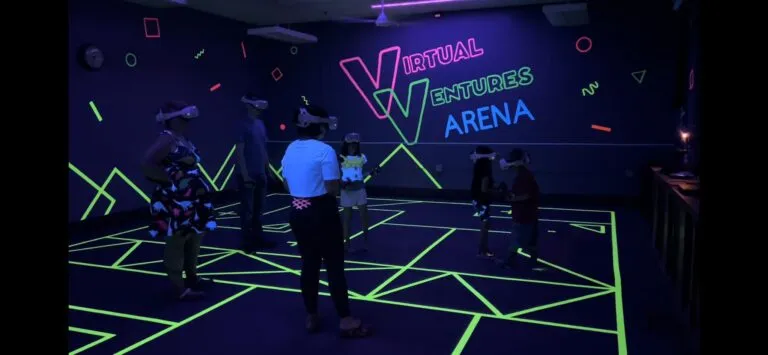
Virtual Ventures Indoor Arena is located in Davenport, IA.
Virtual Ventures is a technology-based company located in Davenport, IA that offers virtual reality experiences to businesses and individuals. They specialize in creating unique and engaging virtual environments for training, education, and entertainment purposes. Their services include custom content creation, equipment rentals, and on-site event coordination. With a focus on innovation and creativity, Virtual Ventures provides a cutting-edge solution for those seeking to enhance their training or event experiences. They provide access to the newest technology and top-of-the-line equipment to ensure their clients have the best possible experience.
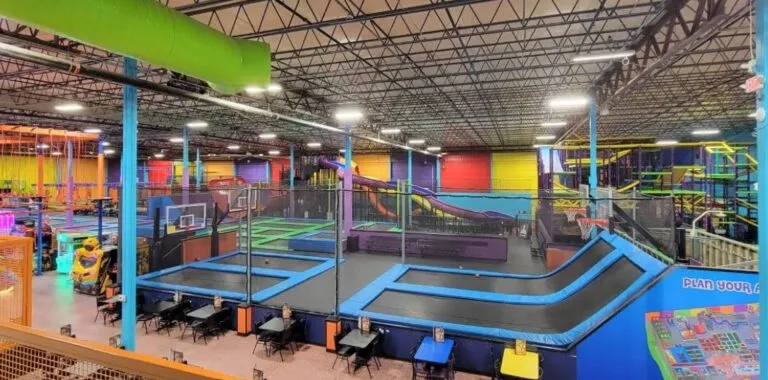
IndoorsThe Fun Station Quad Cities is located in Eldridge, IA.
The Fun Station Quad Cities, located in Eldridge, IA, focuses on Food, Fun, and Family.
The establishment’s story began in 1993 with the opening of its first location in Cedar Rapids, IA. The entertainment complex has remained a staple for family fun for nearly three decades. Since then, The Fun Station has expanded with additional locations in the Quad Cities area, Eldridge, IA, and Dubuque, IA.
Currently, the Edwards family carries on the tradition of providing quality family entertainment that emphasizes safety, cleanliness, and, most importantly, fun. Nick Edwards, President & CEO of Edwards Entertainment Company, expressed that they take fun seriously. Annually, they reinvest in their facilities to provide top-notch entertainment. Their food and beverage teams consistently develop and create new and exciting menu items and desserts. They are proud of their team members and their dedication to providing a quality experience by consistently going above and beyond for their guests. Patrons are encouraged to ask for assistance with any needs during their visit.
Indoors
A free‑roam virtual‑reality arena is a purpose‑built space where participants move freely while immersed in a digital world. Unlike seated or tabletop VR, which confines the user to a static position, free‑roam systems combine high‑resolution head‑mounted displays (HMDs) with external tracking technology that maps the entire play area in real time. The result is a physical‑to‑digital translation: every step, lean, and reach is mirrored by an avatar inside the virtual environment.
The infrastructure typically includes a network of infrared cameras, lidar sensors, or ultra‑wide‑angle optical trackers mounted around the perimeter of the arena. These devices triangulate the position of each headset and any handheld controllers, ensuring sub‑centimeter accuracy. The arena itself is often a cleared‑out warehouse, gymnasium, or purpose‑designed room with padded flooring, safety nets, and removable obstacles to prevent injuries. The space is calibrated before each session so that virtual walls line up perfectly with physical barriers, allowing users to interact with virtual objects as if they were tangible.
Free‑roam arenas differ from “room‑scale” VR that a consumer can set up at home. The primary distinction lies in scale and safety. While a home system may offer a 2 × 2‑meter play area, a commercial arena can span 30 × 30 meters or more, supporting multiple participants simultaneously. The larger footprint enables game designers to craft sprawling adventures, tactical combat simulations, or collaborative puzzles that would be impossible in a cramped living‑room setting.
The flexibility of a large, tracked environment opens the door to a diverse array of scenarios, each leveraging the unique blend of physical movement and digital immersion.
Adventure Expeditions – Participants assume the roles of explorers navigating alien landscapes, ancient ruins, or deep‑sea trenches. Physical obstacles such as foam cliffs or rotating platforms become cliffs to climb or submerged tunnels to crawl through, while the headset renders vivid ecosystems that respond to the user’s gaze and gestures.
Team‑Based Combat – Tactical shooters and melee combat games thrive in free‑roam arenas. Squads of four to eight players can coordinate flanking maneuvers, take cover behind real‑world props, and use motion‑tracked weapons that behave like real swords or firearms within the virtual battleground. The spatial awareness fostered by true‑to‑life movement adds a layer of strategy rarely seen in stationary VR titles.
Puzzle and Escape Rooms – Physical puzzles are integrated with virtual clues, requiring participants to manipulate actual levers, rotate dials, or assemble objects while the virtual world provides contextual hints. The synergy between tactile feedback and digital rendering amplifies the “aha!” moment when a solution clicks into place.
Fitness and Dance – High‑intensity workouts, rhythm games, and dance simulations benefit from the unrestricted space. Users can sprint, jump, or perform complex choreography without worrying about hitting a wall, while the system tracks calories burned and offers real‑time performance metrics.
Training Simulations – Industries such as aviation, emergency response, and manufacturing use free‑roam VR to rehearse procedures in a risk‑free environment. Trainees can walk through a virtual aircraft cockpit, practice fire‑fighter entry techniques, or assemble machinery with hands‑on manipulation, all while receiving instant feedback on posture and accuracy.
These scenarios demonstrate that free‑roam VR is not limited to entertainment; it serves educational, therapeutic, and professional purposes, each exploiting the core advantage of unrestricted movement.
The user base for free‑roam VR is remarkably broad, reflecting the medium’s ability to cater to disparate interests and age groups.
Casual Gamers – Individuals seeking a novel social experience often visit arenas for weekend outings with friends. The novelty of physically ducking behind virtual cover or climbing a digital tower draws crowds looking for adrenaline‑pumping fun.
Competitive eSports Teams – As competitive VR leagues gain traction, professional teams train in free‑roam arenas to refine teamwork, spatial awareness, and reaction times. The physicality of movement adds a physiological component to strategy, making practice sessions more representative of live competition.
Families and Children – Parents bring kids to age‑appropriate sessions that blend play with learning. The safe, supervised environment allows younger participants to explore imaginative worlds while developing gross‑motor skills.
Corporate Groups – Companies use the arena for team‑building exercises, leadership workshops, and creative brainstorming. Scenarios that require problem‑solving under pressure foster communication and trust among coworkers.
Researchers and Educators – Universities and research labs conduct studies on cognition, spatial memory, and human‑computer interaction within free‑roam setups. The controlled yet immersive setting provides a rich data source for scientific inquiry.
Therapists and Rehab Specialists – Physical therapists incorporate free‑roam VR into rehabilitation programs, using gamified movements to encourage patients recovering from injuries or surgeries to regain strength and coordination.
This eclectic mix illustrates that free‑roam VR has moved beyond a niche hobby and is becoming a versatile platform for entertainment, education, and professional development.
Designing free‑roam experiences for children involves a careful balance between excitement, safety, and developmental appropriateness. Operators typically segment arenas into zones with age‑specific content and equipment.
Scaled‑Down Play Areas – For younger children (ages 5‑10), the physical space is often reduced and surrounded by soft padding, foam walls, and low‑height obstacles. The tracking system is calibrated to a lower ceiling, preventing inadvertent collisions with overhead hardware.
Simplified Controls – Handheld controllers are replaced with ergonomically shaped “magic wands” or plush batons that register gestures without requiring fine motor precision. The virtual world responds to broad swings and tilts, allowing kids to cast spells or swing a virtual baseball bat with minimal learning curve.
Educational Themes – Content frequently integrates curriculum‑aligned concepts. A “Dinosaur Dig” adventure teaches paleontology basics by having kids uncover fossil fragments in a sandbox‑styled arena, while a “Space Station” mission introduces elementary astronomy and physics principles.
Parental Supervision – Staff members equipped with oversight consoles monitor each participant’s position and health metrics. If a child’s heart rate spikes or they approach a boundary, the system can pause the session and alert a supervisor.
Adaptive Difficulty – Algorithms adjust challenge levels on the fly, ensuring that a child remains neither bored nor overwhelmed. Puzzles become more intricate as the player demonstrates mastery, while combat scenarios scale back enemy aggression for novices.
These kid‑focused adaptations have proven popular with families, as they provide an immersive playground that encourages physical activity, creativity, and collaborative problem‑solving without the screen fatigue associated with traditional video gaming.
Free‑roam VR has become a go‑to option for milestone celebrations and corporate gatherings, offering a customizable canvas that can be tailored to the occasion’s theme and guest list.
A birthday celebration can be transformed into a quest where the birthday child becomes the hero of a narrative crafted around their interests—whether it’s rescuing a stranded dragon, navigating a pirate ship, or racing through a futuristic city. Multi‑player modes allow friends to join the story, fostering cooperation and friendly competition. The arena can be decorated with balloons and streamers, while the virtual environment incorporates personalized messages, custom avatars, and a celebratory fireworks display at the end of the session.
Graduates seeking a memorable send‑off have embraced immersive “graduation experiences,” where participants don caps and gowns in the real world and walk across a virtual stage that morphs into a symbolic journey. The session may involve traversing a timeline of their academic achievements, solving puzzles that represent challenges overcome, and culminating in a virtual fireworks show synchronized with a live‑streamed speech. The blend of physical movement and emotional storytelling creates a lasting impression that photographs alone cannot capture.
For corporate events, free‑roam arenas serve as both entertainment hubs and strategic platforms. Companies can commission bespoke scenarios that reflect brand identity—imagine a marketing team navigating a virtual market landscape, collecting “lead” tokens, or a product development group prototyping a new device in a sandbox simulation. Team‑building modules emphasize communication, trust, and problem‑solving under time pressure. After the immersive session, data analytics can be provided to HR managers, highlighting metrics such as collaboration frequency, decision‑making speed, and stress indicators, thereby turning fun into actionable insight.
Across all these event types, the key advantages of free‑roam VR are immersion, interactivity, and the ability to scale experiences from intimate groups of ten to large gatherings of a hundred or more. The physical space can be partitioned into multiple “rooms” running distinct experiences simultaneously, ensuring that each guest finds a suitable activity while maintaining a cohesive overall theme.
The scientific community and industry thought leaders have taken a keen interest in free‑roam VR because it sits at the intersection of technology, human physiology, and psychology.
Cognitive Researchers note that unrestricted movement enhances spatial memory retention. Studies comparing stationary VR to free‑roam setups have shown that participants who physically navigate an environment demonstrate superior recall of object locations and routes. The embodied experience—where vestibular, proprioceptive, and visual cues align—appears to reinforce neural pathways involved in map building and navigation.
Neuroscientists are exploring how immersive, full‑body VR influences brainwave patterns. Early findings suggest that the heightened sense of presence triggers increased theta activity, associated with focused attention and learning. Moreover, the combination of physical exertion and mental engagement may promote neuroplasticity, offering potential therapeutic applications for age‑related cognitive decline.
Human‑Factors Engineers commend the safety protocols embedded in arena design. By integrating real‑world obstacles with virtual boundaries—often termed “mixed‑reality safety walls”—the technology mitigates the risk of motion‑induced collisions. Experts advocate for continued refinement of collision‑avoidance algorithms, especially as arenas expand to accommodate larger groups and more complex environments.
Industry Analysts predict a robust market trajectory for free‑roam VR. The global market for location‑based entertainment is projected to grow at a compound annual growth rate exceeding 15% over the next five years, driven by advances in tracking accuracy, wireless headset battery life, and the emergence of subscription‑based content libraries. Partnerships between arena operators and major game publishers are expected to accelerate, delivering high‑production‑value titles previously limited to console or PC platforms.
Healthcare Professionals recognize the modality’s value in rehabilitative contexts. By gamifying movement, patients are more likely to adhere to prescribed exercise regimens, while therapists can monitor progress through telemetry data streamed from the HMDs. Researchers are conducting randomized controlled trials to assess long‑term outcomes for post‑stroke patients using free‑roam VR versus traditional physiotherapy.
Overall, the consensus among scientists and experts is that free‑roam VR represents a transformative medium that not only enriches entertainment but also contributes meaningfully to education, health, and workplace productivity. Continued interdisciplinary collaboration—melding advances in optics, AI‑driven content generation, and biomechanical sensing—is essential to unlock the technology’s full potential.
Free‑roam virtual‑reality arenas have evolved from experimental installations into thriving centers of interactive experience. By marrying precise motion tracking with expansive, safety‑engineered spaces, they enable scenarios that range from epic adventures and competitive sports to educational simulations and celebratory events. The diverse participant base—from children and casual gamers to corporate teams and scientific researchers—underscores the medium’s adaptability. As technology advances and interdisciplinary research deepens our understanding of its impact on cognition and health, free‑roam VR is poised to become a cornerstone of the next generation of immersive experiences.