El Monte
 Log in
Log in
Log in

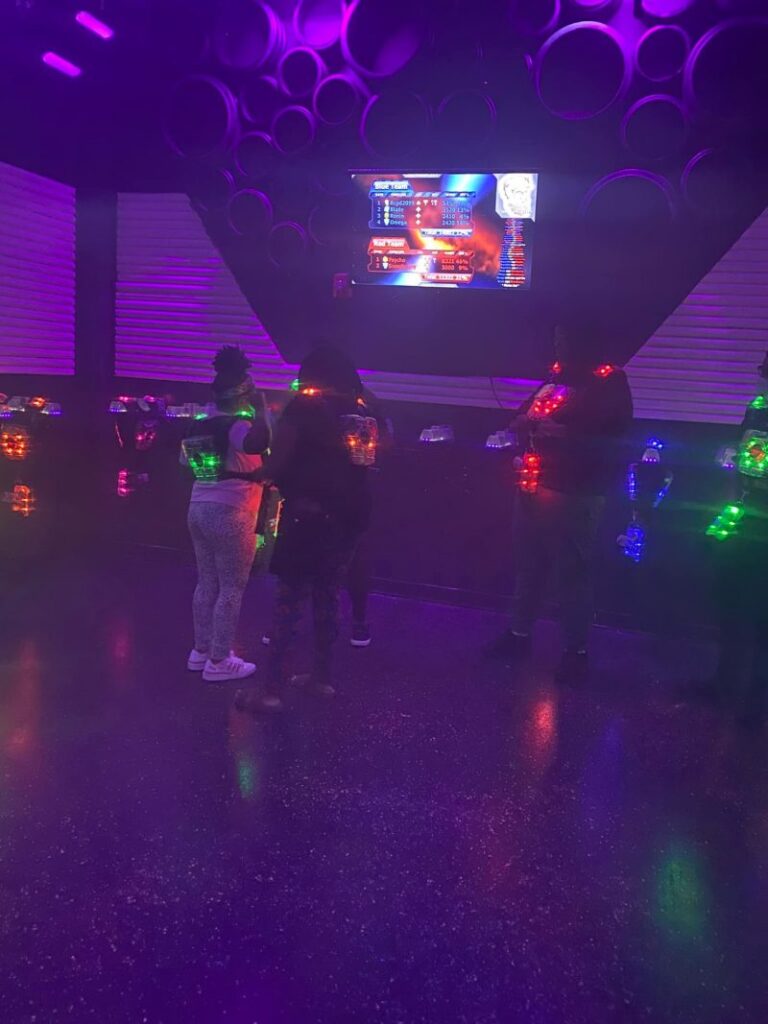
Hendersonville Strike & Spare Family Fun Center sits in Hendersonville, Tennessee, a suburb just north of Nashville, along Volunteer Drive. It’s a long-running family entertainment destination built around dozens of bowling lanes, Cosmic Bowling, leagues, and a pro shop, plus the attached Circus World area where a single wristband unlocks unlimited laser tag, bumper cars, roller skating, a bungee trampoline, a VR roller coaster, Time Freak, and Lazer Frenzy. The sci-fi themed laser tag arena offers fast ten-minute games for kids five and up, and individual attraction pricing is available for those who prefer to pay per game.
Beyond the games, Conway’s Grill provides a seated restaurant and lounge, while an arcade and ticket redemption center keeps the fun going. Five birthday party packages cover everything from unlimited wristband play to mini-bowling and a private soft play gym, each with pizza, drinks, a party room, and a hostess. The center also hosts school outings, teen parties, company events, and fundraisers, making it a versatile spot for family nights and group celebrations alike.
 Indoors
Phazer Kraze is located in the River Rock area of Murfreesboro, Tennessee, at 252 River Rock Blvd, and operates as a family-friendly laser tag and arcade venue.
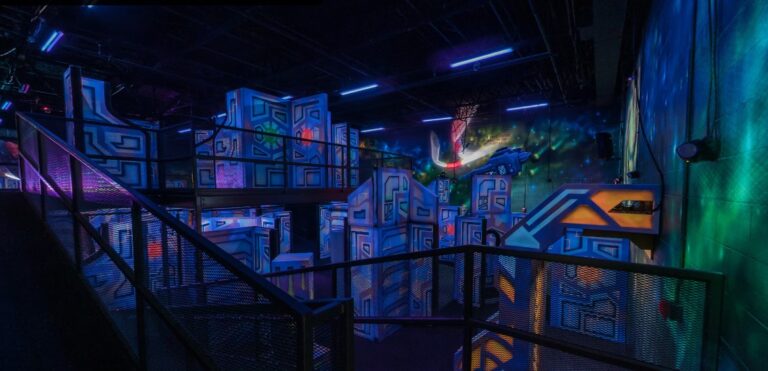
The heart of the venue is a large, multi-level laser tag arena with a futuristic black-light theme, filled with hiding spots and vantage points. Guests can play single missions or unlimited rounds, with weekday specials and player cards that reward regulars. The facility also offers two birthday party packages that include a private party room, laser tag passes, pizza, drinks, and arcade credits, with the guest of honor playing free.
Beyond the arena, there is a full arcade with ticket-earning games, private party rooms for rent, free Wi-Fi, and wheelchair accessibility. The staff is frequently praised for being kind and accommodating with large groups. The venue suits kids’ birthdays, corporate team-building, date nights, and family outings, and is open seven days a week with flexible pricing.
IndoorsTenn Pin Alley sits on Mooresville Pike in Columbia, Tennessee, in the heart of Middle Tennessee, roughly 45 minutes south of Nashville. It’s a full-scale family entertainment center that has earned the title of Middle Tennessee’s Top Entertainment Center for 2024–2026 from Main Street Media.
The venue centers on a 20-player glow-in-the-dark laser tag arena filled with black lights, fog, and music, alongside 32 state-of-the-art bowling lanes, a 70+ game arcade with a prize redemption store, electric go-karts, an 18-hole mini golf course, and Spin Zone bumper cars. Birthday packages include two hours of activities, arcade access, a party meal, and a dedicated hostess, while group events and facility rentals accommodate corporate teambuilding and large gatherings.
The on-site Bar & Cafe serves a full menu of classic and contemporary food alongside handcrafted cocktails, with party rooms set up by staff so guests can relax between activities. With friendly, attentive staff and a clean, modern atmosphere, the venue suits birthdays, corporate events, family nights, and casual outings for all ages.
IndoorsStars and Strikes Family Entertainment Center sits on North Lowry Street in Smyrna, Tennessee, in Rutherford County just southeast of Nashville, spanning more than 54,000 square feet.
The venue centers on a two-story laser tag arena with immersive lighting and sound, plus 24 bowling lanes (8 VIP lanes with SPARK augmented reality bowling), a 7,000-square-foot arcade and prize store, bumper cars, Escapology escape rooms, virtual reality, and Lumberjack Alley axe throwing.
Beyond the games, guests enjoy a full-service restaurant and bar with chef-inspired dishes and big-screen sports viewing, private party rooms and banquet space, and party packages that include activities, food and drinks, and a dedicated party host. It is a popular spot for birthdays, corporate events, and team building.
IndoorsMain Event Murfreesboro sits in the Gresham Park area of Murfreesboro, Tennessee, a roughly 50,000-square-foot entertainment center that opened in early 2024. The venue centers on a multi-story laser tag arena with taggers, hit-detectors, and coaching, alongside a state-of-the-art bowling alley with kid-friendly dragon ramps, an arcade gallery of more than a hundred games, a gravity ropes course, and billiards. All-access passes bundle the main activities into one price, and laser tag missions run about fifteen minutes each.
The full-service restaurant and bar give groups a place to refuel between activities, while birthday packages include reserved party space, a dedicated party host, food, and activity credits. The same setup works well for corporate events and team-building days, with event coordinators available to tailor larger group bookings. Between the high-energy attractions and the comfortable dining area, the venue suits birthday parties, school and sports groups, corporate outings, and casual family weekends alike.
IndoorsIn an era dominated by digital screens and sedentary entertainment, laser tag has emerged as a powerhouse of active social engagement. It is more than just a game; it is a high-tech athletic pursuit that blends strategy, physical exertion, and immersive storytelling. By utilizing infrared light technology, laser tag allows participants to engage in simulated combat scenarios without the physical pain or cleanup associated with paintball or airsoft, making it one of the most accessible recreational activities in the modern landscape.
At its core, laser tag is a team-based sport or recreational activity where players congregate in an arena to “tag” opponents using infrared-emitting devices. Each player typically wears a vest or a headband equipped with sensors that detect hits. When an infrared beam from a phaser hits a sensor, the system records the event, often providing immediate feedback through lights, vibrations, or sounds.
The technology behind laser tag has evolved significantly since its inception in the late 1970s. Modern systems utilize sophisticated software that tracks real-time statistics, calculates accuracy percentages, and manages complex game modes. Because it uses light rather than physical projectiles, laser tag is entirely painless, making it a safe alternative for all ages while maintaining the adrenaline-fueled intensity of a tactical skirmish.
The versatility of laser tag lies in its ability to adapt to nearly any narrative. While a standard game might involve a simple race to the highest score, advanced arenas offer complex missions that transform a simple room into a battlefield.
Popular scenarios include “Capture the Flag,” where teams must infiltrate enemy territory to retrieve a flag and return it to their base, and “Zombie Survival,” an asymmetric game where one player begins as an infected “zombie” and must tag others to grow their ranks. “King of the Hill” challenges players to hold a specific location within the arena for as long as possible against a barrage of incoming fire. These scenarios promote tactical thinking and force players to move beyond “spray and pray” tactics, instead encouraging teamwork, resource management, and strategic positioning.
Beyond the excitement, laser tag offers a significant array of physical and psychological benefits. From a fitness perspective, it is a high-intensity cardiovascular workout. A single session in a complex arena requires bursts of sprinting, crouching, dodging, and rapid directional changes. This improves stamina, agility, and core strength without the monotony of traditional gym exercises.
Psychologically, the game acts as a catalyst for team building and cognitive development. Players must process information quickly, assess the spatial layout of the arena, and communicate effectively with teammates under pressure. It also serves as a tremendous stress reliever, offering an “unplugged” environment where the focus shifts entirely to the present moment, helping participants distance themselves from the anxieties of daily life.
Research into human behavior and recreational sports consistently highlights the value of “gamified” physical activity. Industry experts point out that laser tag bridges the gap between digital gaming and physical reality. For younger generations raised on first-person shooters, laser tag satisfies the cognitive desire for strategic play while providing the essential physical activity that video games lack.
Educational psychologists have also noted that laser tag cultivates soft skills, such as leadership, crisis management, and conflict resolution. When a team is down by 500 points with only two minutes remaining, the individuals who emerge as leaders often demonstrate better emotional regulation and structural thinking. Industry manufacturers continue to invest in R&D to make these environments more immersive, suggesting that as AR (augmented reality) technology advances, the line between tactical simulation and physical play will continue to blur, making the sport more effective as a developmental tool.
While often associated with childhood, the demographic of laser tag players is remarkably broad. For children, laser tag provides a structured environment where they can burn off excess energy while learning the basics of cooperation. Unlike individual sports, laser tag requires kids to listen to one another and understand that their individual success is subordinate to the team’s objective. It provides a sense of agency and empowerment, allowing children to step into roles as scouts, defenders, or leaders in a safe, monitored setting.
The adaptability of laser tag makes it a premier choice for celebratory and professional events. For birthday parties, it provides an all-inclusive entertainment package that keeps children occupied, supervised, and physically engaged, culminating in a shared experience that is far more memorable than a static party.
For graduation parties, it serves as a high-energy transition activity that allows classmates to bond one last time in a competitive setting. Meanwhile, the corporate sector has embraced laser tag as a sophisticated team-building exercise. In a corporate environment, the hierarchy of the office is neutralized; the CEO and the junior intern are on an equal playing field. This helps break down communication silos and fosters camaraderie, as teams must bypass professional jargon to coordinate effective movements toward a common objective. The intensity of the game forces authentic personality traits to emerge, allowing colleagues to see each other in a new, human light.
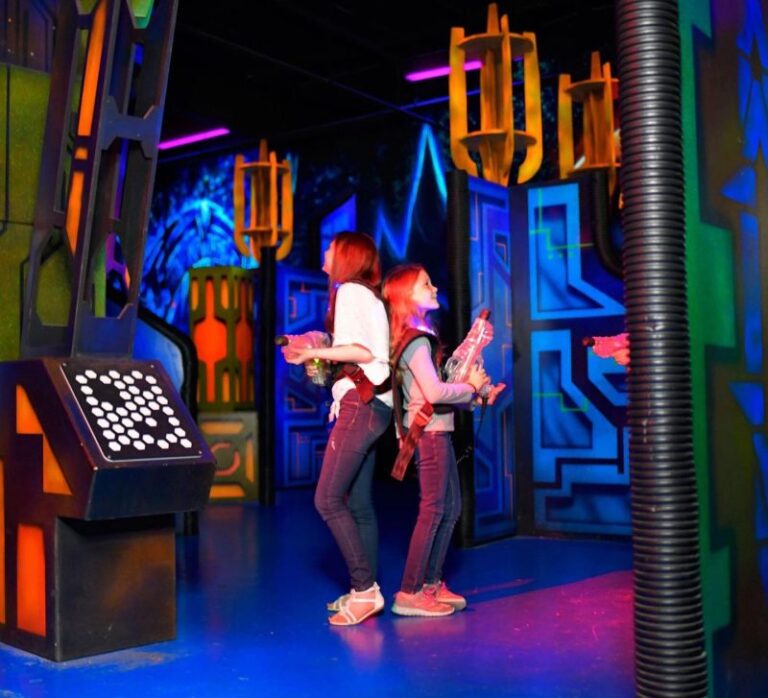
The experience of laser tag varies greatly depending on the venue. Indoor arenas are typically highly controlled environments, characterized by neon lighting, blacklights, fog machines, and elaborate mazes. These venues are designed for high-speed, close-quarters combat. They offer a “sci-fi” atmosphere that feels like stepping inside a video game, making them ideal for weather-independent events.
Outdoor laser tag, conversely, offers a more natural, tactical experience. Often played in wooded areas, urban parks, or specially constructed “village” sets, outdoor venues provide a sense of scale that indoor arenas cannot match. Players often use long-range equipment, allowing for sniper-style gameplay and stealth tactics. These venues are often favored by those looking for a more “milsim” (military simulation) experience, where the environment itself serves as a key player in the strategy. Whether choosing the neon-drenched thrill of an indoor maze or the tactical, wide-open expanse of an outdoor field, the fundamental appeal of the game—the intersection of technology, strategy, and movement—remains the driving force.
In summary, laser tag has cemented its place as a staple of contemporary recreation. By providing a safe, inclusive, and highly adaptable platform for competition, it continues to draw in participants from every walk of life. Whether for the sake of fitness, professional development, or pure celebration, the game continues to evolve, proving that play remains an essential component of the human experience.


 90 Volunteer Dr, Hendersonville, TN 37075, United States