El Monte
 Log in
Log in
Log in

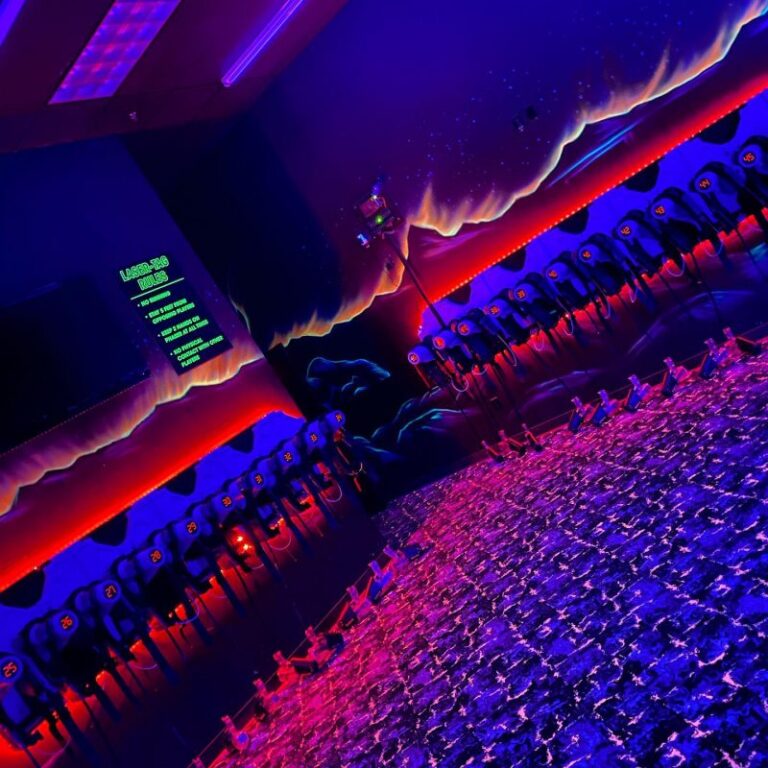
Jas Laser Tag (now operating as SacTag) is located at 9823 Old Winery Place in Sacramento, California, near the border with Rancho Cordova in the eastern part of the city.
The centerpiece is an 8,500-square-foot, two-story laser tag arena with ramps, bridges, elevated sniper positions, fog machines, and neon lighting — the largest in Sacramento. Beyond laser tag, the facility offers bumper cars, a laser maze, Beam Buster, a jungle play area for kids ages 2-12, and a full arcade. Birthday parties, corporate team-building events, fundraisers, and sports team gatherings are all common here, with private party rooms, pizza and drinks included in packages, and a staff that handles setup and cleanup. Walk-ins are welcome, and the atmosphere is family-friendly and safety-focused.
 Indoors
Xtreme Craze is located at 6694 Lonetree Blvd in Rocklin, California, within the Blue Oaks Town Center off Highway 65.
The facility spans over 18,000 square feet and features Northern California’s largest laser tag arena (7,000 sq ft, two-story, up to 38 players per session) and the West Coast’s first indoor Xtreme AirparX (5,000 sq ft inflatable park with slides, obstacle course, and climbing walls). A full arcade with a prize center and the Craze Cafe round out the experience. Birthday parties include a dedicated host, reserved table, pizza, drinks, and arcade credits. The Super Combo Party lets guests choose two attractions. The facility is handicap accessible, family-friendly, and open to walk-ins.
IndoorsSacTag is located in the Northrop Avenue area of Sacramento, California.
The venue features two laser tag arenas — “The Grid,” a two-level neon-lit arena with ramps and catwalks, and “Outbreak,” a ground-level zombie-themed maze. A selection of arcade games with ticket redemption adds variety. Each laser tag session is guided by a game master, and the facility includes a lounge area serving pizza, snacks, and drinks. The venue is well suited for birthday parties, corporate team-building, and group outings, with party packages and private rooms available.
IndoorsCountry Club Lanes is located at 2600 Watt Avenue in Sacramento, California, in the Arden-Arcade area near the intersection of Watt Avenue and Highway 80.
The center features 32 bowling lanes with automatic scoring, bumpers for kids, and cosmic bowling on Friday and Saturday nights after 9 PM with black lights and music. A separate blacklight laser tag arena with inflatable bunkers accommodates up to 20 players per game. The arcade offers redemption games, and the on-site Bar & Grill serves pizza, burgers, and drinks. Birthday packages include bowling or laser tag (or both), pizza, drinks, balloons, and a party host. Bowling leagues for all ages run seasonally. The facility is family-owned, clean, and welcoming to walk-ins and large groups alike.
Indoors
Laser tag is an exciting and interactive game that is the perfect way to have fun with friends and family in Sacramento, California. Whether you are looking for something to do with your friends or just a way to pass some time on a weekend, laser tag provides endless fun with its laser-based technology.
In Sacramento, CA there are various laser tag venues available to choose from. One of the more popular venues is Laserland Entertainment, which offers sixteen different laser tag arenas that make up their two main locations. This laser tag center also features a state-of-the-art game room, an amazing laser show, and a retail store that sells items from t-shirts to toys. Laserland Entertainment provides laser tag packages at a variety of prices, depending on the size of your party, which makes it a great value for a fun day out.

Laser tag is a fast‑moving, team‑oriented sport that blends the excitement of traditional tag with the futuristic feel of sci‑fi combat. Players are equipped with lightweight vests or wrist‑mounted sensors and handheld “phasers” that emit infrared beams. When a beam contacts an opponent’s sensor, the hit is recorded and a score is updated in real time. Unlike paintball or airsoft, laser tag generates no projectile waste, making it safe for indoor arenas, outdoor fields, and even classrooms. The game can be timed, or it can run until a predetermined score is reached, and many systems incorporate sound effects, flashing lights, and mission‑driven objectives to keep the experience immersive.
The versatility of laser tag lies in its ability to accommodate a wide range of scenarios, each crafted to emphasize different skills and storytelling elements.
Free‑For‑All Skirmish – The classic “last man standing” format pits every player against every other, encouraging quick reflexes and aggressive tactics.
Team Capture the Flag – Two or more squads compete to retrieve a virtual flag from the opponent’s base while defending their own. This mode promotes coordinated movement and strategic planning.
Mission‑Based Ops – Players receive a briefing that outlines specific objectives, such as disabling “enemy reactors,” rescuing virtual hostages, or securing control points. These missions add narrative depth and often involve timed phases.
Zombie Apocalypse – A handful of “infected” players chase the remaining “survivors.” When a survivor is tagged, they join the infected ranks, creating a dynamic, ever‑shifting battlefield.
Stealth Infiltration – Using low‑light arenas and sound‑dampening gear, participants must navigate undetected to complete objectives, testing patience and careful movement.
Sport‑Style League Play – Competitive leagues adopt standardized rules, point systems, and refereeing, turning laser tag into an organized sport with rankings and seasonal championships.
Each scenario can be customized with adjustable difficulty levels, allowing beginners to enjoy a gentle introduction while seasoned players can tackle complex, multi‑stage missions.
Beyond the obvious thrill of “laser combat,” laser tag offers a host of physical, mental, and social advantages that make it an attractive activity for a broad audience.
Physical Activity – Players sprint, duck, and weave across arenas, achieving moderate‑intensity cardiovascular exercise comparable to a brisk jog. The constant motion improves agility, balance, and coordination.
Cognitive Development – Rapid decision‑making, spatial awareness, and problem‑solving are required to navigate obstacles, identify threats, and execute strategies. These mental demands sharpen attention span and enhance executive‑function skills.
Teamwork and Communication – Many scenarios rely on coordinated action and clear verbal cues. Participants learn to delegate roles, share information, and adapt to teammates’ strengths and weaknesses.
Stress Relief – The immersive, game‑like environment provides a safe outlet for releasing adrenaline and tension, often leaving players feeling rejuvenated and more focused afterward.
Inclusivity – Since the equipment is non‑lethal and the risk of injury is minimal, people of varying ages, fitness levels, and abilities can join together without the barriers commonly associated with contact sports.
Technological Literacy – Interacting with sensor‑based gear and digital scoring systems familiarizes players with emerging technologies, nurturing an early comfort with electronic interfaces.
Collectively, these benefits have propelled laser tag from a niche amusement into a recognized tool for education, team‑building, and health promotion.
Researchers in kinesiology, psychology, and human‑computer interaction have begun to examine laser tag as a case study for embodied gaming. Studies indicate that the blend of physical exertion and virtual feedback yields higher engagement levels than sedentary video games, translating into measurable improvements in heart‑rate variability and mood. Cognitive scientists note that the real‑time feedback loop—where a hit is instantly registered and displayed—reinforces learning through immediate reinforcement, a principle central to skill acquisition.
From an industry perspective, experts underscore laser tag’s role in the “experience economy.” As consumers increasingly seek immersive, shareable activities, laser tag centers that integrate augmented reality (AR) overlays, mobile app leaderboards, and narrative-driven missions are better positioned to attract repeat visitors. Analysts also highlight sustainability: because laser tag eliminates consumables like paintballs or foam darts, operational costs and environmental impact are reduced, giving the sport a competitive edge over traditional projectile‑based games.
Overall, scientific consensus points to laser tag as a beneficial blend of exercise, cognition, and social interaction, while industry insiders see it as a scalable platform for future innovations in immersive entertainment.
Children are among the most enthusiastic participants in laser tag. The low‑impact nature of the game makes it ideal for school field trips, after‑school programs, and youth camps. For younger players, simplified rules and bright, colorful arenas keep the experience approachable while still encouraging teamwork and physical activity. Educators often incorporate laser tag into curricula—using mission‑based scenarios to teach concepts such as geometry (calculating angles for shots), physics (understanding line‑of‑sight), and even historical events (recreating battlefield strategies).
Adolescents and college‑age individuals gravitate toward laser tag for its competitive edge. High‑energy battle modes, leaderboards, and league structures satisfy the desire for achievement and social recognition. Many universities host intramural laser tag leagues, allowing students to unwind while building camaraderie. The sport’s accessibility—no need for costly protective gear or extensive training—makes it a popular alternative to traditional contact sports.
Corporate teams, fitness enthusiasts, and casual adults turn to laser tag for recreation and professional development. Companies book sessions as team‑building exercises, leveraging the game’s requirement for communication, role allocation, and strategic planning. For fitness‑focused adults, laser tag provides a fun cardio workout that breaks the monotony of conventional gym routines. Even retirees engage in low‑impact laser tag sessions, appreciating the mental stimulation and social interaction it offers.
A laser tag birthday party combines the excitement of a themed adventure with the convenience of a self‑contained activity. Packages typically include private arena time, customized mission briefings, and optional decorations aligned with the child’s favorite characters or sci‑fi motifs. Parents appreciate the all‑in‑one setup: safety gear, staff supervision, and post‑game photo or video highlights that capture memorable moments without the mess of traditional party games.
Graduates seeking a memorable send‑off often choose laser tag as an energetic alternative to conventional gatherings. The competitive nature of the game mirrors the spirit of accomplishment, while the shared experience strengthens bonds among classmates before they disperse into new chapters of life. Event organizers can personalize the experience with custom scoring screens that display graduation year, school colors, or personalized messages.
Corporate events—whether end‑of‑year celebrations, product launches, or client entertainment—benefit from laser tag’s blend of fun and professional development. Tailored scenarios can incorporate brand messaging, product themes, or corporate values, turning a recreational activity into a subtle marketing platform. Additionally, the debriefing phase after a match provides an ideal setting for discussing teamwork dynamics, leadership styles, and conflict resolution, delivering tangible business insights alongside entertainment.
Indoor laser tag arenas dominate urban markets due to their year‑round availability and controlled environments. These facilities range from compact “pop‑up” setups in shopping malls to expansive multi‑level complexes featuring dark corridors, fog machines, and interactive props. Indoor spaces allow for precise calibration of sensors, consistent lighting conditions, and climate control, ensuring a reliable experience regardless of weather. Many venues also offer party rooms, catering services, and on‑site equipment rental, making them convenient one‑stop locations for groups.
Outdoor laser tag brings the sport into natural landscapes—forests, parks, and even beaches. The open‑air setting expands the playing field, encouraging long‑range tactics and stealth navigation through terrain features such as trees, rocks, and elevation changes. Portable laser tag kits enable schools, community organizations, and corporate retreats to set up temporary battle zones without permanent infrastructure. Seasonal considerations (e.g., daylight, precipitation) are the primary variables, but the novelty of fighting under the sun or stars adds a unique thrill that indoor arenas cannot replicate.
Some providers blend indoor and outdoor elements by constructing semi‑open structures with retractable roofs or by integrating AR projections onto physical environments. These hybrid venues aim to capture the best of both worlds: the immersive storytelling and lighting control of indoor arenas, coupled with the expansive freedom and natural obstacles of outdoor play. As technology advances, the line between physical and digital battlegrounds continues to blur, offering participants increasingly rich and varied experiences.
Laser tag has evolved from a simple arcade attraction into a multifaceted activity that appeals to children, teenagers, adults, and corporate teams alike. Its adaptable scenarios—from free‑for‑all skirmishes to narrative‑driven missions—provide endless variety, while the physical, cognitive, and social benefits have drawn the attention of scientists and industry analysts. Whether celebrated as a birthday adventure, a graduation rite of passage, or a corporate team‑building tool, laser tag delivers excitement without the mess or injury risk associated with traditional projectile sports. With indoor arenas offering year‑round convenience and outdoor fields adding natural complexity, enthusiasts have ample options for play. As technology continues to integrate augmented reality and sophisticated scoring systems, laser tag is poised to remain a vibrant, inclusive, and innovative pastime for years to come.



 9823 Old Winery Place, Ste. 2 Sacramento, CA 95827