El Monte
 Log in
Log in
Log in

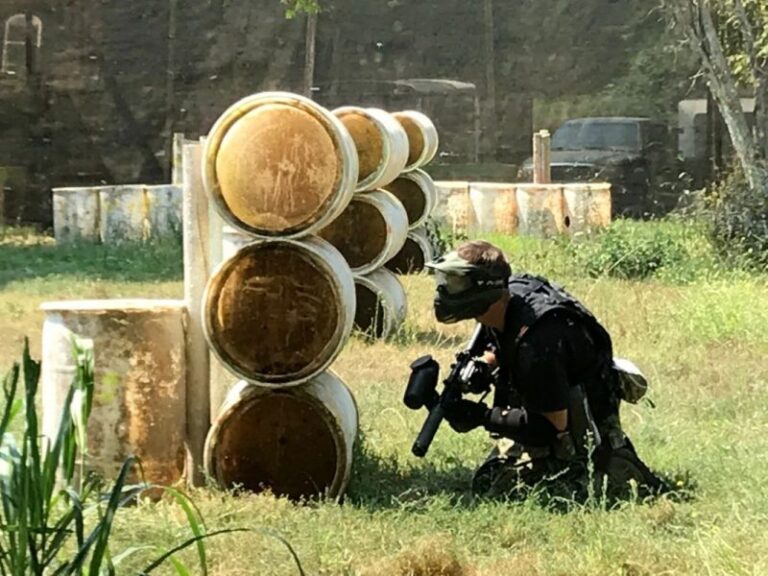
Shooters All-Season Paintball is located along Garden Highway in Nicolaus, California, a short drive north of Sacramento near the Feather River.
The park features five fields — three wooded woodsball maps with natural bunkers, a fast-paced Hyperball field, and a barrels-based urban-style layout. Games include Attack & Defend scenarios and themed seasonal events. Low-Impact Paintball is available for younger players ages 8 and up. The facility is family-owned and known for its attentive, patient staff. A large picnic area with a rental BBQ, dressing rooms, and spectator-friendly policies make it a comfortable spot for birthday parties, corporate team-building, and casual group outings.
 Outdoors
Davis Paintball is located in Davis, California, roughly 15 miles west of downtown Sacramento in Yolo County.
This outdoor paintball park features seven distinct fields — from the urban corridors of Stalingrad and Berlin to the sprawling citadel of Kingdom and the fast-paced Hyperball and Airball courses. The facility offers traditional .68 caliber paintball (ages 10+), Low Impact paintball (ages 8+), and Splatmaster (ages 6+), with full rental packages available. Monthly events like the Davis Big Game and Pump Day draw regular crowds, while birthday party packages and group rates accommodate private celebrations and team outings. The shaded staging area with picnic tables, on-site snack sales, and a family-friendly atmosphere make it a welcoming destination for players of all skill levels.
OutdoorsCapital Edge Paintball is located in Sacramento, California, off Bradshaw Road in the southeastern part of the city.
This outdoor paintball park features six distinct fields — Speedball, Hyperball, Woodsball, Urban, Castle, and Village — offering a range of environments from tournament-style airball to immersive mock-town combat. The facility offers traditional .68 caliber paintball (ages 10+) and Low Impact paintball (ages 8+), with full rental packages available. Private group events and birthday party packages include dedicated referees and exclusive field access. The covered staging area with picnic tables, on-site snack sales, and a family-friendly atmosphere make it a welcoming destination for players of all experience levels.
OutdoorsMidway Paintball Facility is located in Vacaville, California, in Solano County between Sacramento and San Francisco.
This outdoor paintball park spans nearly 25 acres with six unique fields offering traditional .68 caliber paintball, low-impact .50 caliber paintball, and Gel Blasters. Game formats include Capture the Flag, Elimination, and Attack/Defend, all supervised by referees. The facility provides rental equipment, allows BYOP for self-equipped players, and features covered picnic areas with barbecue space. Private parties and group reservations are available seven days a week, making it a solid choice for birthdays, corporate team-building, and casual outings with friends.
Outdoors
Paintball is the thrilling sport of paintballing. It has been around since the late 1980s, and it’s popularity continues to grow. From legitimate tournaments to casual backyard get-togethers, paintball in Sacramento, CA is becoming a more popular pastime and hobby for residents.
In Sacramento, CA there are a variety of locations and fields available for paintballing. Offering different surfaces, interactive buildings, and various obstacles, these fields let you create an intense, realistic paintball war-zone. From indoor to outdoor play and tournament-style fields, Sacramento’s paintball locations take the sport to a new and more engaging level.
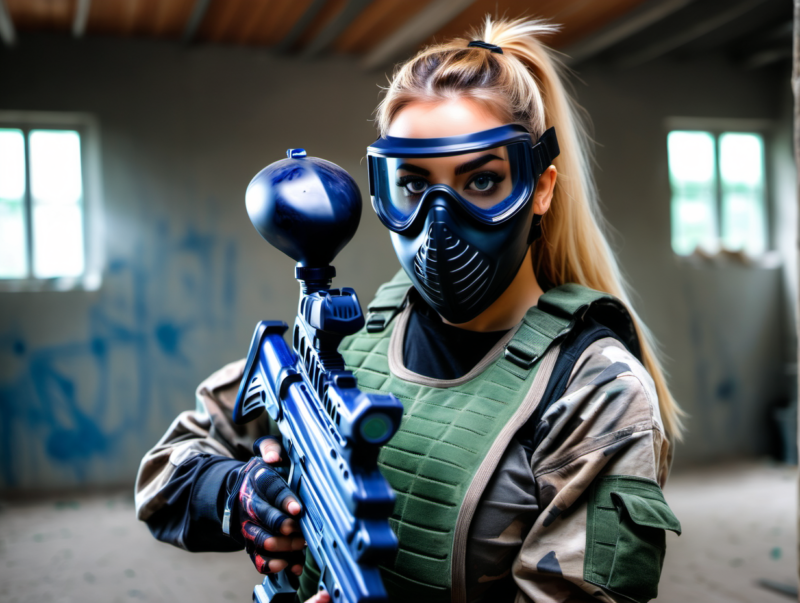
Paintball is a fast‑paced, team‑oriented sport in which participants—known as “players” or “markers”—use specially designed air‑powered guns to launch small, gelatin‑encased capsules filled with non‑toxic, water‑based paint. When a capsule strikes a player’s body or equipment, the paint bursts, marking a visible spot that signifies a hit. The game can be played in a variety of formats, ranging from short, adrenaline‑filled skirmishes on a compact indoor field to sprawling, multi‑hour “scenario” battles that mimic military operations or immersive storytelling. Despite its seemingly simple premise, paintball blends elements of strategy, physical fitness, and technology, creating a sport that appeals to a remarkably diverse audience.
Although local fields may add their own nuances, the core rules of paintball remain consistent worldwide:
Safety First – Every player must wear approved protective gear, including a full‑face mask that meets ASTM F949 or EN 166 standards. Protective clothing, chest protectors, and gloves are strongly encouraged.
Marker Regulation – Most fields cap the muzzle velocity of markers at 280–300 feet per second (fps) to reduce the risk of injury. Players are required to have their markers chronographed and to keep them within the prescribed limits throughout the match.
Elimination – A player is considered “out” when a paint capsule breaks on any part of their body, head, or equipment and leaves a visible mark. Some formats allow “re‑entry” after a designated period or after a teammate tags the fallen player.
Boundary Awareness – The playing area is clearly marked, and crossing into “dead zones” results in an automatic out. Players must stay within the defined boundaries at all times.
Sportsmanship – Unsportsmanlike conduct—such as cheating, intentional equipment tampering, or aggressive verbal behavior—is prohibited and can lead to removal from the field.
Load Limits – On most commercial fields, players are limited to a certain number of paintballs per game (often 500–1,000) to ensure fairness and to manage the cost of consumables.
These rules create a balanced environment that emphasizes fair competition while minimizing the potential for injury.
Paintball scenarios are specially designed game formats that go beyond the classic “capture the flag” or “elimination” styles. They often incorporate a storyline, objectives, and unique terrain features, turning a single match into an immersive experience.
MilSim (Military Simulation) – Players adopt ranks, communicate via radios, and follow mission briefs that can involve hostage rescues, convoy protection, or territory seizure. The emphasis is on realistic tactics, coordinated movement, and adherence to a chain of command.
Zombie Apocalypse – A small “infected” team attempts to “turn” other players by tagging them, while the survivors strive to reach a safe zone or complete a rescue objective. The ebb and flow of the infection adds a dynamic layer of tension.
Capture the Flag Variants – Enhanced versions introduce multiple flags, safe houses, and point‑based scoring, forcing teams to balance offense and defense continuously.
Scenario-Based Role‑Play – Some fields host events based on popular movies, video games, or historical battles, allowing participants to dress in period‑appropriate attire and enact scripted encounters.
These scenarios encourage creativity, strategic depth, and teamwork, often extending the typical 10–15 minute game to several hours of coordinated play.
Beyond the obvious thrill of competition, paintball offers a suite of physical, mental, and social benefits.
Physical Fitness – Running, sprinting, ducking, and crouching while navigating obstacles provide a full‑body workout that improves cardiovascular health, agility, and muscular endurance.
Strategic Thinking – Players must constantly assess terrain, predict opponent movements, and allocate limited resources (paintballs, time, and cover). This sharpens decision‑making and problem‑solving skills under pressure.
Team Building – Because success depends on communication and coordinated action, paintball is frequently used by corporations and military units as a low‑cost team‑building exercise. It fosters trust, leadership development, and the ability to give and receive constructive feedback.
Stress Relief – The high‑energy nature of the sport, combined with the cathartic release of firing a marker, can help participants unwind and momentarily escape everyday pressures.
Social Connectivity – Paintball clubs and events bring together people from varied backgrounds, creating a community built around shared excitement and mutual respect.
Hand‑Eye Coordination – The rapid target acquisition required for accurate shooting enhances fine motor skills and reaction time, benefits that often translate to other sports and everyday activities.
Paintball’s appeal transcends age, gender, and professional background. The typical participant profile includes:
Young Adults (18‑35) – College students and recent graduates who view paintball as a weekend adventure and a way to meet new friends.
Corporate Teams – Companies of all sizes schedule paintball outings to reinforce teamwork, leadership, and problem‑solving among employees.
Military and Law Enforcement Personnel – Units use the sport as a cost‑effective training tool for tactics, communication, and stress inoculation.
Families and Youth Groups – Many fields offer junior leagues, “kids‑only” sessions, and family‑friendly packages that introduce children to the sport in a safe, supervised environment.
Competitive Athletes – Dedicated teams compete in regional, national, and international leagues, often specializing in particular formats such as Speedball (small, fast‑paced fields) or MilSim.
Adventure Enthusiasts – Individuals who enjoy outdoor activities, high‑adrenaline experiences, and immersive storytelling frequently gravitate toward paintball as a complement to sports like laser tag, airsoft, or obstacle‑course racing.
The sport’s low barrier to entry—requiring only a marker, some protective gear, and a modest number of paintballs—makes it accessible, while the depth of skill and strategy sustains long‑term engagement for seasoned players.
Researchers studying recreational sports have highlighted paintball’s unique blend of physical exertion and cognitive demand. A 2022 study published in Journal of Sports Science found that participants exhibited a measurable increase in aerobic capacity after a series of high‑intensity paintball matches, comparable to a 30‑minute interval running session. The same research noted improved reaction times and spatial awareness, attributing these gains to the sport’s requirement for rapid visual processing and split‑second decision making.
From an injury‑prevention standpoint, experts emphasize the importance of proper protective equipment. A review by the American College of Sports Medicine (ACSM) concluded that while paintball carries a low incidence of serious injuries, the majority of reported cases involve facial lacerations or bruises resulting from inadequate mask fit or failure to replace cracked protective lenses. The ACSM recommends mandatory mask inspection before each session and the use of helmets with integrated visor systems for added head protection.
Industry analysts point out that the paintball market has demonstrated steady growth over the past decade, driven by innovations such as low‑pressure, high‑capacity markers, biodegradable paint capsules, and integrated electronic firing systems. The development of environmentally friendly, water‑soluble paint has also broadened the sport’s appeal to venues with stricter ecological regulations.
Collectively, scientific and professional perspectives affirm paintball’s position as a safe, physically beneficial, and technologically evolving activity, provided that participants adhere to established safety protocols.
Paintball facilities are scattered across urban, suburban, and rural settings, each offering a distinct ambience and set of challenges.
Woodland Courses – Set among dense forests, natural obstacles, and uneven terrain, these fields emphasize stealth, long‑range engagement, and tactical movement. Players must navigate natural cover such as trees, hills, and streams, making every shot count.
Open‑Field Speedball Arenas – Constructed with inflatable bunkers, inflatable cover, and clearly marked boundaries, Speedball fields are designed for fast‑paced, high‑action matches. The uniform layout levels the playing field, focusing competition on speed, accuracy, and teamwork.
Scenario Battlefields – Sprawling acres are transformed into fortified towns, abandoned warehouses, or mock battle zones. These venues often incorporate temporary structures, hidden bunkers, and thematic props that align with specific scenarios (e.g., “Rescue the Hostage” or “Capture the Flag”).
Adventure Parks – Some outdoor recreation centers combine paintball with zip‑lines, rope courses, and obstacle challenges, delivering a multi‑disciplinary experience for thrill‑seekers.
Urban‑Themed Arenas – Using modular walls, stacked pallets, and simulated city streets, indoor venues provide a controlled environment where lighting, fog, and sound effects heighten immersion.
Dark‑Paintball Rooms – Equipped with black lights and glow‑in‑the‑dark paint, these arenas create a visually striking experience that tests players’ navigation skills in low‑visibility conditions.
League‑Specific Facilities – Dedicated to competitive Speedball, indoor leagues maintain meticulously calibrated fields with standardized bunker placement, ensuring consistent conditions for tournament play.
Corporate/Private Rental Spaces – Many indoor centers offer customizable layouts for team‑building events, birthday parties, or corporate retreats, allowing organizers to tailor the field to specific objectives or time constraints.
When selecting a venue, players should consider factors such as field size, terrain type, safety record, equipment rental options, and the availability of scenario or league play. Many fields also provide coaching sessions, equipment upgrades, and on‑site maintenance services to enhance the overall experience.
Paintball continues to evolve, merging technology, storytelling, and sport into a dynamic activity that satisfies both the adrenaline‑hungry and the strategic thinker. Whether played on a sun‑drenched forest ridge, inside a high‑tech arena, or as part of a corporate development program, the core essence of paintball remains the same: a fast, fun, and collaborative challenge that tests the limits of physical endurance, mental acuity, and teamwork. By adhering to safety standards, embracing varied game formats, and recognizing the broad demographic that enjoys the sport, paintball stands poised for continued growth and relevance in the years ahead.


 2891 Garden Hwy Nicolaus, CA 95659