
 El Monte
 Log in
Log in
Log in

Surge VR Arena & Golf Lounge is located in the Manzanita Avenue area of Carmichael, California.
The venue combines a free-roam VR arena with eight multiplayer experiences and a golf lounge featuring TrackMan and Full Swing simulators with over 100 courses. Each VR session is guided by a dedicated game master, and the golf bays offer private, comfortable settings with real-time swing data. The lounge area includes a full bar, snack options, and screens displaying live gameplay. The venue is well suited for birthday parties, corporate team-building, and group outings, with party packages and private event bookings available.
 Indoors
HEROES Virtual Reality Adventures is located in the Taylor Road area of Roseville, California.
The club offers five VR formats including Room Scale VR with over 50 games, a wireless Free Roam VR arena for up to six players, virtual escape rooms, a Junior HEROES program for ages 4–9, and the “Walk the Plank” challenge. Each guest is paired with a dedicated VR guide, and the facility includes a spectator lounge with live gameplay screens, a massage chair, Nintendo Switch stations, and complimentary coffee. The venue is well suited for birthday parties, corporate team-building, school field trips, and private group events with packages for up to 30 people.
Indoors
Virtual Reality (VR) gaming has become increasingly popular in recent years, and Sacramento, California is no exception. With the rise of advanced technology and gaming systems, more VR enthusiasts are setting up their own “arenas” in the city. These arenas are akin to traditional arcades but are typically focused on virtual reality gaming.
VR enthusiasts describe a VR arena as a fully immersive gaming experience. Participants put on a headset and are transported to a virtual world. They interact with objects and people in that world just like they would in the real world. But because they’re in a simulated environment, participants can experience events and activities in a risk-free environment. The arena offers several games. Single-player and multi-player options are available, allowing participants to play against each other or join forces to conquer missions.
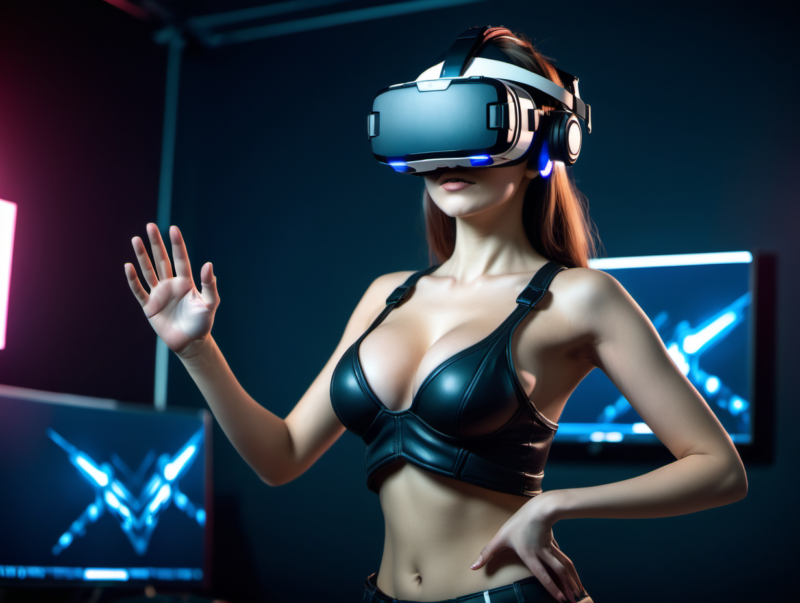
A free‑roam virtual‑reality arena is a physical space that has been transformed into an immersive playground where participants can move unhindered while wearing head‑mounted displays (HMDs). Unlike seated or tabletop VR experiences, the arena removes the tether of a stationary chair or desk. The floor is instrumented with motion‑capture cameras, infrared sensors, or lidar arrays that continuously track the exact position and orientation of each headset and handheld controller. The data is fed in real time to a powerful graphics engine, which renders a virtual environment that responds to the user’s every step, turn, and gesture.
Because the arena is built to be safe for unrestricted movement, walls are padded, obstacles are clearly marked, and the floor is often a low‑friction material that reduces the risk of slipping. Some venues incorporate haptic floor panels, scent diffusers, and directional speakers to deepen the sense of presence. The result is a seamless blend of the physical and digital worlds: users can duck behind a virtual wall, climb a virtual mountain, or collaborate with teammates on a shared mission while still feeling the solid ground beneath their feet.
Free‑roam arenas have moved beyond niche arcades to become destinations for entertainment, education, team building, and research. Their scalability—ranging from compact rooms that host a handful of players to warehouse‑sized spaces that accommodate dozens—makes them a versatile tool for a growing list of applications.
The design possibilities inside a free‑roam arena are limited only by imagination and processing power. Below are some of the most popular categories of scenarios that developers and venue operators offer:
Adventure Quest Worlds – Players embark on narrative‑driven missions that combine puzzle solving, combat, and exploration. Classic fantasy settings, sci‑fi star‑ships, or mythic jungles are recreated with high‑resolution assets and dynamic lighting, encouraging participants to physically traverse the terrain as they would in a real adventure.
Escape Rooms – The traditional escape‑room formula is amplified by the ability to hide clues in three‑dimensional space. Teams must locate virtual keys, decode holographic symbols, and manipulate virtual mechanisms while sprinting, crawling, or leaping across the arena. The time pressure feels more visceral because players can actually run from one puzzle to the next.
Sports Simulations – From VR basketball courts to futuristic zero‑gravity racetracks, free‑roam arenas let athletes practice skills in a safe, repeatable environment. Motion‑tracking ensures that swings, throws, and footwork are captured accurately, providing realistic feedback and performance metrics.
Educational Expeditions – Field trips to the International Space Station, the depths of the Mariana Trench, or the interior of a human heart become possible without leaving the city. Students walk through scale models, interact with scientific data overlays, and collaborate on problem‑solving tasks that reinforce classroom concepts.
Creative Studios – Artists and designers can sculpt, paint, and model in a three‑dimensional workspace that mirrors their physical movements. The ability to walk around a sculpture while shaping it, or to step inside a virtual gallery to arrange installations, opens new pathways for creative expression.
Hybrid Live Events – Concerts, theater productions, and interactive storytelling performances can integrate free‑roam VR to let audience members move through the set, choose their own viewpoint, or even become part of the narrative.
These scenarios often blend multiple genres—an educational escape room might teach chemistry while requiring participants to solve a series of riddles that involve mixing virtual compounds. The fluid nature of free‑roam technology means that updates, seasonal themes, and custom experiences can be rolled out quickly, keeping the venue fresh for repeat visitors.
The demographic profile of free‑roam VR participants is remarkably diverse. Early adopters were predominantly tech‑savvy adults seeking cutting‑edge entertainment. However, as the technology has matured and costs have decreased, a broader audience has emerged.
Teenagers and Young Adults – For this group, the social aspect is a major draw. Multiplayer battle arenas and cooperative puzzles provide a platform for friends to compete and collaborate in ways that feel more physical than conventional online gaming.
Families – Parents appreciate the safe, supervised environment that allows children to experience immersive digital content without the risk of tripping over cords or colliding with furniture at home. Family‑oriented adventures often feature cartoonish aesthetics and gentle difficulty curves, making them accessible to a wide age range.
Corporate Teams – Companies use the arenas for team‑building exercises, leadership training, and innovation workshops. The shared physicality of the experience forces participants to communicate clearly, delegate tasks, and adapt to rapidly changing virtual conditions.
Educators and Students – Schools and universities incorporate free‑roam VR into curricula for STEM subjects, language learning, and history. The hands‑on nature of the medium helps cement abstract concepts through embodied cognition.
Researchers and Clinicians – Scientists studying perception, motor control, and rehabilitation frequently conduct experiments in free‑roam settings because they can precisely monitor movement while exposing participants to richly controlled stimuli.
Senior Citizens – Some community centers have introduced gentle, low‑impact scenarios—such as virtual garden walks or reminiscence tours of historic neighborhoods—to promote physical activity, cognitive engagement, and social interaction among older adults.
The inclusive design of many arenas—adjustable headset straps, wheelchair‑compatible pathways, and multiple difficulty levels—ensures that people with varying physical abilities can participate, further expanding the user base.
When children step into a free‑roam arena, they encounter a blend of play and pedagogy that is difficult to replicate on a flat screen. Safety is the foundational concern. Venues typically enforce a strict age minimum (often four years) and require that a guardian remain on‑site. The equipment is sanitized between sessions, and headsets are calibrated to accommodate smaller head shapes. Motion‑capture zones are clearly delineated, and soft barriers prevent accidental collisions.
From an educational standpoint, immersive experiences tap into the natural curiosity of children. A scenario that lets kids “shrink” to explore the inside of a beehive can teach biology concepts while they physically move from flower to flower. Similarly, a virtual city-building game where participants lay roads, construct buildings, and manage resources helps develop spatial reasoning and strategic planning skills. Because the learning is embodied—children must physically reach for objects, walk along virtual streets, and manipulate tools—the retention of information is often higher than with textbook‑only instruction.
The fun factor is amplified by the sense of agency that VR provides. Children can become superheroes, explorers, or inventors with a simple gesture. The instant feedback loop—seeing the result of a movement in a vivid digital world—keeps them engaged for longer periods. Moreover, multiplayer modes encourage cooperative play, teaching negotiation, turn‑taking, and empathy in a low‑stakes environment.
A birthday celebration in a free‑roam arena transforms a routine cake‑cutting into an unforgettable adventure. Packages often include a themed storyline—pirates hunting for treasure, space cadets defending a galaxy, or detectives solving a mystery—tailored to the birthday child’s interests. The venue staff handle setup, safety briefings, and clean‑up, allowing parents to relax and enjoy the spectacle. Photographs and video highlights can be captured from within the virtual world, providing a unique keepsake that combines real‑world smiles with digital avatars.
Graduates seeking a non‑traditional rite of passage are turning to free‑roam VR to mark the transition from student life to the professional world. A ceremony might feature a virtual auditorium where avatars walk across a digital stage, receive a holographic diploma, and then embark on a celebratory “future‑city” exploration that symbolizes career possibilities. The immersive format allows alumni from different campuses to attend simultaneously, fostering a sense of community despite physical distance.
Companies looking to differentiate their annual gatherings are booking arenas for immersive galas and workshops. A corporate party can blend entertainment—such as a VR concert with synchronized lighting and sound—with branded experiences that showcase a product line in a futuristic showroom. For team‑building, facilitators design custom scenarios that mirror business challenges: crisis‑management simulations where teams must coordinate resource allocation, or design‑thinking challenges where participants prototype solutions in a virtual sandbox. The physical movement required encourages participants to break out of sedentary habits, promoting wellness alongside collaboration.
The flexibility of free‑roam VR also means that events can be scaled up or down on short notice. A venue can host a 30‑person birthday party in a single room and, within the same day, reconfigure the space for a 150‑person corporate gala by swapping out visual assets and adjusting the lighting schema.
Academic researchers and industry analysts recognize free‑roam VR as a disruptive technology with implications that extend beyond entertainment. From a scientific perspective, the ability to capture high‑resolution motion data in a controlled yet naturalistic environment enables new studies of human behavior. Neuroscientists can investigate how the brain integrates visual, vestibular, and proprioceptive cues when navigating complex virtual spaces, shedding light on spatial memory and navigation disorders. Rehabilitation specialists view free‑roam VR as a therapeutic platform that can motivate patients to perform repetitive movements—such as reaching or stepping—by embedding them in goal‑oriented game scenarios, potentially accelerating recovery after stroke or injury.
Industry experts highlight the economic potential of the sector. Market analysts project that the global free‑roam VR market will experience double‑digit growth over the next decade, driven by falling hardware costs, advances in graphics rendering, and the proliferation of location‑based entertainment chains. They also point to the convergence of free‑roam technology with other emerging trends—such as 5G low‑latency streaming, AI‑generated procedural content, and biometric feedback—to create hyper‑personalized experiences that adapt in real time to a participant’s physiological state.
Critics, however, caution about the challenges that still need to be addressed. The high upfront investment required for arena infrastructure, the need for ongoing maintenance of sophisticated tracking systems, and concerns about motion‑sickness in certain users are cited as barriers to wider adoption. Moreover, privacy advocates emphasize that the extensive data collection inherent to free‑roam environments—precise body movements, gaze direction, and even biometric signals—must be handled with transparent consent mechanisms and robust security protocols.
Overall, the consensus among scholars and professionals is optimistic but measured. Free‑roam VR is seen as a fertile ground for interdisciplinary collaboration, where engineers, designers, psychologists, and business leaders can converge to push the boundaries of what immersive experiences can achieve.
As technology continues to advance, several trends are poised to shape the next generation of free‑roam arenas:
Hybrid Physical‑Digital Spaces – Integration of physical props—such as modular walls, movable platforms, and tactile objects—will blur the line between virtual and real, allowing users to feel the weight and texture of simulated items.
AI‑Driven Content Generation – Machine‑learning algorithms will enable on‑the‑fly creation of environments that respond to user behavior, yielding endless variations and reducing the need for handcrafted assets.
Wearable Haptics and Biofeedback – Lightweight haptic suits and biometric sensors will convey sensations like impact, temperature, or heart‑rate fluctuations, deepening immersion and providing valuable data for health‑focused applications.
Networked Multi‑Venue Experiences – Low‑latency networking will allow participants in different physical locations to share a single virtual world, opening possibilities for global tournaments, remote collaboration, and distributed education.
Sustainability Focus – Operators are exploring energy‑efficient lighting, renewable power sources, and recyclable hardware to reduce the environmental footprint of large‑scale venues.
These developments promise to make free‑roam VR more accessible, versatile, and socially relevant. Whether it is a child exploring the solar system for the first time, a team of engineers prototyping a new product in a simulated factory, or a researcher measuring the subtleties of human motion, the free‑roam arena stands as a dynamic stage where imagination meets physical reality.
Free‑roam virtual‑reality arenas have evolved from novelty attractions into multifaceted platforms that serve entertainment, education, corporate, and scientific communities. By freeing participants from the constraints of a chair or desk, these spaces enable genuine bodily interaction with richly rendered digital worlds. The variety of scenarios—adventure quests, escape rooms, sports simulations, educational expeditions, and creative studios—caters to a broad spectrum of interests and ages.
Children benefit from safe, engaging experiences that blend fun with learning, while families, corporations, and event planners discover novel ways to celebrate milestones and foster collaboration. Researchers and industry experts recognize the profound implications for studying human behavior, advancing rehabilitation, and driving economic growth, even as they caution about cost, health, and privacy considerations.
Looking ahead, advances in AI, haptics, networking, and sustainability will expand the possibilities of free‑roam VR, making it an even more integral part of the cultural and technological fabric. As the line between the physical and digital continues to dissolve, the free‑roam arena stands ready to be the next frontier where imagination can truly run free.


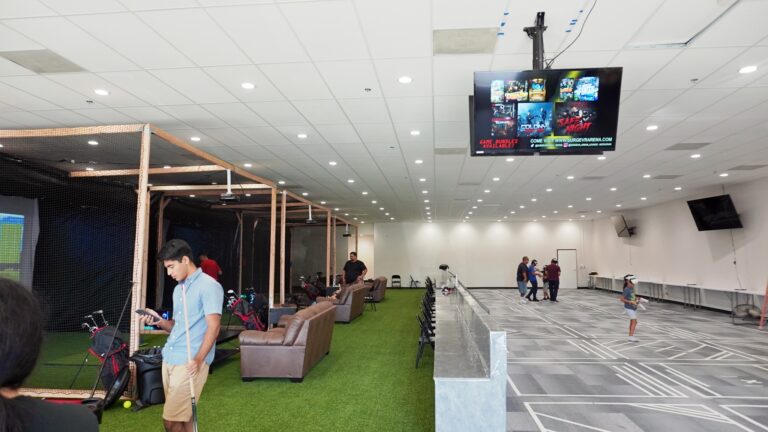
 4794 Manzanita Ave #2, Carmichael, CA 95608, United States
