
 El Monte
 Log in
Log in
Log in

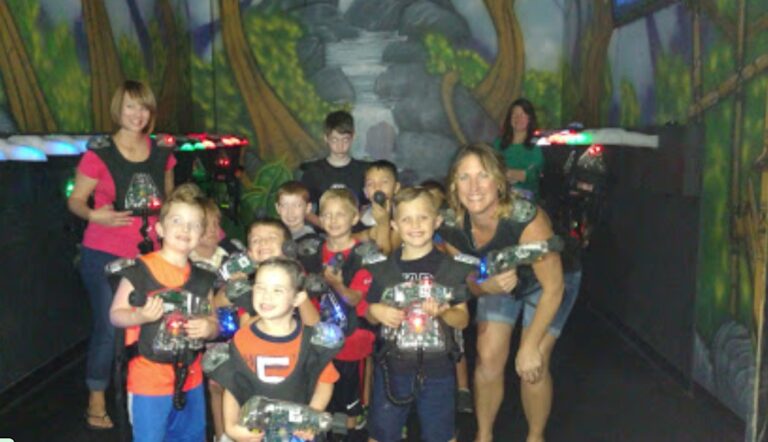
Tilt Studio Southern Hills is located inside the Southern Hills Mall in Sioux City, Iowa.
The venue offers a wide range of indoor attractions including a black light alien-themed laser tag arena, a high-tech laser maze called Laser Frenzy, two black light mini golf courses (Mori’s Galactic Golf and Putter Pirates), Spin and Flip Zone bumper cars, mini bowling lanes, and over 150 arcade and video games. Guests use a reloadable Play Card system to access games and attractions, and admission to the facility is free.
Beyond the games, Tilt Studio Southern Hills provides private party rooms for birthdays, corporate events, fundraisers, and group gatherings of all sizes. A full snack bar and restaurant serves pizza, nachos, and other refreshments. The staff includes dedicated party hosts who handle setup, cleanup, and activity coordination. The facility also features lounge areas, sanitizing stations throughout, and flexible event packages that can be customized to fit different budgets and group sizes.
 Indoors
Laser tag has become a popular recreational activity, especially in cities like Sioux City, Iowa. It is a game that involves participants using laser guns to tag opponents in an outdoor or indoor arena. This futuristic and adrenaline-pumping game has gained a huge following for its thrill and excitement.
Sioux City, Iowa offers a wide variety of locations where one can experience the thrill of playing laser tag. Whether it’s a birthday party, team building event, or just a day out with friends and family, laser tag is the go-to activity. From abandoned warehouses to high-tech arenas, there is a perfect location for everyone.

Laser tag is a fast‑paced, team‑oriented activity that blends technology, sport, and imagination. Participants wear lightweight vests equipped with infrared sensors and wield hand‑held “phasers” that emit invisible infrared beams. When a beam strikes an opponent’s sensor, the vest registers a hit and records the score. The game is usually timed, and points are awarded for each successful hit while penalties may be applied for friendly fire or stepping outside the designated arena. Because the equipment relies on infrared rather than actual projectiles, the experience is safe, silent, and suitable for a wide age range. Modern laser‑tag systems often integrate sophisticated software that can track individual performance, display real‑time leaderboards, and even alter the arena’s lighting and soundscape to create immersive environments.
The versatility of laser‑tag technology means that the game can be customized to fit virtually any narrative or objective. Some of the most popular scenarios include:
Each scenario can be further refined by adjusting variables such as hit sensitivity, respawn times, and arena obstacles. The result is a dynamic experience that can be reset in minutes, keeping repeat play‑throughs fresh and engaging.
Beyond the sheer fun factor, laser tag offers a suite of physical, mental, and social advantages that appeal to educators, health professionals, and corporate wellness coordinators alike.
The game demands constant movement—running, ducking, crouching, and sprinting across the arena. This cardio‑intensive activity improves aerobic fitness, burns calories, and enhances agility without the impact forces associated with traditional contact sports.
Successful play relies on rapid information processing, spatial awareness, and tactical planning. Players must assess threats, calculate angles of attack, and anticipate opponents’ moves, thereby sharpening problem‑solving abilities and hand‑eye coordination.
Most laser‑tag scenarios are team‑oriented, requiring participants to coordinate strategies, delegate roles, and communicate effectively under pressure. These collaborative skills translate directly to classroom projects and workplace environments.
The low‑risk nature of the game allows players to experience both victory and defeat in a supportive setting. Learning to handle setbacks, manage stress, and maintain focus encourages emotional regulation and a growth‑mindset attitude.
Because the equipment is non‑lethal and the rules can be adapted, laser tag accommodates a broad spectrum of ages, fitness levels, and physical abilities. Modified modes can be created for individuals with mobility challenges, ensuring that everyone can participate.
Researchers in the fields of kinesiology, psychology, and human‑computer interaction have taken a growing interest in laser tag as a platform for studying physical‑cognitive integration. Studies have demonstrated that participants experience measurable increases in heart rate and oxygen consumption comparable to moderate‑intensity sports, while also showing heightened activation in brain regions associated with spatial navigation and decision making.
Industry experts in entertainment technology emphasize laser tag’s role as a bridge between traditional physical recreation and emerging immersive experiences such as virtual reality (VR) and augmented reality (AR). By integrating RFID tagging, real‑time data analytics, and adaptive lighting, modern laser‑tag systems can deliver personalized feedback, gamify fitness goals, and even support remote multiplayer competitions. This convergence is seen as a key driver for the next generation of “phygital” (physical + digital) entertainment venues.
Laser tag’s universal appeal cuts across demographics, but distinct player groups have emerged based on motivations and settings.
Children and teenagers are drawn to the adventure and competition. Many schools incorporate laser tag into physical‑education curricula to fulfill activity requirements while teaching teamwork and strategic thinking.
Parents often select laser tag as a safe, active alternative to screen‑time for family outings. The equipment’s non‑violent nature and straightforward rules make it an ideal choice for mixed‑age groups.
Young adults and college students enjoy laser tag for its adrenaline‑rich, competitive atmosphere. Some venues host leagues and tournaments that attract serious players who track performance metrics and refine tactics.
Businesses use laser tag as a team‑building exercise. The game’s emphasis on communication, leadership, and quick decision‑making mirrors many workplace challenges, making it a popular choice for corporate retreats and training days.
When organizing a laser‑tag session for children, safety and accessibility take precedence. Most venues provide age‑appropriate equipment with adjustable sensor sensitivity to prevent overwhelming younger players. Game lengths are typically shortened to match attention spans, and scenarios are simplified—often focusing on “tag‑the‑monster” or “rescue the treasure” narratives that spark imagination without requiring complex strategic planning.
Because laser tag encourages physical movement, it serves as an engaging way for kids to meet recommended daily activity levels. Moreover, the immediate feedback from the vest’s hit indicator helps children understand cause‑and‑effect relationships, reinforcing concepts of responsibility and sportsmanship.
Laser tag offers a hassle‑free, high‑energy alternative to conventional party games. Packages often include private arena access, themed decorations, and customized mission briefs that align with the birthday child’s interests—whether that’s a superhero showdown or a space‑explorer quest. The structured yet flexible format minimizes the need for adult supervision while delivering an unforgettable experience.
For high school or college graduates, laser tag can serve as a symbolic rite of passage—transitioning from structured academics to the competitive landscape of the professional world. Organizers can design missions that reflect milestones such as “collect the diploma” or “navigate the job market,” adding a playful layer of meaning to the celebration.
In a corporate setting, laser tag functions as an interactive ice‑breaker and morale booster. Companies can tailor scenarios to mirror business objectives—e.g., “secure the client” or “neutralize the competitor”—thereby reinforcing core values while fostering camaraderie. Post‑game debriefs allow teams to reflect on communication styles, leadership decisions, and collaborative tactics, turning entertainment into a measurable development tool.
Laser‑tag facilities fall into two broad categories, each offering unique advantages.
Purpose‑built indoor venues provide controlled lighting, sound effects, and elaborate obstacle courses. The enclosed environment ensures consistent sensor performance and allows for complex thematic setups—such as sci‑fi corridors, jungle ruins, or cyber‑punk cityscapes. These arenas are especially popular in urban areas where space is limited and weather conditions are unpredictable.
Outdoor laser‑tag expands the playground to parks, forests, and even abandoned industrial sites. Natural terrain adds an extra tactical dimension; trees, hills, and structures become organic cover, and daylight can be manipulated with portable blackout canopies and battery‑powered lighting rigs. Outdoor play is ideal for large groups and events that seek a more expansive, adventurous feel.
Both indoor and outdoor options can be customized for private bookings, allowing organizers to control the layout, music, and lighting to suit the occasion. Many providers also offer mobile laser‑tag kits that can be set up in schools, community centers, or corporate campuses, bringing the experience directly to the participants.
Laser tag has evolved from a novelty arcade attraction into a versatile, technology‑driven activity that serves recreational, educational, and professional purposes. Its core mechanics—non‑lethal infrared tagging, real‑time scoring, and adaptable scenarios—provide a foundation for endless creativity. The health benefits, cognitive challenges, and social skills cultivated through gameplay have attracted the attention of scientists and industry leaders alike, who see laser tag as a fertile ground for research and innovation in immersive entertainment.
Whether it is a child’s birthday, a graduate’s farewell, or a corporate team‑building day, laser tag delivers an engaging mix of physical exertion, strategic thinking, and collaborative fun. With a growing network of indoor arenas, outdoor fields, and mobile setups, the game is increasingly accessible to diverse audiences worldwide. As technology continues to merge the physical and digital realms, laser tag stands poised to remain a staple of modern recreation—inviting participants of all ages to step into the arena, aim their phasers, and experience the thrill of the chase.


 Sioux City, IA 51106, United States