
 El Monte
 Log in
Log in
Log in

Sorry. We don’t know any paintball locations in this city yet
Paintball, the popular recreational sport that has been gaining quite a following in recent years, is not just a game but a thrilling experience that brings people together. It is an exciting game of strategy, teamwork, and adrenaline rush that involves firing small balls of paint at opponents. This globally recognized sport has made its way to Sioux City, IA and there are numerous locations where people can engage in this exhilarating activity.
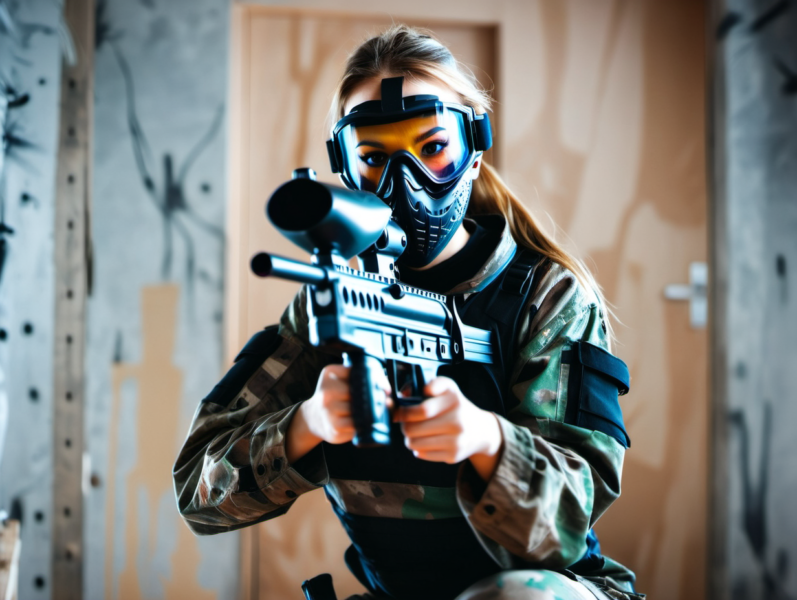
Paintball is a fast‑paced, team‑oriented sport in which participants fire small, gelatin‑filled capsules—commonly called “paintballs”—from pneumatic or electropneumatic markers. The projectiles burst on impact, leaving a vivid mark that signals a hit. Modern paintball markers resemble compact rifles or pistols, but they operate on compressed air or CO₂ rather than gunpowder. The game can be played on a variety of terrain, from dense forested fields to purpose‑built indoor arenas, and it can be adapted to a wide spectrum of ages and skill levels. At its core, paintball is a blend of tactical decision‑making, physical agility, and the simple thrill of “hit‑or‑miss” competition.
Although local venues may tweak regulations to suit their specific layout, most paintball fields adhere to a universal set of rules designed to keep the game safe, fair, and enjoyable:
Protective Gear Must Be Worn – A full‑face mask (or visor) that meets ASTM F1492 standards is mandatory for every player. In addition, most fields require chest protectors, padded gloves, and appropriate footwear.
Velocity Limits – Paintballs are typically limited to 280–300 feet per second (fps) when measured at the muzzle. This cap reduces the risk of serious injury while still allowing for accurate shots at typical playing distances.
Marker and Paintball Standards – Markers must be inspected before each session to confirm they fire within the allowed velocity range. Paintballs must be of the correct diameter (approximately .68 inches) and free of cracks or dents that could cause a barrel jam.
Hit Confirmation – A player is eliminated when a paintball visibly breaks on any part of the body or clothing that is not covered by protective gear. Some venues use “tagging” rules that allow a hit to be called if a paintball lands on a teammate’s mask or a protected area and the player acknowledges the hit.
No Physical Contact – Paintball is a non‑contact sport. Pushing, shoving, or tackling opponents is prohibited and can result in immediate disqualification.
Safe Shooting Zones – Players must never shoot into areas that are not designated as playing fields, such as parking lots, spectator zones, or adjacent properties.
Barrel Safety – The barrel of a marker must be covered with a barrel sock or a safety screen when the gun is not in active play. This prevents accidental discharges and reduces the chance of stray paintballs leaving the field.
Respect the Referee – Field officials have final authority on rule interpretation, penalties, and game stoppages. Their decisions are to be respected at all times.
These foundational rules create a consistent framework that allows participants to focus on strategy and fun, rather than worrying about safety ambiguities.
A key attraction of paintball is the sheer variety of scenarios that can be staged. While “capture the flag” remains a classic staple, modern fields offer a menu of immersive experiences that cater to different group sizes, objectives, and narrative preferences.
Two teams compete to infiltrate the opponent’s base, seize a flag, and return it safely to their own territory. The scenario emphasizes speed, coordination, and the ability to read the enemy’s defensive patterns.
All players start on equal footing; the goal is simple—avoid being hit. The last surviving participant, or team, wins. This format stresses individual awareness and quick reflexes, making it popular for short, high‑intensity matches.
These games adopt a storyline—such as a rescue mission, hostage extraction, or insurgent suppression—and often incorporate props, objectives, and “mission‑critical” equipment that must be secured or destroyed. MilSim events can last several hours and may involve multiple waves of objectives, mirroring real‑world tactical operations.
A small “infected” group starts as zombies, while the rest of the players are survivors. The infected attempt to tag survivors, converting them into additional zombies. The game continues until either all survivors are eliminated or a safe zone is held for a predetermined time.
A central area of the field is designated as the “hill.” Teams fight to maintain control of this zone for as long as possible, earning points for each minute held. The focus is on defensive positioning and coordinated assaults.
Each scenario brings its own strategic considerations: line‑of‑sight management, resource allocation (e.g., limited air tanks), and role specialization (sniper, support, assault). The diversity keeps the sport fresh and allows players to explore multiple tactical mindsets.
Beyond recreation, paintball offers a suite of benefits that extend into physical health, mental development, and even professional skill building.
Physical Fitness – Running, crouching, diving, and quick directional changes provide a full‑body cardiovascular workout. Players often cover several miles in a single match, enhancing stamina and agility.
Teamwork & Communication – Successful teams rely on clear, concise communication and shared situational awareness. Players learn to convey information rapidly under pressure—a skill that translates directly to workplace environments.
Strategic Thinking – Scenario‑based play forces participants to assess terrain, predict opponent moves, and allocate limited resources (e.g., air, ammunition). This nurtures problem‑solving abilities and adaptive thinking.
Stress Relief – The intense, yet controlled, environment of a paintball match offers an outlet for adrenaline release, helping participants unwind and experience cathartic excitement.
Confidence Building – Overcoming fear of getting “hit” and mastering marker handling can boost self‑esteem, especially for newcomers who initially feel apprehensive.
Social Bonding – Whether played with friends, corporate teams, or organized clubs, paintball creates shared memories that strengthen interpersonal connections.
Skill Transfer – For law‑enforcement, military, and security personnel, paintball serves as a low‑risk training platform to practice tactical movement, cover usage, and team coordination in a realistic yet safe setting.
These multifaceted advantages explain why paintball remains popular across diverse demographic groups and why it is often incorporated into team‑building curricula.
Paintball attracts a surprisingly broad audience, spanning age, occupation, and geographic location.
Youth and Teens – Many high schools and community centers organize introductory sessions, using paintball as an engaging way to teach responsibility and teamwork.
College Students – Campus clubs host regular games, fostering camaraderie and offering a competitive outlet that complements academic life.
Corporate Teams – Companies book private fields for team‑building retreats, leveraging the sport’s focus on communication and strategic planning to enhance workplace dynamics.
Military and Law‑Enforcement Professionals – As a realistic tactical exercise, paintball helps sharpen decision‑making, cover navigation, and unit cohesion without the hazards of live ammunition.
Families and Recreational Groups – Many venues provide “family day” packages with lower‑velocity markers and beginner-friendly scenarios, making paintball an inclusive activity for parents and children alike.
Competitive Athletes – A growing professional circuit—complete with leagues, sponsors, and televised events—draws dedicated players who train rigorously, similar to traditional sports.
The sport’s versatility—offering both casual “pay‑as‑you‑go” sessions and highly competitive leagues—ensures that anyone seeking an active, strategic pastime can find a suitable entry point.
Research on paintball’s impact is relatively limited, but existing studies and expert commentary converge on several key observations.
Safety Profile – Ballistics experts confirm that the velocity caps (typically under 300 fps) and the gel‑based projectile design keep the risk of serious injury low when proper protective gear is worn. The majority of reported injuries are minor bruises or eye irritation caused by insufficient mask usage.
Physiological Benefits – Exercise physiologists note that a typical 30‑minute match can elevate heart rate to 150‑170 beats per minute, comparable to high‑intensity interval training (HIIT). The intermittent sprint‑rest pattern promotes both aerobic and anaerobic conditioning.
Cognitive Load – Cognitive psychologists studying fast‑paced team games highlight paintball’s ability to enhance working memory and rapid decision‑making. Players must process visual cues, maintain situational awareness, and execute tactical commands within seconds.
Social Dynamics – Sociologists point out that paintball’s structured rules and shared objectives create a “temporary social micro‑culture” that encourages trust and cooperation among participants who might not otherwise interact.
Industry Growth – Market analysts project steady growth in the global paintball market, driven by rising interest in outdoor recreation, increased corporate team‑building budgets, and expanding indoor arena networks in urban centers.
Overall, the consensus among scientists and industry professionals is that, when played responsibly, paintball offers measurable physical and mental benefits while maintaining a strong safety record.
Choosing the right venue hinges on climate, preferred game style, and logistical considerations. Both outdoor fields and indoor arenas present distinct advantages.
Outdoor sites are typically set in wooded areas, open fields, or abandoned industrial complexes. They excel at providing natural cover—trees, bunkers, and uneven terrain—that adds realism to tactical scenarios. Seasonal weather can be a factor; many fields operate from spring through fall, with some offering heated shelters or night‑time “dark paintball” matches that use glow‑in‑the‑dark paintballs and infrared markers.
Key features of outdoor venues often include:
Indoor arenas bring paintball to urban environments where weather constraints would otherwise limit play. These facilities use inflatable bunkers, modular walls, and painted backdrops to construct tight, fast‑paced arenas. Because the environment is controlled, indoor venues can operate year‑round and often host league play and corporate events.
Advantages of indoor play include:
Many modern paintball centers blend both experiences, offering an outdoor field for weekend scenarios and an indoor arena for weekday league nights. Prospective players are encouraged to research local venues, read reviews regarding safety standards and equipment quality, and consider the type of gameplay that best matches their interests.
Paintball has evolved from a backyard novelty into a sophisticated sport that balances physical exertion, strategic depth, and social interaction. Understanding its fundamentals—what the game entails, how it is regulated, the variety of scenarios, its broader benefits, the diversity of its participants, expert perspectives, and venue options—provides a comprehensive picture of why paintball continues to captivate enthusiasts worldwide. Whether approached as a casual outing, a corporate team‑building tool, or a competitive pursuit, paintball offers an engaging arena where skill, teamwork, and a splash of colorful fun intersect.


