El Monte
 Log in
Log in
Log in

Planet Lazer Richmond Outdoor Paintball is located in Richmond, BC.
Guests can enjoy a variety of services, including laser tag games for casual play, competitive team challenges, and special packages tailored for celebrations. The arenas are spacious and thoughtfully designed, ensuring both fast-paced action and safe gameplay for players of different ages and skill levels. Experienced staff provide full support, from gear fitting and safety instructions to coordinating games and assisting during events, ensuring a smooth and enjoyable experience for everyone.
Planet Lazer Richmond is an ideal venue for a wide range of events. Children’s birthday parties are especially popular, offering structured games, party areas, and organized activities that keep young players engaged and entertained.
 Indoors
Planet Lazer Westminster Outdoor Paintball is located in New Westminster, BC.
Planet Lazer Westminster is a popular laser tag venue located in New Westminster, BC, offering a thrilling and interactive gaming experience for players of all ages. With a range of game modes and spacious arenas, it is a sought-after destination for family outings, birthday parties, and group events, providing a fun and exciting atmosphere for all who visit.
IndoorsLaserdome Plus Indoor Center is located in North Vancouver, BC.
Laserdome Plus, located in North Vancouver, BC, offers an exciting blend of laser tag, arcade games, and virtual reality experiences for all ages. With state-of-the-art laser tag arenas featuring special effects, music, and lighting, players can immerse themselves in a thrilling futuristic battle. The arcade area boasts an extensive selection of classic and modern games, including simulators, racing games, and redemption games. Additionally, Laserdome Plus offers virtual reality experiences, allowing guests to explore new worlds and dimensions through cutting-edge technology. Whether you’re looking for a fun night out with friends, a family activity, or a unique corporate event venue, Laserdome Plus has got you covered.
IndoorsLaser tag is a fast‑moving, team‑oriented game that simulates combat using infrared technology instead of paintballs or real ammunition. Players wear lightweight vests or harnesses equipped with infrared receivers and carry handheld “phasers” that emit a low‑power infrared beam. When a beam strikes a sensor, the vest registers a hit, typically flashing a light and subtracting points from the player’s score. Unlike traditional air‑soft or paintball, laser tag produces no mess, requires minimal protective gear, and can be played in a wide variety of environments—from darkened indoor arenas packed with obstacles to open‑air forests and abandoned warehouses. The core premise is simple: evade opponents, tag their sensors, and complete mission objectives while staying within the rules set by the arena or the game master.
The versatility of infrared technology allows organizers to craft a multitude of scenarios that keep the experience fresh for repeat players.
Classic Team Deathmatch – Two squads compete to achieve the highest number of hits within a set time limit. The arena’s layout is designed to encourage flanking, ambushes, and strategic positioning.
Capture the Flag – Each team protects a “flag” (often a small, illuminated beacon) while attempting to infiltrate the opponent’s territory and retrieve the enemy flag. Successful retrieval earns extra points, but players must survive long enough to bring the flag back to base.
Hostage Rescue – One side assumes the role of “terrorists” guarding a hostage, while the opposing team works to locate and “rescue” the captive. The game may incorporate timed puzzles or sensor‑triggered doors that add a tactical layer beyond pure shooting.
Zombie Apocalypse – A handful of “infected” players start as zombies; when a regular player is tagged, they become a zombie as well. The remaining humans must survive until the clock runs out, encouraging cooperation and swift movement.
Mission‑Based Storylines – Some venues program narrative arcs with multiple objectives, such as deactivating a “bomb” by hitting a series of sensors in a specific order, or gathering intel hidden throughout the arena. These story‑driven games can last 20‑30 minutes and feel more like an interactive adventure than a simple shoot‑out.
The modular nature of laser‑tag software lets operators mix and match elements—time limits, scoring multipliers, power‑up zones—to keep each session unique, ensuring that groups of friends, families, or corporate teams never experience the same run twice.
Beyond the obvious excitement, laser tag offers a suite of physical, mental, and social advantages that are increasingly recognised by educators, health professionals, and workplace trainers.
Cardiovascular Exercise – A typical 15‑minute bout of high‑intensity laser tag can burn between 200‑300 calories, comparable to a brisk jog. Players constantly sprint, duck, and pivot, providing a full‑body workout without the monotony of a treadmill.
Improved Hand‑Eye Coordination – Successful tagging relies on precise aim, timing, and rapid decision‑making. Regular play sharpens the neural pathways responsible for tracking moving targets and reacting in split‑seconds, skills that translate to sports and everyday activities.
Strategic Thinking and Spatial Awareness – Most scenarios demand quick tactical planning: evaluating cover, predicting opponent movement, and managing limited resources such as “power‑ups” or extra lives. Players develop a mental map of the arena, learning to navigate three‑dimensional spaces efficiently.
Teamwork and Communication – Whether in a family group or a corporate delegation, laser tag forces participants to share information, assign roles, and adapt plans on the fly. The fast‑paced nature of the game amplifies the impact of clear, concise communication.
Stress Relief and Mood Boost – Physical exertion triggers the release of endorphins, while the playful, competitive environment provides a natural outlet for pent‑up tension. Many players report feeling more energized and happier after a session.
Inclusivity and Safety – Because the equipment is non‑lethal and the arena is designed to minimise hazards, laser tag is accessible to a wide range of ages and physical abilities. The lack of projectile impact eliminates the risk of bruises or injuries common to paintball or air‑soft.
Research into active video‑gaming experiences, including laser tag, has grown alongside the popularity of “exergaming.” Sports‑science laboratories have examined physiological responses during simulated combat. Studies consistently show that laser tag can elevate heart rate to 70‑85 % of an individual’s maximum, placing the activity firmly in the moderate‑to‑vigorous intensity zone recommended for cardiovascular health.
Neuroscientists point out that the rapid visual‑motor integration required in laser tag stimulates the brain’s dorsal visual stream, the pathway responsible for motion perception and spatial orientation. Repeated exposure can strengthen these neural circuits, potentially enhancing skills such as driving, athletics, and even certain occupational tasks that require quick situational assessment.
From an industry perspective, market analysts note that laser‑tag venues have diversified revenue streams by integrating augmented‑reality overlays, mobile‑app score tracking, and corporate team‑building packages. Experts argue that the blend of physical activity with gamified objectives aligns with current consumer demand for experiences that combine fitness with entertainment, a trend that is expected to sustain growth for the next decade.
The demographic spread of laser‑tag participants is remarkably broad.
Kids and Adolescents – For younger players, laser tag serves as a safe introduction to tactical games. Schools often use it in physical‑education curricula to encourage teamwork and active play.
Young Adults – College students and recent graduates gravitate toward laser tag for social outings, birthday celebrations, or as a low‑cost alternative to arcade gaming.
Corporate Professionals – Companies incorporate laser tag into leadership‑development programs, using the competitive environment to assess decision‑making under pressure and to foster cross‑departmental collaboration.
Senior Citizens – Some community centers offer specially‑designed low‑impact laser‑tag sessions that promote gentle movement and mental stimulation for older adults.
Overall, the activity’s low barrier to entry and adaptable difficulty levels make it attractive to virtually any age group seeking a blend of fun and fitness.
When children are the primary participants, laser‑tag venues often customise the experience to suit developmental needs. Sessions are shortened to 10‑15 minutes, and equipment is lighter with larger, easily readable displays. Many arenas incorporate cartoon‑themed storylines—such as “Space Rescue” or “Jungle Quest”—that capture imaginations while teaching basic concepts like cooperation, rule‑following, and sportsmanship. Parents appreciate the hygienic nature of infrared play, which eliminates the mess of paint‑splatter and the need for extensive protective gear. Additionally, the activity can be paired with educational workshops that discuss topics ranging from physics (how infrared works) to digital safety (team communication etiquette).
A laser‑tag birthday party offers a memorable alternative to traditional cake‑and‑games celebrations. Packages typically include a private arena session, a designated party host, and optional add‑ons such as themed decorations, custom playlists, and photo booths that capture the action. Because the game is inherently team‑based, birthdays often become collaborative quests where the celebrant leads a squad to victory, reinforcing a sense of agency and pride.
Graduates looking for a dynamic way to mark the transition from school to the next chapter often choose laser tag as a bonding activity. Whether it’s a high‑school senior class or a university cohort, the shared experience of strategising, cheering each other on, and celebrating victories creates lasting memories. Many venues offer “graduation bundles” that combine multiple rounds, a catered snack bar, and a trophy ceremony, turning the event into a mini‑tournament.
Corporate groups leverage laser tag for both celebration and skill development. Companies can book an entire arena for a “strategic showdown” that mirrors business challenges: resource allocation, risk assessment, and rapid decision‑making. Facilitators may incorporate debrief sessions after gameplay, where participants discuss tactics, reflect on communication styles, and extract lessons applicable to the workplace. The high‑energy environment also serves as a morale booster, helping employees unwind while strengthening interdepartmental relationships.
Laser‑tag facilities have proliferated across urban and suburban landscapes, offering both controlled indoor arenas and adventurous outdoor fields.
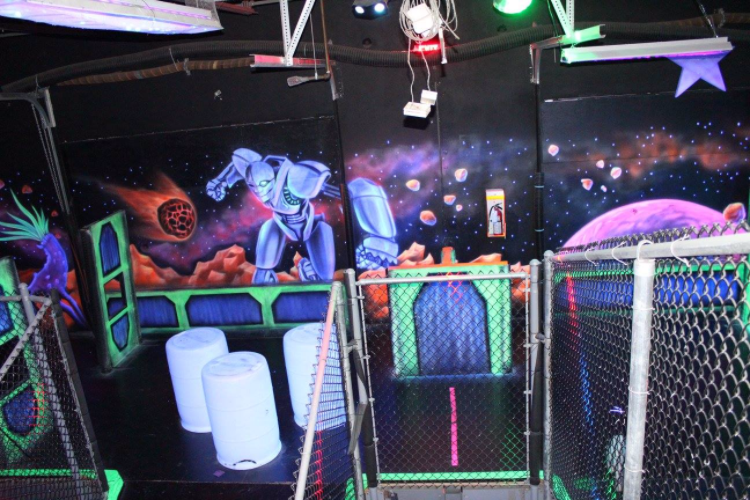
Indoor venues are engineered for optimal infrared performance. Walls are lined with reflective panels, high‑contrast lighting, and modular obstacles such as inflatable barriers, catwalks, and maze‑like tunnels. Climate‑controlled environments ensure consistent comfort year‑round, and the darkness or dynamic lighting effects heighten immersion. Many indoor centers also provide party rooms, catering services, and on‑site equipment rental, making them ideal for birthdays, corporate events, and school field trips.
Outdoor laser‑tag sites capitalize on natural terrain—forests, abandoned factories, or open fields. The expansive setting allows for larger‑scale battles, with teams often exceeding twenty players. Natural obstacles like trees, rocks, and elevation changes introduce additional tactical considerations. Some locations blend laser tag with paintball or archery ranges, offering a “multi‑sport” day for adventure‑seeking groups. Weather considerations are critical; most operators provide rain‑shelters or schedule sessions during favorable seasons.
A growing trend involves “pop‑up” laser‑tag installations in unconventional spaces such as malls, festivals, or corporate campuses. Portable equipment—compact infrared sensors, wireless phasers, and battery‑powered emitters—allows organizers to set up temporary arenas that can be reconfigured on the fly. These hybrid events attract curious passersby and provide a low‑commitment entry point for newcomers.
Laser tag has evolved from a niche amusement to a multifaceted platform that blends physical exertion, strategic gameplay, and social interaction. Its adaptability enables a wide spectrum of scenarios—from simple deathmatches to elaborate narrative missions—catering to children, teens, adults, and seniors alike. The documented health benefits, coupled with endorsements from scientists and industry analysts, underscore its value as both a recreational pastime and a functional tool for education, team‑building, and stress relief. Whether hosted in a high‑tech indoor arena, a sprawling outdoor field, or a temporary pop‑up venue, laser tag continues to captivate participants seeking an engaging, safe, and inclusive experience. As technology advances and new immersive elements—such as augmented reality overlays—become commonplace, the future of laser tag promises even richer, more interactive adventures for generations to come.


 14380 Triangle Rd, Richmond, BC V6W 1B1, Canada