
 El Monte
 Log in
Log in
Log in

XTreme Lazer is located in Webster, Massachusetts, sharing a lively entertainment complex with Mohegan Bowl.
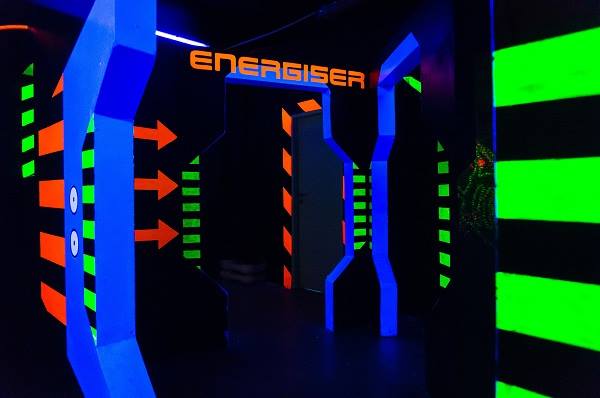
The facility features a 3,500-square-foot fantasy-themed laser tag arena with glowing decorations, fog-filled corridors, and twelve customizable game modes. Sessions run about 45 minutes and are suitable for all ages and skill levels. The venue specializes in kids’ birthday parties, corporate events, youth groups, and team-building outings, with four private rooms available for customization.
Beyond laser tag, guests can enjoy an on-site arcade and access to the adjacent Mohegan Bowl for bowling and food. The experienced staff handles all setup and game customization, ensuring a smooth and safe experience for every group. Private catering and event packages are also available for larger celebrations.
 Indoors
Laser tag has evolved from a futuristic hobby born in the late 1970s into a globally recognized sport and social activity. It represents the perfect intersection of physical exertion, tactical strategy, and immersive technology. Whether played in a dimly lit, neon-soaked arena or a wide-open woodland clearing, laser tag offers a unique experience that challenges the mind and body simultaneously.
At its core, laser tag is a recreational shooting activity where players target opponents using infrared-sensitive devices. Unlike paintball, which relies on physical projectiles, laser tag is entirely non-contact and “mess-free.” Each player wears a vest or a series of sensors—usually positioned on the chest, back, shoulders, and the phaser itself. When a player’s transmitter emits an infrared beam and hits the sensor on an opponent, the system registers a “tag,” usually accompanied by audio-visual feedback and a temporary deactivation of the tagged player’s equipment.
Modern laser tag systems are highly sophisticated, utilizing radio-frequency communication to track real-time scores, accuracy percentages, and health levels. The transition from the clunky, heavy equipment of the 1980s to the lightweight, ergonomic gear of today has made the sport accessible to all ages, turning a simple game of “tag” into a high-stakes tactical simulation.
The versatility of laser tag lies in its modularity. Venues often program their equipment to host a variety of game modes, each requiring a different set of skills and strategies:
Beyond the excitement of the game, laser tag offers a surprising array of developmental benefits. It is a fantastic cardiovascular workout that encourages players to sprint, duck, crawl, and maneuver through an environment for extended periods. Unlike repetitive gym exercises, the adrenaline of the game masks the physical exertion, leading to improved stamina and agility.
Cognitively, the game functions as a high-speed puzzle. Players must maintain constant situational awareness, anticipate opponent movements, and communicate effectively with teammates. It fosters leadership skills, as teams must coordinate to cover defensive blind spots or execute a coordinated assault. Because it emphasizes fairness and sportsmanship, it also helps in developing emotional intelligence and team-building capabilities.
Research into human behavior and educational gaming often highlights laser tag as a prime example of “gamified physical education.” Experts note that laser tag bridges the gap between sedentary screen time and active play. By providing instant feedback through computerized scoring, it triggers the brain’s reward centers, keeping participants engaged for longer than traditional sports might.
Industry experts point to the shift toward “Tactical Laser Tag” as a significant milestone. This evolution moves away from the “carnival” style of gameplay toward military-grade simulations. Organizations and even local tactical training units have utilized high-end laser tag systems to teach communication, spatial awareness, and stress management in a safe, controlled environment. The industry continues to innovate, with augmented reality (AR) integrations expected to further blur the lines between virtual gaming and reality.
While the technology appeals to the inner child in everyone, kids remain the primary demographic for the sport. For children, laser tag is more than just a game; it is an immersive adventure where they become the heroes of their own action movie. Because it does not involve the pain associated with paintball or airsoft, it is widely regarded as a safe and inclusive introduction to competitive team sports. It teaches children about accountability, as players must track their own hardware and respect the boundaries of the arena, all while fostering social bonds with their peers.
Laser tag has become a staple for milestone events due to its ability to bridge age and skill gaps.
The choice between indoor and outdoor laser tag changes the fundamental nature of the experience.
Indoor Venues are typically characterized by “blacklight” environments, fog machines, and complex, multi-level labyrinths. These arenas prioritize speed, agility, and close-quarters combat. The controlled lighting and sound effects create a surreal, sci-fi atmosphere that is ideal for younger players or those who enjoy high-energy, fast-paced matches.
Outdoor Venues, conversely, utilize natural terrain, inflatable bunkers, or purpose-built “urban combat” villages. These venues often use long-range equipment with advanced optics and sensors that can communicate at distances of over 100 yards. The outdoor experience emphasizes stealth, long-range marksmanship, and team-based battlefield maneuvering. It provides a more tactile, realistic sensation, making it a favorite for tactical enthusiasts and adult groups.
Ultimately, whether you are ducking behind a neon ramp in a dimly lit warehouse or crawling through the brush in an outdoor forest, laser tag remains an enduringly popular activity. It combines the thrill of competition with the joy of movement, ensuring that it will continue to evolve as a premier choice for entertainment and social engagement for years to come.


 51 Thompson Rd, Webster, MA 01570