Log in
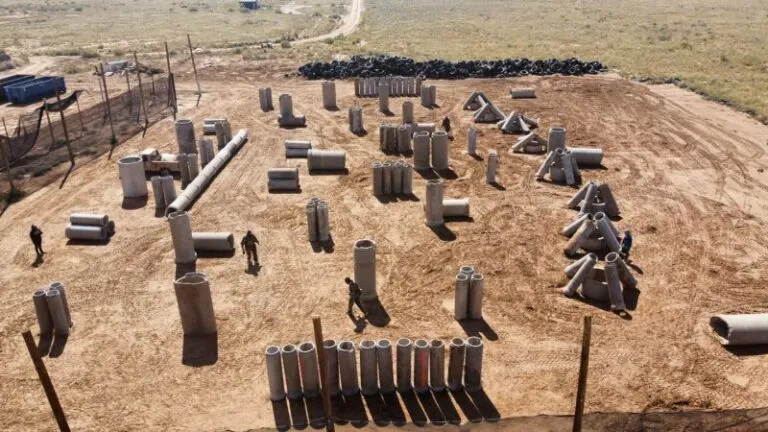
Ruckus Paintball facility is located in Albuquerque, NM
Located just outside the city in a scenic woodland setting, Ruckus Paintball offers the perfect getaway for adrenaline-hungry players and group celebrations alike. Surrounded by trees and fresh air, the club provides a true escape from urban stress — an ideal spot for a day of action, team spirit, and pure fun.
Perfect Venue for Any Event
Outdoors
Paintball has evolved from a niche outdoor activity into a globally recognized competitive sport and a cornerstone of recreational team-building. It combines the thrill of high-stakes strategy with intense physical exertion, offering a unique experience that bridges the gap between childhood games and professional athletics. By understanding the mechanics, rules, and benefits of the sport, participants can appreciate the complexity that lies beneath the surface of this colorful and energetic activity.
At the core of the sport is the paintball itself, a marvel of chemical engineering designed to be both functional and environmentally safe. A paintball is a spherical gelatin capsule containing a liquid, non-toxic, water-soluble dye. The shell of the paintball is typically made from the same pharmaceutical-grade gelatin used in vitamin capsules. This ensures that the projectile is sturdy enough to be fired from a marker at high speeds but brittle enough to break upon impact with a solid surface.
The “paint” inside is not actually paint in the traditional sense; it is a mixture of polyethylene glycol, other food-grade ingredients, and dye. This composition is essential because it allows the marks to be easily washed out of clothing and ensures that the material biodegrades if left on an outdoor field. The quality of a paintball is determined by its roundness and the consistency of its shell. Professional-grade paintballs are perfectly spherical to ensure aerodynamic stability, while lower-grade options may have slight seams or dimples that can cause the ball to curve mid-flight.
Safety and fair play are the twin pillars of paintball regulations. While specific rules may vary between recreational fields and professional leagues, several universal standards apply across the board. The most critical rule is the mandatory use of protective eye and face gear. Players are required to wear impact-rated goggles and masks at all times while on the field or in the “hot zone” where markers are active. Taking off a mask during play is usually grounds for immediate disqualification.
Another standard rule involves the “chronographing” of markers. Before entering a game, every player must fire their marker through a device that measures the velocity of the paintball in feet per second (FPS). Most fields cap this speed at 280 to 300 FPS to ensure that impacts are felt but do not cause serious injury. Within the game, a player is considered “out” when a paintball hits them or their equipment and leaves a visible mark roughly the size of a quarter. Players who are hit must raise their markers above their heads and exit the field toward a designated dead zone. Furthermore, many fields enforce a “mercy rule” or a “surrender rule,” where players are encouraged to offer an opponent the chance to surrender if they are within a very close range, avoiding a painful point-blank shot.
The versatility of paintball is best showcased through its various game formats, which range from quick, reflexive bursts to grueling multi-day simulations. The most common recreational format is “Capture the Flag,” where two teams compete to retrieve a flag from the center of the field or the opponent’s base and return it to their own. “Elimination” or “Team Deathmatch” is another staple, where the sole objective is to mark and remove all players on the opposing team.
For those seeking more depth, “Scenario Paintball” or “Woodsball” often involves elaborate backstories and complex objectives. These games can mimic historical battles, heist movies, or futuristic survival scenarios. Participants might be tasked with protecting a “VIP” player, defusing a prop bomb, or holding a specific geographical “fort” against waves of attackers. On the professional side, “Speedball” is the dominant format. Played on a flat field with inflatable bunkers arranged in a symmetrical pattern, Speedball emphasizes movement, communication, and high-volume firing, with matches often lasting only a few minutes.
Paintball serves as a multi-faceted tool for personal and professional development. Physically, it provides a high-intensity interval training (HIIT) workout. Players are constantly sprinting, crouching, crawling, and maneuvering, which improves cardiovascular health, endurance, and lower-body strength. The physical demands of the sport are often forgotten in the heat of the moment due to the adrenaline, making it an excellent alternative to traditional gym exercise for those who prefer engaging activities.
Beyond the physical benefits, paintball is a powerful medium for developing soft skills. It is one of the most effective tools for corporate team building because it necessitates clear communication and trust. Under “fire,” players must relay information about enemy positions and coordinate flanking maneuvers. This fosters leadership skills and teaches individuals how to stay calm and analytical under pressure. Furthermore, the sport provides a significant psychological release; the catharsis of competition and the focus required to survive a match allow players to detach from the stresses of daily life, entering a “flow state” where only the immediate objective matters.
The demographic of paintball players is surprisingly broad. While it was once seen as a male-dominated hobby, it has become increasingly inclusive. Children as young as eight or nine can participate in “low-impact” paintball, which uses smaller projectiles and lower velocities. On the other end of the spectrum, it is common to find enthusiasts in their 50s and 60s who enjoy the tactical depth of woodsball.
The sport attracts professional athletes who use it for cross-training, military and law enforcement personnel who use it for low-cost tactical drills, and office workers looking for weekend excitement. Social groups also frequent paintball fields for celebrations such as bachelor parties or birthdays. In the competitive scene, professional leagues like the NXL (National Xball League) draw thousands of spectators and high-level athletes who treat the sport with the same rigor as professional soccer or football.
Industry experts frequently highlight the technological evolution of the equipment as a driver for the sport’s growth. Modern electronic markers can fire over 15 balls per second with incredible precision, a feat that engineers have refined through decades of pneumatic research. Experts in the sports industry also point out that paintball has one of the best safety records among contact or high-energy sports. When insurance companies and safety analysts compare paintball to sports like football or hockey, paintball often shows a lower rate of serious injury per 1,000 participants, largely due to the strict enforcement of mask and velocity rules.
From a psychological and sociological perspective, scientists have studied the “adrenaline response” triggered by paintball. The controlled environment of a paintball field allows the human brain to experience the “fight or flight” mechanism in a safe setting. Researchers suggest that this can help with stress management and emotional regulation. Furthermore, the industry has made significant strides in sustainability. Scientists working within the chemical sector of the industry have ensured that the environmental footprint of the sport is minimal, developing biodegradable fills and shells that do not harm local ecosystems or wildlife.
The experience of a paintball match is heavily influenced by the environment. Outdoor venues are the traditional home of the sport. These fields can cover several acres and feature natural terrain such as forests, hills, and creeks. Outdoor play allows for longer games, more sophisticated stalking and camouflage strategies, and a sense of “adventure.” Many outdoor facilities also build elaborate sets, such as mock villages or trench systems, to enhance the immersion of scenario games.
Indoor venues, meanwhile, offer a more controlled and fast-paced alternative. These are typically smaller and use synthetic turf as a playing surface. The primary advantage of indoor paintball is its immunity to weather; players can enjoy a game regardless of rain, snow, or extreme heat. Indoor centers often specialize in Speedball or “Reball” (which uses reusable rubber balls instead of paint-filled ones for cleaner practice). The tight quarters of an indoor arena lead to intense, high-energy encounters where reaction time is more important than long-range accuracy. Whether a player chooses the rugged expanse of the woods or the neon-lit intensity of an indoor warehouse, the sport provides a unique arena for competition and camaraderie.