El Monte
 Log in
Log in
Log in

AG Paintball sits on 28 acres of wooded New Hampshire countryside in Weare, roughly a half-hour drive northwest of Manchester, and is one of the longest-running paintball facilities in the country.
The park offers traditional paintball (12+), low-impact paintball (9+), Paintball Lite (7+), Gellyball (8+), and New Hampshire’s only outdoor laser tag arena, plus the region’s first outdoor cosmic paintball experience. Twelve unique playing fields—from woodland courses to a speedball arena—keep games varied, with rounds lasting about 30 minutes and experienced referees guiding players of all skill levels.
Beyond the games, the park is built for groups: birthday parties, corporate team-building, bachelor and bachelorette parties, school outings, and sports teams all have dedicated packages, and private groups of ten or more get their own referees. An on-site pro shop, marker service, picnic area, and Snackshot outdoor dining round out the experience, making it easy to spend a full day on the property.
 Outdoors
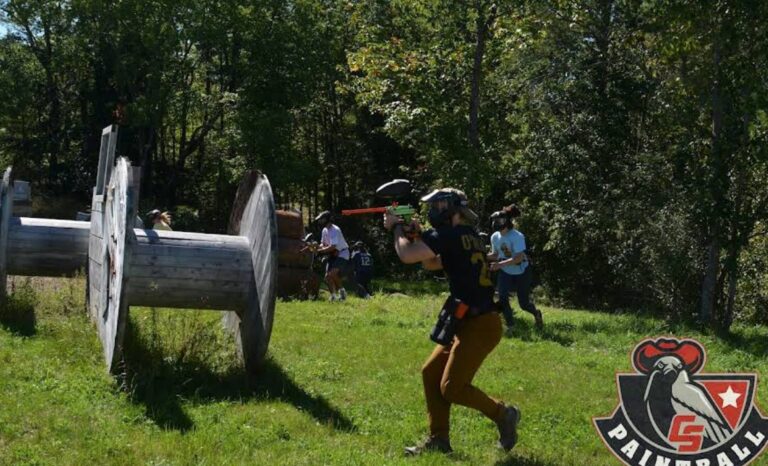
CS Paintball is located on Dover Road in Epsom, New Hampshire, a short drive from Concord and within easy reach of Manchester and the Seacoast. The park offers multiple themed fields, including Speedball, Vietnam, Stock Yard, Mill Yard, Dominion, Tires, and Grim, with classic formats like Capture the Flag and Last Man Standing alongside scenario-based missions and big events such as Escape From New York. Rental gear, paintballs, and free tech support for self-equipped players are available, and the knowledgeable owners bring more than 20 years of combined experience.
The park also hosts private parties for birthdays, corporate outings, and team building, keeping groups together with their own referee. Picnic areas, restrooms, and basic concessions are on site, and parties may bring in pizza, cake, and other foods. With a family-friendly atmosphere welcoming players ages 12 and up, it suits everyone from first-timers to competitive players.
OutdoorsPaintball has evolved from a niche recreational activity used by forestry workers into a global competitive sport that blends high-intensity physical activity with complex strategic thinking. It is an adrenaline-fueled pursuit that transcends age and profession, offering an immersive experience that few other sports can replicate. Whether played on a rugged outdoor terrain or inside a climate-controlled facility, paintball challenges the body and the mind in equal measure.
At its core, paintball is a competitive team shooting sport in which players eliminate opponents from play by hitting them with dye-filled, breakable gelatin capsules called paintballs. These capsules are launched from a device known as a paintball marker. While often referred to colloquially as a “gun,” the term “marker” reflects the sport’s origins, as the devices were originally used by loggers to mark trees and ranchers to mark cattle from a distance.
The technology behind paintball is a sophisticated blend of pneumatics and chemistry. A paintball marker uses compressed air or carbon dioxide to propel the ammunition through a barrel at speeds generally capped at 300 feet per second. The paintballs themselves are composed of a non-toxic, water-soluble, biodegradable polyethylene glycol fill, encased in a thin gelatin shell. When the projectile strikes an object or a player, the shell ruptures, leaving a bright “splat” that serves as an undeniable visual indicator of a hit.
The sport is fundamentally a high-stakes version of “tag” or “hide and seek,” but the addition of equipment and projectiles introduces layers of complexity involving ballistics, movement, and teamwork. It is a game of angles, where players must constantly negotiate their position relative to cover and the position of their adversaries.
Safety and fair play are the cornerstones of the paintball community. Every sanctioned field operates under a strict set of regulations designed to prevent injury and ensure a balanced competitive environment. The most critical rule in any paintball venue is the mandatory use of safety goggles and masks. These must be worn at all times when a player is on the field or in the “hot” zone. Because the eyes and ears are vulnerable to the impact of a paintball, failure to follow this rule usually results in immediate ejection from the facility.
Regarding gameplay, the standard rule of elimination is the “mark.” A player is considered out of the game if a paintball hits them and breaks, leaving a mark the size of a quarter or larger on any part of their body or equipment. If a paintball bounces off without breaking, the player is typically allowed to remain in the game. Once marked, the player must raise their marker or hand and shout “Hit!” to signal to others that they are no longer an active participant, then exit the field to a designated dead zone.
Field etiquette also involves “barrel socks” or plugs. When players are in the staging area or not actively participating in a match, their markers must have a safety device over the end of the barrel to prevent accidental discharges. Furthermore, most fields enforce a “minimum distance” rule or a “surrender” rule. If a player manages to sneak up on an opponent at very close range, they are encouraged to ask the opponent to surrender rather than firing at point-blank range, promoting a culture of sportsmanship and mutual respect.
The versatility of paintball allows for a wide range of game formats, often referred to as “scenarios.” The most traditional format is “Capture the Flag,” where two teams attempt to retrieve a flag from the center of the field or the opponent’s base and return it to their own. This requires a balance of offensive push and defensive positioning.
Another popular format is “Elimination” or “Team Deathmatch,” where the sole objective is to remove all members of the opposing team. For those seeking a faster pace, “Speedball” is played on smaller, flat fields with symmetrical inflatable bunkers. These games are rapid, often lasting only a few minutes, and focus on high-speed movement and suppressive fire.
In contrast, “Woodsball” and “Scenario Games” involve larger, natural environments and can last for hours or even days. These events often include complex storylines, such as historical battle reenactments or futuristic sci-fi missions. Players may be tasked with “protecting a VIP,” “defusing a prop bomb,” or “holding a specific territory” against waves of attackers. These formats emphasize long-term strategy, resource management, and communication over sheer reflex.
Paintball offers a unique array of physical and psychological benefits. Physically, it serves as an exceptional form of high-intensity interval training (HIIT). Players are constantly sprinting, crouching, crawling, and lunging. This promotes cardiovascular health, builds core strength, and improves overall endurance. Because the game is so engaging, participants often find they have exerted themselves far more than they would have during a standard gym session.
Beyond the physical, paintball is a powerful tool for mental development. It requires rapid problem-solving and decision-making under pressure. A player must analyze the field, predict the movements of others, and execute a plan while dealing with the sensory input of incoming fire. This builds resilience and sharpens cognitive focus.
Perhaps most significantly, paintball is an unmatched team-building exercise. Success on the field is rarely the result of a single individual’s skill; rather, it comes from effective communication and trust among teammates. Many corporations use paintball to foster leadership and cooperation among employees, as the “battlefield” environment strips away office hierarchies and encourages collaborative problem-solving.
One of the great myths of the sport is that it is only for the hyper-athletic or those with military interests. In reality, the paintball community is remarkably diverse. On any given weekend, a local field might host a mix of middle school students at a birthday party, corporate executives on a retreat, and professional athletes who compete in international leagues.
The sport is an “equalizer” because success is not dependent on size or raw strength. A smaller, more agile player who communicates well and uses cover effectively can easily outmaneuver a much larger opponent. This inclusivity extends to gender and age; there are vibrant communities of female players and senior enthusiasts who find the strategic depth of the game rewarding. For some, it is a casual weekend hobby; for others, it is a lifestyle that involves traveling the country for professional tournaments and regional events.
From a scientific perspective, paintball is a fascinating study in ballistics and physics. Engineers analyze the fluid dynamics of the paint within the capsule to ensure a stable flight path, while materials scientists work on developing biodegradable shells that are fragile enough to break on impact but durable enough to withstand the high pressure of the marker’s bolt.
Industry experts often highlight the social psychology of the sport. Psychologists have noted that paintball provides a safe outlet for the “fight or flight” response, allowing individuals to experience high-stress simulations in a controlled environment. This can aid in stress management and emotional regulation. Furthermore, medical experts point out that, when played with proper gear, paintball has a lower injury rate than many common sports like football or soccer, primarily because it is a non-contact sport in the traditional sense. The industry is also pivoting toward sustainability, with experts continuously refining the formulas of paintballs to ensure they remain environmentally friendly and non-toxic to local flora and fauna.
The environment in which paintball is played fundamentally changes the nature of the game. Outdoor venues are the traditional home of the sport. These fields utilize natural terrain—forests, hills, and creeks—and supplement them with wooden structures, trenches, and old vehicles. Outdoor play allows for a wider range of movement and long-range tactical engagements. However, it is subject to the whims of the weather; rain, wind, and heat can all influence the trajectory of the paintballs and the endurance of the players.
Indoor venues, on the other hand, offer a highly controlled and consistent experience. Usually housed in large warehouses, these fields feature artificial turf and inflatable or plywood bunkers. Indoor play is not affected by weather or daylight, making it an ideal year-round option. The confined space typically leads to a faster, more aggressive style of play, often referred to as Close Quarters Battle (CQB). Many indoor facilities also utilize specialized lighting and sound systems to enhance the atmosphere, sometimes incorporating neon paints and “glow-in-the-dark” elements for a high-energy experience.
Ultimately, whether choosing the rugged expanse of an outdoor forest or the fast-paced intensity of an indoor arena, players find that paintball offers a unique escape from the mundane. It is a sport that rewards bravery, requires intelligence, and creates lasting bonds through the shared experience of the “splat.”



 158 Deering Center Road Weare, New Hampshire 03281