
 El Monte
 Log in
Log in
Log in

Action Park Paintball is located in Mishawaka, Indiana, off Harrison Road in the Michiana region.
The club has been running for over 25 years and features both indoor and outdoor paintball fields with bunkers, barricades, and tactical obstacles. They offer scenario-based games, a winter league, walk-on play, and regular tournaments. Rental equipment is available on-site, and the Pro Shop carries markers, masks, tanks, and accessories. The facility is run by experienced paintball players and welcomes everyone from first-timers to seasoned pros.
The club is a popular choice for birthday parties, corporate team-building events, and group outings. A lounge and recreation area provide space to relax between games. The staff, led by owner Matt, is known for being helpful and creating a welcoming atmosphere. The facility also hosts special events and tournaments throughout the year, giving local players a chance to compete and connect with the paintball community.
 Outdoors
Paintball is a competitive sport in which participants use a specialized marker—commonly called a paintball gun—to launch gelatin‑based pellets filled with non‑toxic, water‑soluble dye. When a pellet strikes a player’s clothing or exposed skin, the dye bursts, leaving a visible mark that counts as a “hit.” The fundamental premise mirrors that of a tactical skirmish: two or more teams attempt to eliminate opponents while advancing toward a defined objective. Despite the seemingly simplistic mechanics, modern paintball incorporates sophisticated equipment, strategic planning, and a rich cultural heritage that stretches back to the early 1980s. The sport has evolved from a novelty pastime into a global phenomenon with organized leagues, professional tournaments, and a thriving community of recreational enthusiasts.
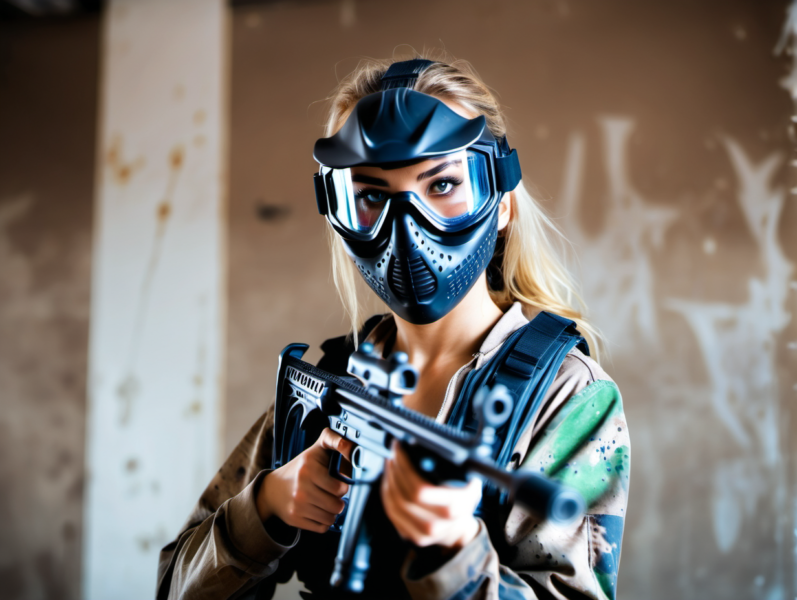
The framework of paintball is built upon a handful of universal rules designed to ensure safety, fairness, and enjoyment for all participants. First and foremost, every player must wear a certified protective mask that shields the eyes, face, and ears from high‑velocity projectiles. Most venues also require additional padding, such as chest protectors and elbow or knee guards, especially in high‑intensity game formats.
Markers must be calibrated to fire within the velocity limits established by the host field—typically between 280 and 300 feet per second. Exceeding these limits can increase the risk of injury and is considered a violation. Players are required to keep their markers in a “safe” or “off” position when not actively engaged in a match, and they must follow a strict “no‑shooting” rule inside the safety zones or at the start and end of a round.
Elimination is straightforward: a single hit on the body or limbs results in immediate removal from the current game. Hits to the mask are generally considered non‑eliminating, though some fields adopt a “full‑body” rule that treats any contact with the mask as a valid hit. When a player is eliminated, they must leave the play area promptly and return to the designated “respawn” or “reloading” zone, depending on the specific game mode.
Communication and sportsmanship are also codified. Players must respect officials, adhere to the designated time limits for each round, and refrain from unsportsmanlike conduct such as deliberately targeting the face, refusing to recognize a legitimate hit, or tampering with opponents’ equipment. These rules create a level playing field and protect the integrity of the sport.
The versatility of paintball lies in its capacity to accommodate a wide spectrum of scenarios, ranging from fast‑paced “capture the flag” skirmishes to elaborate, story‑driven missions. The most common formats include:
Each scenario demands a distinct approach to equipment selection, team composition, and tactical execution, allowing players to tailor their experience to personal preferences and skill levels.
Beyond the immediate thrill of competition, paintball delivers a suite of tangible benefits that extend into physical, mental, and social domains. Physically, the sport provides an intense cardiovascular workout. Running between cover, crouching, and rapidly changing direction taxes the aerobic system while simultaneously building muscular endurance in the legs, core, and upper body. The high‑intensity bursts of activity mimic interval training, making paintball an effective calorie‑burning exercise.
Mentally, paintball sharpens decision‑making under pressure. Players must constantly assess threats, calculate trajectories, and choose between offense and defense within seconds. This rapid information processing enhances situational awareness and improves the ability to remain calm in high‑stress environments. Many corporate teams use paintball as a leadership development tool, recognizing that the sport forces participants to practice delegation, communication, and adaptive thinking.
Socially, paintball fosters camaraderie and teamwork. Because success hinges on coordinated action, players quickly learn to trust one another, share information, and support teammates in both victory and defeat. The shared experience of navigating a challenging course or surviving a simulated ambush often forges lasting friendships and a sense of belonging within local and online communities.
Finally, paintball serves as a low‑impact alternative to more dangerous combat‑oriented activities. The use of soft, biodegradable projectiles eliminates the risk of permanent injury while still delivering an authentic tactical experience. This makes it an accessible entry point for individuals seeking adrenaline‑filled recreation without the hazards associated with firearms.
The demographic landscape of paintball is remarkably diverse, reflecting its broad appeal across age groups, professions, and cultural backgrounds. Young adults constitute a large portion of the player base, drawn by the sport’s excitement and the opportunity for social interaction. However, the community also includes seasoned veterans in their 40s, 50s, and beyond, many of whom appreciate the strategic depth and physical challenge that paintball offers.
Corporate teams frequently incorporate paintball into team‑building retreats, leveraging the sport’s collaborative nature to strengthen interpersonal dynamics. Military personnel and law‑enforcement officers often participate in paintball as a supplemental training tool, using the simulated environment to rehearse tactics in a controlled, cost‑effective setting.
College campuses host paintball clubs that compete in inter‑collegiate leagues, while high‑school programs sometimes integrate the activity into physical‑education curricula to teach teamwork and strategic thinking. Internationally, paintball enjoys robust participation in North America, Europe, and parts of Asia, with national federations and organized leagues supporting competitive play at the amateur and professional levels.
Inclusivity initiatives have further expanded the player pool. Many venues now offer adaptive equipment for individuals with disabilities, and women‑only tournaments have emerged to encourage greater gender diversity within the sport. These efforts underscore paintball’s evolution from a niche hobby into an inclusive, worldwide pastime.
The scientific community has examined paintball from multiple perspectives, focusing on safety, biomechanics, and psychological impact. Researchers studying projectile dynamics have confirmed that the standard 0.68‑centimeter paintball, traveling at regulated velocities, poses minimal risk of penetrating skin when proper protective gear is used. Studies on eye safety reinforce the critical importance of certified masks, noting that the combination of impact‑resistant lenses and full facial coverage effectively mitigates the primary injury vector in the sport.
From a physiological standpoint, exercise scientists have highlighted paintball’s capacity to deliver intermittent high‑intensity effort interspersed with periods of lower activity—a pattern akin to high‑intensity interval training (HIIT). Measurements of heart rate, oxygen consumption, and lactate production during simulated matches reveal that participants achieve cardiovascular loads comparable to traditional aerobic workouts, while also engaging muscular groups used in rapid directional changes and sprinting.
Psychologists have explored the sport’s influence on stress resilience and decision‑making. Experiments involving controlled paintball scenarios demonstrate that participants develop improved attentional focus and faster reaction times when faced with unpredictable threats. Moreover, the collaborative nature of team‑based paintball contributes to enhanced social cohesion and reduced perceived stress among players.
Industry experts, including equipment manufacturers and field operators, emphasize the role of technological innovation in advancing safety and performance. Modern markers feature electronic firing systems that enable precise velocity control, while advancements in biodegradable paintball shells address environmental concerns. Venue designers incorporate modular inflatables and terrain‑building techniques to create adaptable play spaces that can accommodate a wide range of game formats and safety requirements.
Overall, the consensus among scientists and industry professionals is that paintball, when conducted under regulated conditions, offers a safe, physically demanding, and psychologically enriching activity with measurable benefits for participants.
Paintball can be experienced in a variety of settings, each offering a distinct atmosphere and tactical landscape. Outdoor venues typically capitalize on natural terrain, integrating forests, hills, and fields into the layout. These sites often feature expansive “woodsball” courses where trees, boulders, and uneven ground create organic cover and promote guerrilla‑style tactics. Some outdoor fields also incorporate man‑made structures such as bunkers, towers, and simulated buildings to diversify the playing environment.
Large‑scale outdoor complexes may host multi‑day scenario events, providing participants with extensive acreage, themed props, and elaborate storylines. The open‑air ambience lends itself to realistic MilSim engagements, where wind, weather, and daylight variations add additional layers of complexity to gameplay.
Indoor venues, by contrast, deliver a controlled environment that mitigates weather constraints and allows for year‑round operation. The most common indoor format is speedball, played on compact, rectangular arenas lined with inflatable bunkers arranged in symmetrical patterns. The uniformity of the field ensures that skill and strategy outweigh terrain familiarity, making speedball the preferred setting for competitive leagues and televised matches.
For players seeking a hybrid experience, some facilities combine indoor inflatables with outdoor elements, offering “net‑ball” arenas that simulate urban settings while providing the safety of netted walls. These venues are particularly popular in densely populated regions where space is limited but demand for high‑energy paintball remains strong.
When choosing a venue, prospective players should consider factors such as the type of game they wish to play, the level of equipment rental available, safety policies, and the presence of experienced staff who can guide newcomers through the rules and equipment handling. Many fields also provide introductory packages that include markers, protective gear, and a brief tutorial, making it easy for first‑time participants to jump straight into the action.
Paintball stands at the intersection of sport, recreation, and simulation, delivering an experience that is both physically demanding and mentally stimulating. Whether played on a sun‑drenched forest clearing, a high‑tech indoor arena, or within an immersive scenario that unfolds over an entire weekend, the game continues to attract a broad audience eager for challenge, teamwork, and the simple joy of hitting a brightly colored pellet. As technology advances and research continues to underscore its benefits, paintball is poised to remain a vibrant and evolving pastime for generations to come.


 11951 Harrison Rd, Mishawaka, IN 46544, United States