Log in
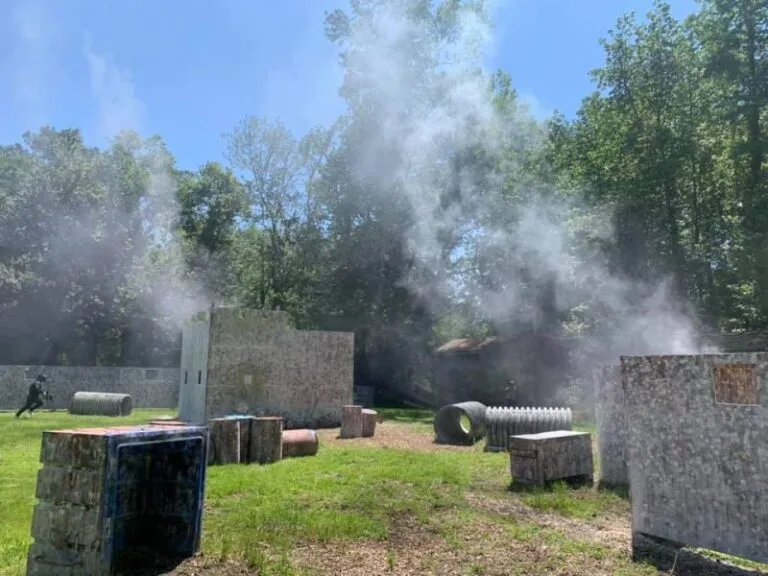
Bethel Battlefield Paintball Park is located in Hampton, VA.
Bethel Battlefield Paintball Park in Hampton, VA, boasts a diverse range of playing fields.
The facility offers eight different paintball playing courses. The field descriptions provide insight into what to expect. While pictures can convey some aspects of the game, Bethel Battlefield emphasizes its ability to offer a unique paintball experience.
OutdoorsChesapeake Paintball Park is a popular destination for paintball enthusiasts in Chesapeake, VA. The park offers a variety of fields and courses to cater to different skill levels and preferences. With over 25 acres of land, players can enjoy a day of intense and exciting gameplay.
The park provides rental equipment such as markers, masks, and air tanks. They also offer group packages for parties and events. Chesapeake Paintball Park has a friendly and knowledgeable staff that ensures a safe and enjoyable experience for all players.
OutdoorsFox Brother’s Paintball Park is a popular destination for paintball enthusiasts in Virginia Beach, VA. The park offers a variety of playing fields, including wooded areas, open fields, and obstacle courses. With over 20 years of experience, the staff at Fox Brother’s Paintball Park ensures a safe and enjoyable experience for all players.
In addition to traditional paintball games, the park also offers special events such as zombie hunts and night games. The park provides all necessary equipment, including paintball guns, masks, and paintballs. Players are encouraged to wear comfortable clothing and closed-toe shoes.
Outdoors
Paintball is a competitive, fast‑paced sport in which participants—known as “players” or “markers”—use air‑powered guns to fire spherical capsules filled with non‑toxic, water‑based dye. When a capsule (commonly called a “paintball”) strikes a player’s protective gear, the dye breaks open, leaving a visible mark that signals a hit. The objective of most paintball games is to eliminate opponents by tagging them, capture a flag, or achieve a mission‑specific goal within a set time limit.
The equipment is deceptively simple: a paintball marker, a compressed‑air or CO₂ supply, a hopper or loader to feed the balls, and protective gear such as a full‑face mask, padded vest, and appropriate clothing. Modern markers are highly engineered, featuring adjustable firing rates, electronic triggers, and interchangeable barrels, allowing for a wide range of play styles—from low‑impact “recreational” matches to high‑intensity “tournament” formats.
While the specific rule set can vary by venue, tournament, or game mode, the core principles remain consistent across the sport. The following list captures the most widely accepted standards:
Safety Gear Is Mandatory – Every player must wear a certified paintball mask that fully covers the eyes and nose at all times on the field. Additional protective equipment—such as chest protectors, gloves, and padded clothing—is strongly encouraged and often required for certain game types.
Marker Velocity Limits – Paintball markers are limited to a maximum muzzle velocity of 300 feet per second (≈ 91 m/s) in most jurisdictions. This cap reduces the risk of serious injury while preserving a competitive balance.
Minimum Engagement Distance – Players must not fire at opponents within a predefined “minimum engagement distance,” commonly 4–5 feet (1.2–1.5 m), to prevent accidental close‑range hits that could bypass protective gear.
Leave No Trace – All paintballs must be retrieved or accounted for after a match. Leaving stray paintballs on the field can create hazards for future games and damage property.
Fair Play and Sportsmanship – Cheating, intentional rule violations, or unsportsmanlike conduct—such as verbal abuse or physical aggression—are grounds for ejection and possible bans.
Game‑Specific Objectives – Each match outlines a clear win condition, whether it’s “elimination,” “capture the flag,” “king of the hill,” or a scenario‑driven mission. Players must adhere to these objectives and respect the referees’ decisions.
These rules form the backbone of a safe and enjoyable paintball experience, ensuring that the sport remains accessible to newcomers while providing a structured environment for seasoned competitors.
A key element that keeps paintball fresh and exciting is the variety of scenarios that can be staged. Organizers blend storytelling, tactical challenges, and environmental features to create immersive experiences. Below are some of the most popular formats:
The simplest and most widely played scenario, elimination pits teams against each other until only one remains. Rounds are typically short (5–10 minutes), making it ideal for beginners and for venues with limited space.
Two teams defend a flag placed in their respective bases while simultaneously attempting to capture the opponent’s flag and return it to their own side. This mode encourages coordinated offense, defense, and strategic use of terrain.
One side assumes a defensive posture, protecting a static objective such as a bunker, flag, or “VIP.” The opposing team must breach the defenses within a set timeframe. This scenario mirrors military tactics and is popular in both recreational and competitive circuits.
These games go beyond simple win‑conditions, immersing players in narrative-driven missions. Examples include “Zombie Apocalypse,” where “infected” players convert hit opponents, and “Rescue Mission,” where a team must locate and extract a “hostage” while evading adversaries. Props, sound effects, and story cues enhance the atmosphere, encouraging creativity and teamwork.
Played on a small, symmetrical field with inflatable bunkers, speedball emphasizes rapid movement, quick decision‑making, and high shooting accuracy. The fast‑paced nature of speedball makes it the primary format for professional tournaments and televised events.
Each scenario offers a distinct blend of physical exertion, mental strategy, and social interaction, ensuring that paintball can cater to a broad spectrum of player preferences.
Beyond sheer entertainment, paintball delivers a host of tangible benefits that extend into personal development, health, and professional contexts.
Running, dodging, and sprinting across varied terrain provide an excellent cardiovascular workout. The sport also improves agility, hand‑eye coordination, and core strength as players maneuver around obstacles and handle their markers under pressure.
Many scenarios require coordinated attacks, defensive formations, and real‑time communication. Players develop leadership skills, learn to delegate responsibilities, and experience the consequences of strategic decisions—all in a low‑stakes environment that encourages rapid feedback.
The adrenaline rush and focus required in paintball can serve as a healthy outlet for stress. The immersive nature of the game forces participants to be present in the moment, temporarily diverting attention from daily worries.
Dynamic fields and unpredictable opponent behavior demand quick analysis and adaptation. Players hone their ability to assess risk, prioritize objectives, and adjust tactics on the fly—skills that translate well into academic, corporate, and military settings.
Whether played among friends, family, or coworkers, paintball fosters camaraderie through shared challenges and victories. The collaborative spirit often builds lasting relationships and strengthens existing ones.
Consequently, paintball is more than a pastime; it is a versatile tool for physical health, mental acuity, and social development.
Paintball’s appeal cuts across age groups, professions, and cultural backgrounds. The sport’s inclusive nature is reflected in its diverse participant base:
Youth and Students – Many high schools and universities organize paintball clubs, using the activity as a team‑building exercise and a safe, supervised introduction to outdoor recreation.
Corporate Teams – Companies frequently book paintball sessions for employee retreats, leveraging the sport’s emphasis on teamwork, communication, and strategic planning to enhance workplace dynamics.
Military and Law‑Enforcement Personnel – Tactical training units employ paintball to simulate combat scenarios, practice room‑clearing techniques, and evaluate decision‑making under stress without the risks associated with live ammunition.
Competitive Athletes – Professional paintball leagues attract dedicated players who train year‑round, maintain rigorous fitness regimes, and travel internationally for tournaments.
Recreational Enthusiasts – Families, groups of friends, and adventure seekers comprise the largest segment, participating in casual matches, weekend outings, or scenario events for pure enjoyment.
The sport’s low barrier to entry—thanks to relatively modest equipment costs and a wide network of venues—ensures that anyone with an interest can experience it, regardless of prior athletic experience.
Research and expert commentary provide an evidence‑based perspective on paintball’s impact and future trajectory.
Biomedical researchers have examined the incidence of injuries in paintball and generally conclude that, when safety protocols are followed, the sport poses a low risk of serious harm. Common injuries are minor abrasions or bruises, most often preventable with proper protective gear. Studies also suggest that the non‑toxic, biodegradable paint used today reduces environmental impact compared with earlier formulations that contained hazardous chemicals.
Psychologists have explored paintball’s role in stress reduction and resilience building. Experiments indicate that participants report increased feelings of competence and social connectedness after a match, with measurable reductions in cortisol levels—a physiological marker of stress—during and after gameplay.
Industry analysts highlight paintball’s role as a testing ground for emerging technologies. Advances in high‑efficiency CO₂ compressors, electronic firing systems, and lightweight composite marker frames have filtered into related fields such as airsoft, robotics, and even medical device engineering. Moreover, the integration of augmented reality (AR) overlays in some modern venues demonstrates paintball’s potential as a platform for interactive, data‑driven training simulations.
Market researchers estimate that the global paintball industry generates billions of dollars annually, encompassing equipment sales, venue operations, and ancillary services such as apparel and event organization. The sector’s growth is attributed to rising demand for experiential recreation, especially among millennials and Gen Z consumers who prioritize memorable, social activities over passive entertainment.
Overall, experts concur that paintball is a safe, socially constructive sport with meaningful health, psychological, and economic contributions, especially when played within regulated environments that emphasize safety and sportsmanship.
Finding the right venue can dramatically shape a player’s experience. Paintball fields fall into two broad categories—outdoor and indoor—each offering distinct advantages.
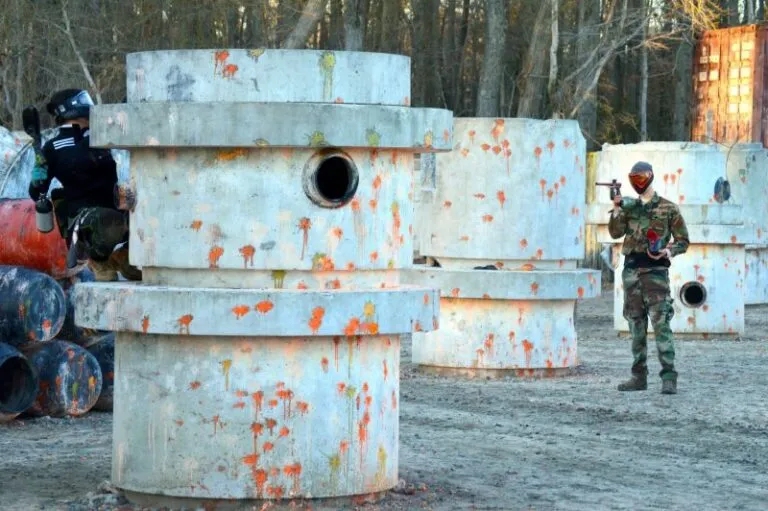
Outdoor venues capitalize on natural terrain—forests, hills, abandoned structures, and open fields—to craft expansive, realistic battlefields. They are ideal for large‑scale scenario games, tactical drills, and “milSim” (military simulation) events that require ample space for maneuvering and strategic depth.
Key Characteristics:
Popular outdoor destinations include national parks that lease designated sections for paintball, purpose‑built adventure farms, and military surplus sites repurposed for civilian recreation.
Indoor arenas, often referred to as “speedball fields,” are purpose‑constructed spaces designed for fast, high‑intensity play. They typically feature inflatable bunkers, synthetic turf, and modular layouts that can be rearranged quickly between games.
Key Characteristics:
Some indoor venues blend traditional speedball with thematic elements—dark lighting, soundtracks, and fog machines—to create a semi‑immersive experience while retaining the quick‑play format.
When selecting a paintball location, players should consider:
Regardless of the setting, reputable venues prioritize safety, maintain equipment standards, and provide trained staff to enforce rules and assist players, ensuring that every match is both fun and secure.
Paintball stands as a multifaceted sport that blends physical exertion, strategic thinking, and social interaction. From its basic definition—a game of colorful projectiles fired from air‑powered markers—to its sophisticated scenarios, health benefits, and broad appeal across demographics, paintball continues to evolve. Supported by scientific research, industry innovation, and a global network of indoor and outdoor fields, the sport offers something for everyone: the thrill of competition, the satisfaction of teamwork, and the joy of stepping into a world where strategy and adrenaline collide in a burst of color.