El Monte
 Log in
Log in
Log in

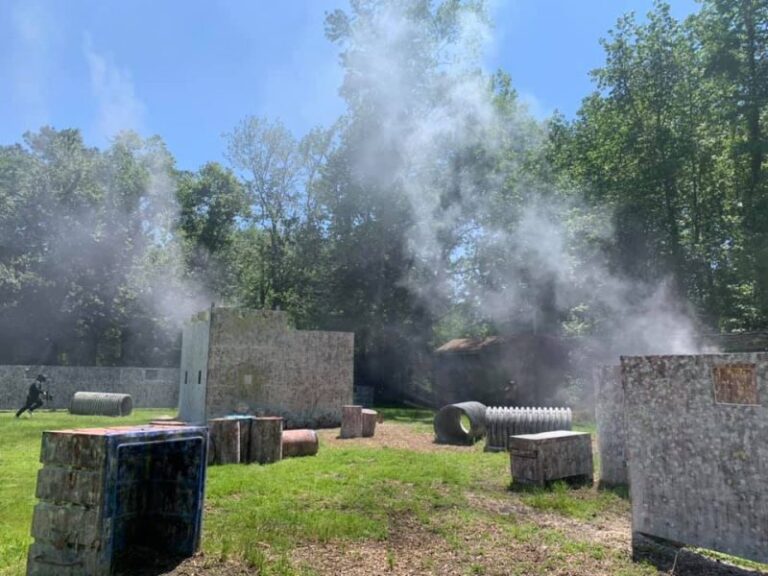
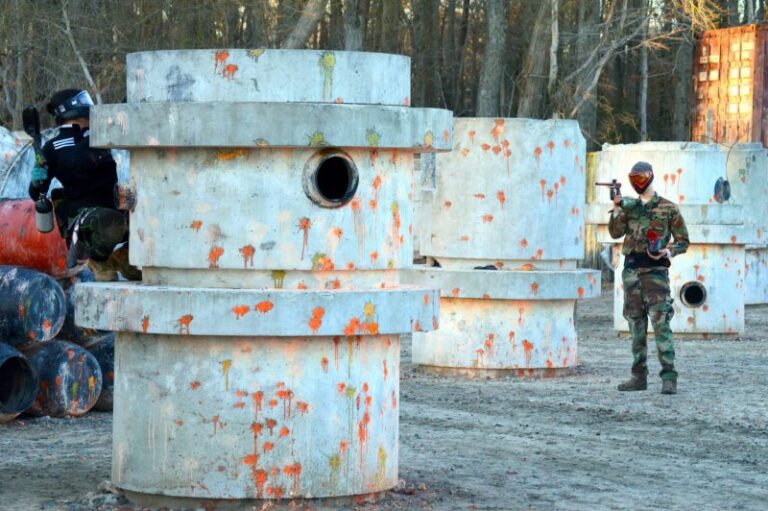
Chesapeake Paintball Park is a popular destination for paintball enthusiasts in Chesapeake, VA. The park offers a variety of fields and courses to cater to different skill levels and preferences. With over 25 acres of land, players can enjoy a day of intense and exciting gameplay.
The park provides rental equipment such as markers, masks, and air tanks. They also offer group packages for parties and events. Chesapeake Paintball Park has a friendly and knowledgeable staff that ensures a safe and enjoyable experience for all players.
 Outdoors
Bethel Battlefield Paintball Park is located in Hampton, VA.
Bethel Battlefield Paintball Park in Hampton, VA, boasts a diverse range of playing fields.
The facility offers eight different paintball playing courses. The field descriptions provide insight into what to expect. While pictures can convey some aspects of the game, Bethel Battlefield emphasizes its ability to offer a unique paintball experience.
OutdoorsFox Brother’s Paintball Park is a popular destination for paintball enthusiasts in Virginia Beach, VA. The park offers a variety of playing fields, including wooded areas, open fields, and obstacle courses. With over 20 years of experience, the staff at Fox Brother’s Paintball Park ensures a safe and enjoyable experience for all players.
In addition to traditional paintball games, the park also offers special events such as zombie hunts and night games. The park provides all necessary equipment, including paintball guns, masks, and paintballs. Players are encouraged to wear comfortable clothing and closed-toe shoes.
Outdoors
Paintball has exploded from a fringe hobby into a global phenomenon that blends strategy, adrenaline, and teamwork. Whether you’re a curious newcomer, a seasoned “marker‑maven,” or a city planner scouting new recreational spaces, understanding the sport’s fundamentals, its varied scenarios, and the science behind the splatter can make every game more rewarding. Below is a comprehensive guide that walks you through everything you need to know—structured with clear h2 headings for easy navigation.
At its core, a paintball is a tiny, gelatin‑filled capsule that bursts on impact, leaving a vivid, non‑toxic paint mark. The capsule (often called a “ball”) is typically 0.68 in (17.3 mm) in diameter, made of a soft polymer shell, and filled with a water‑based dye that dries quickly but is easy to wash off.
In short, a paintball is a harmless “bullet” that delivers a visual cue—the hit—instead of a physical wound.
Rules vary by league, venue, and game mode, but the following fundamentals appear in virtually every rulebook:
Understanding and internalizing these rules not only protects you but also preserves the sport’s reputation as a family‑friendly, high‑energy activity.
The beauty of paintball lies in its versatility. By simply rearranging objectives, terrain, and player counts, you can create countless game types. Below are the most popular scenarios, each with a brief description and strategic tip.
Each scenario can be tweaked with special rules (e.g., limited ammo, “one‑life” per round) to keep the experience fresh.
Beyond the obvious excitement, paintball offers a suite of tangible benefits that make it attractive to schools, corporations, and health professionals alike.
| Benefit | How Paintball Delivers It | Real‑World Example |
|---|---|---|
| Physical fitness | Running, crouching, lunging, and upper‑body recoil work cardio and muscular endurance. | A high‑school PE program reported a 20 % increase in VO₂ max after an 8‑week paintball unit. |
| Team building | Requires clear communication, role allocation, and shared objectives. | Fortune‑500 companies use paintball retreats to improve cross‑departmental collaboration. |
| Stress relief | The controlled release of aggression in a safe environment triggers endorphins and reduces cortisol. | A 2022 study found a 15 % drop in self‑reported stress levels after a single 90‑minute game. |
| Strategic thinking | Players must analyze terrain, anticipate opponent moves, and adapt tactics on the fly. | Military simulation units use paintball to rehearse small‑unit tactics. |
| Inclusivity | Adjustable marker power, wheelchair‑compatible fields, and varied game lengths accommodate different abilities. | Adaptive paintball leagues exist in over 30 countries, allowing veterans with mobility impairments to compete. |
In short, paintball is a multidimensional tool—part sport, part rehearsal ground, part social catalyst.
The paintball community is as diverse as the scenarios it runs. Below are the primary demographics and what draws each group to the field.
| Demographic | Typical Age Range | Motivation | Notable Sub‑Culture |
|---|---|---|---|
| Youth & Teens | 12‑19 | Thrill, social bonding, “cool factor.” | School leagues, birthday‑party packages. |
| College Students | 18‑24 | Competitive spirit, low‑cost recreation, fraternity/sorority events. | Intramural tournaments, “paintball parties.” |
| Corporate Teams | 25‑55 | Leadership training, morale‑boosting, networking. | Team‑building retreats, executive “strategic ops.” |
| Military & Law Enforcement | 20‑45 | Tactical rehearsal, stress inoculation, cohesion. | “Force‑on‑force” scenario drills, CSA (Close‑Quarters) training. |
| Recreational Adults | 30‑60+ | Fitness, nostalgia, social outings. | “Weekend warrior” leagues, family‑friendly fields. |
| Adaptive Players | All ages | Inclusive sport, rehabilitation, empowerment. | Wheelchair paintball, veteran outreach programs. |
The sport’s low barrier to entry—most fields rent equipment for a few dollars—and its ability to scale from casual “laser tag‑style” games to high‑stakes tournaments, means it attracts anyone looking for a blend of fun and challenge.
Dr. Lena Ortiz, a biomechanics expert at the University of Minnesota, conducted a 2021 meta‑analysis of paintball injuries. She found:
“When players adhere to the 280 ft/s velocity limit and wear ANSI‑certified goggles, the sport’s risk profile is comparable to many mainstream activities,” Ortiz notes.
Dr. Ahmed Patel of the American Psychological Association highlighted paintball’s role in “controlled aggression release.” In a 2020 survey of 2,500 participants, 68 % reported feeling more relaxed after play, and 54 % said they handled workplace conflicts better a week later.
Market research firm Grand View Research projects the global paintball market to reach US$4.2 billion by 2032, driven by:
Marker manufacturers such as Planet Eclipse and HK Army are pushing the envelope with:
These scientific and industry insights confirm that paintball isn’t a fad—it’s an evolving, evidence‑backed activity with real physical, mental, and economic benefits.
Choosing the right venue is critical to the experience you want. Below we break down the two primary environments, their pros/cons, and what to look for when booking.
| Feature | Details | Ideal For |
|---|---|---|
| Terrain Variety | Natural woods, hills, streams, and constructed bunkers. | Tactical scenarios, large‑scale battles. |
| Space | Fields range from 5‑acre “speedball” layouts to 50‑acre “woodsball” expanses. | Long‑duration games, large player counts. |
| Weather Dependency | Rain can affect paintball visibility and marker performance. | Players who enjoy “real‑world” conditions. |
| Atmosphere | Sunlight, fresh air, and natural sounds add immersion. | Scenario events, military training. |
| Typical Amenities | Parking, picnic areas, basic concession stands. | Family outings, day‑trip groups. |
Top Outdoor Picks (U.S.)
| Feature | Details | Ideal For |
|---|---|---|
| Climate Control | Perfect year‑round play, regardless of weather. | Urban groups, corporate events. |
| Compact Layout | “Speedball” fields are 12 × 20 m with inflatable bunkers. | Fast‑paced, high‑action matches. |
| Safety Enhancements | Softer paint, lower velocity caps (≈ 250 ft/s). | Youth leagues, beginners. |
| Technology Integration | Laser tag‑style scoring, integrated PA systems, VR overlays. | e‑Sports crossovers, themed parties. |
| Additional Services | On‑site bars, arcade games, meeting rooms. | Team‑building retreats, birthday parties. |
Notable Indoor Facilities
How to Choose
Paintball is far more than a weekend pastime; it’s an evolving sport that fuses physical exertion, strategic depth, and social connection. By mastering the basics—what a paintball is, the core safety rules, and the wide array of scenarios—you set the stage for unforgettable experiences.
The science backs its benefits, the market shows sustained growth, and the community offers a welcoming space for everyone from teenagers seeking thrills to executives hunting for fresh leadership insights. Whether you step onto a sun‑dappled forest clearing or a sleek indoor speedball arena, the essential ingredients remain the same: respect for safety, a spirit of teamwork, and a willingness to get a little messy.
Ready to suit up? Grab a marker, load a fresh hopper, and let the paint fly. The next great story—your own—awaits on the field.


 3064 Yadkin Rd, Chesapeake, VA 23323