El Monte
 Log in
Log in
Log in

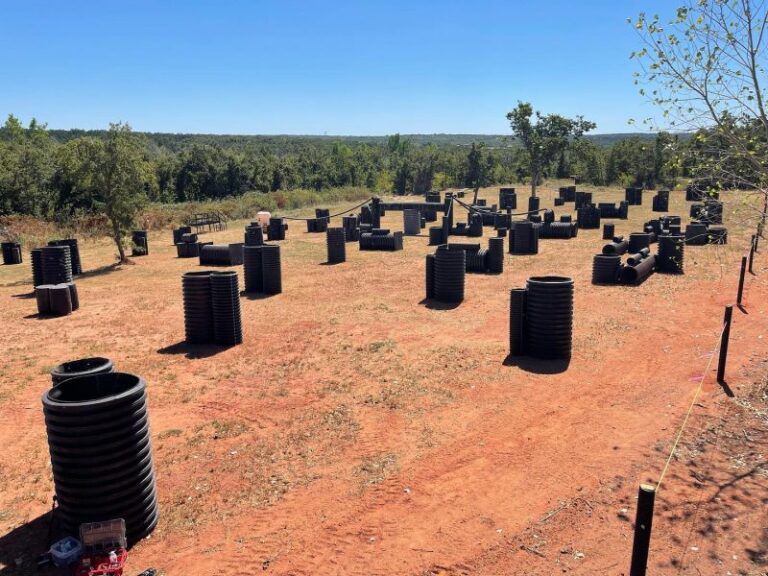
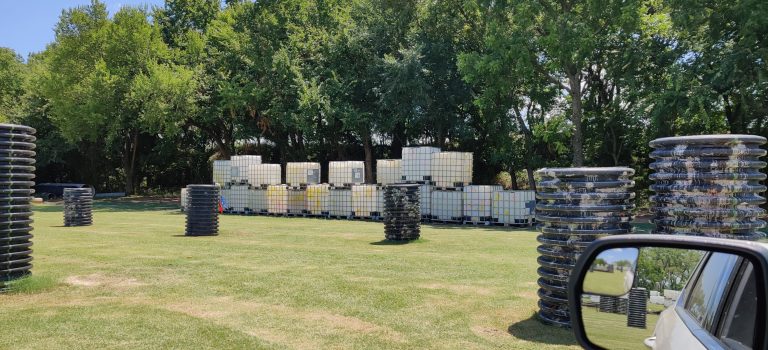
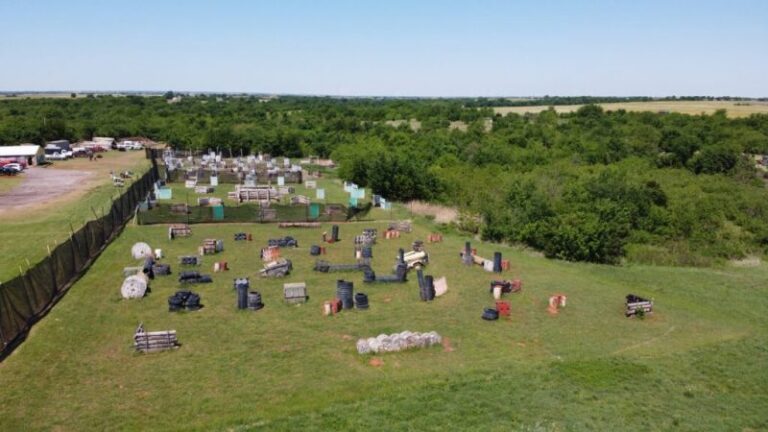
Norman Paintball | ATV Games sits in East Norman, Oklahoma, along East State Highway 9, a short drive from the heart of the city. It is a private, reservation-only facility, which means the field belongs entirely to your group for the day.
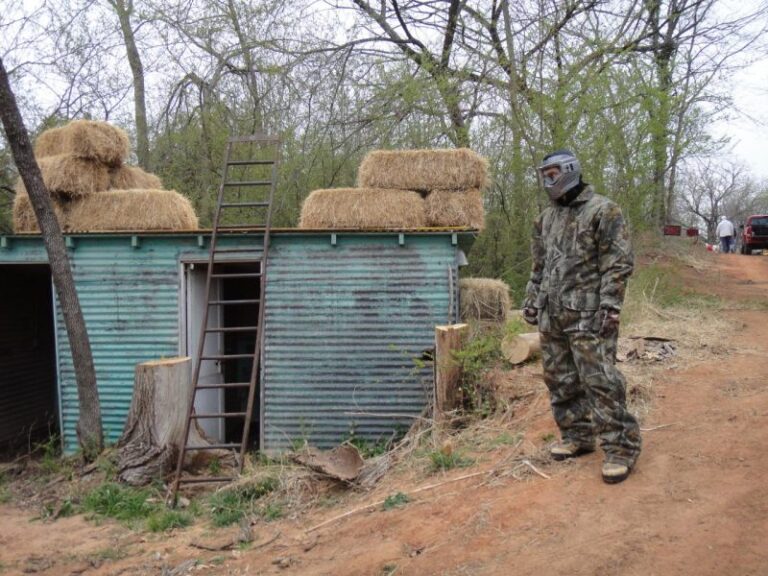
This is the only private event paintball field in Oklahoma, and it offers a realistic, military-themed outdoor arena with a tank, a helicopter, and simulated AR-15 paintball rifles. Games are scenario-based with specific missions, walkie-talkies for squad coordination, and even dune buggies and role players for extra realism. The staff sets up equipment and loads guns before every round, and a referee on a four-wheeler keeps the action flowing.
The park is a natural fit for birthday parties, corporate team building, and youth group outings, with players from age five to adults enjoying the field. The team, including the well-reviewed Jay and Randy, is known for being professional, kind, and safety-focused, staying in touch from booking through the event. There is also a comfortable spectator area for those who prefer to watch, making it a welcoming spot for the whole group.
 Outdoors
Paintball Land is located in Collinsville, Oklahoma, a short drive from Owasso, Tulsa, Claremore, and Bartlesville.
The club has been running for over 40 years and offers eight developed courses spread across 17 acres of outdoor terrain, with more than seven bridges connecting the maps for nearly unlimited configurations. It specializes in recreational play for all ages, including an intermediate option with equipment that shoots at less than half the speed of regular paintball. A typical match runs about ten minutes, and most parties last around two hours with three to four games an hour.
The facility hosts birthday parties, corporate outings, church groups, and school or sports teams, with team-building events accommodating up to 250 players. Guests are fitted with safety masks, markers, and air tanks during orientation, and each group gets a referee to load paint and balance teams. Picnic tables, shade trees, and safety netting keep players and spectators comfortable between matches.
OutdoorsAvid Extreme Sports Park South sits in Newcastle, Oklahoma, a short drive south of the Oklahoma City metro with easy access off the I-35 and I-44 corridors.
The park is built around custom themed paintball fields — two-story buildings, sniper towers, shipping containers, a western town, a castle, and a full 360-degree arena — plus a tournament arena with lighted nightball play. Game types include Capture the Flag, Center Flag, team elimination, and attack-and-defend, with low-impact paintball and Splatmaster options for younger players. Private packages cover birthdays, corporate team building, bachelor parties, and school groups, while walk-on play runs on weekends.
An on-site pro shop, “The Armory,” offers equipment sales and repairs with certified technicians, and rental gear includes markers, goggles, loaders, and air tanks. A covered staging area and shooting range help players prepare before battle, and the park hosts large scenario games that draw players from across the country. With more than 30 years of staff experience in Oklahoma paintball, it’s a welcoming spot for families, first-timers, and seasoned players alike.
OutdoorsChoctaw Paintball Club is an active outdoor paintball park in Choctaw, Oklahoma, just east of Oklahoma City. The facility spreads play across roughly six themed fields, including a deep woodsball arena, a nuclear waste field, two regulation PSP speedball fields, and Fort Apache, with forts, bunkers, and containers shaping each match. Game formats range from elimination and capture-the-flag to attack-and-defend and scenario play, plus glowball night sessions, while low-impact paintball welcomes kids ages six and up. Rental packages include marker, tank, hopper, goggles, and chest pads, and the park is a field-paint-only facility.
Beyond the fields, the club offers a large spectator area, a covered cooking space with a charcoal grill and pellet smokers, picnic tables, bleachers, and a kids’ play zone. It hosts birthday parties, corporate team-building events, bachelor and bachelorette gatherings, school reunions, church groups, and family reunions, with no strict time limits on private parties. Friendly staff and referees run a mandatory safety orientation, and large groups of more than twenty players can request a custom booking.
OutdoorsPaintball Adventures sits on the southwest edge of the Tulsa metro area in Sapulpa, Oklahoma, where it has operated for more than twenty years. The club runs eight distinct fields that range from close-quarters combat zones to wide, strategic landscapes, giving players a fresh challenge on every visit. It offers equipment rentals, a pro shop, and walk-on play on weekends, with party packages built around groups of ten that include a dedicated referee, rental gear, paintballs, and all-day air fills.
The club is a natural fit for birthdays, corporate team-building, and family outings, and it even serves pizza after group events so the day can wind down together. Friendly, experienced staff, membership in the Better Business Bureau, and a welcoming atmosphere round out the experience, making it a dependable outdoor destination for ages ten and up.
OutdoorsEpic Paintball Park sits on the I-40 service road at Morgan Road, about ten miles west of downtown Oklahoma City, right next to Terex Corp., with easy access from Mustang, Bethany, Yukon, Edmond, and Norman.
The park offers large, tightly spaced playing fields with short walking distances and lightweight markers for less fatigue, plus referee-supervised games like Cops & Robbers, Capture the Flag, and elimination. Rental packages include a Planet Eclipse EMEK marker, breathable full-face mask, compressed air, and all-day access, with low-impact paintball for ages seven and up and GellyBall for younger kids.
Beyond the games, the park features thirty shaded picnic tables, free spectator access, and a welcoming staff that briefs newcomers before play. Outside food, drinks, and grills are allowed, making it a great spot for birthday parties, corporate events, school and church outings, and family gatherings, with private play available for groups of twelve or more.
OutdoorsDodge City Paintball is located in the Yukon area of the Oklahoma City metro, set on roughly 30 acres of open land just outside town near Piedmont, Oklahoma.
The venue centers on a large outdoor woodsball field with natural terrain and structures, offering gellyball for ages four and up, .50 caliber paintball from age seven, and classic .68 caliber paintball. Referees run game modes like capture the flag and elimination, and each all-inclusive rental package includes a marker, required safety mask, compressed air, 500 rounds of paint, and a referee for two to three hours of play.
Beyond open play, the family-owned, veteran-operated site hosts birthday parties, corporate team building, and church group outings, with special pricing for organizations. The same property becomes the DCP Haunted Trail each fall, and the venue’s spacious outdoor setting makes it a natural gathering spot for groups before and after games.
Outdoors
Paintball is a fast‑paced, team‑oriented sport in which participants fire small capsules—called paintballs—filled with non‑toxic, water‑based dye from pneumatic or CO₂‑powered markers. The capsules burst on impact, leaving a bright, temporary stain that signals a hit. While the equipment may look like a miniature rifle, the paintball marker is fundamentally a low‑energy device: most markers propel a 0.68 inch (17 mm) sphere at velocities between 250 and 300 feet per second, a speed deliberately limited to reduce the risk of serious injury. The sport’s origins trace back to the early 1980s, when hobbyists in the United States began modifying air‑soft guns to fire paint‑filled pellets. Over the ensuing decades, paintball has evolved from a niche pastime into a global phenomenon with organized leagues, professional teams, and a thriving aftermarket of accessories.
Although specific regulations may vary by venue, a core set of rules governs most paintball games to ensure safety, fairness, and enjoyment.
Protective Gear Requirement – Every player must wear an approved mask that fully covers the eyes, nose, and mouth. Additional padding such as chest protectors, gloves, and knee pads is strongly encouraged, especially in high‑impact scenarios.
Velocity Limits – Markers are calibrated to stay within the venue’s maximum allowed muzzle velocity, typically 300 fps for indoor arenas and up to 320 fps for outdoor fields. Operators use chronographs to verify compliance before play begins.
Hit Confirmation – A player is eliminated once a paintball leaves a visible mark on any part of the body, clothing, or equipment. In many formats, players may “run it out” by washing the paint off; however, certain competitive leagues enforce an automatic out upon any hit.
Boundary Enforcement – Fields are marked with clear boundaries. Crossing these lines results in a penalty, often an automatic elimination or a time‑out, depending on the game type.
Marker Maintenance – Players are responsible for ensuring their markers fire cleanly and reliably. Malfunctioning guns must be taken offline until repaired, to prevent accidental over‑pressurization or misfires.
Sportsmanship – Unsportsmanlike conduct—such as deliberately targeting a player’s face, “camping” a flag without attempting to engage opponents, or using profanity—can lead to disqualification or a ban from the venue.
These baseline rules provide a framework that venues can adapt for specific formats like “Capture the Flag,” “Elimination,” or “Scenario” events, but they all share the underlying goal of keeping the game safe and competitive.
Beyond standard elimination matches, paintball venues frequently host themed scenarios that transform a basic game into an immersive experience. Scenario paintball blends tactical gameplay with storytelling, often spanning several hours or even multiple days. Below are some of the most popular formats:
Capture the Flag (CTF) – Two or more teams vie to steal the opponent’s flag while defending their own. The first team to retrieve the enemy flag and bring it back to their base wins. Variations may include multiple flags, “king of the hill” zones, or rotating objectives.
Zombie Apocalypse – A small group of “infected” players starts as zombies. When a zombie tags a human, that human becomes a zombie as well. The surviving humans must complete missions—such as retrieving a “cure” or reaching a safe zone—before the infection spreads completely.
Military Simulations (MilSim) – These events emulate real‑world combat missions, complete with objectives like hostage rescue, demolition, or reconnaissance. Players often adopt realistic load‑outs, adhere to strict rules of engagement, and may use radio communication to coordinate squads.
Fantasy Battles – Drawing inspiration from movies, video games, or mythology, these scenarios may involve “dragons,” “wizards,” or futuristic soldiers. Special props, such as inflatable bunkers or LED‑lit obstacles, enhance the atmosphere.
Adventure Races – Combining paintball with obstacle courses, participants navigate climbing walls, zip lines, and mud pits while engaging opponents. This hybrid format tests both physical endurance and tactical acumen.
Scenario paintball emphasizes creativity, encouraging players to adopt roles, plan strategies, and even improvise on the fly. Because the action can be prolonged, many venues provide “reload stations,” food services, and rest areas to sustain participants throughout the event.
While most people associate paintball with adrenaline‑pumping recreation, the sport delivers a surprisingly broad set of benefits across physical, mental, and social dimensions.
Running, diving for cover, and rapid directional changes turn a paintball match into a high‑intensity interval workout. Players routinely cover several kilometers per game, burn between 500 and 800 calories, and improve agility, balance, and cardiovascular endurance. The necessity to carry a marker, hopper, and extra paint canisters adds a modest resistance component, strengthening core and upper‑body muscles.
Paintball mirrors many principles of military and law‑enforcement training. Participants learn to assess terrain, coordinate fireteams, communicate concise commands, and manage limited resources such as ammunition. These skills translate well to corporate team‑building exercises, where problem‑solving under pressure and collaborative decision‑making are essential.
The fast‑paced nature of paintball forces players to stay present, focus on immediate threats, and adapt quickly to changing conditions. This “flow” state can reduce cortisol levels and provide a healthy outlet for aggression. Moreover, the game’s inherent risks—albeit controlled—teach players to confront fear, manage anxiety, and build confidence.
Because the sport relies heavily on teamwork, it naturally fosters camaraderie. Shared victories, near‑misses, and the occasional paint‑splattered mishap become memorable stories that strengthen friendships and build new networks. Many local leagues organize regular meet‑ups, fostering a community of enthusiasts who support one another both on and off the field.
Some schools and youth programs incorporate paintball into curricula to teach subjects such as physics (ballistics, velocity, kinetic energy), geometry (angles of fire, line‑of‑sight), and biology (human anatomy, injury prevention). By coupling academic concepts with hands‑on experiences, educators can reinforce learning in an engaging context.
Paintball’s appeal cuts across age, gender, and cultural boundaries, though certain demographics are more prominently represented.
Young Adults (18‑35) – This group forms the core of most local leagues and competitive teams. The combination of physical exertion, strategic depth, and social interaction aligns well with their lifestyle.
Corporate Teams – Companies often book paintball sessions for team‑building retreats. The sport’s emphasis on communication and leadership makes it an attractive option for managers seeking experiential training.
Military and Law‑Enforcement Personnel – Training programs sometimes integrate paintball to simulate tactical scenarios without the expense and risk of live ammunition.
Families and Youth Groups – Many indoor arenas offer “kid‑friendly” days with lower marker velocities and simplified rules, allowing children as young as eight to experience the sport under close supervision.
Competitive Athletes – Professional paintball players travel internationally, competing in leagues such as the National Paintball League (NPL) or the Paintball Sports International Federation (PSIF). These athletes treat the sport with the same rigor as traditional athletics, maintaining strict fitness regimens and studying opponent tactics.
The sport’s inclusive nature is underscored by its growing presence in countries across Europe, Asia, and South America, where local clubs adapt the game to regional preferences and cultural norms.
A growing body of research has examined paintball’s impact on health, safety, and technology. Scientists generally acknowledge the sport’s benefits while urging continued emphasis on injury prevention.
Biomechanical Studies – Researchers at several universities have analyzed the forces transmitted during paintball impacts. Findings confirm that, when markers are kept within regulated velocity limits, the kinetic energy is insufficient to cause permanent tissue damage. However, studies also highlight the importance of proper protective equipment, especially eye protection, to mitigate risk of orbital injuries.
Psychological Research – Cognitive psychologists have explored how paintball influences decision‑making under stress. Experiments reveal that participants develop quicker threat assessment skills after repeated exposure to dynamic scenarios, a finding that could inform training programs for emergency responders.
Materials Science – Industry experts continually innovate on marker design, moving from traditional spring‑powered mechanisms to electronically controlled “smart” markers that can log shot counts, velocity, and even GPS location. These advancements improve reliability and provide valuable data for both casual players and professional teams.
Environmental Considerations – Paintball manufacturers have responded to concerns about biodegradable paint. Modern paintballs use a water‑based, non‑toxic gel that breaks down in soil within weeks, minimizing ecological impact on outdoor fields.
Overall, the scientific consensus holds that paintball is a relatively safe sport when participants adhere to established safety protocols. Ongoing research aims to refine equipment standards and enhance the sport’s therapeutic potential.
Paintball can be enjoyed in a variety of settings, each offering distinct tactical experiences and logistical considerations.
Outdoor arenas capitalize on natural terrain—forests, hills, and abandoned structures—to create expansive, realistic battlefields. These sites often feature multiple playing zones ranging from dense woods (ideal for ambush tactics) to open fields (favoring long‑range engagements). Weather adds an unpredictable element: wind can alter paintball trajectories, while rain may affect marker performance and marker handling. Many outdoor facilities also provide camping areas for multi‑day scenario events, allowing participants to fully immerse themselves in long‑form narratives.
Urban environments lacking large open spaces benefit from indoor paintball venues. These facilities rely on inflatable bunkers, multi‑level platforms, and artificial obstacles to simulate urban combat. Because the environment is controlled, indoor arenas can maintain consistent lighting, temperature, and marker velocity limits, making them ideal for beginners and for hosting corporate team‑building sessions. The compact nature of indoor fields also allows for rapid turnover between games, increasing the number of matches a group can play in a single session.
Some modern complexes blend indoor and outdoor elements, featuring a central “hub” building with climate‑controlled tactical rooms adjacent to a surrounding outdoor field. This design offers flexibility: groups can start with indoor drills—such as close‑quarters combat or weapons safety—then transition to an outdoor battlefield for strategic maneuvers.
When selecting a paintball location, players should consider:
Skill Level – Beginners may prefer indoor arenas with clearly marked lanes and lower velocity limits, while seasoned players often seek the complexity of natural terrain.
Game Format – Scenario events typically require large outdoor spaces to accommodate narrative elements, whereas fast‑paced elimination matches can be efficiently run indoors.
Accessibility – Proximity to public transportation, parking availability, and accommodation options become crucial for groups traveling from out of town.
Safety Standards – Reputable venues display compliance certificates, regularly calibrate markers, and employ trained staff to enforce safety protocols.
By assessing these factors, participants can ensure an enjoyable, safe, and memorable paintball experience, regardless of whether they step onto a wooded field or dive into a high‑tech indoor arena.
Paintball stands at the crossroads of sport, strategy, and social interaction. From its humble beginnings as a backyard hobby to its current status as a globally recognized competitive activity, the game continues to evolve through innovations in equipment, scenario design, and scientific insight. Its well‑defined rules safeguard participants while fostering a dynamic environment that sharpens physical fitness, tactical thinking, and teamwork. Whether a corporate team looking to boost collaboration, a military unit seeking realistic training, or a group of friends chasing an adrenaline rush, paintball offers a versatile platform that adapts to a wide array of needs. With a growing network of indoor and outdoor venues worldwide, the sport is readily accessible, inviting anyone curious about the thrill of a colorful, fast‑moving battle to step onto the field and discover what lies beyond the mask.


 19000 OK-9, Norman, OK 73026