
 El Monte
 Log in
Log in
Log in

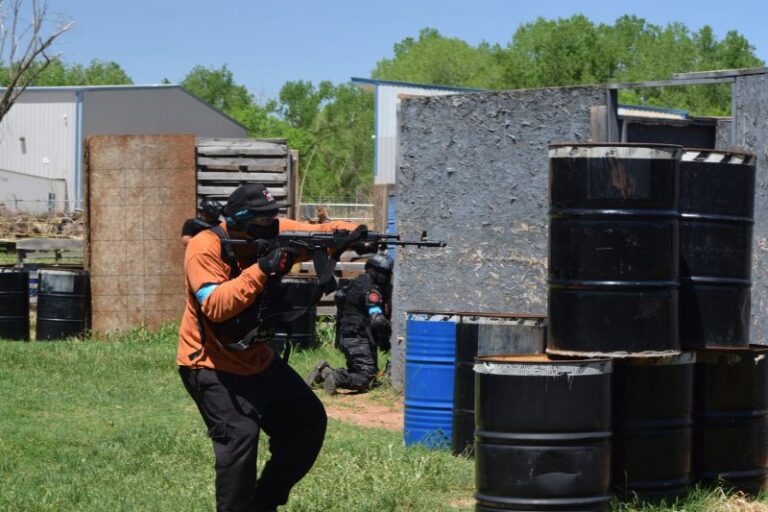
T1 Airsoft is located in the northeast part of Oklahoma City, in the Adventure District area just off Interstate 35, near the Lake Aluma suburb and not far from Frontier City amusement park.
The club’s heart is a 40-plus-acre outdoor field of varied wooded terrain and structures, open every weekend for walk-on play with no pre-registration. It runs casual quick games plus a full calendar of themed and MilSim events, from the monthly Battleground campaign to story-driven scenarios like Rebellion and Escape From T1. The field supports all airsoft classes with strict safety rules, and rentals of guns, masks, and tactical gear let newcomers join in easily.
Beyond the field, T1 Airsoft operates as a retailer offering guns, accessories, and upgrade and repair services. The field is available for private rentals with group discounts, making it a good fit for birthday parties and corporate team-building. A strong community culture, active Discord group, and holiday cookouts and swap meets round out the experience, all run by staff who have served the Oklahoma City metro since 2010.
 Outdoors
Airsoft Tulsa Indoor Field sits in the east side of Tulsa, Oklahoma, at 6323 E. 41st St, right across from Academy Sports. The club centers on a 30,000-square-foot indoor CQB arena packed with bunkers, styled rooms, and a full-size military truck, alongside an 80-acre outdoor battlefield in nearby Broken Arrow. Players enjoy simulated military and law-enforcement style combat with simple objectives like domination and capture-the-flag, while Nerf games and non-lethal training sessions for police, military, and security officers round out the offerings. Public games run in three-hour sessions, and guns, masks, and vests are all available to rent on-site.
Beyond gameplay, the venue is a popular spot for birthday parties, family outings, corporate team-building, and private events, with a full retail store in the same parking lot for picking up gear. The staff and regular players are known for being down-to-earth and respectful, creating a friendly, safe, and welcoming atmosphere for all ages. With both indoor and outdoor fields, on-site rentals, and a retail shop, it’s a one-stop destination for newcomers and experienced players alike.
 Indoors
Airsoft is a recreational sport that pits teams against one another in mock combat using replica firearms that fire 6‑mm plastic BBs. The guns are engineered to look and feel like real weapons, but they discharge non‑lethal projectiles powered by electricity, gas, or spring mechanisms. Players navigate a variety of terrains—urban warehouses, forested fields, or improvised indoor arenas—while adhering to a set of agreed‑upon rules that prioritize safety and fair play. Though it may appear as a simple pastime, airsoft blends elements of tactics, role‑playing, and physical fitness, creating a unique experience that appeals to a broad spectrum of enthusiasts.
One of airsoft’s most compelling attractions is its emphasis on realism. The replicas are often meticulously detailed, from the external finish to the interior components, allowing participants to practice handling weapons that feel authentic without the legal and safety concerns of live firearms. This realism extends beyond the gear; many groups simulate military doctrine, using authentic gestures, hand signals, and communication protocols.
Teamwork is the lifeblood of successful airsoft engagements. Players must coordinate movement, allocate roles such as point man, sniper, or support, and share intelligence about enemy positions. The necessity of synchronizing actions under pressure cultivates a strong sense of camaraderie and improves interpersonal communication skills. Strategy, in turn, becomes a dynamic puzzle. Teams must assess terrain, manage limited ammunition, decide when to advance or retreat, and devise ambushes or defensive perimeters. The fluid nature of each match forces participants to think on their feet, adapting plans in real time as the battlefield evolves.
Airsoft’s flexibility is evident in the wide range of game modes available. Classic “Capture the Flag” tasks teams with seizing an opponent’s flag while protecting their own, emphasizing both offensive aggression and defensive vigilance. “Team Deathmatch” focuses on eliminating opponent players, encouraging aggressive tactics and precise shooting. “MilSim” (Military Simulation) introduces longer, scenario‑driven missions that can last several hours, often incorporating objectives such as hostage rescue, bomb defusal, or reconnaissance. “Objective‑Based” games assign nuanced goals like securing a building or gathering intelligence, requiring players to balance movement, firepower, and stealth. By rotating through these formats, airsoft keeps the experience fresh and challenges participants to master a diverse skill set.
Modern airsoft has cultivated a thriving culture of customization. Players can modify their rifles, pistols, and gear to match personal preferences or specific tactical requirements. Upgrades may include higher‑capacity magazines, adjustable hop‑up units that alter BB trajectory, improved internals for greater rate of fire, or lightweight polymer bodies for enhanced mobility. External accessories such as rails, foregrips, and laser sights allow for tailored ergonomics and visual flair. Even clothing and armor—ranging from tactical vests to camouflage patterns—can be selected to reflect a player’s role or the environment. This customization not only boosts performance but also offers a creative outlet, as enthusiasts often share build guides and showcase their setups online.
The airsoft community functions as a supportive ecosystem that spans local meet‑ups, regional tournaments, and global forums. Newcomers can find mentorship through veteran players who offer advice on gear selection, safety practices, and tactical fundamentals. Social media groups and dedicated websites enable participants to exchange reviews, organize events, and discuss emerging technologies. Many fields host “open days” where novices can try equipment under supervision, fostering an inclusive atmosphere. The sense of belonging cultivated by these interactions frequently extends beyond the game itself, with friendships persisting long after the final BB has been fired.
Starting a journey into airsoft requires a baseline set of protective equipment to ensure safety and comfort:
Collectively, these items form a protective envelope that lets players focus on tactics rather than worrying about injuries.
Regardless of the venue or game mode, airsoft adheres to a core set of principles designed to protect participants and preserve the sport’s integrity:
These guidelines ensure that airsoft remains an enjoyable, responsible activity for people of all ages.
Airsoft firearms fall into three primary categories, each offering distinct performance characteristics and maintenance demands:
Understanding the strengths and maintenance requirements of each type helps players select a platform that aligns with their preferred play style and budget.
Researchers in fields such as biomechanics, psychology, and safety engineering have examined airsoft as a model for studying team dynamics, stress responses, and injury prevention. Studies indicate that the sport can improve hand‑eye coordination, situational awareness, and decision‑making under pressure, mirroring competencies valuable in emergency services and military training. From an industry standpoint, manufacturers emphasize rigorous testing of BB velocity, material durability, and protective gear compliance with international safety standards. The convergence of scientific insight and commercial responsibility has driven the development of low‑impact, high‑precision ammunition and advanced protective equipment, reinforcing airsoft’s reputation as a controlled, low‑risk activity.
Airsoft’s appeal cuts across age groups, occupations, and cultural backgrounds. Teenagers often discover the sport through school clubs or community events, attracted by the blend of physical activity and strategic gameplay. Young adults, including university students and working professionals, value the social networking opportunities and the chance to unwind after demanding schedules. Military veterans and law‑enforcement personnel find airsoft a low‑cost avenue to rehearse tactics and maintain proficiency. Additionally, hobbyists with interests in model building, engineering, or cosplay gravitate toward the customization aspects. This diverse participant base fuels a vibrant, inclusive community.
Finding a suitable venue is essential for a rewarding airsoft experience. Options include:
Players are encouraged to research local regulations regarding airsoft usage, as legal requirements for BB velocity, age restrictions, and transport vary by jurisdiction.
Airsoft stands out as a multifaceted hobby that intertwines realistic weapon handling, strategic teamwork, and creative customization within a safe, community‑driven framework. By adhering to established safety protocols, investing in essential protective gear, and understanding the nuances of different gun platforms, newcomers can embark on a rewarding journey that hones both physical and mental skills. Supported by an enthusiastic global community and informed by scientific research, the sport continues to evolve, offering fresh challenges through diverse game modes and immersive MilSim experiences. Whether pursued as a weekend pastime, a training supplement, or a social outlet, airsoft provides a compelling arena where imagination, discipline, and camaraderie converge.


 8000 N I- 35 Service Rd, Oklahoma City, OK 73131
