El Monte
 Log in
Log in
Log in

Warpaint International sits in the Northgate area of Salem, Oregon, at 3046 Portland Rd NE, and has been part of the local action-sports scene since 1995. Now run by Extreme Velocity, it offers paintball, airsoft, laser tag, and gellyball in a large indoor arena, with a dedicated airsoft course and a complete pro shop on site. Rounds run about 15 minutes each, and the staff keeps games structured, safe, and fun for everyone from first-timers to regulars.
The venue also hosts themed events like Star Wars laser tag nights and an October Zombie Shoot at its outdoor Lost Forest field. Private party options cover paintball, airsoft, and laser tag, making it a great fit for birthdays, bachelor and bachelorette parties, and corporate team-building days. After-hours private games give groups the whole building, a personal referee, and their own music, and outside food and drink is encouraged.
 Indoors
 Outdoors
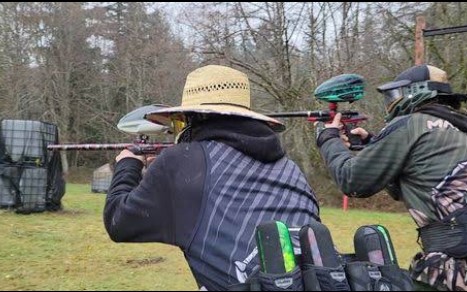
Splat Action Paintball & Airsoft Park spreads across more than 100 acres of forested, creek-crossed terrain in Molalla, Oregon, about a half-hour drive south of downtown Portland along OR-211.
The park offers eight playing fields spanning woodsball and hyperball paintball plus a wide range of airsoft game modes, with rental gear available for more than 160 paintball players and 18 airsoft players. Weekend walk-on days, weekday group reservations and private fields with dedicated referees accommodate everyone from solo players to large groups, and the staff can customize more than twenty standard game formats to fit any group.
Beyond the games, Splat hosts birthday parties for ages 4 and up, summer day camps for ages 9–17, and corporate team-building, reunions, scout groups, sports teams and even weddings. Registered players camp for free with access to bathrooms, showers and a community fire pit, and the property includes picnic zones, a seasonal swimming hole, and shower and changing facilities, making it easy to turn a game day into a full weekend outdoors.
OutdoorsRoyal Ridges Paintball sits in the quiet foothills of the Cascade Mountain range in Yacolt, Washington, roughly 25 miles northeast of Vancouver, as part of the 378-acre Royal Ridges Retreat camp.
The club offers paintball open play on the third Saturday of each month and airsoft open play on the first Saturday, plus two-hour private parties for birthdays, bachelor and bachelorette celebrations, family gatherings, and company events. Players can enjoy two large speedball fields with air bunkers, a 20-acre woodsball field, and a Tactical Village, with rental gear, paint, and a party manager/referee included in private bookings.
Beyond the game, the retreat campus adds horseback riding, high and low ropes challenge courses, rock climbing, arts and crafts, a jump pillow, and access to Andersen Lake. The family-friendly, CPR-certified staff also run week-long paintball summer camps for kids in grades 3 through 10, making the venue a versatile choice for youth groups, scout troops, school outings, and corporate team-building retreats.
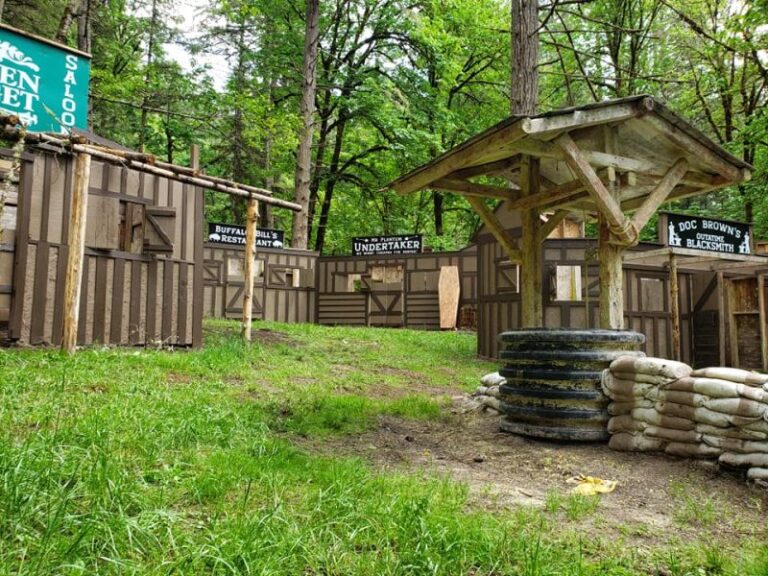
OutdoorsThe Swamp, Paintball, Airsoft, & Gellyball Field is located in rural Lebanon, Oregon, on Shady Oak Lane between Lebanon and Albany, about twenty minutes from Corvallis.
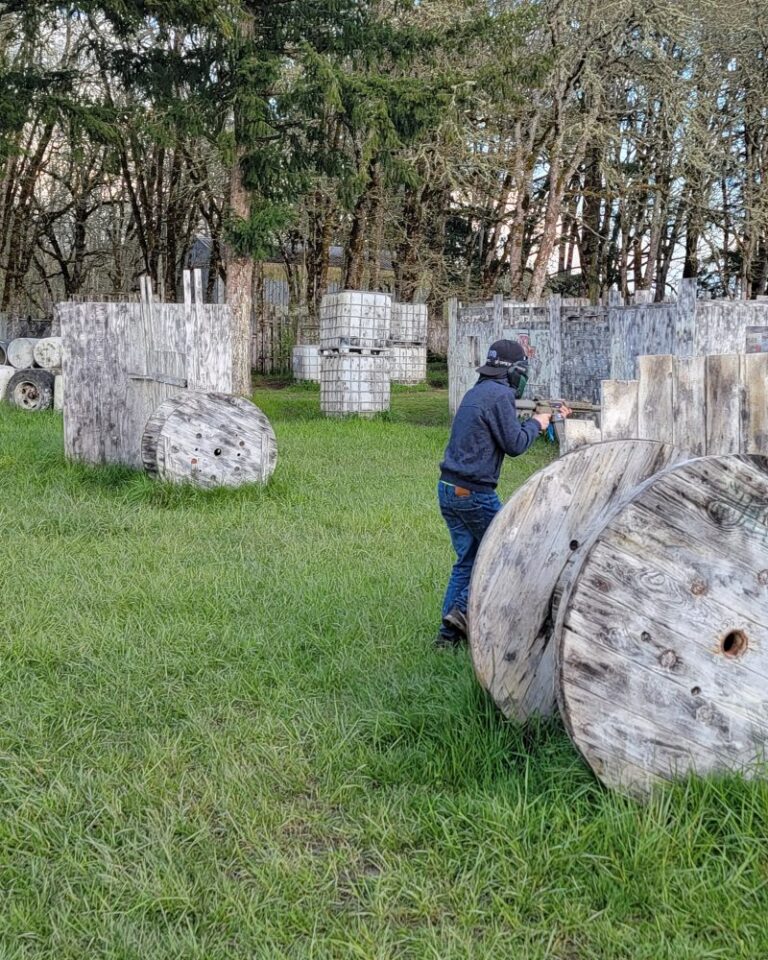
The park runs three sports on large, wooded fields loaded with bunkers, forts, pipes, and tires. Paintball and airsoft focus on scenario and woodsball play, while gellyball offers a soft, low-impact option for younger kids. Rental equipment is available in good condition, players may bring their own paint, and the fields are regularly updated with new structures. The staff and referees are known for being friendly and professional.
The Swamp is a popular choice for birthday parties, bachelor and bachelorette parties, church groups, family reunions, and corporate team-building events, and it can be reserved privately. Scheduled scenario days and walk-on events draw a loyal community of players. The park is among the highest-rated paintball fields in Oregon, praised for its clean facility, courteous staff, and welcoming, honor-based style of play.
OutdoorsImpact Action Sports sits in Tualatin, Oregon, roughly 20 minutes south of downtown Portland, along SW Schaber Lane. It’s the only action sports park in the area offering paintball, low-impact paintball, gel ball, and tactical laser all on one property, with multiple fields, obstacles, and covered staging areas. Private groups of 10 or more enjoy exclusive field access, a dedicated referee, and a private tent for three-hour sessions, while open play runs on weekends.
Beyond the games, the park has a full pro shop, VIP memberships with unlimited open play, offsite rentals, and add-ons like upgraded rentals, party packs, and paint grenades. Guests can bring their own food and decorations, and the staff is known for being friendly and professional. It’s a popular choice for birthdays, bachelor parties, corporate team building, and youth groups, with gel ball safe for kids as young as five.
Indoors Outdoors
Whether you’re a curious newcomer, a seasoned “sharpshooter,” or just someone who loves a good story about adrenaline‑fueled competition, this deep‑dive into paintball will give you the context, rules, strategies, and science behind the sport. Grab your marker, load up some CO₂, and let’s explore the colorful world where tactics meet teamwork and a splash of paint tells the whole tale.
Paintball is a fast‑paced, team‑oriented sport that pits players against one another using compressed‑air or CO₂‑powered markers (commonly called “guns”) that fire small, gelatin‑encased capsules of non‑toxic, water‑based paint. When a capsule hits a participant, it bursts on impact, leaving a bright, unmistakable mark that signals an “out.”
Key ingredients of a paintball game:
| Element | Description |
|---|---|
| Markers | Hand‑held devices that launch paintballs at velocities typically ranging from 250–300 ft/s (76–91 m/s). |
| Paintballs | 0.68‑inch (17.3 mm) spherical shells filled with a water‑based dye. Modern “eco‑balls” are biodegradable and dissolve in water within a few weeks. |
| Propellant | CO₂ cartridges or high‑pressure air (HPA) tanks provide the burst of power needed to propel the ball. |
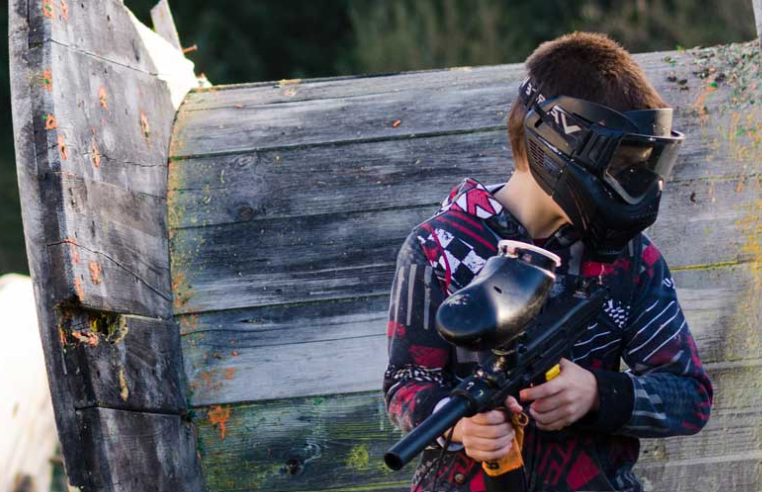
| Protective Gear | Full‑face masks, padded vests, gloves, and sometimes elbow/knee pads. Safety is baked into the rules. |
| Playing Field | Ranges from dense forest “woodsball” arenas to open “speedball” fields riddled with inflatable bunkers. |
The sport originated in the early 1980s when a group of former soldiers in Hennessey, New Hampshire, modified small air pistols to fire paint‑filled capsules. From backyard skirmishes to global tournaments, paintball has grown into a thriving industry worth over $2 billion worldwide (2023 estimate).
Every field enforces a core set of safety and gameplay regulations—think of them as the “rules of engagement.” Below is a concise cheat‑sheet that applies to most organized matches, whether you’re playing an 8‑person “capture the flag” or a 30‑person “last man standing” tournament.
A game’s flavor often hinges on its scenario. Below are the most popular setups, each offering a different tactical challenge.
| Scenario | Typical Player Count | Core Objective | Key Tactics |
|---|---|---|---|
| Speedball | 6‑12 per team | Eliminate opponents on a tight field with inflatable bunkers | Fast movement, aggressive flanking, quick reloads |
| Woodsball | 8‑24 per team | Capture flags or “search & destroy” in a natural, forest‑like terrain | Camouflage, stealth, long‑range engagements |
| Scenario / Story‑Based | 20‑100+ | Follow a narrative (e.g., “zombies vs. survivors,” “sci‑fi alien invasion”) | Role‑play, special equipment, objectives that change mid‑game |
| Tournament / League Play | 5‑10 per team | Accumulate points over several matches in a season | Consistency, team synergy, disciplined communication |
| Urban/Indoor “Arena” | 4‑8 per team | Clear rooms, clear corridors, secure hostages | Close‑quarters tactics, use of corners, controlled fire |
| MilSim (Military Simulation) | 30‑100+ | Simulate real‑world missions (e.g., “hostage rescue,” “convoy ambush”) | Realistic load‑outs, radio communication, coordinated assault |
Scenario play is where creativity meets strategy, turning a simple paintball match into an immersive, story‑driven experience.
Beyond the obvious thrill, paintball offers a surprising array of benefits—physical, mental, and social.
Paintball’s community is as colorful as its ammunition. Below is a snapshot of the main demographics and why they’re drawn to the sport.
| Demographic | Typical Age Range | Why They Play |
|---|---|---|
| College Students | 18‑24 | Affordable adrenaline, social bonding, and “college‑team” competitions. |
| Corporate Teams | 25‑45 | Team‑building retreats, leadership training, and stress relief for office workers. |
| Military & Law‑Enforcement Personnel | 20‑50 | Tactical rehearsal, camaraderie, and fitness maintenance. |
| Youth & Teen Groups | 12‑17 | Structured recreation, after‑school programs, and summer camps. |
| Competitive Athletes | 18‑35 | Pursuit of elite tournament play, sponsorship, and prize money. |
| Family & Hobbyists | 30‑60+ | Casual weekend outings, family bonding, and lifelong hobby. |
Finding the perfect battlefield depends on your preferred style, budget, and geographic location. Below is a guide to the most common venue types, plus tips for choosing the right one.
| Sub‑type | Description | Ideal For | Typical Features |
|---|---|---|---|
| Woodsball / Natural Terrain | Fields set in forests, hills, or abandoned farms. Terrain is irregular, with natural cover (trees, rocks). | Scenario play, tactical realism, long‑range shooting. | Variable sightlines, hidden bunkers, “no‑man’s‑land” zones. |
| Speedball / Inflatable Bunkers | Flat arena (≈ 30 × 30 m) surrounded by high‑visibility inflatable obstacles. | Fast‑paced competitive play, tournaments, beginner training. | Low friction, standardized layout, quick turnover. |
| Adventure Parks | Paintball incorporated into larger adventure complexes with zip‑lines, climbing walls. | Family outings, mixed‑activity days. | Multi‑activity packages, safety staff, on‑site rentals. |
| Military‑Simulation (MilSim) Sites | Large, often 10‑acre fields replicating urban or battlefield environments. | MilSim events, large‑scale scenario games (50‑200 players). | Mock buildings, trench networks, “objective” zones. |
What to Look For:
| Venue Type | Description | Pros | Cons |
|---|---|---|---|
| Urban “Arena” | Small‑scale indoor fields (≈ 15 × 15 m) with modular obstacles and limited “dead zones.” | Year‑round play, climate‑controlled, easy access in cities. | Constrained movement, higher risk of “paint‑ball bounce” (use low‑velocity markers). |
| Laser‑Tag/Paintball Hybrid | Some venues offer both laser and paintball equipment, letting groups switch mid‑session. | Flexibility, reduced mess (laser) for younger participants. | Higher cost per hour, equipment turnover time. |
| Corporate Event Centers | Dedicated event spaces with professional staff, catering, and meeting rooms. | All‑inclusive packages, team‑building facilitation. | Typically pricey, limited field size. |
Insider Tip: Many indoor venues now employ “dry‑fire” zones where players can practice without paint, using real‑time video analysis to refine technique before hitting the field.


 3046 Portland Rd. NE Salem, OR 97301