El Monte
 Log in
Log in
Log in

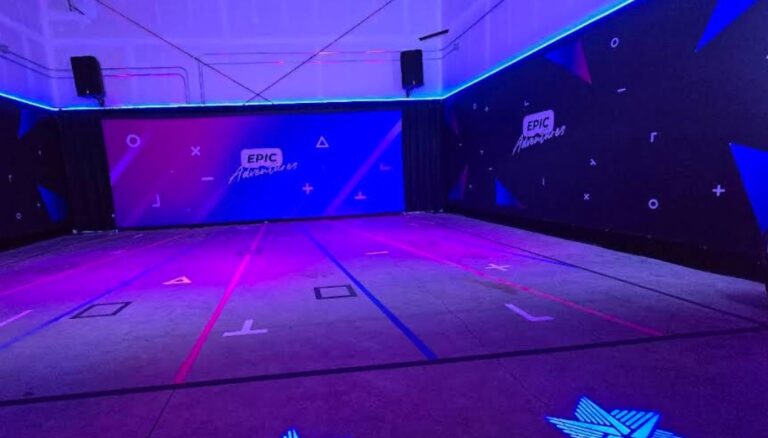
Epic Adventures is located in Vancouver, WA.
Epic Adventures: Free-Roam VR Arena and Party Space in Vancouver, WA
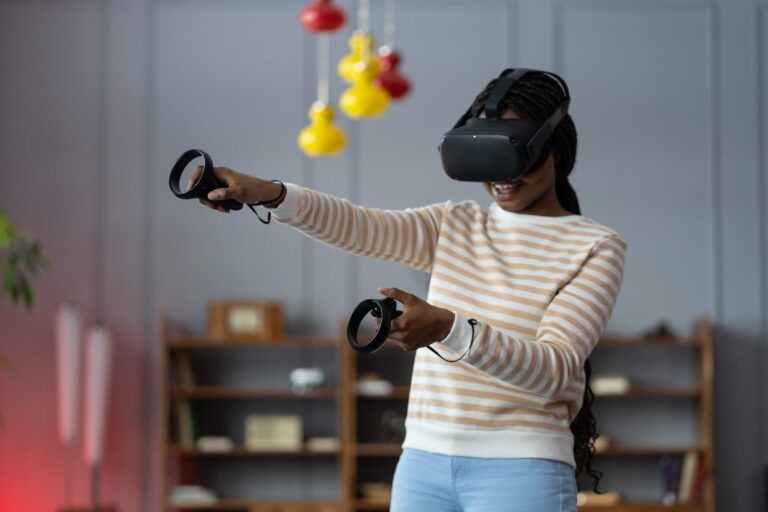
Epic Adventures in Vancouver, WA, aims to be the Portland/Vancouver area’s most advanced Free-Roam VR Arena gaming center, offering shared immersive VR entertainment experiences. They cater to individuals and groups looking for innovative entertainment. Reserve a private Free-Roam VR Arena experience for a date night, birthday party, bachelor/bachelorette party, holiday party, or team-building event. Furthermore, they offer a completely mobile Free-Roam VR Arena setup for events, wherever they may be.
For those who enjoy escape rooms, VR escape adventures offer experiences beyond a single room. These VR escape adventures might involve rescuing people on a space station before it explodes, being shrunk and having to figure out how to return to normal size, escaping prison, battling a powerful sorcerer to restore time, and many more adventures. It challenges participants to see if they have what it takes.
 Indoors
Gresham Cinema & Wunderland is located in Gresham, OR.
Gresham Cinema & Wunderland in Gresham, OR, presents a unique entertainment destination. Wunderland prides itself on offering these diverse experiences at a lower price point than other facilities, maintaining everyday low pricing.
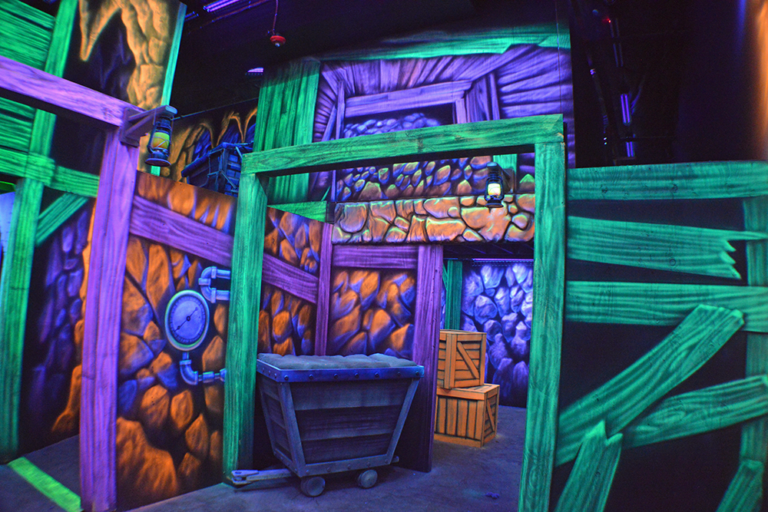
The Laser Tag arena transports players to the past, immersing them in a two-level, over 5500 square foot space. Upon entering the outfitters’ supply house, players find themselves in an old west setting. As they venture deeper, they’ll encounter old lost mines shimmering with gems and gold, and an old town where seeking shelter may be necessary, but difficult to find.
The XD Dark Ride presents a rich, multi-sensory interactive adventure, utilizing cutting-edge technology and special effects to create an exceptional guest experience. Group play, real-time 3D graphics, and individual scoring systems foster a competitive dynamic. Hologate VR provides a physically engaging, immersive experience using advanced graphic technology that crafts a stunningly realistic environment. Participants can collaborate as a team, venture out solo, or challenge friends in player-versus-player competitions. Beyond the virtual realm, visitors can enjoy a nine-hole mini golf course designed with interactive elements on every hole. This isn’t just a typical course; it’s a black light experience intended to excite the senses.
IndoorsKingPins Family Entertainment Center is located in Portland, OR.
KingPins Family Entertainment Center stands as a premier destination in Portland, Oregon, renowned for its unique blend of food and fun. KingPins Family Entertainment Centers are designed to offer a welcoming and friendly atmosphere where guests can enjoy bowling, laser tag (specifically at their Beaverton location), a state-of-the-art arcade, and satisfying restaurant dining. For those seeking a day brimming with entertainment that appeals to all ages, KingPins is the ideal choice, offering something for everyone. With locations in both SE Portland and Cedar Hills Crossing in Beaverton, KingPins ensures easy access to a world of excitement.
The Portland arcade within KingPins is a major attraction, boasting over 50 of the latest video and redemption games. Spanning 4,000 square feet, it provides ample space for guests to explore and engage with a diverse selection of gaming experiences. In addition to the traditional arcade offerings, they provide cutting-edge Virtual Reality experiences, including popular attractions like Virtual Rabbids and King Kong of Skull Island. After accumulating tickets from their gaming prowess, visitors can head to the Winner’s Court Redemption Store to redeem their winnings for a wide variety of prizes, adding an extra layer of excitement to their visit.
IndoorsCipher Solver Escape Games is located in Vancouver, WA.
Cipher Solver Escape Games: Vancouver’s Immersive Entertainment
Cipher Solver Escape Games in Vancouver, WA, strives to provide the best escape rooms & VR games in the area. A core tenet of the experience is 100% PRIVATE GAMES – ensuring no grouping with strangers, ever.
Cipher Solver aims to bring the most immersive, high-tech, and cinematic games to Vancouver! It challenges players to test their wits, skill, and teamwork as they race against the clock in a real-life adventure. They offer traditional escape rooms that serve 2 – 8 players and a VR Arena that can hold up to 5 players, catering to diverse preferences.
Indoors
A free‑roam VR arena is a purpose‑built, physical space where participants can move untethered while wearing a headset that tracks their position in three dimensions. Unlike seated or tabletop VR, which relies on a stationary play area and hand‑held controllers, free‑roam venues combine high‑precision optical tracking, wireless power solutions, and specially designed safety zones to let users walk, run, jump, and even crouch without tripping over cables or bumping into obstacles.
| Component | What It Does | Typical Specs |
|---|---|---|
| Head‑Mounted Display (HMD) | Delivers stereoscopic visuals and head tracking | 4K per eye, >90 Hz, inside‑out or external tracking |
| Wireless Power | Keeps the headset on for 2–4 hours without a battery pack | 60 W RF or resonant magnetic charging |
| Positional Tracking System | Captures the user’s location in real‑time | 30–60 Hz camera arrays or lidar grids |
| Safety Infrastructure | Prevents collisions with walls, props, or other players | Soft padding, motion‑sensor mats, “virtual walls” |
| Interactive Props | Physical objects that react to VR actions | Haptic‑enabled guns, swords, steering wheels |
Together, these technologies create a “real‑world sandbox” where the line between the digital and physical blurs, allowing participants to feel as though they are truly inside the virtual world.
Because the arena is a blank canvas, developers can craft a staggering variety of experiences. Below are some of the most popular—and innovative—scenarios you’ll find today.
Imagine a sprawling cavern, lit by bioluminescent fungi, where a team of four must locate a relic before a ticking lava flow engulfs them.
Space stations have never been more accessible. Float through a zero‑gravity arena and compete in “Astro‑Dodgeball” or “Orbit‑Racing.”
Step onto a recreated 1920s speakeasy or walk the streets of ancient Rome—complete with ambient smells and tactile textures.
Paramedics practice triage in a virtual disaster zone, or surgeons rehearse a complex procedure with a patient‑specific 3D model.
Teams solve “mission‑critical” puzzles that require cross‑department communication, mirroring real‑world project workflows.
Free‑roam VR isn’t a niche hobby for the tech‑savvy elite; it’s a multigenerational playground that attracts a surprisingly broad audience.
Hard‑core players love the physicality. Many professional teams now train in free‑roam arenas to improve reaction times and spatial awareness.
Parents see it as a safer alternative to traditional playgrounds. The built‑in safety nets and controlled environment mean children can explore high‑energy activities without the usual bruises.
From team‑building retreats to product demos, companies leverage the novelty factor to create memorable experiences that reinforce brand identity.
Cities such as Tokyo, Berlin, and San Francisco have turned free‑roam spaces into tourist attractions, offering “VR city tours” that showcase iconic landmarks in a wholly new light.
Universities partner with arena operators to study human movement, cognition, and ergonomics within immersive environments.
Children are natural explorers, and free‑roam VR satisfies that curiosity while keeping them physically active—a rare win in a world dominated by screen‑bound gaming.
| Benefit | How Free‑Roam VR Contributes |
|---|---|
| Cardiovascular activity | Running, ducking, and reaching raise heart rate to moderate levels. |
| Motor skill development | Hand‑eye coordination improves through object manipulation. |
| Spatial reasoning | Navigating 3D mazes hones mental mapping abilities. |
The result? A playground where imagination, learning, and exercise intersect—something parents are eager to endorse.
Because the arena can be custom‑decorated and programmed on the fly, it has become the go‑to venue for unforgettable celebrations.
Bottom line: Free‑roam VR transforms ordinary gatherings into multi‑sensory, story‑driven spectacles that participants will talk about for years.
The rapid growth of free‑roam arenas has attracted attention from academics, technologists, and policy makers alike. Below is a snapshot of the current discourse.
“Immersive locomotion in a VR environment recruits the same hippocampal circuitry used for real‑world navigation,” notes Dr. Maya Patel, a neuroscientist at Stanford University. She and her team published a 2025 study showing 30 % higher spatial memory retention in participants who trained in a free‑roam arena versus those who used a seated simulator.
Prof. Lars Henriksen, Chair of Ergonomics at KTH Royal Institute of Technology, emphasizes the importance of physical safety design. In a 2024 whitepaper he argues:
“The key to successful free‑roam VR lies in a seamless blend of software latency under 15 ms and hardware safety nets that are invisible to the user but prevent impact injuries.”
His recommendations have become industry standards for arena construction.
Gartner predicts that global free‑roam VR revenue will exceed $12 billion by 2028, driven by corporate adoption and the rise of experiential tourism. Analyst Sophie Chen (Bloomberg) adds:
“The shift from traditional arcade attractions to narrative‑driven, data‑rich experiences is creating a new revenue model—‘experience‑as‑a‑service.’”
This model includes subscription‑based access for schools, recurring corporate bookings, and “pay‑per‑play” for casual visitors.
| Research Area | Current Focus | Anticipated Breakthrough |
|---|---|---|
| Haptic Feedback | Low‑latency vibration suits | Full‑body force feedback exoskeletons |
| AI‑Driven Narrative | Branching storylines | Real‑time, player‑driven plot generation |
| Mixed Reality Fusion | Overlaying virtual objects on physical sets | Seamless integration where physical props become “alive” in VR |
| Health Monitoring | Heart‑rate and posture tracking | Closed‑loop bio‑feedback that adapts difficulty for wellness |
Collectively, the scientific community sees free‑roam VR as a living laboratory—a place where entertainment, education, health, and research intersect.
Free‑roam VR arenas have moved from novel curiosities to catalysts for cultural, educational, and commercial transformation. Whether you’re a kid hunting digital dragons, a corporate team solving a cyber‑security crisis, or a researcher dissecting the brain’s navigation system, the arena offers a physically active, emotionally resonant platform that static VR simply cannot match.
As tracking precision sharpens, wireless power becomes ubiquitous, and AI weaves ever‑more intricate stories, the only limit will be our imagination. The next time you walk through a lobby and see a sleek doorway framed by glowing panels, remember: beyond those doors lies a world where your body is the controller, and the adventure is limited only by the boundaries you choose to cross.
Ready to step inside? Check your local free‑roam VR venue and book a session—you might just discover a new side of reality.


 5305 NE 121st Ave Suite 806, Vancouver, WA 98682, United States