El Monte
 Log in
Log in
Log in

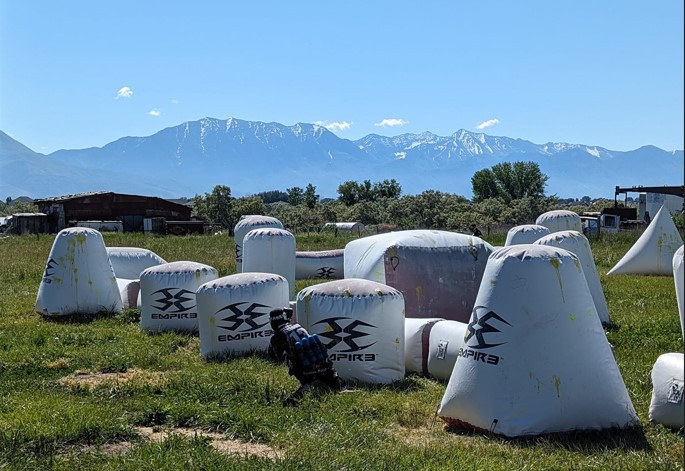
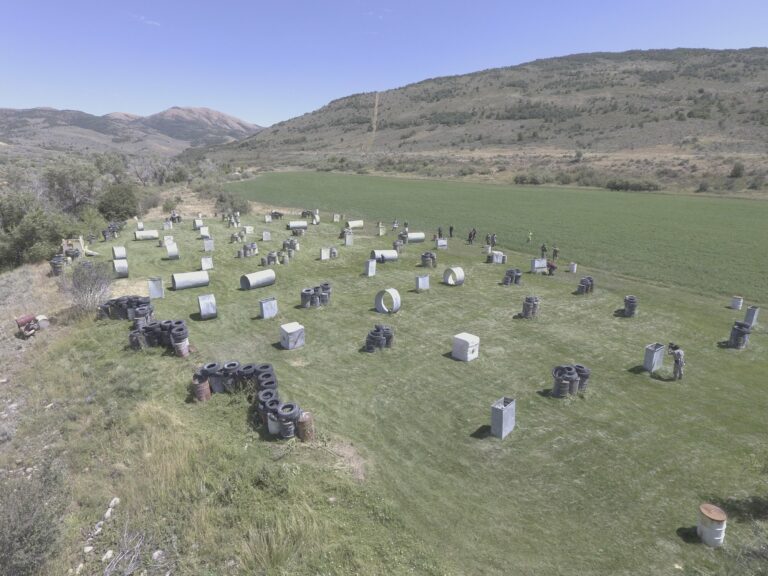
Action Center Paintball Outdoor Paintball field is located in Mountain Green, UT.
Action Center Paintball: Premier Outdoor Paintball Field in Mountain Green, UT
Action Center Paintball, located in Mountain Green, UT, positions itself as Utah’s oldest and largest paintball field. They assert that they provide everything needed for a comprehensive paintball experience, functioning as a full-service field with all the necessary gear and organized games. They aim to provide visitors with the best paintballing experience possible.
Regarding the field itself, Action Center Paintball features one of the few 360° playing fields in the area, which they state makes playing paintball extremely fun. They have a designated safe zone with grass, trees, picnic tables, flushing toilets, wash water, drinking water, and a shooting range. They even have a speedball or warm-up area located above the safe zone.
 Outdoors
Vendetta Paintball is located in Lehi, UT.
Vendetta Paintball: A Paintball Field and Store in Lehi, UT
Vendetta Paintball in Lehi, UT, operates a full-size NXL air bunker field. They characterize themselves as individuals who are passionate about paintball and dedicated to growing the sport and making it more accessible for people to play.
In addition to the field, they also function as a store catering to all paintball needs. They highlight their commitment to excellent customer service and their availability for service, maintenance, and any other support required by their customers.
OutdoorsSB Paintball is located in American Fork, UT
SB Paintball in American Fork, UT is a premier destination for paintball enthusiasts. With over 15 years of experience, SB Paintball offers a variety of fields and game formats to suit players of all levels. The facility features six different fields, including a speedball field, a woodsball field, and a scenario field, each with unique terrain and obstacles to provide a challenging and exciting experience.
OutdoorsPaintball is a competitive sport that pits teams or individual players against one another using high‑velocity markers that shoot spherical gelatin capsules filled with non‑toxic, water‑based paint. When a projectile strikes a player’s gear or exposed skin, the capsule ruptures, leaving a visible mark that signals an “out.” The markers, commonly called paintball guns, are powered by compressed carbon dioxide (CO₂) or high‑pressure air (HPA) and are regulated to fire at velocities that balance safety with the excitement of rapid, accurate shooting. Modern paintball equipment includes protective masks, padded vests, and a variety of tactical accessories that allow participants to customize their play style, much like the gear used in military or law‑enforcement training.
Although the game’s origins trace back to the early 1980s in the United States, it has since evolved into a global pastime enjoyed by millions. Its appeal lies in the blend of physical exertion, strategic planning, and the adrenaline rush of friendly competition. The sport can be adapted for casual weekend outings, organized tournaments, or even corporate team‑building exercises, making it a versatile activity that bridges age groups and skill levels.
While the specifics of a match may vary depending on the format or venue, a core set of rules underpins most paintball games:
Safety Gear Is Mandatory – Every participant must wear a certified paintball mask that fully covers the eyes, ears, and nose. Additional protective clothing, such as padded vests, gloves, and elbow/knee pads, is strongly recommended.
Markers Must Be Regulated – Most fields enforce a maximum muzzle velocity, typically between 280 and 300 feet per second (fps). This limit reduces the risk of injury while preserving the sport’s competitive edge.
No Shooting When Opponents Are Down – Players who have been marked must raise their marker and retreat to a designated “re‑entry” zone before re‑entering the game. Shooting a downed opponent is prohibited and may result in ejection from the field.
Maintain a Safe Distance – Most venues require a minimum distance of five feet when approaching an opponent for a “tag.” This rule prevents close‑range contact that could cause premature capsule rupture and potential eye injury.
No Physical Contact – Paintball is primarily a shooting sport; deliberately pushing, shoving, or tackling another player is forbidden. Minor accidental contact may occur, but intentional aggression can lead to penalties.
Follow Field‑Specific Rules – Each field may have additional regulations regarding barrel covers, the use of certain accessories, or time limits for specific game modes. Players are expected to read and adhere to these guidelines before stepping onto the field.
These rules create a structured environment that safeguards participants while allowing the sport’s dynamic nature to flourish. Violations are typically handled by referees or field staff, who may issue warnings, temporary suspensions, or permanent bans depending on the severity of the infraction.
Paintball’s versatility stems from the myriad scenarios that can be staged on a field. The most common formats include:
Two teams vie to retrieve the opponent’s flag and bring it back to their own base while defending their own flag. Success depends on coordinated offense, disciplined defense, and effective communication.
All players start on equal footing, and the goal is simple: eliminate opponents until only one remains. This format emphasizes individual skill, situational awareness, and the ability to adapt quickly to changing battlefield conditions.
Large‑scale events simulate military operations, movie scenes, or fictional storylines. Players may be assigned distinct roles such as “sniper,” “medic,” or “engineer,” and objectives can involve multiple phases, such as securing an objective, defending a location, or completing a rescue mission.
Played on a smaller, inflatable field with a symmetric layout, speedball emphasizes fast‑paced action and rapid respawns. It is the format most often seen in televised tournaments and is designed for high‑energy, short‑duration matches.
MilSim blends realistic tactics, authentic gear, and extended gameplay periods—sometimes spanning an entire day. Players must manage ammunition, maintain communications, and adhere to mission briefs that mirror real‑world military operations.
These scenarios can be mixed and matched, with organizers tailoring rules, objectives, and field layouts to suit the skill level of participants and the desired intensity of the experience.
Beyond sheer entertainment, paintball offers a spectrum of physical, mental, and social benefits:
Cardiovascular Fitness – The stop‑and‑go nature of the game, combined with quick sprints, crouching, and sudden changes of direction, provides a vigorous aerobic workout comparable to high‑intensity interval training.
Strategic Thinking – Players must assess terrain, anticipate opponents’ moves, and devise tactics on the fly. This mental exercise sharpens decision‑making skills and encourages adaptive thinking under pressure.
Team Cohesion – Successful teams rely on clear communication, role allocation, and mutual trust. Paintball thus serves as an effective team‑building tool for corporate groups, sports teams, and military units.
Stress Relief – The adrenaline surge associated with rapid firing and the release of built‑up tension can have a cathartic effect, helping participants unwind after a demanding day.
Hand‑Eye Coordination – Repeated aiming and firing enhance fine motor skills, reaction time, and spatial awareness—abilities that translate well to other sports and everyday tasks.
Confidence Building – Overcoming fear of being “hit,” mastering equipment, and executing successful strategies boost self‑esteem and foster a growth mindset.
Collectively, these advantages make paintball a holistic activity that nurtures both the body and the mind, appealing to individuals seeking a balanced blend of physical exertion and cerebral challenge.
The demographic profile of paintball participants is remarkably diverse:
Youth and Teens – Many schools and summer camps introduce paintball as an extracurricular activity, allowing adolescents to explore teamwork in a safe, supervised environment.
College Students – Campus clubs often organize intramural leagues, fostering camaraderie and providing a stress‑busting outlet during exam periods.
Professionals – Corporate groups increasingly incorporate paintball into team‑building retreats, recognizing its capacity to simulate high‑stakes decision‑making and reinforce interdepartmental collaboration.
Military and Law‑Enforcement Personnel – Units use paintball for tactical training, scenario rehearsal, and as a low‑risk method to assess unit cohesion and command effectiveness.
Retirees and Recreational Adults – The sport’s low‑impact nature and adjustable intensity make it accessible to older adults seeking active social outings.
Competitive Athletes – A subset of players pursues paintball at a semi‑professional or professional level, participating in national and international tournaments with sponsorships and prize pools.
This breadth of participation underscores paintball’s adaptability; the sport can be scaled from a casual weekend game to an elite competitive discipline, accommodating a wide range of ages, fitness levels, and motivations.
Researchers and industry specialists have examined paintball from several perspectives:
Safety Research – Studies published in sports medicine journals confirm that, when proper protective gear is employed and field regulations are enforced, the injury rate in paintball is comparable to other high‑impact recreational activities such as skiing or basketball. Common injuries are minor abrasions, bruises, or temporary eye irritation—most of which resolve without medical intervention.
Physiological Impact – Exercise physiologists note that a typical 30‑minute match can burn between 400 and 600 calories, depending on intensity and player weight. Heart rate monitoring during games indicates sustained periods of elevated beats per minute, confirming paintball’s efficacy as a cardiovascular workout.
Psychological Benefits – Cognitive psychologists highlight paintball’s role in enhancing stress resilience and improving problem‑solving abilities. The need to constantly assess threats and adjust tactics mirrors real‑world scenarios that demand rapid judgment under pressure.
Industry Growth – Market analysts project that the global paintball market will continue expanding, driven by innovations in marker technology, eco‑friendly paint formulations, and the rise of indoor “arena” facilities that operate year‑round. The industry’s commitment to safety standards, such as the International Paintball Federation’s (IPF) code of conduct, further bolsters public confidence.
Overall, the consensus among scientists and experts is that paintball, when practiced responsibly, offers substantial health and developmental benefits while maintaining an acceptable safety profile.
Paintball can be enjoyed in a variety of settings, each offering distinct experiences:
Outdoor venues typically operate seasonally, with weather influencing availability. They excel at delivering immersive, expansive gameplay that mirrors real‑world combat environments.
Indoor venues offer year‑round accessibility, controlled lighting, and consistent playing conditions, making them ideal for organized leagues, corporate events, and beginners seeking a more structured environment.
When selecting a venue, participants should consider factors such as field layout, safety policies, equipment rental options, and the presence of certified referees. Many reputable fields provide introductory packages that include marker rentals, safety gear, and a brief orientation, ensuring that newcomers can quickly integrate into the game.
Paintball stands at the intersection of sport, strategy, and social interaction. From its definition as a regulated shooting game using gelatin capsules to its diverse rule sets, varied scenarios, and broad demographic appeal, the activity offers a uniquely engaging experience. The sport’s benefits—ranging from physical fitness to enhanced teamwork—are supported by scientific research, while industry experts forecast continued growth driven by technological advances and expanding venue options.
Whether pursued on a sprawling woodland battlefield, a high‑tech indoor arena, or a compact speedball field, paintball delivers a dynamic blend of excitement and challenge. Its capacity to accommodate casual players, competitive athletes, and professional training units alike ensures that the game will remain a vibrant and accessible pastime for years to come.


 4129 Cottonwood Canyon Rd, Mountain Green, UT 84050, United States