El Monte
 Log in
Log in
Log in

All Star Bowling & Entertainment – Tooele is located in Tooele, UT.
All Star Bowling & Entertainment – Tooele: Fun for Everyone in Tooele, UT
All Star Bowling and Entertainment in Tooele, UT, features state-of-the-art bowling lanes, scoring systems, and bumpers designed for younger bowlers. They position themselves as a place where the entire family can enjoy spending time together. They also offer Cosmic Bowling, featuring black lights, lasers, fog, and music, designed to be a hit with people of all ages. All Star Bowling & Entertainment aims to provide something for everyone.
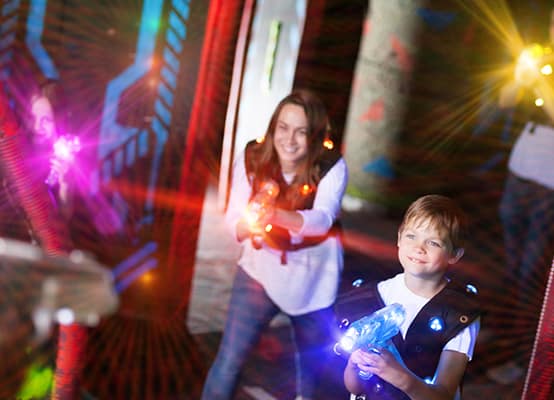
All Star Bowling & Entertainment offers a diverse range of exciting attractions suitable for individuals of all ages. They encourage visitors to explore the attractions offered at their location, guaranteeing that they will find something fun for everyone in their group. The attractions listed include an Arcade, a Climbing Wall, Bumper Cars, Laser Tag, and Hologate Virtual Reality.
 Indoors
Sandbox VR Indoor Center is located in Murray, UT.
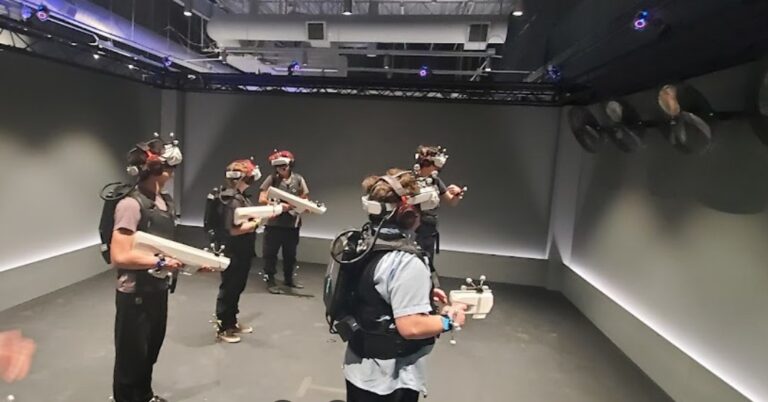
Located in Murray, Utah, Sandbox VR Murray brings cutting-edge virtual reality entertainment to guests of all ages. The venue combines full-body VR technology, advanced motion capture, and detailed 3D worlds to create hyper-realistic adventures that feel completely lifelike.
Sandbox VR Murray offers a wide selection of immersive games and story-driven missions. Groups can battle through futuristic sci-fi landscapes, explore mysterious worlds, survive thrilling horror scenarios, or work together to complete action-packed quests. Each experience allows players to move naturally within the space, interact with their environment, and see both themselves and their teammates as personalized avatars inside the virtual world.
Beyond its lineup of VR adventures, Sandbox VR Murray is also a popular destination for celebrations and special events. The location hosts birthday parties for kids, teens, and adults, offering unforgettable shared experiences and plenty of opportunities for photos and laughs. Corporate groups often choose the venue for team-building activities, as the cooperative gameplay naturally encourages communication, strategy, and problem-solving. The venue also accommodates bachelor and bachelorette parties, holiday gatherings, family outings, and graduation celebrations, giving each group a private space and a personalized schedule.
IndoorsGamer Planet is located in Sandy, UT.
Gamer Planet: Utah’s Premier Esport Center in Sandy, UT
Gamer Planet in Sandy, UT, positions itself as Utah’s leading Esport Center, aiming to provide the ultimate gaming destination for enthusiasts of all levels. They strive to create a vibrant and engaging environment for players to connect, compete, and experience the latest in gaming technology.
For those looking to celebrate a special day, Gamer Planet aims to be the ultimate destination for birthday parties. They provide a space where individuals can have a blast and make unforgettable memories. They offer a unique and exciting alternative to traditional party venues, catering specifically to gamers and tech enthusiasts. They strive to create a fun and memorable experience for all attendees.
Indoors
A free‑roam virtual‑reality (VR) arena is a purpose‑built physical space where participants can move unhindered while wearing head‑mounted displays (HMDs) that track their position in three dimensions. Unlike seated or tabletop VR setups, free‑roam arenas combine high‑precision motion‑capture systems with a safe, obstacle‑free environment, allowing users to walk, duck, reach, and even sprint as the virtual world responds in real time. The arena’s walls are typically lined with padded foam or soft panels, and the floor is covered with a low‑friction mat to reduce the risk of slips. Multiple HMDs, often tethered to powerful PCs or housed in wireless rigs, feed each player a unique perspective of the shared digital space, enabling both solo adventures and collaborative multiplayer experiences.
The technology behind free‑roam VR has matured rapidly. Inside tracking solutions (infrared cameras or lidar), outside‑in hybrid systems, and ultra‑low latency wireless transmitters now deliver sub‑20‑millisecond response times, which are critical for preventing motion sickness. The result is an immersive playground where the boundary between the physical and the virtual blurs, making it possible to explore vast landscapes, solve puzzles, or engage in high‑octane combat without being confined to a chair.
The versatility of a free‑roam arena lies in the breadth of scenarios that can be crafted for it. Developers can program anything from realistic simulations to fantastical adventures, and the arena’s hardware adapts to each narrative.
Exploration and Adventure – Players can wander through a recreated ancient ruin, a dense alien jungle, or a sprawling cyber‑city. The sense of scale feels authentic because participants physically traverse the space while the virtual environment expands beyond the walls through clever use of “portal” tricks and dynamic scaling.
Co‑op Puzzle Rooms – Team‑based escape‑room style challenges thrive in free‑roam VR. Objects that appear massive in the digital world can be manipulated with natural gestures, encouraging communication and coordination as teammates pass items, flip levers, or align holographic symbols.
Sports and Competition – From futuristic sword duels to zero‑gravity dodgeball, the arena’s open floor allows kinetic games that would be impossible on a stationary platform. The added dimension of height—jumping to reach floating targets or ducking under incoming obstacles—creates a physicality that heightens excitement.
Training Simulations – Emergency responders, military personnel, and industrial workers can rehearse high‑risk procedures in a safe setting. A fire‑fighting drill, for example, can simulate heat, smoke, and collapsing structures while the participants physically move through hallways and stairwells.
Creative Sandbox – Artists and designers can sculpt 3D models, paint in volumetric space, or choreograph virtual performances, all while walking around their creations to view them from every angle.
These scenarios are not static; many arenas offer modular content pipelines, allowing operators to swap out assets and rules on the fly, tailoring each session to the audience’s age, skill level, or thematic preference.
Free‑roam VR appeals to a surprisingly diverse demographic. While early adopters were predominantly tech enthusiasts and gamers, the accessibility and novelty of unrestricted movement have broadened the user base.
Teenagers and Young Adults – The primary market segment consists of high‑school and college‑age individuals seeking social, adrenaline‑pumping experiences. Group bookings for friends, school clubs, or esports teams are common, as the arena offers a shared narrative that can be streamed or recorded for later sharing.
Families – Parents appreciate the physical activity component, which mitigates the sedentary reputation of conventional gaming. Family‑friendly titles with cartoonish aesthetics and lower intensity levels make it suitable for children as young as five, provided they meet the arena’s safety guidelines.
Corporate Groups – Companies use free‑roam VR for team‑building exercises, product demonstrations, and creative brainstorming sessions. The immersive environment fosters collaboration and breaks down hierarchical barriers, encouraging participants to think outside the box.
Researchers and Educators – Universities and research institutions rent arenas to study human‑computer interaction, spatial cognition, and physiological responses to immersive environments. The controlled yet naturalistic setting provides valuable data for academic papers and prototype testing.
Event Attendees – Large‑scale conventions, festivals, and pop‑culture gatherings often feature a free‑roam VR booth, attracting curious visitors who want a quick taste of cutting‑edge entertainment.
The inclusive design of most arenas—adjustable headset straps, wheelchair‑compatible pathways, and customizable difficulty—ensures that people with varying physical abilities can also participate, further widening the audience.
When it comes to children, free‑roam VR offers a blend of entertainment and developmental benefits that educators and parents find increasingly compelling. The physical motion required reduces the risk of the eye strain and postural issues associated with traditional screen time. Moreover, interactive scenarios stimulate spatial reasoning, hand‑eye coordination, and problem‑solving skills.
Designers create age‑appropriate content that balances challenge with safety. For younger children, environments often feature bright colors, friendly characters, and simplified controls that rely on natural gestures rather than complex button combinations. Safety protocols—such as guardian monitoring stations, automatic proximity alerts, and restricted play zones—ensure that kids remain within the safe perimeter of the arena.
In addition to pure fun, many venues partner with schools to deliver curriculum‑aligned experiences. A “Space Exploration” module might teach basic astronomy, while a “Dinosaur Dig” adventure introduces paleontology concepts. The immersive nature of VR helps retain information better than textbook learning, as students can literally walk through a historical period or scientific phenomenon.
The flexibility of free‑roam VR makes it an attractive venue for a wide range of celebrations, each of which can be customized to fit the event’s theme and guest list.
Birthday Parties – Parents can book a themed adventure—such as a treasure‑hunt on a pirate island or a superhero training camp—where the birthday child leads the quest. Packages often include a “photo‑capture” feature that compiles in‑game screenshots into a digital album, giving the celebrant a souvenir that blends the virtual and real worlds.
Graduations – A university or high‑school graduation can be transformed from a traditional ceremony into an immersive “future‑vision” experience. Graduates might walk through a simulated career path, explore campus landmarks that have been digitally enhanced, or partake in a collaborative “building the world” game that symbolizes their transition into adulthood.
Corporate Parties – Companies looking to impress clients or reward employees can stage bespoke experiences that align with branding. For instance, an automotive firm could let participants test‑drive a virtual concept car on a digital track, while a tech startup might showcase its product in an interactive holographic sandbox. The social aspect is reinforced by post‑session lounges where participants discuss strategies, share highlights, and network in a relaxed setting.
These events usually incorporate additional services—catering, custom music playlists, and branded décor—to create a seamless blend of physical and digital celebration. The result is a memorable gathering where participants talk about the experience long after the headset is removed.
The scientific community and industry thought leaders recognize free‑roam VR as a catalyst for both technological advancement and societal impact. Researchers emphasize its potential as a research tool, while industry analysts focus on market growth and cross‑sector applications.
From a human‑factors perspective, studies demonstrate that free‑roam VR reduces the incidence of cybersickness compared with seated experiences, thanks to the congruence between visual motion cues and vestibular feedback. This alignment also offers a more accurate platform for studying locomotion, spatial awareness, and body schema in virtual environments, paving the way for breakthroughs in neurorehabilitation and prosthetic training.
In the medical field, clinicians are exploring the arena as a safe arena for exposure therapy, gait training for stroke patients, and surgical rehearsal. The ability to track precise body movements and provide real‑time haptic feedback allows for detailed performance metrics, which can be used to assess progress or refine techniques.
From an industrial innovation standpoint, manufacturers see free‑roam VR as a cost‑effective alternative to building full‑scale mock‑ups. Engineers can walk through a virtual assembly line, identify ergonomic issues, and test workflow optimizations before committing to physical prototypes. This accelerates product development cycles and reduces waste.
Economically, market analysts forecast that the global free‑roam VR segment will grow at a compound annual growth rate exceeding 30% over the next five years. The driver behind this expansion includes rising consumer demand for immersive entertainment, increasing corporate investment in experiential marketing, and the proliferation of lower‑cost, high‑performance VR hardware that makes deployment more feasible for medium‑sized venues.
Finally, ethicists caution that as free‑roam VR becomes ubiquitous, considerations around data privacy, psychological effects, and equitable access must be addressed. The data generated—precise body movements, gaze patterns, and biometric readings—hold immense value for personalization but also pose risks if mishandled. Ongoing dialogue between technologists, policymakers, and the public is essential to ensure that the technology enhances rather than undermines societal well‑being.
Free‑roam VR arenas have evolved from niche experimental labs into vibrant social hubs where adventure, education, and celebration intersect. By marrying unrestricted physical movement with high‑fidelity digital worlds, they provide experiences that are at once thrilling, instructive, and deeply human. Whether a teenager racing through a neon‑lit metropolis, a family embarking on a prehistoric quest, or a team of engineers fine‑tuning a production line, the arena invites participants to step beyond the screen and truly inhabit the virtual realm. As research continues to validate its benefits and industry investment fuels further innovation, free‑roam VR is poised to become a cornerstone of the next generation of immersive experiences.


 1111 N 200 W St, Tooele, UT 84074, United States