Outdoor Xtreme Charleston is located in Moncks Corner, SC.
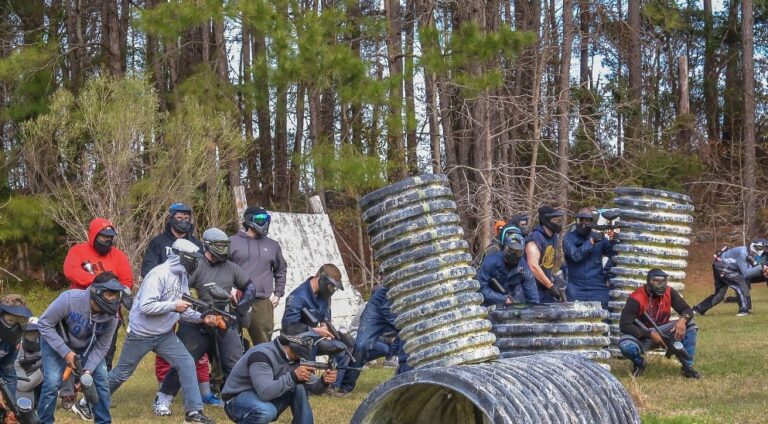
Outdoor Xtreme Charleston, situated in Moncks Corner, SC, presents over 20 acres of diverse terrain designed for unending adventure. They offer fields, and unique activities, with a core focus on interactive and engaging outdoor experiences.
Visitors to Outdoor Xtreme Charleston can participate in a range of exciting activities:
The Ultimate Guide to Paintball: From Basics to the Battlefield
Whether you’re a curious newcomer, a seasoned player, or just someone who loves a good adrenaline‑pumping story, this article will walk you through everything you need to know about paintball – its rules, the scenarios that make it thrilling, who’s playing, what experts think, and where you can dive into the action.
What Is Paintball?
Paintball is a team‑oriented sport that pits players against each other using air‑propelled markers (often called “guns”) that fire small gelatin capsules filled with non‑toxic, water‑soluble paint. When a capsule bursts on impact, it leaves a bright, unmistakable splatter that instantly “tags” the opponent and removes them from the round.
Key elements that define paintball:
The Marker – A mechanical or electronic device that shoots 0.68 in (17.3 mm) paintballs at velocities typically between 250–300 ft/s (76–91 m/s).
The Paintball – A soft, round sphere made of a thin shell of gelatin (or biodegradable polymer) that can be safely shot at high speed.
Safety Gear – A full‑face mask (mandatory in most leagues), chest protectors, gloves, and sometimes padded sleeves or knee pads.
The Playing Field – A designed arena—either indoor or outdoor—filled with natural cover (trees, rocks) or artificial structures (inflatable bunkers, pallets).
At its core, paintball is a fast‑paced blend of strategy, reflexes, and teamwork, with a vivid visual cue that makes every hit instantly obvious.
General Paintball Rules
While variations exist across leagues and casual “fun” games, most organized play follows a core set of rules that keep the sport safe, fair, and competitive.
1. Safety First
Masks on at all times while on the field. Dropping the mask is an immediate penalty.
Barrel covers must be installed when leaving the playing area.
No shooting from a stationary, raised position (e.g., from a tree or a ladder) unless the specific scenario permits it.
2. Elimination & “Hit” Confirmation
A player is out when a paintball leaves a visible mark on their body or equipment.
If there’s any dispute, the referee’s decision is final; most fields use “no‑talk” rules where players cannot argue after a hit.
3. Game Modes & Objectives
Capture the Flag (CtF): Retrieve the opponent’s flag and bring it back to your base.
Elimination (Deathmatch): Be the last player or team standing.
Objective‑Based (Scenario) Games: Complete a mission—defuse a “bomb,” rescue hostages, or control a point.
4. Reloading & Ammunition Limits
Players may carry a maximum of 400–600 paintballs depending on venue rules.
Some leagues enforce a “magazine” limit, requiring a brief pause after a set number of shots (usually 15–30) to simulate reload time.
5. Boundaries & “Out‑of‑Bounds”
The playing area is clearly marked. Crossing it results in an automatic out or a penalty if done to avoid a hit.
6. Sportsmanship
No cheating (e.g., swapping markers, using prohibited accessories).
Respect referees, staff, and opponents – unsportsmanlike conduct can lead to ejection.
These rules provide a solid framework that can be tweaked for casual “pay‑to‑play” weekends or high‑stakes tournament play.
Paintball Scenarios: Turning the Field into a Story
Scenarios (or “scenario games”) are the narrative heart of paintball, turning a simple shooting match into an immersive experience. Below are some of the most popular—and a few creative—scenario ideas.
1. MilSim (Military Simulation)
Objective: Replicate real‑world military missions such as “search and destroy,” “convoy escort,” or “recon.”
Features: Realistic rules of engagement, timed “load‑out” phases, and mission briefings.
2. Zombie Apocalypse
Objective: Survivors must reach a safe zone while “infected” players (zombies) chase them.
Features: Zombies get a speed boost, survivors can “cure” teammates with a special paintball, and safe zones act as “bases.”
3. Capture the Flag (Classic)
Objective: Steal the opponent’s flag and return it to your home base without being eliminated.
Features: Flag carriers are often marked with a bright flag or vest for easy identification.
4. King of the Hill
Objective: Hold a designated “hill” area for the longest cumulative time.
Features: Teams rotate in and out, with bonus points awarded for each minute held.
5. Rescue Mission
Objective: One team must locate and “rescue” a captured teammate (the “hostage”) while the other team defends.
Features: The hostage may have a limited “life” (e.g., a timer) before the round ends.
6. Adventure Quest
Objective: A series of checkpoints each with mini‑objectives (solve a puzzle, retrieve a token, etc.) leading to a final “treasure.”
Features: Encourages strategic pacing, teamwork, and problem‑solving under fire.
7. Urban Assault (Indoor Scenario)
Objective: Clear a multi‑room building of “enemy” players.
Features: Tight corridors, low ceilings, and the need for close‑quarters tactics.
Scenarios add depth and replayability, making each match feel fresh. For seasoned players, the best games are those that balance strategy, movement, and storytelling—all while keeping the adrenaline flowing.
What Is Paintball Good For?
Beyond the obvious fun factor, paintball offers a surprisingly diverse set of benefits that appeal to both individuals and groups.
1. Physical Fitness
Cardiovascular endurance: Sprinting between bunkers, dodging, and navigating terrain spikes heart rate.
Agility & coordination: Quick directional changes improve proprioception and balance.
2. Mental Sharpness
Strategic thinking: Players must assess terrain, anticipate opponents, and allocate resources on the fly.
Stress management: Rapid decision‑making under pressure hones the ability to stay calm in high‑stakes environments.
3. Team Building & Leadership
Communication: Clear, concise calls are essential for success.
Role allocation: Assigning shooters, medics (players who retrieve eliminated teammates), and scouts builds leadership skills.
4. Social Connectivity
Paintball is a great icebreaker at corporate retreats, bachelor parties, or school outings, fostering camaraderie through shared excitement.
5. Rehabilitation & Therapy
Some physical‑therapy programs incorporate paintball to improve range of motion, reaction time, and confidence after injury.
6. Educational Applications
Military academies and law‑enforcement agencies use paintball for tactical training, as it offers realistic engagement without lethal risk.
In short, paintball is a multifaceted tool for fitness, mental conditioning, social bonding, and even professional development.
Who Plays Paintball?
The paintball community is remarkably diverse, spanning various ages, professions, and motivations.
Demographic
Typical Motivation
Common Play Style
Young Adults (18‑35)
Thrill‑seeking, competitive leagues
Aggressive, high‑speed MilSim or tournament play
Corporate Teams
Team‑building, leadership exercises
Structured scenario games with debriefs
Military & Law‑Enforcement
Tactical training
Realistic MilSim with fire‑team drills
Families & Kids
Recreational fun, birthday parties
Low‑velocity “soft‑play” fields, easy rules
College Clubs
Social scene, intramural competition
Tournament circuits, “cannonball” events
Retirees & Seniors
Low‑impact exercise, social outings
“Speedball” or “cannonball” at slower velocities
Therapy & Rehab Patients
Motor‑skill relearning, confidence
Controlled indoor venues with safety nets
The common denominator across all groups is the desire for challenge, excitement, and connection. Paintball’s flexibility—adjustable marker speeds, customizable scenarios, and varied field types—makes it accessible to anyone willing to don a mask and have a blast.
Scientists and Industry Experts View on Paintball
1. Safety & Health Perspective
Biomechanics researchers (e.g., at the University of Colorado) have studied impact forces from paintballs, concluding that standard‑speed (≈280 ft/s) paintballs deliver less than 5 J of kinetic energy, well below thresholds for serious injury when proper protective gear is used.
Dermatologists note that while paintballs can cause minor bruising or skin irritation, the non‑toxic, water‑soluble pigment rarely leads to allergic reactions.
2. Psychological Benefits
A 2022 study published in Frontiers in Psychology linked regular paintball participation with improved stress resilience and higher scores on teamwork assessments. The researchers suggested that the sport’s “controlled risk” environment mirrors real‑world stressors without lasting harm.
3. Environmental Impact
Ecologists have raised concerns about paintball litter in natural fields. However, biodegradable paintballs (made from plant‑based gelatin) now decompose within 24–48 hours, greatly reducing ecological footprints. Industry leaders like Planet Paint have adopted compostable shells and recycled CO₂ propellant cycles.
4. Economic Outlook
The International Paintball Association (IPA) projects a 7 % CAGR (compound annual growth rate) through 2030, driven by e‑sports integration, virtual‑reality hybrid arenas, and corporate wellness programs.
5. Future Tech
Smart markers equipped with Bluetooth telemetry are being tested to provide real‑time shot data for coaching and analytics.
Augmented‑Reality (AR) overlays are piloted in indoor arenas, projecting virtual objectives and “hazards” onto the physical space, merging e‑sports with traditional paintball.
Overall, the scientific consensus is that paintball is a safe, beneficial activity when best‑practice safety protocols are observed, and the industry is moving rapidly toward more sustainable and technologically enhanced experiences.
Where to Play Paintball? Outdoor and Indoor Venues
Finding the right arena can make the difference between a “good day” and an unforgettable adventure. Below are the main venue types, their unique advantages, and tips for choosing the best spot for your needs.
1. Outdoor Fields
Venue Type
Terrain & Features
Ideal Scenarios
Typical Price (per player)
Forest / Woods
Natural cover: trees, bushes, uneven ground
MilSim, Survival, Zombie Apocalypse
$25‑$45 (2‑hour session)
Open “Speedball” Fields
Symmetrical inflatable bunkers, flat grass or synthetic turf
Tournament play, fast‑paced elimination
$20‑$30 (30‑min match)
Mountain / Hilltop
Elevation changes, rocky outcrops
King of the Hill, Capture the Flag with altitude challenge
$30‑$50 (full‑day rental)
Adventure Parks
Mixed natural & man‑made obstacles (ropes courses, zip lines)
Team‑building, corporate events
Custom pricing, often per group
Why Choose Outdoor?
Dynamic terrain demands adaptive tactics.
Fresh air and natural scenery add to the excitement.
Larger fields accommodate large‑scale scenario games (100+ players).
Combination of paintball guns and laser tag sensors for mixed‑mode games
Family events, “cannonball” parties
$20‑$35 (per hour)
VR‑Paintball Labs
AR headsets overlay virtual obstacles onto physical space
Tech‑savvy tournaments, futuristic training
$40‑$60 (per hour)
Why Choose Indoor?
Weather‑proof – no rain or heat worries.
Controlled lighting and acoustics allow for night‑vision or blackout scenarios.
Compact footprints make them accessible in urban areas.
3. How to Pick the Right Spot
Define Your Goal – Competitive league versus casual fun?
Check Safety Standards – Look for certified referees, mask‑fit stations, and first‑aid kits.
Read Reviews – Player feedback on field layout, paintball quality, and staff professionalism.
Ask About Packages – Many venues offer group discounts, equipment rentals, and “all‑inclusive” day passes.
Consider Travel Logistics – Proximity to public transport, parking availability, and on‑site amenities (food, lockers, showers).
The Paintball Experience in One Sentence
Paintball blends the pulse‑pounding thrill of a high‑speed chase with the brain‑tuning challenge of a strategic puzzle, all within a safe, social arena that welcomes anyone from weekend warriors to corporate leaders.
Ready to suit up? Pick a venue, brush up on the rules, and let the paint fly!

 El Monte
 Log in

 Indoors


 239 Cypress Gardens Rd, Moncks Corner, SC 29461, United States