El Monte
 Log in
Log in
Log in

Stars and Strikes Family Entertainment Center sits at the Coastal Grand Mall in Myrtle Beach, South Carolina, near U.S. 17, U.S. 501, and the Myrtle Beach airport, welcoming both locals and the area’s many visitors.
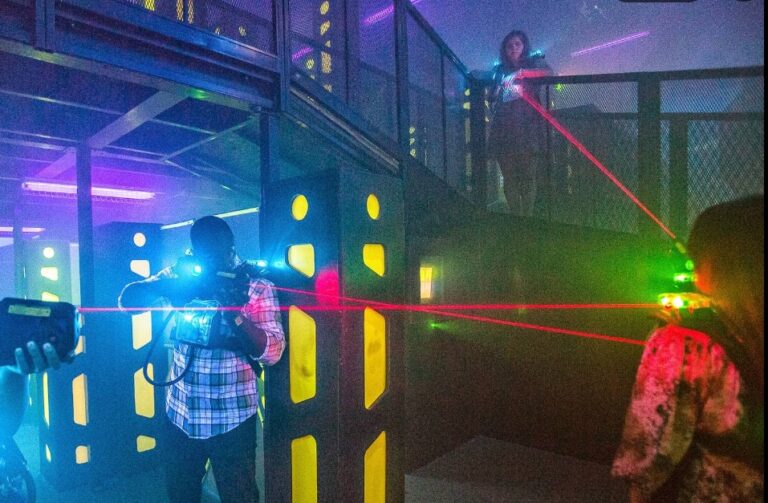
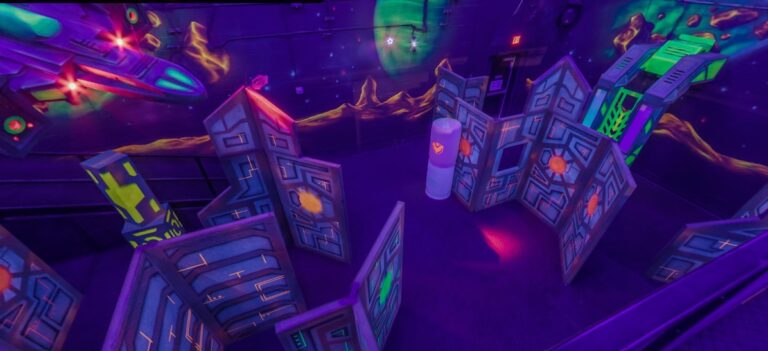
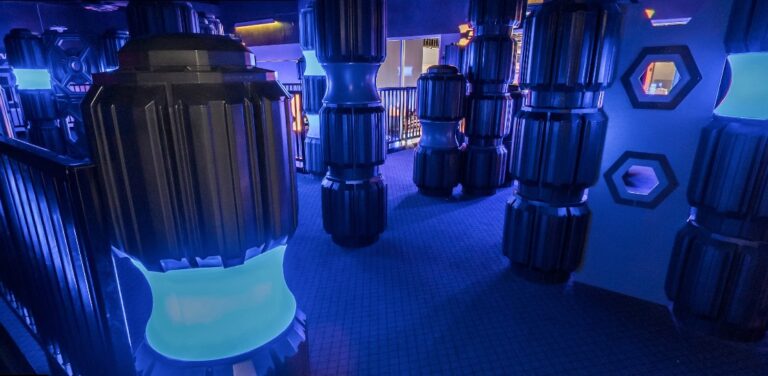
The venue centers on a multi-level laser tag arena with modern equipment, ramps, obstacles, and glowing hideouts, plus 24 bowling lanes, SPARK augmented reality bowling, virtual reality gaming, and axe throwing at Lumberjack Alley. A 10,000-square-foot arcade, bumper cars, an escape room, and karaoke round out the action. Beyond walk-in play, the Laser Tag Blast birthday package bundles four laser tag games, VR experiences, arcade cards, and food, while the event team handles corporate events, team building, fundraisers, and group parties of nearly any size. An on-site kitchen and full bar let guests refuel between games, and dedicated party hosts and trained coaches keep every visit running smoothly.
 Indoors
Frankie’s Fun Park sits on 13 acres in the Columbiana Mall area of Columbia, South Carolina, just minutes from downtown, and has been a local favorite since 1994. The park runs on a pay-per-attraction model with no admission fee, offering three go-kart tracks, three miniature golf courses with 54 holes, bumper boats, batting cages, a spinning coaster, and a two-level apocalypse-themed laser tag arena. Indoors, a large arcade with hundreds of games, virtual reality experiences, and the interactive XD Dark Ride keep the fun going regardless of the weather.
The park is well set up for celebrations, with birthday packages starting at $25 per person (ten-guest minimum), twelve family-friendly party rooms, and group packages that add bonus value to play cards. An on-site special events team handles everything from corporate team building for groups up to 180 people to large events for up to 2,000 guests, while the food menu covers pizza, burgers, wings, and sandwiches. With free entry, never-expiring fun money cards, and gift cards available at the park, it suits birthdays, corporate outings, graduations, and family days alike.
IndoorsStars and Strikes Family Entertainment Center sits in Irmo, South Carolina, along Lake Murray Boulevard just a short drive from downtown Columbia.
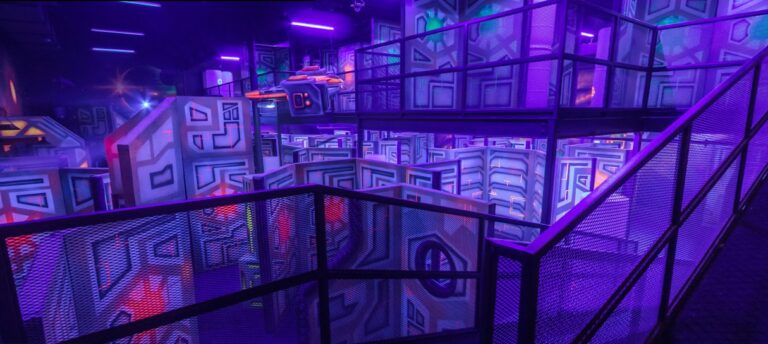
The 50,000-square-foot venue centers on a two-story laser tag arena packed with ramps, obstacles, and glowing hideouts, plus 24 bowling lanes (eight with SPARK augmented reality), a 7,500-square-foot arcade and prize store, virtual reality experiences, and bumper cars. Kids’ birthday packages start at $15.99 per person with a minimum of ten kids and include bowling, arcade cards, and/or laser tag, food, a Ticket Tornado, and a dedicated party host.
The on-site CJ’s Tavern restaurant and bar serves chef-inspired food, and multiple private party rooms include an upscale corporate event space seating over 100 with a full private bar. The venue hosts corporate events, team building, fundraisers, sports and church groups, and reunions, and runs regular specials like entertainment happy hours, Sunday deals, and a Friday Stack-n-Play bundle.
IndoorsCharleston Fun Park sits in the Mount Pleasant area of South Carolina, along busy Highway 17, a short drive from downtown Charleston. It’s a family entertainment venue that blends outdoor attractions with a large indoor arcade and gaming space, making it a year-round destination for locals and visitors alike.
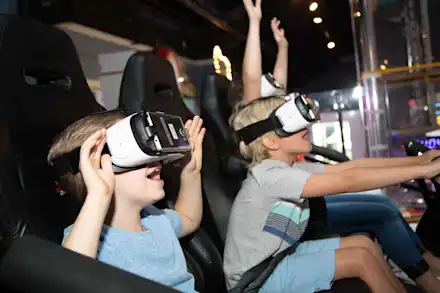
The park offers high-speed go-karts on a professional track, two themed 18-hole mini-golf courses under Spanish moss, bumper cars, a motion theater, mini-bowling, and a new gem and fossil mining sluice. Inside, an arcade with more than 50 games and the unique OMNI VR Battle Arena—a 360-degree virtual reality experience with full-motion treadmills—provide tactical, high-energy gaming for groups of all sizes.
Birthday packages range from a simple reserved table with pizza and arcade play to a top-tier option with 1.5 hours of unlimited go-karts, mini-golf, and arcade games, plus add-ons like NERF shooting, piñata fun, and slime-making. The event team handles corporate events, school groups, holiday parties, and family reunions with catering from pizza to BBQ. An on-site snack bar, an outdoor patio with beer and wine for adults, and seasonal community events round out the experience.
Indoors Outdoors
Stars and Strikes Family Entertainment Center sits in the Oakbrook area of Summerville, South Carolina, on Ladson Road just off the highways that connect the greater Charleston region.
The 55,000-square-foot complex centers on a two-story laser tag arena packed with ramps, glowing hideouts, fog, and music, alongside 24 bowling lanes (eight VIP lanes in the Main St Lounge), a 7,300-square-foot arcade with a prize store, bumper cars, virtual reality, and an on-site Escapology escape room. Kids’ birthday packages come with dedicated party hosts, while adult parties, corporate events, and team-building outings are all welcome in private rooms, including an upscale corporate event room seating 150-plus with a full private bar.
The 7/10 Grille serves chef-inspired cuisine from burgers to seafood, with a full-service bar and big-screen TVs for sports viewing. Seating is spread throughout so parents can watch their kids while dining. Regular specials—happy hour bowling, discounted game days, and food-and-arcade combos—make it easy to enjoy everything without overspending, and the attentive staff keeps the space clean, welcoming, and well-maintained.
Indoors
Virtual‑reality has moved beyond headset‑only experiences and into spacious, physical environments where users can walk, run, and interact with digital worlds as naturally as they do in the real one. These free‑roam VR arenas are redefining entertainment, education, and corporate events. Below we explore what they are, the scenarios they enable, who’s using them, and what scientists and industry leaders think about this rapidly expanding medium.
A free‑roam VR arena (sometimes called a “room‑scale” or “location‑based” VR space) is a purpose‑built venue equipped with multiple tracking systems, high‑performance PCs, and safe‑designated play zones. Unlike seated or couch‑based setups, users wear a head‑mounted display (HMD) and can move freely within a tracked area that typically ranges from 10 × 10 feet to an entire warehouse‑sized floor.
| Component | Function |
|---|---|
| Tracking hardware – Infrared cameras, lidar, or inside‑out sensors | Maps user position and orientation with sub‑centimeter accuracy. |
| Safety barriers – Soft walls, padded obstacles, floor‑level rails | Prevent collisions with real‑world objects while preserving immersion. |
| High‑end PCs / GPUs – Nvidia RTX 40xx series, AMD Radeon Pro | Render photorealistic worlds at 90 fps+ to avoid motion sickness. |
| Haptic peripherals – Vests, gloves, omnidirectional treadmills (optional) | Add tactile feedback, deepening the sense of presence. |
| Ambient design – Lighting, sound, scent diffusers | Complements the virtual narrative and boosts immersion. |
These arenas can be stand‑alone commercial venues (e.g., “The Void,” “VR Zone,” “Zero Latency”) or temporary pop‑up installations at malls, festivals, or corporate campuses. Their flexibility makes them a compelling platform for a wide range of experiences.
Because users can physically walk, duck, and gesture, developers can craft experiences that would be impossible on a static platform. Below are the most popular categories:
The common thread? Presence—the feeling that the digital world truly is where you are physically located.
Free‑roam VR appeals to a surprisingly diverse audience, driven by the blend of physical activity, social interaction, and cutting‑edge tech.
| Demographic | Typical Use‑Case | Why It Resonates |
|---|---|---|
| Gamers (15‑35) | Competitive shooters, multiplayer quests | High‑adrenaline, social bragging rights, novel gameplay |
| Families with kids | Fantasy adventures, educational tours | Safe, supervised, active play that keeps children moving |
| Corporate teams | Team‑building, product demos, brainstorm “mind‑maps” | Encourages collaboration, visualizes concepts in 3D |
| Educators & Students | Historical re‑enactments, science labs | Experiential learning that boosts retention |
| Therapists & Rehab centers | Motion‑controlled physiotherapy, exposure therapy | Motivating, low‑impact environment for recovery |
| Event planners | Birthday parties, graduations, trade shows | Unique, Instagram‑ready experiences that stand out |
Parents are drawn to free‑roam venues because they combine safe physical activity with digital wonder. Age‑appropriate content is curated to avoid overstimulation, and the arenas are staffed with trained facilitators who enforce hygiene protocols (sanitized headset covers, hand‑washing stations). Popular kids’ experiences include:
These offerings not only entertain but also spark curiosity in STEM fields and promote teamwork.
A birthday party in a free‑roam arena turns a typical cake‑and‑balloons celebration into an adventure saga. Packages usually include:
Kids leave with a lasting memory—the feeling that they truly saved a kingdom, not just played a video game.
Graduation ceremonies can become immersive retrospectives:
Such experiences add an emotional depth that a conventional speech often lacks.
Corporate clients leverage free‑roam VR for:
The outcome is typically higher engagement, improved recall of brand messaging, and measurable improvements in team cohesion (as reported by post‑event surveys).
The rapid rise of free‑roam VR has attracted attention from researchers across neuroscience, ergonomics, and computer science. Below is a synthesis of their perspectives.
Dr. Maya Patel (Cognitive Neuroscience, Stanford) notes that “the combination of proprioceptive feedback and visual immersion in free‑roam VR significantly lowers the cognitive load required to maintain a sense of presence compared to seated VR.” This translates to longer comfortable session times and deeper learning outcomes.
Professor Alexei Smirnov (University of Helsinki, Human‑Computer Interaction) adds that free‑roam environments “provide a richer set of affordances for spatial cognition, allowing users to develop mental maps that are more accurate than those formed in screen‑based simulations.”
Ergonomics specialist Dr. Lina Gómez (Harvard T.H. Chan School of Public Health) emphasizes that “controlled physical movement in VR can meet daily activity recommendations for moderate exercise, especially for children and sedentary adults.” However, she warns of motion sickness if frame rates dip below 90 fps, encouraging venues to invest in high‑end GPUs and proper calibration.
Safety engineer Mark Liu (ISO/IEC VR Working Group) stresses that “robust real‑world barrier design, regular equipment sanitation, and staff training are essential to prevent injuries and maintain public trust.” Recent ISO standards (ISO/IEC 22983) now include specific clauses for free‑roam arena safety.
Industry analyst Priya Nair (Gartner) projects that “the location‑based VR market will exceed $5 billion by 2028, driven largely by free‑roam experiences that can command premium pricing for events and education.”
Sociologist Dr. Tomasz Kowalski (University of Warsaw) observes that “free‑roam VR creates a new shared cultural space akin to early arcades, fostering cross‑generational interaction and democratizing access to high‑fidelity virtual worlds.”
| Research Area | Key Questions |
|---|---|
| Neuroplasticity | How does repeated free‑roam VR exposure reshape spatial memory circuits? |
| Multimodal Haptics | Can low‑latency tactile feedback be scaled affordably for large venues? |
| Social Dynamics | What emergent norms develop when avatars share a physically bounded space? |
| Sustainability | How can energy‑intensive PCs be offset by renewable power solutions? |
Collectively, experts argue that while technical and safety challenges remain, the benefits—enhanced learning, novel social experiences, and economic opportunities—make free‑roam VR a transformative medium.
Free‑roam VR arenas are more than a novelty; they represent a convergence of physical movement, digital storytelling, and social interaction that is reshaping entertainment, education, and corporate culture. From fantastical quests for kids to sophisticated training simulators for professionals, the technology offers a canvas limited only by imagination.
As scientists continue to validate its cognitive and health benefits, and industry leaders fine‑tune safety and scalability, we can expect free‑roam VR to become a staple of public spaces—much like the cinema or the arcade once were. Whether you’re planning a birthday party that feels like a dragon‑riding odyssey, a graduation that lets graduates walk into their futures, or a corporate event that turns strategy into an interactive adventure, the free‑roam arena is the stage where real world meets the limitless possibilities of virtual reality.


 600 Coastal Grand Cir, Myrtle Beach, SC 29577, United States