
 El Monte
 Log in
Log in
Log in

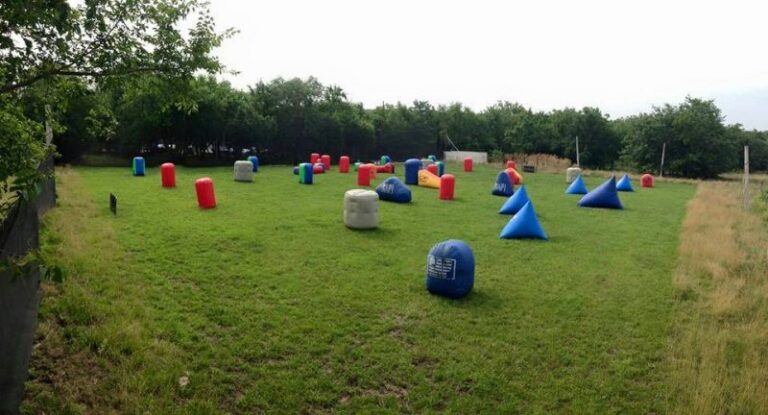
Drop Zone Paintball Park is located in Overbrook, Kansas, about 30 minutes southwest of Topeka.
The park spans 89 acres with six distinct game zones including a castle fort, a speedball field, a sniper plateau, and a creek-side battlefield for large-scale matches. Full rental equipment is available, and the staff provides safety briefings and game coordination for players of all skill levels. The park has been operating since 1989, making it the oldest paintball destination in Kansas.
Beyond paintball, the park features a barbecue and picnic area, shaded seating, and spectator zones near the main fields. It regularly hosts birthday parties, corporate team-building events, bachelor parties, school groups, and family reunions. Custom event packages and reserved party areas make it easy to combine active gameplay with social time. The friendly, experienced staff ensures that every group feels welcome and well taken care of.
 Outdoors
Paintball is a fast‑paced, team‑oriented sport in which participants use specially designed markers (commonly called “paintball guns”) to launch gelatin capsules filled with non‑toxic, water‑soluble paint. When a capsule bursts on impact, it leaves a vivid splatter that signals a hit. The game can be played in a wide variety of formats—from short, one‑on‑one duels on a compact field to large‑scale “military‑style” simulations that involve dozens of players, complex objectives, and elaborate terrain. Although the equipment and rules have evolved considerably since the sport’s birth in the early 1980s, the core concept remains simple: aim, fire, and avoid getting marked.
While specific tournaments and venues may tweak details, a set of universal guidelines governs most paintball play. These rules keep the game safe, fair, and enjoyable for everyone involved.
Safety Gear Is Mandatory – Every player must wear a certified mask that covers the eyes, nose, and ears. Additional protective equipment such as chest protectors, gloves, and padded clothing is strongly encouraged, especially in high‑impact formats.
Markers Must Be Regulated – Paintball markers are limited by velocity (typically 280–300 feet per second) and barrel length to reduce the risk of injury. Most fields require a chronograph test before a player may enter the arena.
Paintball Integrity – Only approved, non‑hazardous paintballs may be used. Players must ensure that paintballs are not cracked or misshapen, as damaged capsules can break prematurely and pose a danger to other participants.
Hit Confirmation – A player is considered “out” when a paintball marks any part of the body, clothing, or equipment that is exposed. Some formats permit a “re‑hit” rule where a player may return to the game after a set time or upon a teammate’s rescue.
Code of Conduct – Unsportsmanlike behavior—such as deliberately aiming for the head, shouting profanity, or tampering with opponents’ gear—is prohibited. Most venues employ referees who can issue warnings, penalties, or disqualifications.
Field Boundaries – Players must stay within the designated playing area. Crossing into off‑limits zones often results in a penalty or immediate elimination.
By adhering to these fundamentals, participants can focus on strategy and excitement while minimizing the risk of injury.
The versatility of paintball lies in its capacity to accommodate a broad spectrum of scenarios. Below are some of the most popular formats, each offering distinct tactical demands.
Two teams compete to retrieve the opponent’s flag and bring it back to their base while defending their own. Success hinges on coordinated assaults, defensive patrols, and rapid flag‑run transitions.
Every player starts as an individual combatant; the objective is to be the last unmarked participant. This format stresses stealth, precise shooting, and the ability to read opponents’ movements.
Scenario games create immersive storylines—such as a post‑apocalyptic survivor clash or a historical battle reenactment. Objectives may include rescuing hostages, planting “bombs,” or controlling strategic zones. Large fields, props, and role‑playing elements elevate the experience beyond simple shoot‑outs.
A central “hill” area is contested; teams earn points for the amount of time they maintain control. The hill may shift during gameplay, forcing teams to adapt and rotate their forces.
Played on a compact, inflatable field with symmetrical obstacles, speedball emphasizes fast reflexes, quick decision‑making, and high‑intensity firing. It is the standard format for competitive leagues and televised events.
Each scenario can be tweaked with custom rules—such as limited ammunition, “respawn” stations, or timed rounds—to suit the skill level and preferences of the players.
Beyond the immediate thrill of competition, paintball offers a suite of physiological, psychological, and social benefits.
Running, sprinting, crouching, and navigating uneven terrain provide an effective cardio workout. The sport also improves hand‑eye coordination, fine motor skills, and overall agility. Because matches can last anywhere from a few minutes to an hour, participants experience interval training that blends bursts of high intensity with short recovery periods.
Many scenarios require strategic planning, role assignment, and real‑time communication. Players learn to delegate tasks, trust teammates, and adapt to rapidly changing circumstances—skills directly transferable to workplace environments and community projects.
The adrenaline surge of a fast‑paced match, coupled with the physical exertion, triggers the release of endorphins. These natural mood enhancers help reduce stress and anxiety, offering a healthy outlet for competitive energy.
Scenario paintball forces participants to analyze terrain, predict opponent behavior, and devise creative tactics. This nurtures critical‑thinking abilities and encourages players to think several steps ahead, similar to a real‑world “chess match” played on a physical field.
Paintball attracts people from diverse backgrounds, fostering camaraderie among strangers who become teammates. The shared experience of a high‑stakes game often leads to lasting friendships and networking opportunities.
The demographic landscape of paintball is surprisingly broad. While the sport originated among military simulation enthusiasts and tactical training groups, it has since expanded to include:
Statistical surveys from industry associations indicate that approximately 60 % of paintball participants fall within the 18‑35 age bracket, but the proportion of players over 40 has been steadily increasing as the sport’s community emphasizes inclusivity and safety.
Researchers and medical professionals have examined paintball from several angles, ranging from injury prevention to its psychological impact.
Biomechanical studies have confirmed that modern paintball markers, when limited to the industry‑standard velocity of 280 fps, generate impact forces comparable to a fast‑moving tennis ball. The use of high‑quality, water‑based paintballs further reduces the likelihood of skin penetration. Consequently, the consensus among sports medicine experts is that paintball, with proper protective gear, ranks as a low‑to‑moderate injury‑risk activity—significantly safer than many contact sports such as rugby or ice hockey.
A 2021 study published in the Journal of Applied Sport Psychology demonstrated that participants in scenario paintball exhibited improved situational awareness and faster decision‑making under pressure. The researchers attributed these gains to the need for continuous visual scanning, rapid threat assessment, and split‑second execution of tactics.
Paintball manufacturers and field operators emphasize sustainability. Recent advancements in biodegradable paintball shells and recycled‑material markers aim to reduce environmental impact. Industry leaders also advocate for standardized safety training certifications, arguing that a consistent knowledge base across venues enhances both player confidence and public perception.
Collectively, the scientific community and industry stakeholders view paintball as a sport that, when regulated responsibly, provides measurable physical and mental benefits while maintaining an acceptable safety profile.
Paintball can be enjoyed in a range of settings, each offering distinct experiences and logistical considerations.
Outdoor venues typically span several acres and feature natural terrain—trees, hills, streams, and dense foliage. These settings are ideal for large‑scale scenario games and military‑style simulations. Players benefit from varied line‑of‑sight opportunities, strategic concealment, and the immersive feel of an authentic battlefield. Weather conditions add an extra layer of complexity; rain can make the field muddy, while bright sunshine may affect visibility.
Key characteristics of outdoor fields include:
Indoor paintball arenas are housed in climate‑controlled facilities, often constructed from inflatable “bubbles” or modular wall systems. The environment is curated for fast‑paced, high‑turnover matches, making indoor play perfect for newcomers, corporate events, and speedball leagues. Because the space is confined, matches are generally shorter, and the intensity level remains high.
Features of indoor venues include:
Some operators blend both approaches by offering “semi‑outdoor” fields—covered arenas with natural elements, such as a forest canopy over a cleared field. These hybrids provide weather protection while preserving the tactile feel of outdoor terrain.
When selecting a paintball location, players should consider:
By evaluating these factors, participants can match their objectives to the most suitable environment, ensuring a rewarding paintball experience.
Paintball has matured from a niche hobby into a globally recognized sport that balances excitement, strategy, and physical activity. Whether a teenager seeking an adrenaline rush, a corporate team aiming to sharpen communication, or a researcher studying cognitive performance under pressure, paintball offers a versatile platform. With clearly defined safety rules, a spectrum of engaging scenarios, and venues ranging from lush forests to high‑tech indoor arenas, the sport continues to attract a diverse audience while garnering respect from scientists and industry experts alike. As technology advances and sustainability initiatives take hold, paintball’s future looks bright—promising even richer experiences for the next generation of players.


 1224 1 Rd, Overbrook, KS 66524