
 El Monte
 Log in
Log in
Log in

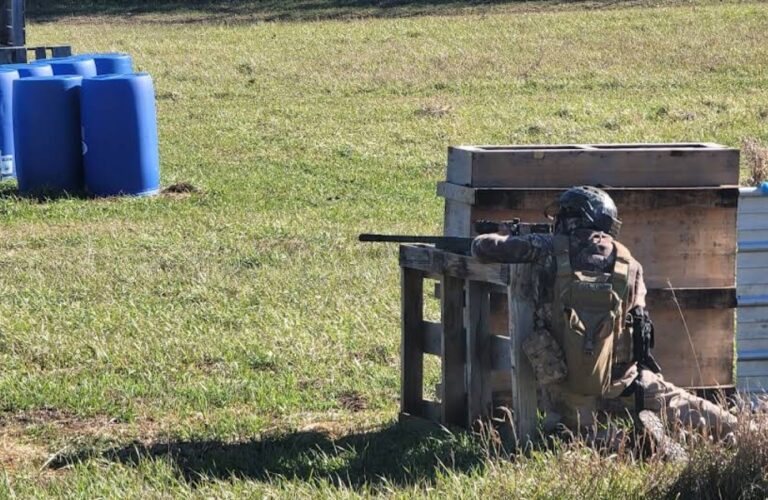
Top City Airsoft is located just off 49th and Burlingame Road in Topeka, Kansas, on 13 acres of outdoor terrain that opened in September 2023.
The field offers Saturday walk-on play with a variety of game formats including Team Deathmatch, capture the flag, and objective-based scenarios. The $25 entry fee includes airsoft gun rental, eye protection, and BBs, making it easy for newcomers to jump in without their own gear. The terrain blends natural features like hills, trees, and grasslands with man-made bunkers, creating a dynamic battlefield that suits all play styles. Safety is taken seriously with a 400 FPS limit, chronograph testing, and clear engagement distance rules.
Beyond regular play, Top City Airsoft hosts birthday parties, corporate team-building events, bachelor parties, graduations, and family gatherings with customizable packages. Periodic night games add a unique experience. The field is run by airsofters who started playing in 2023 and continue to improve the property each month. The atmosphere is community-driven and welcoming to all ages and skill levels, with a hands-on owner (Jeff) and staff who prioritize safety and fun in equal measure.
 Outdoors
Airsoft is a fast‑growing recreational sport that simulates military or law‑enforcement combat using replica firearms that fire lightweight plastic BBs, typically 6 mm in diameter. Unlike paintball, the projectiles are smaller and travel at lower velocities (usually between 200 ft/s and 400 ft/s depending on the gun and local regulations). The emphasis is on realistic tactics, teamwork, and immersion rather than on high‑impact hits. Players, often called “airsofters,” dress in military‑style gear, adopt authentic load‑out configurations, and engage in structured scenarios that range from simple objective‑capture games to elaborate “MilSim” (military simulation) operations lasting several days.
The sport’s appeal lies in its blend of realism, strategic depth, and social interaction. It offers a safe outlet for enthusiasts to experience the feel of tactical shooting without the legal, logistical, and ethical complications associated with real firearms.
Airsoft manufacturers design guns, accessories, and apparel to mirror their real‑world counterparts as closely as possible. Many replicas feature functional hop‑up systems, adjustable gas reservoirs, and realistic weight distribution, allowing players to experience the handling characteristics of actual weapons. Scenarios often incorporate authentic mission briefings, radio communications, and tactical objectives that mimic real‑life operations.
Because most games center on capturing objectives, defending positions, or assaulting fortified zones, success depends heavily on coordination. Squads must assign roles—such as point man, medic, or designated marksman—and communicate via hand signals or radios. Effective teamwork reduces the chaos of a firefight and creates a more satisfying, mission‑oriented experience.
Airsoft encourages players to think like commanders. Map knowledge, fire‑and‑movement tactics, and resource management (e.g., conserving ammunition or using smoke grenades) are critical. A well‑planned flanking maneuver or a carefully timed breach can turn the tide of a match, rewarding players who study the terrain and adapt on the fly.
Airsoft’s flexibility is evident in the breadth of game formats available:
Each mode emphasizes different aspects of play—speed, stealth, coordination, or endurance—ensuring that both newcomers and veterans can find a challenge that matches their preferences.
Airsoft’s aftermarket ecosystem rivals that of any hobbyist community. Players can upgrade nearly every component of their load‑out:
This level of personalization enables players to reflect personal tastes, mission requirements, or simply experiment with performance tweaks, fostering a culture of continual learning and innovation.
The airsoft community is a global network of enthusiasts, clubs, and event organizers bound by shared values of safety, respect, and camaraderie. Online forums, regional Facebook groups, and Discord servers serve as hubs for:
Because the sport relies heavily on mutual trust—especially when confirming hits—the community’s emphasis on respect and honesty helps keep the experience enjoyable for all participants.
Safety is the cornerstone of any airsoft session. Beginners should prioritize protective equipment before investing heavily in weapons or accessories.
| Essential Gear | Why It Matters |
|---|---|
| Eye Protection (ANSI Z87.1 rated goggles or full‑face mask) | BBs can cause serious eye injury; only certified protection should be used. |
| Gloves | Shield hands from BB impacts and provide grip for weapons. |
| Sturdy Boots | Offer ankle support and protect feet from accidental kicks or trips over obstacles. |
| Knee & Elbow Pads | Reduce bruising and abrasions during low‑crawling or prone movement. |
| Helmet | Guards the head against stray BBs, especially in close‑quarters battles. |
| Lower‑Face Protection (mouth guard or full‑face mask) | Prevents BBs from damaging teeth or the lower jaw. |
While many players opt for full‑face masks that combine eye protection, a breath mask, and a lower‑face guard, some fields allow “eye‑only” goggles paired with a separate mouth guard. Always verify local field regulations before purchasing.
All participants must treat every gun as if it were loaded and dangerous. This means keeping the trigger finger off the trigger until a clear line of fire is established, never pointing a gun at anyone outside of play, and adhering to the field’s velocity limits (often measured with a chronograph).
Airsoft relies on players to self‑report hits. Most fields use “hit‑call” systems where a player who feels a BB impact calls “hit” and removes their gear or steps out of the game. Some venues enforce “fair‑play” zones where referees verify hits with laser detection or sound‑based devices, but the majority of games depend on honesty.
Respect extends to teammates, opponents, and the field itself. This includes:
Violations can result in warnings, temporary bans, or permanent removal from a venue.
AEGs dominate the hobby due to their reliability, semi‑auto and fully‑auto firing modes, and ease of maintenance. Powered by rechargeable lithium‑polymer (LiPo) or nickel‑metal hydride (NiMH) batteries, they use a motor to drive a gearbox that compresses a spring, propelling BBs at consistent velocities. Popular platforms include the M4/M16 series, AK‑47 replicas, and sniper rifles.
These guns use compressed gas—either green gas (propane‑based), CO₂, or HPA (high‑pressure air)—to cycle the action. Gas pistols and rifles can deliver a realistic blowback effect, mimicking the recoil of real firearms. They excel in close‑quarters scenarios where rapid follow‑up shots and realistic muzzle flash are desired. However, performance can be temperature‑sensitive, with colder weather reducing gas pressure.
The simplest and most affordable option, spring guns require manual cocking before each shot. While they lack rapid fire capabilities, they are praised for durability and low maintenance. Spring sniper rifles are especially popular for long‑range engagements where precision outweighs rate of fire.
Each category offers distinct advantages, and many players maintain a mixed arsenal to adapt to different game styles.
Researchers in ballistics and injury prevention have examined airsoft BBs for safety implications. Studies reveal that at typical field velocities (under 400 ft/s), BBs possess kinetic energy well below thresholds for penetrating skin, but they can cause serious eye injury—hence the stringent eyewear requirements.
Psychologists note that airsoft’s emphasis on teamwork and strategic planning can enhance cognitive skills such as decision‑making, situational awareness, and stress management. Military training programs sometimes incorporate airsoft‑style simulations to teach squad tactics without the expense or risk of live ammunition.
Industry experts stress responsible regulation: they advocate for standardized velocity caps, mandatory protective gear, and clear field signage to maintain a safe environment while preserving the sport’s immersive qualities.
Airsoft attracts a diverse demographic:
While many fields require participants to be at least 18 years old (or to have parental consent), the sport’s inclusive nature fosters a community where skill level and background are less important than a willingness to learn and respect the rules.
Commercial venues provide well‑maintained terrain—urban ruins, forested zones, or indoor warehouses—complete with safety officers, rental equipment, and structured game schedules. These fields enforce velocity limits, require safety gear checks, and often host tournaments and special events.
Grassroots groups meet regularly at public parks, private property, or rented spaces. Clubs tend to run “soft” events with more relaxed rules, focusing on community building and skill development. Joining a local team is a great way for beginners to learn the ropes and find regular playing partners.
MilSim (military simulation) weekends are large‑scale, multi‑day experiences that combine realistic mission planning, supply logistics, and role‑playing. Participants often camp on site, use radio communication, and adopt strict operational protocols—making the event feel like a genuine tactical exercise. These events are usually organized by dedicated MilSim groups and can attract hundreds of players from across the country.
When selecting a venue, players should consider factors such as distance, terrain type, field reputation for safety, and the style of games offered. Most fields maintain a website or social media page where schedules, rules, and booking information are posted.
Airsoft has evolved from a niche hobby into a vibrant, globally connected sport that blends realistic weaponry, strategic gameplay, and a strong sense of community. By prioritizing safety through proper protective gear, adhering to a clear honour system, and respecting fellow players, participants can enjoy a thrilling yet responsible experience. Whether a newcomer chooses a reliable AEG, a gas‑powered pistol, or a classic spring rifle, the sport offers endless avenues for customization, teamwork, and personal growth. With diverse game modes, supportive clubs, and professionally managed fields, airsoft invites anyone with a taste for tactical challenge and camaraderie to step onto the field and become part of a dynamic, ever‑expanding community.


 2704 SW 49th St, Topeka, KS 66609, United States