El Monte
 Log in
Log in
Log in

Pyrrhic Outdoor Paintball and Fun is the outdoor location of Pyrrhic Tactical Sports Center, situated on 6 acres just off Ustick Road in Caldwell, Idaho. The facility offers three main outdoor activities: high-impact paintball, tactical airsoft, and low-impact peewee paintball for younger players. The fields are equipped with bunkers, obstacles, and strategic cover, and the club welcomes both walk-on public play and private group reservations. Rental gear is available on-site, and the staff provides referees for private matches to ensure fair and organized gameplay.
The club is family-owned and operated for over 12 years, with a strong focus on birthday parties, bachelor parties, church youth groups, sports teams, and corporate team-building events. A Paintball Birthday Package includes a reserved picnic table and extra gear for the birthday person. Additional amenities include rental gloves, vests, coveralls, and tactical accessories like smoke grenades. The outdoor setting features picnic tables for relaxation between games, and the facility operates year-round with adjusted winter hours on weekends.
 Outdoors
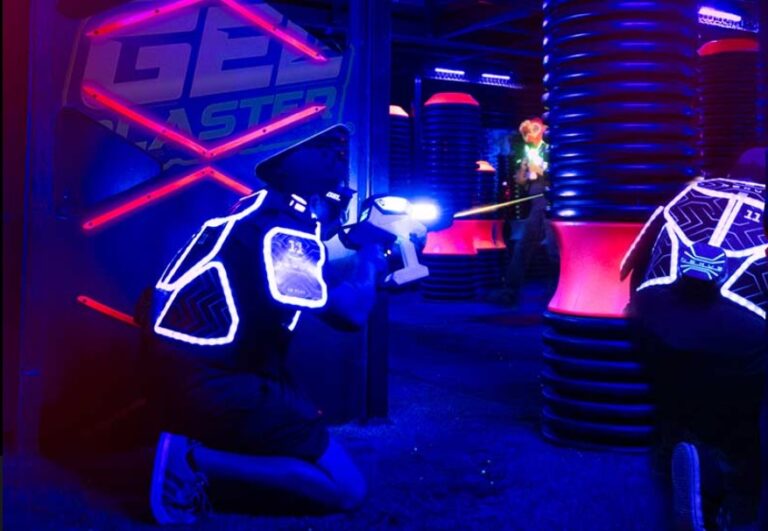
Pyrrhic Indoor Sports is located at 2104 Caldwell Blvd in Nampa, ID, inside the former Reel Theatre. The 22,500-square-foot facility offers five indoor activities: Tactical Laser Tag, Gel Blaster Nexus, Tactical Nerf, Airsoft, and Virtual Reality. The arenas are darkly lit with special effects and tracer ammunition, creating an immersive experience for players ages 6 and up (VR requires ages 10+). Birthday packages, youth group rates, and private event options are available.
Beyond the games, the venue features an arcade with air hockey, pool, and a motion simulator, plus spectator areas in each arena. The staff is family-owned and known for being energetic and helpful. Outside food is allowed for parties, and the lobby includes repurposed theater seating for relaxation. The center also operates an outdoor paintball and airsoft facility in Caldwell for those seeking high-impact action.
 Indoors
Airsoft is a sport that blends the excitement of military simulation with the camaraderie of team‑based play. Participants, often called “airsofters,” use replica firearms that discharge lightweight plastic BBs at velocities that are safe when proper protective equipment is worn. Though the projectiles are non‑lethal, the experience can feel remarkably realistic because the replicas are designed to mimic the look, weight, and operation of real weapons.
The appeal of airsoft lies in several intertwined elements. First, the realism of the gear and tactics draws enthusiasts who want to practice military‑style maneuvers without the legal or ethical complications of using live ammunition. Second, the sport emphasizes teamwork and strategy; success depends on communication, coordinated movement, and the ability to adapt to changing battlefield conditions. Third, a variety of game modes—ranging from simple capture‑the‑flag skirmishes to elaborate, multi‑hour “MilSim” (military simulation) scenarios—keeps the action fresh and challenges players to think creatively. Fourth, the customization possibilities for weapons, optics, and load‑out allow participants to tailor their equipment to personal preferences and specific mission requirements. Finally, a thriving community of clubs, forums, and online retailers provides support, shared knowledge, and a sense of belonging that extends beyond any single match.
Together, these facets make airsoft a distinctive blend of sport, hobby, and social activity.
For newcomers, selecting the right protective and functional gear is essential for safety, comfort, and enjoyment. While the list can appear extensive, a focused starter kit covers the most critical items:
The eyes are the most vulnerable part of the body in airsoft. Certified safety goggles or full‑face masks with polycarbonate lenses must meet standards such as ANSI Z87.1 or the European EN 166. They should fit snugly, be impact‑resistant, and provide a clear field of view. Many players opt for a full‑face mask that also shields the teeth and nose, especially in higher‑intensity games.
Durable, tactical gloves protect the hands from BB impacts, scratches, and the occasional snap‑fit of a weapon. Look for gloves with reinforced knuckles, a breathable palm, and a secure wrist strap to prevent loss during rapid movement.
Footwear must combine ankle support, traction, and water resistance. Military‑style combat boots or specialized airsoft boots with reinforced toe caps and anti‑slip soles are ideal for traversing uneven terrain, mud, and obstacles.
Knees and elbows take frequent hits when players crawl, dive, or fall. Hard‑shell pads with foam backing absorb impact while allowing a reasonable range of motion. Adjustable straps ensure a secure fit during dynamic play.
A robust helmet shields the head from stray BBs and provides a mounting platform for accessories such as night‑vision goggles, cameras, or communication devices. Lightweight polymer helmets with padded interiors strike a balance between protection and comfort.
While full‑face masks cover this area, a lower‑face guard or bite‑piece can be added for extra security, especially during close‑quarters battles where facial exposure is high.
Equipping oneself with this baseline gear not only satisfies safety requirements but also builds confidence, allowing new players to focus on tactics rather than worrying about potential injuries.
Airsoft fields and clubs implement a set of core rules that preserve safety, fairness, and mutual respect among participants. These guidelines are universally recognized, even when specific venues add their own variations.
Safety is the non‑negotiable foundation of every match. Players must keep their weapons on “safe” mode—or have a physical safety device engaged—whenever they are off the playing area. BBs should never be fired at anyone who is not actively participating, and all engagements must be called out clearly (e.g., “hit!”) so that injured players can cease fire immediately.
Airsoft relies heavily on honesty because the BBs are not traceable once they strike a target. When a player is hit, they are expected to call themselves out, raise a hand, and exit the game area for a brief “respawn” period. The honour system also extends to counting eliminations and reporting friendly fire incidents. Violation of this trust undermines the entire experience.
Respect for fellow players, referees, and property is essential. This includes maintaining proper conduct on and off the field, cleaning up spent BBs, and adhering to the designated boundaries and time limits. Discriminatory language, aggressive intimidation, or reckless behaviour can lead to removal from the venue and exclusion from future events.
Adhering to these principles ensures that every match remains an enjoyable, competitive, and safe environment for all participants.
Airsoft weapons fall into three primary categories, each with distinct operating mechanisms, performance characteristics, and maintenance requirements. Understanding these differences helps players choose a platform that matches their playing style and budget.
AEGs are the most common type of airsoft gun. Powered by a rechargeable lithium‑ion or NiMH battery, an internal motor drives a gearbox that compresses a spring and releases stored energy to propel BBs. AEGs can fire in semi‑automatic, burst, or fully automatic modes, offering flexibility for various game scenarios. They are praised for consistent FPS (feet per second) output, relatively low maintenance compared to gas systems, and a wide range of aftermarket upgrades—from tighter hop‑up units to high‑torque gears.
Gas‑powered guns use compressed propellant—typically green gas (propane mixed with a lubricant) or CO₂—to drive a piston that launches the BB. These rifles and pistols deliver a realistic blowback action, replicating the recoil of real firearms. Gas guns excel in short‑range engagements due to their high muzzle velocity, but performance can be temperature‑dependent; colder weather reduces gas pressure and may cause inconsistent firing. Maintenance involves regular cleaning of seals and o‑rings to prevent leaks.
Spring guns rely on a manually cocked spring to store energy. Each trigger pull releases the spring, pushing the piston forward and firing a single BB. These are popular for bolt‑action rifles and sniper platforms because of their simplicity, durability, and low cost. While they lack the rapid fire of AEGs or gas guns, skilled players can achieve high accuracy, especially at longer distances. Spring guns require no batteries or gas, making them ideal for field‑restricted venues or budget‑conscious newcomers.
Choosing between these categories depends on factors such as desired rate of fire, maintenance willingness, climate considerations, and the specific role a player intends to fill within a team.
The scientific community has examined airsoft from multiple perspectives, including ballistics, material science, and public health. Researchers note that the kinetic energy of a typical 0.20 g BB traveling at 350 fps translates to roughly 0.5 joules—well below the threshold for causing permanent injury to skin when proper protective gear is employed. Studies on eye‑injury risk consistently emphasize that polycarbonate lenses effectively disperse impact energy, reinforcing the importance of certified eye protection.
From an engineering standpoint, airsoft manufacturers have driven innovations in polymer technology, battery efficiency, and gas sealing systems. The development of high‑flow hop‑up units and adjustable gearboxes exemplifies how consumer demand pushes forward mechanical refinement.
Public‑health experts, meanwhile, view airsoft as a constructive outlet for adolescent and adult participants, providing a channel for physical activity, strategic thinking, and social bonding. While concerns occasionally arise about noise levels or the perception of militarism, most experts agree that, with regulated safety standards and responsible community oversight, airsoft presents a low‑risk, high‑engagement recreational option.
These professional assessments underline that, when played responsibly, airsoft aligns with safety guidelines and offers tangible benefits beyond mere entertainment.
Airsoft attracts a remarkably diverse demographic. Youth groups often discover the sport through school clubs or local recreation centers, drawn by the tactical challenges and the chance to develop teamwork skills. Adults ranging from college students to retirees participate for fitness, stress relief, and the social connections forged on the field.
Military enthusiasts, law‑enforcement personnel, and hunters frequently use airsoft as a low‑cost training tool to rehearse movement, communication, and cover‑and‑conceal techniques without live fire. Meanwhile, hobbyists with a passion for mechanical tinkering relish the extensive customization options, upgrading internals, optics, and external accessories to achieve optimal performance.
The inclusive nature of the community—welcoming newcomers, seasoned veterans, and everyone in between—has cultivated a global network of clubs, online forums, and international tournaments. The shared language of tactics, gear, and game etiquette bridges cultural and age gaps, making airsoft a truly universal pastime.
Finding an appropriate venue is essential for a rewarding airsoft experience. Opportunities vary by location, but three primary settings dominate the landscape.
Commercial fields operate under strict safety protocols, offering a range of built‑in obstacles, themed scenarios, and referee oversight. These venues typically enforce FPS limits, mandatory gear checks, and clear rules on engagement distance. Sanctioned fields are ideal for first‑time players because staff provide orientation, equipment rentals, and a controlled environment that minimizes accidental injuries.
Grassroots clubs often meet in public parks, wooded areas, or privately owned property with the owner’s permission. Membership provides regular practice sessions, internal tournaments, and the chance to develop long‑term relationships with fellow players. Clubs may also organize “night games” using low‑light equipment, adding an extra layer of immersion. Because clubs are community‑driven, they frequently welcome input on game design and encourage members to contribute to venue maintenance.
MilSim (military simulation) events are large‑scale, multi‑hour or multi‑day affairs that aim to replicate realistic military missions. Participants may be assigned specific roles such as squad leader, medic, or communications operator, and must follow detailed briefing packets that outline objectives, rules of engagement, and extraction protocols. These events often take place on expansive, purpose‑built battlegrounds that feature bunkers, trenches, and urban structures. While MilSim demands a higher level of commitment and gear investment, it rewards participants with an immersive, narrative‑driven experience that closely mirrors actual tactical operations.
Regardless of the chosen venue, players should verify that the location complies with local regulations regarding airsoft usage, noise ordinances, and landowner permissions. Engaging with reputable fields, clubs, or event organizers ensures a safe, enjoyable, and legally sound experience.
Airsoft stands at the intersection of realistic simulation, strategic sport, and vibrant community. Its core pillars—realism, teamwork, diverse game modes, extensive customization, and a supportive network—create a compelling environment for participants of all ages and backgrounds. By starting with the essential protective gear, respecting the universal rules of safety, honour, and respect, and selecting a gun platform that aligns with personal preferences, newcomers can smoothly transition into the hobby.
The perspectives of scientists and industry experts reinforce the sport’s safety when proper precautions are observed, while the broad demographic of players illustrates its universal appeal. Whether on a sanctioned field, within a local club, or amid a sprawling MilSim battlefield, airsoft offers experiences that blend physical activity, mental acuity, and social interaction.
For those seeking a dynamic, immersive pastime that challenges both body and mind, airsoft presents an accessible gateway. With the right preparation and an open‑minded attitude, the battlefield becomes not just a place of competition, but a community where strategy, camaraderie, and personal growth thrive.



 11809 Ustick Rd, Caldwell