Log in
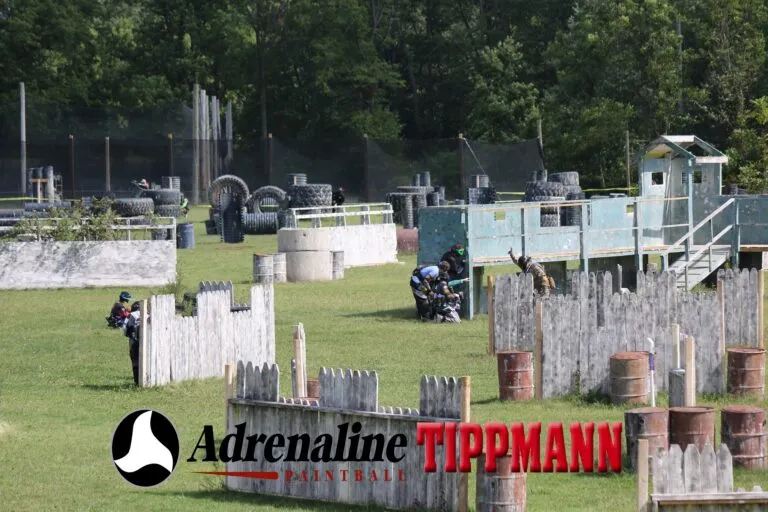
Adrenaline Outdoor Paintball is located in Melbourne, ON
Adrenaline Paintball in Melbourne, ON. A Thrilling Experience for All Ages
Nestled in the vibrant region of Melbourne, ON, Adrenaline Paintball stands as a premier destination for paintball enthusiasts of all ages. They pride ourselves on offering a wide variety of recreational play modes that cater to everyone, from young beginners aged 8 and up to seasoned veterans looking for a fun outing. Whether you’re looking to bond with family, celebrate a special occasion, or just experience the rush of the game, Adrenaline Paintball has something to offer.
One of standout offerings is their Kids Parties. Paintball is not just for adults; it can be an exhilarating experience for youngsters too. Carefully crafted Kid’s Parties are specifically designed for players aged 8-10 and up. In addition to Kids Parties, they also host Private Groups. But offerings don’t stop at paintball. They also provide Airsoft and Speedball options, catering to enthusiasts looking for different types of combat simulations.
Outdoors
Airsoft is a recreational activity that simulates military or law‑enforcement combat using replica firearms that fire lightweight, non‑metallic projectiles known as BBs. The guns—often called “airsoft guns”—are modeled after real weapons but operate on pneumatic, electric, or spring‑driven mechanisms. While the sport’s roots can be traced to Japan in the 1970s, it has grown into a global pastime that blends physical activity, tactical thinking, and a strong community ethos. Participants, called “airsofters,” engage in structured games that range from brief skirmishes in a backyard to multi‑day, large‑scale “MilSim” (military simulation) operations.
One of airsoft’s most compelling draws is its commitment to realism. Replica weapons are reproduced to exacting standards, often featuring authentic weight, ergonomics, and even external accessories such as rails, scopes, and flashlights. This fidelity creates an immersive environment where players must think and move as they would in actual combat.
Teamwork is equally essential. Unlike many single‑player video games, airsoft forces participants to communicate, assign roles, and coordinate movements under pressure. Successful squads rely on clear command structures, flanking maneuvers, and fire‑and‑movement tactics that mirror those taught in military training. The tactical depth encourages players to develop problem‑solving skills, quick decision‑making, and an intuitive sense of situational awareness.
Airsoft’s versatility is evident in the wide array of game modes available. Some of the most popular include:
Each mode emphasizes different aspects of combat—speed, stealth, coordination, or endurance—allowing players to experience a broad spectrum of tactical challenges.
The airsoft market thrives on personalization. From internal upgrades that improve gun performance to external accessories that enhance ergonomics, the possibilities are virtually endless. Popular upgrades include:
Customization extends beyond weaponry. Players often personalize their gear—vests, helmets, and uniforms—to reflect specific units, historical periods, or personal style. This culture of modification fuels a robust aftermarket industry and creates a sense of ownership that deepens engagement.
Airsoft’s strong community is a cornerstone of its longevity. Local clubs organize regular matches, share knowledge through online forums, and host training sessions for newcomers. Larger conventions bring together enthusiasts from different regions, offering vendor expos, demo days, and competitive tournaments. The community also emphasizes mentorship; experienced players routinely guide novices through safety protocols, gear selection, and tactical fundamentals, fostering an inclusive environment that welcomes participants of all ages and skill levels.
Entering the sport safely requires a baseline set of protective equipment. While the exact list can vary based on local regulations and personal comfort, the following items are widely recommended for beginners.
The most critical piece of gear is a pair of certified ballistic eye protectors. Airsoft BBs travel at velocities often exceeding 300 feet per second, and a direct hit can cause serious eye injury. Full‑frame goggles or wrap‑around masks that meet the ANSI Z87.1 standard provide the necessary impact resistance and coverage.
Durable gloves protect hands from scrapes, cuts, and BB impact. Tactical gloves with reinforced knuckles and palm padding offer both protection and improved grip on weapon controls.
Footwear should provide ankle support, puncture resistance, and good traction on varied terrain. Military‑style combat boots or rugged hiking boots are ideal, as they guard against sharp objects, mud, and uneven ground.
Knees and elbows are frequent points of contact during low‑crawls, prone positions, and rapid descents. Lightweight polymer pads with adjustable straps reduce bruising and allow greater mobility while maintaining protection.
A solid helmet shields the head from accidental BB strikes and the occasional stray projectile. Many players opt for lightweight tactical helmets equipped with rails for mounting lights or cameras.
Some venues require a full‑face mask or lower‑face guard, particularly in high‑velocity or “hardcore” fields. These masks protect the teeth, mouth, and chin while still allowing the wearer to breathe and communicate.
Together, this core gear creates a safety envelope that lets players focus on strategy and fun rather than worrying about injuries.
All airsoft fields enforce strict safety protocols. Weapons must be kept on “safe” or “bolt‑back” when not actively engaged in a scenario, and players are required to wear eye protection at all times. BBs are typically limited to a maximum velocity—often 350–400 fps for standard 6 mm BBs—to reduce injury risk.
Airsoft operates on an honour system: when a player is hit, they must call themselves “out” or “hit” and immediately cease participation in the current round. Cheating or failing to acknowledge a hit is considered a serious breach of etiquette and can result in removal from the field.
Respect for fellow players, referees, and field staff is mandatory. This includes arriving on time, following the rules set by event organizers, and maintaining sportsmanship both during and after matches. Verbal abuse, aggressive behavior, or any form of harassment is prohibited and can lead to bans from the venue.
AEGs dominate the market due to their reliability, semi‑automatic and fully automatic fire modes, and relatively low maintenance. Powered by rechargeable battery packs, they use an electric motor to drive a gearbox that cycles the bolt and compresses a spring to launch BBs. AEGs emulate the look and feel of real assault rifles, making them the go‑to choice for most tactical players.
Gas guns employ compressed propellant—typically green gas (propane‑based) or CO₂—to propel BBs. The most common gas‑powered models are pistols and sniper rifles, prized for their realistic blowback action that mimics the recoil of a real firearm. Gas guns can deliver higher muzzle velocities and a more authentic shooting experience, though they are more sensitive to temperature fluctuations.
The simplest mechanism, spring‑powered guns require manual cocking before each shot. While the rate of fire is limited to one BB per trigger pull, spring guns are inexpensive, highly durable, and maintenance‑free. They are often used as entry‑level rifles or as reliable backup weapons for experienced players.
Researchers studying projectile sports have highlighted airsoft’s potential benefits and risks. From a biomechanical perspective, the sport encourages hand‑eye coordination, cardiovascular fitness, and muscular endurance, especially when participants engage in lengthy MilSim events that involve trekking over challenging terrain.
Psychologists note that airsoft can serve as a constructive outlet for aggression, channeling competitive impulses into teamwork and strategic problem solving. However, experts also caution that improper protective equipment or disregard for safety protocols can result in injuries, particularly to the eyes and face.
Industry analysts point to airsoft’s growing economic impact. The global market, valued at several billion dollars, is driven by continuous innovation in gun technology, realistic accessories, and the rise of organized events that attract sponsorships and media coverage. The sector’s expansion has prompted many manufacturers to adopt stricter quality controls, ensuring that guns meet regulated velocity limits and that protective gear complies with recognized safety standards.
Airsoft’s appeal cuts across age groups, professions, and cultural backgrounds. Young adults often discover the sport through video‑game culture, seeking a physical counterpart to digital combat. Military enthusiasts appreciate the opportunity to practice tactical drills in a low‑risk environment. Law‑enforcement and security professionals sometimes use airsoft for scenario‑based training.
In recent years, families have begun participating together, with parent‑child teams fostering bonding experiences. Additionally, corporate teams employ airsoft as a team‑building exercise, leveraging the sport’s emphasis on communication, leadership, and trust. The diversity of participants contributes to a vibrant, inclusive community where newcomers are welcomed and experienced players serve as mentors.
Most regions have dedicated airsoft facilities that operate under local regulations. These fields provide controlled environments with clearly marked boundaries, safety briefings, and on‑site referees. They often feature varied terrain—urban mock‑ups, woodland areas, and indoor arenas—allowing players to experience different tactical scenarios. Many fields also rent gear, making it easy for beginners to try the sport without a substantial upfront investment.
Grassroots clubs organize regular meet‑ups, practice sessions, and friendly matches. Joining a local team offers the benefits of consistent training, shared knowledge, and a sense of belonging. Clubs frequently host “training days” where members practice weapon handling, movement drills, and communication protocols. They also serve as a conduit to larger events, helping members transition from casual play to organized tournaments.
MilSim (military simulation) events represent the pinnacle of airsoft immersion. These multi‑day operations simulate realistic missions, complete with detailed briefings, supply chains, command structures, and after‑action reviews. Participants may be assigned specific roles such as rifleman, medic, or squad leader, and must manage logistics like ammunition resupply and casualty evacuation. MilSim events are often held on expansive outdoor sites, sometimes featuring temporary structures, bunkers, and realistic props.
These varied venues ensure that players of all skill levels and interests can find a suitable setting—whether they seek a quick, casual skirmish or an elaborate, story‑driven campaign.
Airsoft stands at the intersection of sport, simulation, and community. Its realistic equipment, emphasis on teamwork and strategy, and diverse game modes create a compelling experience that attracts a broad spectrum of participants. By adhering to fundamental safety rules—eye protection, the honour system, and mutual respect—players can enjoy the thrill of tactical combat without undue risk.
The choice of gear, from the type of airsoft gun to protective apparel, shapes each individual’s entry into the hobby. Meanwhile, the industry’s ongoing innovations and the positive perspectives of scientists and experts underscore airsoft’s growing legitimacy as both a recreational activity and a valuable training tool.
Whether on a sanctioned field, within a local club, or amid the sprawling narrative of a MilSim event, airsoft offers a dynamic arena for physical exercise, strategic thinking, and camaraderie. For anyone looking to combine the excitement of combat simulation with the benefits of teamwork and community, the sport provides an accessible, engaging pathway—one that continues to evolve and expand with each new generation of players.