El Monte
 Log in
Log in
Log in

The Next Level VR Indoor Arcade is located in London, ON.
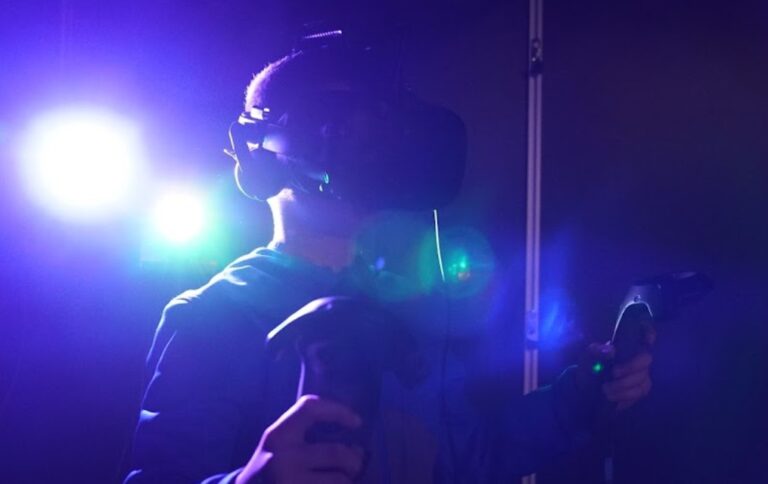
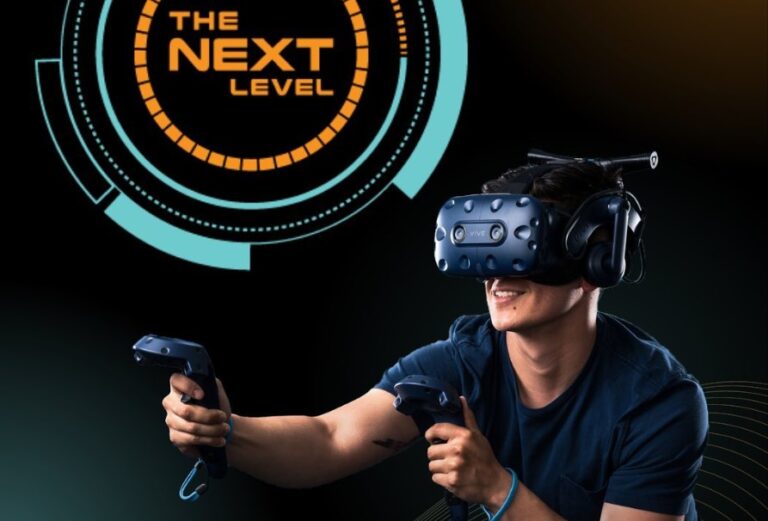
London Ontario’s Premiere Virtual Reality Experience. Situated conveniently at the Factory London, this facility is Canada’s largest dedicated VR space, and it’s designed to transport you beyond the confines of reality. With an impressive array of 24 HTC Vive™ Pro headsets, 22 individual gaming pods, a specialized private party room, and over 4,000 square feet of play area, we offer a truly immersive and unparalleled virtual reality experience. Ever-expanding game library is updated continuously, ensuring that you encounter a fresh and exhilarating adventure each time you visit.
Looking to host an unforgettable event? Let they elevate the experience! Whether you’re planning a birthday party, corporate event, or team-building activity, The Next Level VR has the facilities to make it extraordinary. Book out individual gaming pods for your group, or opt for a more private celebration in our specially designed party room.
 Indoors
The Factory Indoor Playground and Adventure Park is located in London, ON.
Canada’s Largest Indoor Adventure Park and Entertainment Centre. Spanning over 170,000 square feet, The Factory’s vastness is truly jaw-dropping. Imagine climbing walls, trampoline zones, high ropes courses, escape rooms, and more. It’s not just a park; it’s an adventure land where exhilarating activities are designed to challenge your physical limits and engage your mind. The little ones can explore designated kids’ areas while adults and teens push their boundaries with more complex activities. Safety is also a top priority, with experienced staff and well-maintained equipment ensuring everyone enjoys their adrenaline rush stress-free.
Planning a memorable party for your child or looking to strengthen bonds with friends through an exciting group activity? The Factory has party packages that cater to a variety of needs and preferences. Imagine celebrating a birthday surrounded by exhilarating attractions, dedicated party rooms, and all the fun your heart could desire. From customized themes to special add-ons, the staff at The Factory ensure that every detail is fine-tuned for a truly memorable celebration.
Virtual Reality: Step into New Worlds
One of the standout features of The Factory is its cutting-edge virtual reality (VR) experiences. Equipped with state-of-the-art HTC Vive Pro headsets, you’re invited to step into fantastical new worlds that stretch the boundaries of imagination. A massive library of games and experiences, updated monthly, ensures that there’s always something new to explore. Over 60 unique experiences are available at any given time, promising something for everyone, whether you’re a seasoned gamer or a curious newcomer to the world of VR.
IndoorsA free‑roam virtual‑reality arena is a physical space that has been transformed into a three‑dimensional playground where participants can move unrestricted by wires or stationary headsets. Unlike seated or tabletop VR, which confines the user to a single spot, free‑roam systems mount the headset on a lightweight backpack or a tethered cable that is long enough to allow full‑body movement across a defined area—typically a warehouse‑size room, an empty office floor, or a specially built dome.
The arena is fitted with an array of external sensors—infrared cameras, lidar scanners, or ultrasonic beacons—that constantly track the headset, handheld controllers, and sometimes even the wearer’s body. This data is processed in real time, feeding the virtual world with the user’s exact position and orientation. The result is an immersive experience that mirrors real‑world locomotion: walking, running, crouching, jumping, and even dodging obstacles are reflected in the digital environment without the latency or motion‑sickness that can plague less sophisticated setups.
Because the technology decouples the user from a fixed chair or a treadmill, designers can craft experiences that take advantage of actual space. A user may explore a sprawling alien landscape, navigate a maze of ancient ruins, or cooperate with teammates in a tactical combat scenario—all while their feet are firmly planted on the arena floor. The physicality of the setup also introduces a social element; observers can watch the action on large screens, making free‑roam VR a hybrid of gaming, performance art, and live entertainment.
The flexibility of a free‑roam arena gives rise to a wide spectrum of scenarios, each leveraging the freedom of movement in a different way.
Adventure Exploration – Participants can wander through hyper‑realistic recreations of historical sites, such as a 15th‑century Venetian marketplace or an extinct dinosaur jungle. The ability to physically walk through the environment enhances learning, as users naturally gravitate toward points of interest and absorb contextual details without the need for menus or teleportation.
Team‑Based Competitive Games – Multiplayer shooters, capture‑the‑flag matches, and battle‑royale style contests thrive in a space where players can flank, hide, and sprint. The physical separation of teams encourages strategic use of cover and height, making the gameplay feel more akin to a paintball match than a conventional video game.
Co‑operative Puzzle Rooms – Escape‑room designers can embed physical props that interact with the virtual world. A player might pull a lever in reality that unlocks a virtual door, or align mirrors on a real wall to redirect a laser beam in the headset’s view. This blend of tactile and digital problem‑solving deepens immersion and fosters collaboration.
Fitness and Wellness Sessions – High‑intensity cardio workouts, virtual yoga studios, and rhythmic dance challenges are all possible within a free‑roam arena. Because the system tracks every step, instructors can provide real‑time feedback on form, heart rate zones, and calorie expenditure, turning VR into a legitimate fitness platform.
Narrative Storytelling – Immersive theater productions can place audience members inside a story, allowing them to walk through plot‑driven environments and interact with characters played by actors or AI avatars. The result is a hybrid of cinema, live performance, and video‑game storytelling that blurs the line between spectator and participant.
These scenarios illustrate that free‑roam VR is not confined to a single genre; its core advantage is the ability to translate any virtual concept that benefits from physical movement into a tangible, shared experience.
The demographic profile of free‑roam VR participants is surprisingly broad, reflecting the technology’s adaptability.
Casual Gamers – Individuals who enjoy video games but are deterred by the discomfort of headset cables or limited motion often gravitate toward free‑roam arenas for a more natural feel.
Families and Children – Parents appreciate the safe, supervised environment where kids can explore imaginative worlds without the risk of tripping over cords. Age‑appropriate experiences range from gentle underwater adventures to light‑hearted obstacle courses.
Corporate Teams – Companies use the arenas for team‑building exercises, leadership training, and product demos. The collaborative nature of many scenarios promotes communication, trust, and rapid decision‑making under pressure.
Educators and Researchers – Universities and vocational schools employ free‑roam VR to teach subjects such as anatomy, architecture, and chemistry. The embodied learning model helps students retain information longer than traditional lecture formats.
Event Organizers – Birthday parties, graduation celebrations, and product launches increasingly feature free‑roam VR as an entertainment centerpiece, capitalizing on its novelty and visual wow factor.
The common thread among these groups is the desire for an experience that feels both physically engaging and mentally stimulating—a blend that static VR setups struggle to deliver.
Introducing children to free‑roam VR requires a careful balance of safety, educational value, and fun. Most arena operators enforce age restrictions (often 8 years and older) and conduct brief safety briefings before each session. The hardware is typically lighter than standard headsets, and the play area is bounded by padded walls or virtual “safety zones” that trigger a gentle pause if a child approaches the perimeter.
From an educational standpoint, free‑roam VR can act as a modern sandbox. Young learners can explore ecosystems, conduct virtual chemistry experiments, or travel back in time to witness historical events firsthand. Because the experience is embodied, children retain spatial relationships and cause‑and‑effect logic more effectively than through 2‑D screens.
Moreover, the social aspect—playing alongside peers in the same physical space—helps develop teamwork and communication skills. Trainers can design age‑appropriate challenges that require cooperation, such as constructing a bridge in a virtual construction site or solving a mystery that demands collective clue gathering.
Parents often cite the novelty factor as a major draw, but the underlying educational merits are increasingly recognized by schools and after‑school programs that incorporate free‑roam VR into curricula for STEM enrichment.
When it comes to celebrations, free‑roam VR offers a versatile platform that can be customized to fit the tone and scale of any gathering.
Birthday Parties – Hosts can select themed adventures—pirate treasure hunts, space missions, or whimsical fairy‑tale forests—that cater to the birthday child’s interests. The arena can be divided into stations for different age groups, ensuring younger guests face less intense challenges while older teens enjoy more competitive games. The vibrant visuals and kinetic energy naturally draw photo‑opportunities, making the party memorable for both participants and onlookers.
Graduations – For milestone ceremonies, free‑roam VR can turn a simple gathering into a shared narrative experience. Graduates might walk through a virtual timeline of their academic journey, reliving key moments such as first‑day lectures, laboratory breakthroughs, or extracurricular triumphs. A culminating “future vision” segment could project personalized career paths, allowing each graduate to explore a simulated workplace that aligns with their degree. This immersive tribute adds emotional depth beyond conventional speeches and photo slideshows.
Corporate Parties and Team‑Building – Companies often employ free‑roam VR to reinforce brand identity while fostering camaraderie. Custom scenarios can embed product prototypes, allowing employees to interact with future offerings in a risk‑free environment. Competitive team challenges promote strategic thinking and stress management, while cooperative missions highlight the importance of cross‑departmental communication. Because the arena can accommodate dozens of participants simultaneously, large groups can be split into smaller squads, ensuring everyone gets hands‑on involvement.
Logistically, organizers benefit from the all‑inclusive nature of most arena packages: hardware setup, scenario selection, staff facilitation, and post‑event analytics are bundled, reducing the complexity of event planning. The immersive factor also guarantees a high “wow” quotient, encouraging social media sharing and positive word‑of‑mouth that extends the event’s impact far beyond its duration.
From a research perspective, free‑roam VR is regarded as a bridge between controlled laboratory simulations and real‑world behavior. Neuroscientists, for instance, appreciate the technology’s ability to map spatial navigation patterns with high fidelity, shedding light on hippocampal activity and memory formation. By allowing participants to physically walk through a virtual maze while their brain activity is recorded, researchers obtain data that is far richer than what can be gathered from joystick‑controlled simulations.
Human‑factors engineers leverage free‑roam arenas to test ergonomics and safety procedures in hazardous environments without exposing participants to actual danger. Simulated fire‑fighting drills, factory floor navigation, and aircraft maintenance tasks can be rehearsed repeatedly, providing quantitative metrics on reaction times, error rates, and situational awareness.
In the industrial sector, manufacturers see free‑roam VR as a cost‑effective prototyping tool. Engineers can walk through a full‑scale digital twin of a new production line, identifying bottlenecks or ergonomic issues before any physical equipment is installed. This “virtual commission” process reduces the need for costly physical mock‑ups and accelerates time‑to‑market.
Healthcare professionals also explore therapeutic applications. Physical rehabilitation programs incorporate free‑roam VR to motivate patients recovering from strokes or orthopedic injuries. By gamifying repetitive movements—such as reaching for virtual objects or navigating obstacle courses—patients are more likely to complete prescribed exercise regimens, leading to faster functional recovery.
Across these disciplines, a recurring theme emerges: free‑roam VR provides a level of ecological validity that stationary VR lacks. The technology’s capacity to capture genuine locomotion, body language, and social interaction makes it a valuable research instrument, a design platform, and an emerging therapeutic modality.
Looking ahead, several trends are poised to expand the reach and impact of free‑roam VR arenas. Advances in wireless bandwidth, such as 5G and emerging 6G standards, will further reduce latency, enabling truly untethered experiences without sacrificing visual fidelity. Lighter, ergonomically designed headsets will lower the entry barrier for younger users and those with mobility constraints.
Artificial‑intelligence‑driven adaptive scenarios will personalize difficulty levels on the fly, ensuring that each participant is challenged appropriately, whether they are a novice child or a seasoned corporate executive. Integration with biometric sensors—heart‑rate monitors, eye‑tracking, and galvanic skin response—will feed real‑time emotional data back into the experience, allowing scenarios to respond dynamically to stress or excitement levels.
On the commercial front, modular arena designs will permit temporary installations in malls, festivals, and pop‑up venues, making free‑roam VR a mobile entertainment option. Partnerships between educational institutions and arena operators could lead to curriculum‑aligned modules that travel between schools, democratizing access to high‑quality immersive learning.
Finally, as sustainability becomes a central corporate concern, operators are exploring low‑energy sensor arrays and recyclable hardware components to reduce the environmental footprint of these large‑scale installations.
Collectively, these developments suggest that free‑roam VR will evolve from a niche amusement attraction into an integrated component of education, industry, health, and social life. By marrying the physicality of real‑world movement with the limitless possibilities of digital worlds, free‑roam arenas stand to redefine how people play, learn, and collaborate in the years to come.


 Inside The Factory, 100 Kellogg Ln, London, ON N5W 2T5, Canada