
 El Monte
 Log in
Log in
Log in


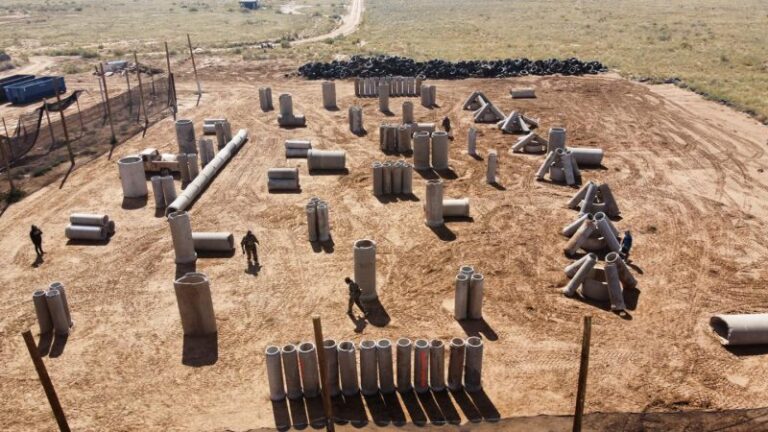
Ruckus Paintball + Airsoft sits on the west side of Albuquerque, inside the Albuquerque City Shooting Range Park at 16001 Shooting Range Access Rd, as the largest paintball park in New Mexico.
The park offers four game styles across three themed fields: classic paintball and low-impact paintball for ages 10 and up, airsoft on the first and third Saturdays, and Gellyball for younger kids ages 6 to 10. Full rental packages include guns, face masks, unlimited air fills, and all-day admission, with paintballs included. Walk-on players are welcome on weekends, and the fields feature bunkers, forts, trenches, and varied obstacles supporting capture-the-flag, elimination, and scenario games.
Ruckus doubles as a full event venue, hosting birthday parties, bachelor and bachelorette parties, corporate outings, youth and school groups, church groups, and sports teams, with private bookings available any day of the week and custom quotes for groups of 30-plus. The professional, safety-focused staff includes dedicated airsoft referees with decades of combined experience. Gift cards are available, and reservations are recommended since rentals book up quickly on weekends.
 Outdoors
Airsoft is a modern, low‑impact sport that blends the thrill of simulated combat with the discipline of teamwork and strategy. Participants—often called “players” or “operators”—use replica firearms that fire non‑metallic 6 mm or 8 mm plastic projectiles called BBs. Unlike paintball, the pellets leave virtually no visible mark, which encourages a focus on realism, tactical planning, and immersive role‑play. The sport can be enjoyed in a wide range of settings, from compact indoor arenas to expansive outdoor battlefields that mimic urban streets, dense forests, or abandoned industrial complexes.
Because the primary goal is to simulate a realistic combat scenario without the lethal risk of genuine weapons, airsoft has cultivated a unique subculture that values authenticity, safety, and camaraderie. Whether a newcomer is stepping onto a field for the first time or a veteran is fine‑tuning a custom build, the core experience remains the same: a fast‑paced, team‑oriented game that rewards communication, strategic thinking, and respect for fellow players.
Airsoft’s appeal rests heavily on its commitment to realism. Manufacturers design replica weapons that mirror the weight, ergonomics, and external appearance of their real‑world counterparts. Players often dress in military‑style uniforms, wear tactical vests, and use accessories such as holsters, magazine pouches, and radio equipment. This attention to detail creates a sensory immersion that transports participants into a plausible combat environment, making each engagement feel purposeful rather than merely recreational.
No single player can dominate a well‑balanced match; success depends on coordinated effort. Units are typically organized into squads or fire teams, each with a designated leader. Roles such as rifleman, support, sniper, or medic emerge organically or are assigned before the game begins. Clear communication—through hand signals, radios, or pre‑established code words—ensures that players can react to changing battlefield conditions, cover each other’s blind spots, and execute combined‑arms tactics.
Strategic planning in airsoft mirrors real‑world military doctrine. Before a match, teams conduct a “briefing” to discuss objectives, map layout, possible enemy positions, and contingency plans. During the game, players must balance aggression with caution, manage ammunition, and adapt to unexpected moves from the opposition. The fluid nature of each encounter demands quick decision‑making, situational awareness, and the ability to execute maneuvers such as flanking, bounding overwatch, or defensive holds.
Airsoft’s versatility is evident in the sheer number of game modes that can be run on a single field. Some of the most popular formats include:
Each mode emphasizes different aspects of gameplay. CTF stresses speed and coordination, TDM highlights firepower and aggression, while MilSim demands endurance, planning, and deep role‑play. This diversity keeps the sport fresh and accommodates players of varying skill levels and interests.
Customization is a cornerstone of the airsoft hobby. Modern airsoft guns are designed with modularity in mind, allowing players to swap out internal components, external accessories, and aesthetic parts. Common upgrades include:
Beyond the weapon itself, players often personalize their load‑out with custom tactical vests, plate carriers, and modular pouches to suit specific roles. This level of personalization not only enhances performance but also fosters a sense of ownership and identity within the community.
Airsoft has grown into a global community that extends far beyond the battlefield. Local clubs host regular meet‑ups, training sessions, and friendly competitions, while online forums and social media groups serve as hubs for knowledge exchange, gear reviews, and event announcements. The community’s collaborative spirit is evident in the prevalence of mentorship programs, where seasoned operators guide newcomers on safety protocols, gear selection, and tactical fundamentals.
In many regions, airsoft participants organize charitable events, charity paintball‑airsoft hybrids, and community service projects that reinforce the sport’s reputation as a positive, socially responsible pastime. This communal ethos is a vital part of what keeps the hobby thriving and welcoming to new players.
Entering the sport for the first time can be overwhelming, but a core set of protective equipment ensures safety and confidence on the field.
The most non‑negotiable item is a pair of high‑quality, impact‑rated eye protection. Dedicated airsoft goggles or full‑face masks that meet ANSI Z87.1 or equivalent standards protect against high‑velocity BBs and prevent eye injuries. Many players opt for a combination of goggles and a mesh “ballistic” mask for added facial coverage.
Gloves shield the hands from BB impacts, brush‑off debris, and the rough surfaces of barricades. Tactical gloves with reinforced knuckles, padded palms, and a snug fit allow for precise trigger control while offering protection.
Footwear must provide ankle support, traction, and durability. Combat‑style boots with reinforced soles and waterproof membranes guard against mud, rocks, and unexpected spills.
Crouching, sliding, and taking cover often place stress on the knees and elbows. Lightweight, impact‑absorbing pads reduce bruising and allow players to maintain low profiles without sacrificing mobility.
A tactical helmet offers head protection from stray BBs and can serve as a mounting platform for accessories such as night vision goggles, communication headsets, or rail‑mounted lights.
In addition to eye gear, a lower‑face shield or full‑face mask protects the teeth, lips, and chin. Many modern designs incorporate a clear visor that preserves peripheral vision while shielding vulnerable areas.
Collectively, this baseline gear creates a safe foundation for any new player, allowing them to focus on tactics and enjoyment rather than worry about minor injuries.
Safety is ingrained in every facet of airsoft. Players must treat every firearm as if it were loaded, keep the muzzle pointed away from people when not engaged in a game, and never shoot at the face—even when wearing protection. Fields typically enforce a mandatory “safety zone” at the entrance where guns are inspected, and everyone is briefed on the day’s specific safety protocols.
Airsoft relies heavily on the honour system. When a player is hit by a BB and feels the impact, they are expected to call out “hit” or “out” and immediately raise their hands to indicate surrender. This self‑policing approach eliminates the need for referees to monitor every engagement, fostering a culture of trust and integrity.
Respect for fellow participants, field staff, and property is essential. Players should avoid aggressive language, refrain from sabotaging equipment, and adhere to field rules regarding boundaries, time limits, and designated safe zones. Disrespectful behavior can result in removal from the field and may impact a player’s reputation within the broader community.
Airsoft firearms fall into three primary categories, each with distinct operating mechanisms and performance characteristics.
AEGs are the most common type in modern airsoft. Powered by a rechargeable battery, they use a motor to drive a gear set that compresses a spring, propelling the BB. AEGs can fire in semi‑automatic, burst, or fully automatic modes, offering a realistic rate of fire. Their reliability, ease of maintenance, and upgrade potential make them the go‑to choice for newcomers and seasoned players alike.
Gas‑powered guns use compressed green gas (a mix of propane and silicone oil) or CO₂ to drive a piston that fires the BB. They are prized for their realistic blowback action—where the slide cycles back after each shot—replicating the feel of real firearms. Gas guns excel in short‑range engagements and are popular for sniper rifles, pistols, and “real‑action” rifles. However, they can be temperature‑sensitive and require more frequent maintenance.
Spring guns are the simplest and most mechanically straightforward option. Each shot requires manually pulling back a spring-loaded bolt (or “cocking” the gun). While they lack automatic fire, spring pistols and rifles are inexpensive, highly durable, and ideal for beginners who wish to learn the fundamentals without the complexity of electronics or gas systems.
Understanding the strengths and limitations of each type helps players select a platform that matches their preferred playstyle, budget, and the environments in which they intend to play.
Airsoft attracts a remarkably diverse demographic. Participants range from teenagers discovering tactical teamwork for the first time to seasoned veterans with military or law‑enforcement backgrounds who appreciate the sport’s realistic simulation. College students often join as an outlet for stress relief and physical activity, while corporate teams sometimes use airsoft for team‑building exercises to improve communication and problem‑solving skills.
Internationally, airsoft enjoys a strong following in North America, Europe, and parts of Asia, with each region contributing its own cultural flavor—whether it’s the heavily modded “custom culture” of the United States, the tactical realism emphasis seen in European MilSim events, or the fast‑paced “run‑and‑gun” style prevalent in Japan’s indoor arenas.
Dedicated airsoft fields provide the safest and most regulated environments for gameplay. These venues are typically licensed, feature clearly marked boundaries, and enforce strict safety protocols. Facilities often include varied terrain—urban ruins, woodland trails, and constructed bunkers—allowing organizers to design bespoke scenarios. Many fields also host weekly “open play” sessions, special events, and rental gear for newcomers.
Joining a local team or club offers a more intimate, community‑driven experience. Clubs usually meet at a regular cadence, conduct training drills, and organize private matches on nearby private property or members’ backyards. Being part of a club gives players access to shared gear, collective knowledge, and a supportive network that can accelerate skill development.
MilSim (Military Simulation) events are large‑scale, multi‑hour or multi‑day operations that emulate authentic military missions. Participants often adopt specific roles—such as squad leader, medic, or weapons specialist—and adhere to a detailed briefing that outlines mission objectives, rules of engagement, and de‑briefing procedures. MilSim events may take place on expansive outdoor ranges, abandoned industrial sites, or even historic battlefields, and they frequently involve elaborate props, simulated casualties, and coordinated logistical support.
These various venues give players the flexibility to choose the style of play that best aligns with their interests, whether they seek casual skirmishes, competitive league play, or deep tactical immersion.
Airsoft stands at the crossroads of sport, hobby, and simulation. Its blend of realism, teamwork, strategic depth, and community involvement creates an experience that is simultaneously physically engaging and intellectually stimulating. By investing in proper protective gear, respecting core safety and honour principles, and selecting a firearm platform that matches personal preferences, newcomers can confidently step onto the field and begin a rewarding journey.
From the rapid‑fire chaos of a Team Deathmatch to the meticulously planned operations of a MilSim weekend, airsoft offers a spectrum of game modes that cater to every tactical taste. The thriving global community reinforces the sport’s appeal, providing mentorship, camaraderie, and countless opportunities to sharpen skills. Whether a player is a teenager seeking adventure, an adult looking for team‑building, or a veteran yearning for realistic combat simulation, airsoft delivers an accessible, safe, and endlessly adaptable arena for exploration and growth.


 16001 Shooting Range Access Rd, Albuquerque, NM 87121