
 El Monte
 Log in
Log in
Log in

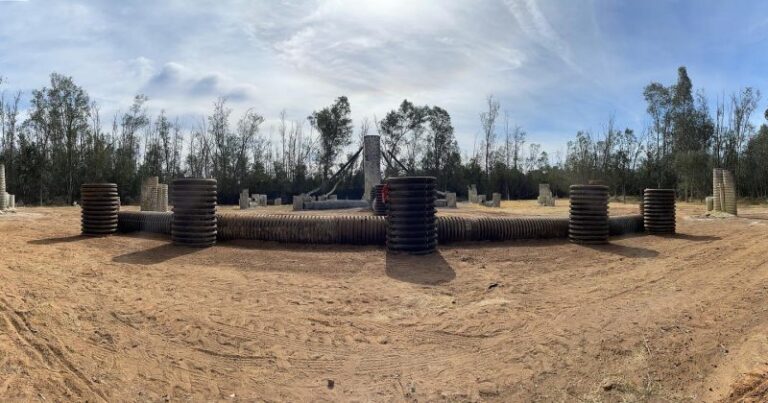
Velocity Paintball Park is located in the Ramona area of San Diego County, California, on Main Street.
The venue features four paintball fields including Speedball, Woodsball, Hyperball, and “The Fort” castle-themed field, each offering a different style of play. Equipment rentals are available for those without their own gear, and a pro shop sells paintballs and accessories. The staging area includes shaded seating, tables, and a snack bar. The facility is well suited for birthday parties, corporate team-building, and group outings, with party packages and private event bookings available.
 Outdoors
As a southern California staple, Airsoft in San Diego has been increasing in popularity in recent years. The great weather, diverse terrain, and wide array of airsoft events have made this area perfect for airborne sport enthusiasts of all skill levels and ages.
Airsoft is a tactical recreation in which participants are equipped with realistic replica firearms and ammunition, such as airsoft guns, pellets, and paintballs. The goal of the sport is to simulate a military-style combat zone, and each opponent will be trying to eliminate the other players by shooting them with their airsoft gun. Airsoft in San Diego offers a unique opportunity to experience a fully immersive atmosphere of adrenaline-filled combat.
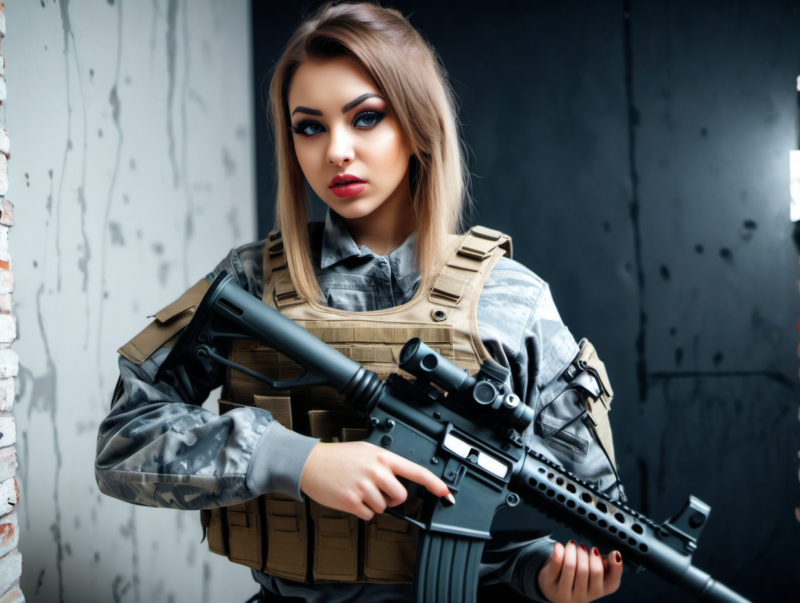
Airsoft is a competitive sport that replicates military and law‑enforcement scenarios using replica firearms that fire small, non‑lethal plastic BBs. The equipment is designed to look, feel, and operate like real weapons, but the projectiles travel at velocities that are safe when proper protective gear is worn. Players—often called “airsofters”—organise into squads or larger units and engage in simulated combat, completing objectives that range from simple “capture the flag” to complex, multi‑day “military simulation” (MilSim) campaigns. Because the sport emphasises realism, teamwork, and tactical planning, it has grown into a global community that attracts hobbyists, veterans, and newcomers alike.
The core attraction of airsoft lies in its blend of realistic gear and authentic combat tactics. Replicas are frequently modelled after real‑world firearms, complete with interchangeable parts, adjustable hop‑up mechanisms, and realistic recoil patterns. This fidelity encourages players to adopt genuine military doctrines—cover and movement, fire‑and‑maneuver, and disciplined communication. Successful teams rely heavily on coordinated strategies, assigning roles such as point man, support, and medic, and rehearsing fire‑team drills before each match. The need to think several steps ahead cultivates problem‑solving skills and reinforces the value of collective effort over individual heroics.
Airsoft arenas host a wide spectrum of game modes, each catering to different skill levels and narrative preferences. Classic formats like Team Deathmatch focus on head‑to‑head combat with straightforward kill‑count objectives. Capture the Flag introduces territorial control, requiring squads to infiltrate enemy lines and retrieve a designated item. More elaborate scenarios—Search and Destroy, VIP Escort, and Zombie Survival—incorporate story‑driven missions, time constraints, and asymmetrical forces. The diversity of gameplay ensures that participants can experience everything from fast‑paced skirmishes to slow‑burn, strategy‑heavy engagements.
One of airsoft’s most compelling aspects is the ability to customise equipment. Modern replicas feature modular rail systems, allowing players to attach optics, foregrips, flashlights, and laser pointers. Internally, the power source (electric motor, gas valve, or spring) can be upgraded for higher muzzle velocity, while external components such as barrels, hop‑up units, and batteries can be swapped to fine‑tune performance. Clothing and armour also receive attention; tactical vests, plate carriers, and padded rigs not only enhance realism but provide practical storage for magazines, grenades, and medical kits. This culture of personalisation fuels a thriving aftermarket and encourages continual learning about ballistics, electronics, and ergonomics.
Airsoft’s growth is sustained by an active and inclusive community. Online forums, social‑media groups, and regional clubs serve as hubs for knowledge exchange, gear reviews, and event announcements. Local meet‑ups often incorporate “train‑and‑play” sessions where veterans teach newcomers about safety protocols, maintenance, and tactical fundamentals. Annual conventions and national tournaments bring together players from disparate regions, fostering friendships that extend beyond the battlefield. The community ethos places a premium on mentorship, sportsmanship, and shared passion for the hobby.
Starting in airsoft requires a baseline set of protective equipment to ensure safety while allowing newcomers to enjoy the game comfortably. The following items are considered indispensable for anyone purchasing their first load‑out.
The eyes are the most vulnerable body part in airsoft. Certified polycarbonate goggles or full‑face masks that meet ANSI Z87.1 standards must be worn at all times on the field. These lenses resist impact from high‑velocity BBs and provide a wide field of vision, essential for situational awareness.
Tactile dexterity is crucial for reloading magazines, handling weapons, and navigating obstacles. Lightweight, reinforced tactical gloves protect the palms and knuckles from scrapes, cuts, and accidental BB impacts while preserving grip and finger mobility.
A good pair of combat or hiking boots offers ankle support, traction on varied terrain, and protection against mud, rocks, and debris. Waterproof or breathable designs keep feet comfortable during long‑duration events, reducing fatigue and the risk of injury.
Crouching, crawling, and taking cover often place a player’s joints under stress. Padded knee and elbow protectors absorb shock when dropping to the ground or sliding behind obstacles, preventing bruises and sprains.
A tactical helmet provides head protection from low‑impact BBs and environmental hazards such as branches or low hanging objects. Modern helmets often feature mounting rails for accessories like night‑vision devices or communication headsets, adding functional value.
For players opting for full‑face masks, lower‑face guards shield the mouth, teeth, and chin from stray BBs. Even when using goggles alone, a simple balaclava or mesh face mask can reduce the likelihood of BBs striking sensitive facial areas.
Airsoft fields around the world adopt a shared set of principles that promote safety, fairness, and respect among participants. While specific venues may add local variations, three overarching rules form the backbone of responsible play.
All participants must treat every piece of equipment as if it is loaded with live ammunition. This mindset includes mandatory eye protection, safe‑fire distances, and adherence to velocity limits (typically 350–400 fps for standard players). Field staff enforce these standards through regular inspections and mandatory safety briefings before each session.
Airsoft relies heavily on player honesty. Hits are generally called by the impacted player, who must immediately announce a “hit” and either turn a corner or place their weapon on the ground. In competitive formats, referees may monitor gameplay, but the integrity of the sport depends on each participant’s willingness to acknowledge hits promptly and accurately.
Mutual respect extends beyond the battlefield. Players are expected to treat opponents, teammates, and field personnel with courtesy, avoiding aggressive language, unsportsmanlike conduct, or equipment tampering. Respect also includes obeying field rules regarding boundaries, restricted zones, and designated safe areas.
Airsoft firearms fall into three primary categories, each defined by its power source and operational characteristics. Understanding the differences helps newcomers select a platform that matches their play style and budget.
AEGs dominate the airsoft market due to their reliability, consistent rate of fire, and ease of maintenance. They are powered by rechargeable lithium‑ion or nickel‑metal hydride batteries that drive a gearbox to compress a spring and release BBs at a rapid cadence. AEGs are available in a wide range of calibres—most commonly 6 mm (0.20 in)—and can be upgraded with stronger gears, high‑capacity magazines, and custom hop‑up units.
Gas‑powered replicas use compressed propellant—typically green‑propane (GP) or high‑pressure air (HPA)—to propel BBs. The gas expands when a valve opens, providing a realistic blowback effect that mimics the slide movement of real firearms. Gas guns excel in delivering authentic recoil and rapid burst fire, making them popular for role‑players and MilSim participants. However, they are more temperature‑sensitive and require regular refilling of gas canisters.
Spring guns, also called “springers,” operate via a manually cocked spring that compresses each time a shot is fired. The simplicity of the mechanism results in few moving parts and low maintenance, making spring guns ideal for beginners or budget‑conscious players. While they lack the rapid fire of AEGs or gas guns, many spring rifles and pistols feature high accuracy and respectable power when paired with quality hop‑up tuning.
Researchers in ballistics and material science view airsoft as a valuable low‑risk platform for studying projectile dynamics and safety engineering. Studies have shown that modern polycarbonate eye protection can withstand impacts up to 2,000 ft/s, far exceeding typical airsoft velocities, confirming the adequacy of current safety standards.
Industry analysts note that the rapid growth of airsoft mirrors trends seen in other experiential hobbies such as paintball and laser tag. The market’s expansion is driven by advancements in battery technology, realistic replica manufacturing, and the rise of “experience‑based” tourism, where participants travel to dedicated MilSim venues for immersive weekend campaigns.
From a public‑health perspective, some experts caution that excessive exposure to high‑velocity BBs without proper gear can lead to eye injuries or soft‑tissue trauma. Consequently, they advocate for mandatory safety briefings, routine equipment inspections, and the implementation of velocity caps tailored to age groups and skill levels.
Airsoft appeals to a remarkably diverse demographic. Young adults in their teens and twenties often discover the sport through video‑game culture, seeking a physical outlet for strategic thinking. Military veterans and law‑enforcement professionals are drawn to the realistic tactical environment, which offers a controlled setting to practice teamwork and communication.
Corporate groups use airsoft for team‑building exercises, appreciating how the activity forces participants out of their comfort zones and fosters trust. Families also engage in “family‑friendly” low‑intensity games, where children and parents enjoy a shared hobby in a safe, supervised environment. In many regions, university clubs host regular matches, attracting students who appreciate the balance between physical activity and mental strategy.
Finding the right venue is essential for an enjoyable airsoft experience. Options range from professionally managed fields to informal community gatherings.
Licensed fields operate under strict safety regulations, offering purpose‑built terrain—urban streetscapes, forested zones, and indoor arenas. These venues provide rental equipment, on‑site referees, and clearly marked boundaries. Many fields host regular league play and special events, making them ideal for players seeking structured competition.
Grass‑roots clubs often meet in public parks, abandoned warehouses, or private properties with the owners’ permission. These groups emphasize camaraderie and skill development, organizing “train‑and‑play” sessions that combine tactical drills with friendly matches. Membership usually entails a modest fee that covers field usage and collective equipment purchases.
MilSim—short for Military Simulation—events represent the pinnacle of airsoft immersion. Spanning one to several days, these events recreate full‑scale military operations, complete with scripted missions, command hierarchies, and logistical support. Participants may be assigned specific roles such as squad leader, sniper, or medics, and are expected to adhere to realistic rules of engagement. MilSim gatherings are often hosted at remote sites with expansive terrain, offering a truly cinematic experience for dedicated airsofters.
Airsoft has evolved from a niche hobby into a globally recognised sport that blends realistic equipment, strategic depth, and a vibrant community. By prioritising safety through mandatory protective gear and a strong honour system, the sport offers a secure environment for players of all ages and backgrounds. Whether a newcomer selects an entry‑level AEG, a seasoned veteran opts for a high‑performance gas rifle, or a casual enthusiast enjoys a weekend MilSim event, airsoft provides a versatile platform for teamwork, personal growth, and immersive recreation. As technology continues to advance and the community expands, airsoft’s appeal is poised to grow even further, inviting a new generation of players to experience the thrill of tactical combat in a safe and collaborative setting.


 1350 Warnock Dr, Ramona, CA 92065