TOP 10 best of the best Free-roam VR in Austin, TX – Battleonix
El Monte
Log in
0

Advanced Search:

City

Rating

Playground


Price:

Main / Catalog / VR / Texas, US / Austin, TX

The best Free-roam VR near me in Austin, TX

img
from $45
VR

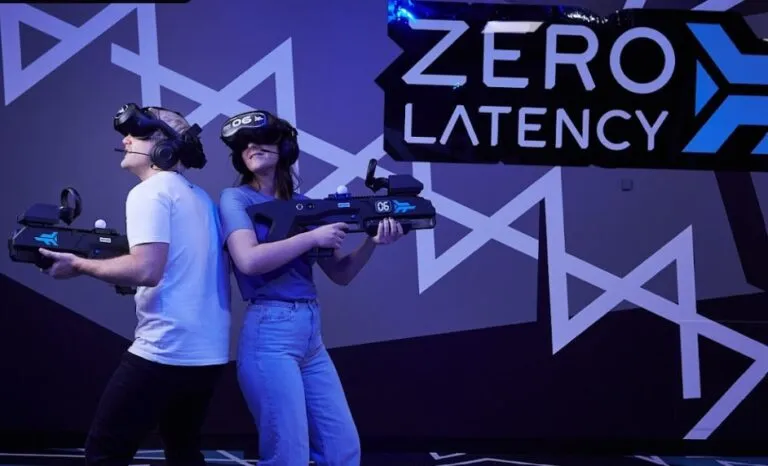
Zero Latency – Austin is located in Austin, TX.


Zero Latency – Austin in Austin, TX: The Pinnacle of VR Entertainment and Events. Zero Latency in Austin provides a unique venue for hosting a variety of special events, each infused with the magic of virtual reality. Imagine a night where you’re not just commemorating an occasion, but also diving into fantastical worlds that transform your celebration into something truly memorable. Here are some of the exceptional events you can hold at Zero Latency:

Date Night
Graduation
Anniversary
Holiday Parties
Wedding Parties
Client Entertainment
Reunions
Retirement Parties
Just Because

Zero Latency VR Austin provides a platform where imagination knows no bounds. Recognized among the top VR event venues in Austin, it invites guests to embark on extraordinary virtual adventures, turning your event into a captivating narrative.Every event at Zero Latency is tailored to your desires. Their expert staff works closely with you to customize each session, ensuring that your celebration aligns perfectly with your vision. Whether it’s a private VR party or a unique event experience, Zero Latency is dedicated to making your special occasion stand apart from the rest.

Indoors
img
from $50
VR

Sandbox VR Indoor Center is located in Austin, TX.

 Sandbox VR, a renowned virtual reality entertainment center, has opened its doors in Austin, TX. Equipped with advanced technology, the center offers an immersive gaming experience that blurs the line between reality and fantasy. Customers can choose from a variety of games, such as “Deadwood Mansion” and “Curse of Davy Jones,” that allow players to collaborate with friends and family members in a shared adventure. Safety protocols are in place to prevent the spread of COVID-19, including regular cleaning. The center promises an unforgettable experience for all VR enthusiasts.

Indoors
img
from $5
VRLaser tag

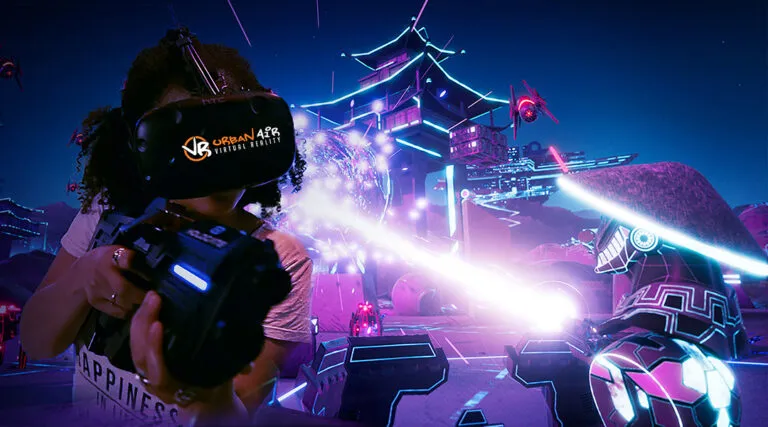
Urban Air Trampoline and Adventure Indoor Park is located in Austin, TX.


 Urban Air Trampoline and Adventure Park in Austin, TX is a popular destination for thrill-seekers and families. With over 35,000 square feet of indoor space, the park offers a variety of attractions, including trampolines, a ropes course, a climbing wall, a warrior course, and more. Visitors can also enjoy a virtual reality experience, a laser tag arena, and a sky rider coaster. The park is open seven days a week and welcomes guests for birthday parties, group events, and walk-in play. Safety is a top priority, and all equipment is regularly inspected and maintained.

Indoors
img
from $7
VR

Urban Air Trampoline and Adventure Indoor Park is located in Bee Cave, TX.


 Urban Air Trampoline and Adventure Park is a popular destination for families and thrill-seekers in Bee Cave, TX. The park offers a variety of activities, including trampolining, obstacle courses, laser tag, and virtual reality experiences. Guests can also enjoy a zip line, ropes courses, and a climbing wall, as well as arcade games and a café. Urban Air is a great place to celebrate birthdays and other special events, with party packages available that include private rooms, a host, and catering. The park is open every day and offers special pricing for groups.

Indoors
img
from $37
VR

Zero Latency Austin – South is located in Austin, TX.


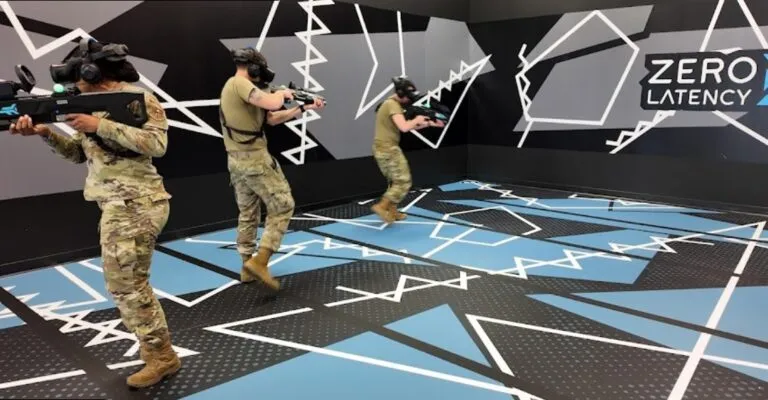
As a premier destination for immersive gaming, Zero Latency provides a zero-latency VR adventure where participants can fully engage with their environments, see and communicate with their peers, and explore expansive virtual worlds. Designed for groups of up to eight players, this cutting-edge venue delivers a gaming experience that rivals blockbuster AAA titles in both graphics and scale.


If you’re seeking an unbeatable combination of thrilling group activities and unparalleled team-building opportunities, Zero Latency VR Austin – South is the place to be. Whether you’re organizing a memorable outing with friends or devising a unique way to strengthen bonds within your team, this venue promises an extraordinary experience. It fosters camaraderie and challenges participants in ways traditional activities simply cannot match, all within a safe and exhilarating environment.

Furthermore, Zero Latency offers competitive pricing, with a variety of bundles to fit every budget. This affordability ensures that more people can access these groundbreaking virtual experiences without financial strain. Whether you’re a local resident or a tourist exploring Austin, Zero Latency provides exceptional value for money, making it an accessible and essential stop on your itinerary.

Indoors

Best of the best Free-roam VR in Austin, TX


The Evolution of Play: Understanding the Immersive World of Free-Roam VR Arenas

The landscape of entertainment is undergoing a profound transformation. As technology bridges the gap between the digital and physical realms, few innovations have captured the public imagination quite like the free-roam VR (Virtual Reality) arena. Unlike the solitary experience of a living room headset, where players are tethered to couches and limited by the narrow perimeter of a rug, free-roam VR removes the boundaries. It turns the user into an active protagonist, allowing them to walk, run, and interact within a sprawling, open-ended digital landscape.


What is a Free-Roam VR Arena?

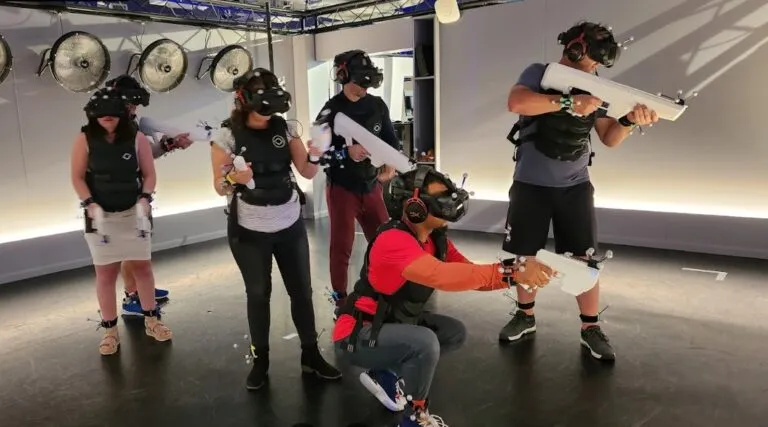
At its core, a free-roam VR arena is a dedicated physical space—often a modified warehouse or a specialized gaming facility—designed to host immersive, multi-player virtual experiences. Unlike traditional VR setups that rely on “teleportation” or analog sticks to move a character, free-roam VR utilizes “room-scale” tracking technology.

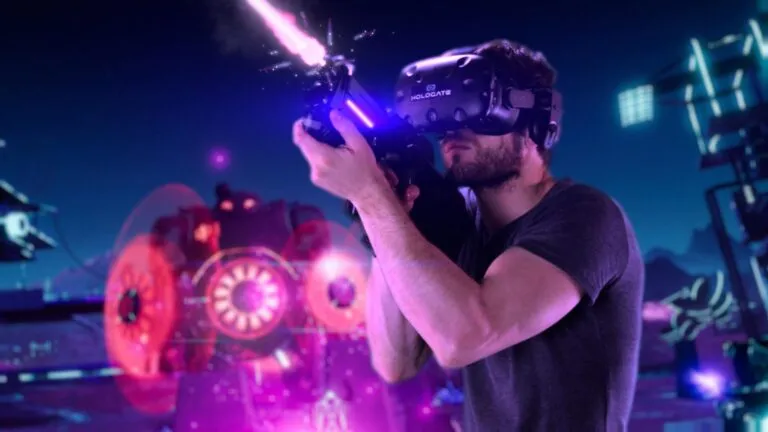
Players wear lightweight headsets and carry haptic peripherals or controllers while walking freely throughout a cleared, obstacle-free floor. Sophisticated motion-capture sensors, often mounted on ceilings or integrated into the arena’s architecture, track every movement in real-time. If a player walks five steps to the left in reality, their avatar in the game moves exactly five steps to the left. This seamless synchronization creates a phenomenon known as “presence,” a psychological state where the brain becomes convinced that the virtual environment is the physical one. This environment effectively deletes the “walls” of a room, replacing them with infinite digital horizons.


Free-Roam VR Scenarios

The power of the free-roam arena lies in its versatility. Because the environment is entirely software-driven, the setting can change from a dystopian cityscape to a serene alien forest in the blink of an eye.

Popular scenarios often lean into the collaborative nature of the medium. Many players gravitate toward “zombie survival” modes, where teams must coordinate to defend a barricaded position. Because players are physically walking beside their friends, the communication becomes natural and frantic, heightening the tension. Others prefer puzzle-based adventures, such as escaping a high-tech pyramid or solving mysteries in a magically rendered library. These scenarios emphasize spatial awareness; players find themselves crouching behind virtual crates, leaning around corners, or reaching out to manipulate digital objects. The lack of a tether—no cables trailing from the ceiling or floor—allows for an unprecedented level of tactical freedom, making these scenarios feel like living inside an action-adventure film.


Who Plays on Free-Roam VR Arenas? VR for Kids

While gaming has historically been stereotyped as a solitary hobby, free-roam VR is inherently social. It attracts a broad demographic, from casual gamers looking for a unique night out to technology enthusiasts eager to experience the bleeding edge of hardware.

One of the most rapidly growing segments of the free-roam market is the youth demographic. For kids, VR is more than just a game; it is a playground of limitless potential. Because these arenas prioritize physical movement, they offer a more active alternative to traditional screen time. Children are able to engage their motor skills while collaborating with their peers to solve challenges. Parents are increasingly favoring free-roam VR for children’s outings because it provides a structured, monitored environment where energy is channeled into teamwork rather than passive viewing. The technology is intuitive enough that children can often navigate the virtual space with more confidence than adults, making it an empowering experience that fosters digital literacy.


Free-Roam VR for a Birthday Party, Graduation, or Corporate Party

The experiential nature of free-roam VR has made it a premier destination for social gatherings and milestones. As people move away from static entertainment, such as cinema or dining alone, they are seeking “active socialization.”

For a birthday party, an arena provides a high-octane centerpiece that is difficult to replicate at home. Instead of playing separately, a group of friends can experience the same narrative arc together, fostering memories that feel genuinely shared rather than viewed side-by-side.

Graduations and milestone celebrations benefit from the novelty of the experience. It serves as an ice-breaker that levels the playing field—everyone is a novice when they first step into a virtual world. For corporate parties, the benefits extend into the professional sphere. Team-building exercises in a virtual environment require clear communication, strategy, and trust. When a team of coworkers must work together to “defuse a bomb” or “navigate a maze” in VR, they are practicing the same skills required in the boardroom. The “fun factor” reduces the friction of formal team-building, allowing coworkers to bond over a shared, exhilarating adventure rather than a lecture or a slide deck.


Scientists and Industry Experts View on Free-Roam VR

The transition toward free-roam VR is viewed by scientists and industry experts as a significant milestone in human-computer interaction (HCI). Researchers in the field of neuroscience are particularly interested in how the brain retains “spatial memory” within these arenas. When a user navigates a virtual room, their brain maps the space similarly to how it would a physical room, which has massive implications for education, architectural training, and clinical therapy.

Industry experts argue that free-roam VR is the final piece of the puzzle for mass-market virtual reality adoption. While home VR headsets have faced challenges regarding space limitations and the physical discomfort of navigating small rooms, free-roam arenas remove these technical and psychological barriers. Experts predict that as the hardware becomes lighter and more wireless, these arenas will evolve into “holodecks,” becoming a staple in urban planning and retail design.

Furthermore, the industry is moving toward “blended reality,” where physical furniture or walls in the arena are mapped into the virtual world, allowing users to physically touch a virtual wall or sit in a virtual chair. This haptic feedback, combined with the tracking capabilities, is creating a new standard for sensory immersion. Scientists are already exploring the potential for these arenas to assist in phobia treatment, post-traumatic stress therapy, and specialized high-stakes training for surgeons or firefighters. The consensus is clear: free-roam VR is no longer a gimmick contained within an arcade; it is a sophisticated interface that is fundamentally changing how humans interact with digital information and with each other.

As the technology continues to mature, the barriers between the physical and the virtual will continue to thin. Whether it is a group of friends celebrating a birthday or a team of scientists training for a crisis, the free-roam VR arena stands at the threshold of a new era of human experience—one where the limits of reality are defined only by the imagination.