
 El Monte
 Log in
Log in
Log in

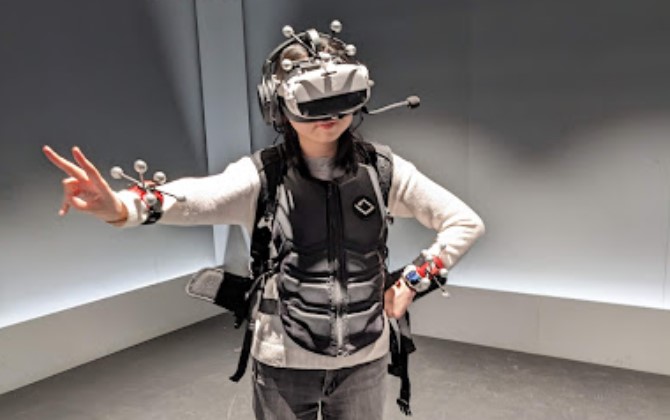
Sandbox VR Indianapolis is located in the Bottleworks District at 850 Massachusetts Avenue, Suite 150, inside the historic Bottleworks complex. The venue features four private “holodeck” rooms where groups of up to six players experience full-body virtual reality using motion capture technology, haptic vests, and VR headsets. Guests can choose from a rotating lineup of exclusive games including Deadwood Valley, Stranger Things: Catalyst, Squid Game Virtuals, Age of Dinosaurs, Curse of Davy Jones, and more — all designed as cooperative social experiences where teamwork drives the adventure.
The venue includes a lounge area for gathering before or after sessions and is surrounded by the restaurants and shops of the Bottleworks District. It is well-suited for birthday parties, corporate team-building events, date nights, and group celebrations. The staff is consistently praised for being personable, knowledgeable, and accommodating. With a 4.8-star rating from thousands of reviews, Sandbox VR Indianapolis has become a go-to destination for immersive group entertainment in downtown Indianapolis.
 Indoors
Press Play Gaming Lounge is located in Brownsburg, Indiana, at 1004 E. Main Street, about 20 minutes west of Indianapolis.
The venue combines Nerf foam wars in a 1,500-square-foot obstacle-filled arena, 8 virtual reality booths with over 50 games, the rare Omni Arena VR (4-player co-op), a 3-point basketball challenge, an arcade with redemption prizes, and 16 family TV pods with Xbox and 75-inch screens. Guests can purchase individual attraction tickets or unlimited play passes (1-hour, 2-hour, day, or weekend) starting at $30, with group rates and discounted pricing for children 7 and under.
Beyond gaming, Press Play offers a full-service sports bar and café with stadium-style food, two private party rooms (seating 15–20 and up to 40 guests), and a comfortable lounge area with luxury massage chairs. The venue is well-suited for birthday parties, corporate team-building events, school gatherings, holiday celebrations, and adult social outings, with party room packages starting at $299 for two hours including unlimited gaming for all guests.
IndoorsUrban Air Trampoline and Adventure Park is located at the corner of 146th Street and Highway 37 in Noblesville, just off Mundy Drive, easily reachable from Fishers, Carmel, and Westfield.
This indoor adventure park offers over a dozen attractions including trampolines, a Sky Rider zip line coaster, laser tag, bumper cars, a ninja warrior course, an elevated ropes course, climbing walls, virtual reality, dodgeball, a battle beam, and a tubes playground for younger kids. Guests can choose from several access passes — Unlimited Play ($34.99), Shorty Pass for kids under 40″ ($17.49), or Parent Pass ($17.49) — and the Adventure 4 All bundle packs tickets, socks, pizza, and drinks for the whole family. Memberships are available for frequent visitors, and sensory-friendly play hours are offered on select Sundays.
Birthday parties come with private rooms, a dedicated host, food, and socks for all guests, with Unlimited Play and Unlimited Play+ packages available. The park also hosts field trips, team-building events, fundraising nights, and private rentals. The Urban Café serves pizza, snacks, and adult beverages, and there is plenty of seating including massage chairs for parents. All visitors must wear Urban Air grip socks and complete a waiver online before arriving.
IndoorsThe Virtual Galaxy is located in Avon, Indiana, at the Shiloh Crossing shopping center, just west of Indianapolis. This family-owned virtual reality arcade and cafe opened in August 2018 and features over 100 VR game titles in a unique open-concept layout where players and spectators can see all the action on large screens at each station. Sessions run 15 minutes each, with multiplayer options available, and the venue offers customizable party packages that include pizza, drinks, desserts, and reserved seating for groups of all sizes.
The on-site cafe serves a variety of food and drinks, and the comfortable lounge area allows guests to relax between games while still watching the fun unfold. The Virtual Galaxy is well-suited for birthday parties, corporate team-building events, school groups, and family outings, with a friendly staff that tailors each experience to the group’s needs. Small thoughtful touches like head socks for hygiene and an open floor plan that keeps everyone connected make this a welcoming destination for players ages 6 and up.
IndoorsWhen virtual reality first entered the mainstream, most people imagined themselves crouched on a sofa, clutching a wired headset while a single‑player adventure unfolded on a flat screen. The image has changed dramatically in recent years. Today, a growing segment of the market is dedicated to free‑roam virtual reality—large, dedicated spaces where users can move unhindered, interact with physical props, and become fully immersed in three‑dimensional narratives that respond to their every step. The rise of free‑roam VR arenas has transformed the way families, schools, and businesses think about entertainment, education, and team building.
A free‑roam VR arena is a purpose‑built environment, typically ranging from a modest 500‑square‑foot room to a sprawling warehouse‑sized facility. Inside, the floor is fitted with motion‑tracking sensors, optical markers, or infrared grids that continuously locate each headset and controller with sub‑centimeter accuracy. The walls and ceiling are often blank canvases, allowing projection mapping or LED panels to augment the physical space with digital scenery.
Unlike seated or room‑scale VR that confines movement to a relatively small area, free‑roam systems let participants walk, run, crouch, and even climb within a safe, obstacle‑free zone. The headset’s view updates in real time, stitching together the virtual world as the player traverses the arena. Because the hardware is tethered to a central server rather than a single PC, multiple users can share the same narrative simultaneously without sacrificing visual fidelity or latency.
Key components of a free‑roam arena include:
The result is an experience that feels less like a game and more like stepping into a living, breathing story world.
Free‑roam arenas can host a wide spectrum of scenarios, each designed to exploit the freedom of movement that the space provides. Below are some of the most frequently deployed concepts, ranging from pure entertainment to educational and corporate applications.
Adventure Quests – Participants become heroes on a quest to retrieve a relic, solve ancient riddles, or escape a cursed temple. The narrative is broken into zones; as players progress, the arena transforms visually through projection mapping, turning a plain hallway into a dense jungle or a crumbling dungeon.
Sci‑Fi Simulations – Spaceships, alien planets, and futuristic cityscapes are recreated in full scale. Players don exosuit‑style controllers that simulate laser blasters or energy shields, allowing team‑based combat or cooperative problem‑solving.
Historical Re‑enactments – Museums and cultural institutions use free‑roam VR to transport visitors to pivotal moments in history—walking the streets of ancient Rome, stepping onto the deck of the Titanic, or witnessing a civil‑rights march. The physical layout of the arena mirrors the historical setting, reinforcing spatial awareness.
Escape Rooms – Traditional lock‑and‑key puzzles are elevated by integrating virtual clues with physical locks, pressure plates, and moving walls. Teams must coordinate both real‑world actions and virtual interactions to beat the clock.
Sports and Fitness Challenges – Virtual obstacle courses, archery ranges, or rhythm‑based dance arenas encourage vigorous movement. The data captured by the tracking system can be displayed on leaderboards, fostering friendly competition.
Creative Studios – Artists and designers use the space as a three‑dimensional canvas, sculpting virtual objects with hand gestures while walking around them. The immersive environment enables a level of spatial creativity that would be impossible on a flat screen.
These scenarios are highly modular; developers can swap assets, adjust difficulty, or overlay new storylines without physically altering the arena, making the venue a versatile platform that serves many audiences.
The demographic reach of free‑roam VR is surprisingly broad. While early adopters were primarily tech‑savvy teenagers and adult gamers, the technology’s safety features, scalability, and narrative depth have attracted a far wider user base.
Families and Children – Parents appreciate the supervised environment that eliminates the hazards of a cluttered living room. Children can explore fantastical worlds while developing spatial reasoning, teamwork, and problem‑solving skills. Because the hardware is lightweight and adjustable, even younger kids can comfortably wear headsets for short sessions.
School Groups and Educational Programs – Teachers incorporate VR modules into science, history, and language curricula. A class might “travel” to a rainforest to study biodiversity or step inside a molecular structure to visualize chemistry concepts. The immersive format increases engagement and retention compared to textbook learning.
Corporate Teams – Companies book arenas for team‑building retreats, product launches, or training simulations. Scenarios can be customized to mirror workplace challenges—such as coordinating a virtual rescue operation that parallels crisis management or navigating a simulated factory floor for safety training.
Event Organizers and Party Planners – Birthday parties, graduation celebrations, and community festivals now feature VR as a headline attraction. The novelty of stepping into a shared virtual adventure adds a premium entertainment factor that distinguishes an ordinary gathering from a memorable experience.
Gaming Communities and Esports Enthusiasts – Competitive leagues are emerging around free‑roam titles, with tournaments held in arenas that can accommodate spectators watching live feeds of the action. The physicality of the gameplay adds a new layer of skill beyond traditional controller‑based esports.
By providing a safe, adaptable, and socially oriented platform, free‑roam VR arenas have broadened the appeal of virtual reality beyond niche hobbyists to mainstream audiences.
Parents often wonder whether virtual reality is appropriate for their children. Free‑roam arenas address most concerns through design, supervision, and content curation.
Safety First – All arenas enforce a strict age‑minimum policy (typically six years or older) and require a brief safety orientation before participants don headsets. The tracking system automatically pauses the experience if a user strays too close to a wall or collides with another player, prompting an in‑game warning and a gentle pause.
Physical Activity – Unlike seated VR, free‑roam encourages movement. Kids naturally run, duck, and reach, which helps burn calories and improve coordination. Many scenarios incorporate fitness challenges—climbing virtual cliffs or dodging obstacles—transforming playtime into an active experience.
Educational Value – Content creators design many kid‑focused scenarios with explicit learning objectives. A “Space Explorer” mission, for example, teaches basic astronomy as players locate planets and identify constellations. A “Dinosaur Dig” adventure introduces paleontology concepts through a blend of virtual excavation tools and real‑world fossils displayed on the arena floor.
Social Interaction – Because the arena accommodates groups, children can collaborate with friends or classmates. Cooperative puzzles teach communication, negotiation, and shared decision‑making. The shared physical space also reinforces empathy—players can see each other’s avatars and gestures, fostering a sense of presence that is harder to achieve in isolated home setups.
Overall, free‑roam VR provides a controlled, enriching environment where kids can explore worlds far beyond the reach of their backyard while staying safe and active.
The immersive nature of free‑roam VR makes it a compelling centerpiece for a variety of celebrations. Organizers can tailor the experience to the theme of the event, creating a personalized adventure that aligns with the occasion.
A birthday party in a free‑roam arena becomes an epic quest. Imagine a group of ten-year-olds embarking on a “Treasure Island” adventure where each clue leads them deeper into a pirate‑themed virtual world. The arena can be decorated with real‑world props—plastic swords, treasure chests, and a captain’s wheel—that correspond to virtual objects. A birthday cake can be placed in a designated “safe zone,” and the final triumph (perhaps unlocking a secret vault) can be timed to coincide with the cutting of the cake, making the moment feel like the climax of the story.
For high‑school or college graduates, the arena can host a “Future Pathways” experience. Participants choose from multiple virtual career tracks—engineer, artist, entrepreneur—and navigate a series of challenges that symbolize real‑world milestones such as presenting a pitch, designing a prototype, or launching a startup. As graduates overcome each obstacle, the arena projects celebratory fireworks and a custom graduation banner that includes the class year and school colors. The shared journey reinforces camaraderie while highlighting each individual’s aspirations.
Corporate events benefit from the arena’s ability to blend entertainment with purposeful training. A “Mission Control” scenario can simulate a space‑station crisis where teams must allocate resources, troubleshoot system failures, and communicate across virtual consoles—all under a ticking clock. The high‑stakes environment encourages clear communication, role clarity, and rapid decision‑making—skills directly transferable to real business challenges.
For pure celebration, a “Neon Nightclub” experience transforms the arena into a pulsing, music‑driven environment where employees can dance, compete in rhythm challenges, or simply unwind. The venue can integrate company branding into the lighting and visual effects, turning the party into a memorable showcase of corporate culture.
As hardware becomes lighter, tracking technology more precise, and content pipelines faster, free‑roam VR is poised for continued expansion. Emerging trends include:
These developments will likely lower the barrier to entry for smaller venues and expand the range of applications—from therapeutic sessions for patients with mobility challenges to immersive rehearsals for performing artists.
Free‑roam VR arenas have redefined what virtual reality can be. By granting users the freedom to walk, run, and interact with both physical and digital objects, these spaces deliver a level of immersion that static, seated setups cannot match. The versatility of the technology supports a spectrum of scenarios—adventure quests, educational reenactments, escape rooms, and corporate simulations—all of which appeal to a diverse audience that includes families, school groups, gamers, and businesses.
For children, the arena offers a safe playground that encourages physical activity, teamwork, and learning. For special occasions such as birthdays, graduations, and corporate parties, it provides a customizable stage where memorable stories can be lived rather than merely told. As tracking fidelity improves and content creation tools become more accessible, free‑roam VR will continue to evolve, opening new possibilities for entertainment, education, and collaboration.
In the coming years, walking into a free‑roam VR arena may become as commonplace as stepping into a movie theater or a bowling alley—a place where imagination is not confined by walls, but amplified by them. The era of truly immersive, shared virtual experiences is already here, and the arena is its vibrant, ever‑changing heart.


 850 Massachusetts Ave Suite 150, Indianapolis, IN 46204, United States


