
 El Monte
 Log in
Log in
Log in

Sandbox VR Indianapolis is located in the Bottleworks District at 850 Massachusetts Avenue, Suite 150, inside the historic Bottleworks complex. The venue features four private “holodeck” rooms where groups of up to six players experience full-body virtual reality using motion capture technology, haptic vests, and VR headsets. Guests can choose from a rotating lineup of exclusive games including Deadwood Valley, Stranger Things: Catalyst, Squid Game Virtuals, Age of Dinosaurs, Curse of Davy Jones, and more — all designed as cooperative social experiences where teamwork drives the adventure.
The venue includes a lounge area for gathering before or after sessions and is surrounded by the restaurants and shops of the Bottleworks District. It is well-suited for birthday parties, corporate team-building events, date nights, and group celebrations. The staff is consistently praised for being personable, knowledgeable, and accommodating. With a 4.8-star rating from thousands of reviews, Sandbox VR Indianapolis has become a go-to destination for immersive group entertainment in downtown Indianapolis.
 Indoors
Urban Air Trampoline and Adventure Park is located at the corner of 146th Street and Highway 37 in Noblesville, just off Mundy Drive, easily reachable from Fishers, Carmel, and Westfield.
This indoor adventure park offers over a dozen attractions including trampolines, a Sky Rider zip line coaster, laser tag, bumper cars, a ninja warrior course, an elevated ropes course, climbing walls, virtual reality, dodgeball, a battle beam, and a tubes playground for younger kids. Guests can choose from several access passes — Unlimited Play ($34.99), Shorty Pass for kids under 40″ ($17.49), or Parent Pass ($17.49) — and the Adventure 4 All bundle packs tickets, socks, pizza, and drinks for the whole family. Memberships are available for frequent visitors, and sensory-friendly play hours are offered on select Sundays.
Birthday parties come with private rooms, a dedicated host, food, and socks for all guests, with Unlimited Play and Unlimited Play+ packages available. The park also hosts field trips, team-building events, fundraising nights, and private rentals. The Urban Café serves pizza, snacks, and adult beverages, and there is plenty of seating including massage chairs for parents. All visitors must wear Urban Air grip socks and complete a waiver online before arriving.
IndoorsPress Play Gaming Lounge is located in Brownsburg, Indiana, at 1004 E. Main Street, about 20 minutes west of Indianapolis.
The venue combines Nerf foam wars in a 1,500-square-foot obstacle-filled arena, 8 virtual reality booths with over 50 games, the rare Omni Arena VR (4-player co-op), a 3-point basketball challenge, an arcade with redemption prizes, and 16 family TV pods with Xbox and 75-inch screens. Guests can purchase individual attraction tickets or unlimited play passes (1-hour, 2-hour, day, or weekend) starting at $30, with group rates and discounted pricing for children 7 and under.
Beyond gaming, Press Play offers a full-service sports bar and café with stadium-style food, two private party rooms (seating 15–20 and up to 40 guests), and a comfortable lounge area with luxury massage chairs. The venue is well-suited for birthday parties, corporate team-building events, school gatherings, holiday celebrations, and adult social outings, with party room packages starting at $299 for two hours including unlimited gaming for all guests.
IndoorsThe Virtual Galaxy is located in Avon, Indiana, at the Shiloh Crossing shopping center, just west of Indianapolis. This family-owned virtual reality arcade and cafe opened in August 2018 and features over 100 VR game titles in a unique open-concept layout where players and spectators can see all the action on large screens at each station. Sessions run 15 minutes each, with multiplayer options available, and the venue offers customizable party packages that include pizza, drinks, desserts, and reserved seating for groups of all sizes.
The on-site cafe serves a variety of food and drinks, and the comfortable lounge area allows guests to relax between games while still watching the fun unfold. The Virtual Galaxy is well-suited for birthday parties, corporate team-building events, school groups, and family outings, with a friendly staff that tailors each experience to the group’s needs. Small thoughtful touches like head socks for hygiene and an open floor plan that keeps everyone connected make this a welcoming destination for players ages 6 and up.
Indoors
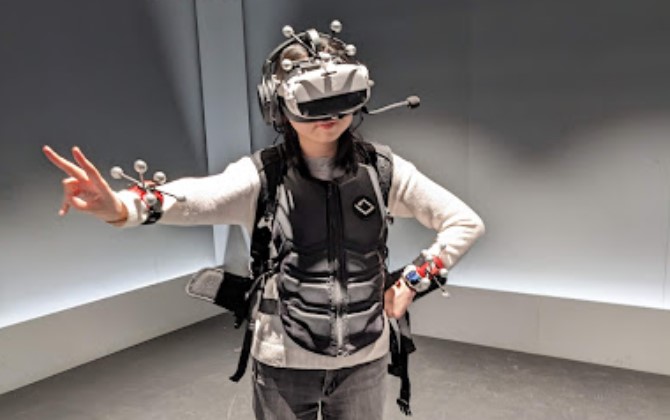
A free‑roam virtual‑reality (VR) arena is a purpose‑built physical space that allows users to move unimpeded while wearing a head‑mounted display (HMD). Unlike seated or tethered VR experiences, the arena removes the constraints of cables and small play areas by employing wireless tracking systems, floor‑mounted sensors, and often a safety net or padded walls. The result is a three‑dimensional playground where participants can walk, run, crouch, and interact with virtual objects as if they were truly present in the digital world.
The technology that makes these arenas possible combines precise positional tracking (usually through infrared, lidar, or optical markers) with low‑latency wireless transmission. This ensures that the virtual environment updates instantly as the user moves, preserving immersion and preventing motion sickness. Because the space is designed for unrestricted movement, developers can create experiences that would be impossible on a traditional living‑room setup—think of climbing a virtual mountain, dodging laser fire in a sci‑fi battleground, or collaborating on a massive puzzle that spans the entire floor.
The flexibility of a free‑roam arena lends itself to a wide variety of scenarios, each exploiting the ability to physically navigate a virtual world.
Adventure Questing – Participants embark on story‑driven missions that require exploring sprawling environments, solving riddles, and battling foes. The physical act of walking through hallways or climbing platforms amplifies the sense of heroism.
Sports Simulations – From virtual soccer and basketball to futuristic hover‑board races, the arena can replicate real‑world physics while adding fantastical elements such as zero‑gravity arenas or hyper‑speed sprinting.
Educational Expeditions – Learners can traverse reconstructed ancient cities, dive into marine ecosystems, or walk through the human circulatory system, gaining a kinesthetic understanding of complex subjects.
Co‑operative Puzzle Rooms – Teams must coordinate their movements to manipulate large virtual mechanisms, encouraging communication and spatial reasoning.
Immersive Storytelling – Narrative experiences leverage the arena’s scale to place users in cinematic moments—standing on a virtual cliff as a dragon swoops overhead or navigating a haunted mansion where every corridor reacts to the player’s presence.
These scenarios are continually expanding as developers experiment with haptic feedback, physical props, and multi‑user synchronization, turning the arena into a versatile canvas for both entertainment and learning.
The audience for free‑roam VR is remarkably diverse, reflecting the technology’s broad appeal.
The common denominator among these groups is a desire for an experience that blends physical movement with digital storytelling, creating a memorable blend of exercise, excitement, and immersion.
Designing a child‑friendly free‑roam arena involves more than simply lowering the height of obstacles. Safety, content suitability, and developmental benefits are central considerations.
Because the arena offers a controlled environment where the virtual world can be shaped to suit children’s needs, many operators report higher engagement levels compared with traditional video games.
When planning a celebration or corporate gathering, organizers increasingly look to free‑roam VR to provide a unique focal point. The versatility of the arena makes it adaptable to various event formats.
Birthday Parties – A themed adventure—such as a pirate treasure hunt or a superhero training camp—can be customized for the birthday child’s interests. Sessions are typically timed in short bursts (10‑15 minutes) to accommodate multiple guests, while the arena staff handles equipment distribution and safety briefings, allowing parents to relax and enjoy the festivities.
Graduations – For milestone celebrations, a free‑roam experience can symbolize transition and achievement. A “future‑world” scenario where graduates navigate a city of possibilities, unlocking doors that represent career paths, adds an emotive layer to the ceremony. Group trophies or digital keepsakes can be printed on the spot as souvenirs.
Corporate Parties – Companies use the arena for product launches, brand activations, or employee appreciation events. Customizable environments enable branding elements—logos, colors, product models—to be integrated seamlessly. Team‑building modules focus on problem‑solving under time pressure, providing measurable outcomes for HR departments. Additionally, the novelty of VR can attract media coverage, amplifying the event’s reach.
Logistical planning for these events involves coordinating session schedules, ensuring sufficient staffing, and tailoring the virtual content to match the occasion’s tone. When executed well, a free‑roam VR segment becomes the highlight of the day, offering attendees a shared memory that extends beyond traditional photo‑ops.
The academic and professional community has taken a keen interest in free‑roam VR, evaluating its impact across multiple disciplines.
Human‑Computer Interaction (HCI) Research – Scholars examine how unrestricted movement influences presence, cognitive load, and user satisfaction. Early studies suggest that physical locomotion significantly enhances spatial awareness and reduces motion sickness compared with seated VR.
Neuroscience – Researchers investigate the neural correlates of embodied interaction. Functional imaging indicates heightened activity in brain regions linked to proprioception and motor planning when participants navigate a free‑roam environment, implying deeper learning potential.
Education Technology – Experts highlight the arena’s capacity to deliver experiential learning. By aligning virtual scenarios with curriculum standards, educators can create immersive field trips that would otherwise be cost‑prohibitive or logistically impossible.
Health and Rehabilitation – Physical therapists explore the arena as a tool for gait training, balance improvement, and post‑stroke recovery. The gamified nature of VR encourages patient adherence, while the precise tracking data offers clinicians objective metrics for progress assessment.
Industry Analysts – Market reports forecast steady growth for free‑roam VR venues, driven by expanding consumer demand for immersive entertainment and corporate interest in innovative training solutions. Analysts note that scalability remains a challenge; large‑scale arenas require significant capital investment and ongoing maintenance, but modular designs and shared‑ownership models are emerging to mitigate costs.
Overall, the consensus among scientists and industry leaders is that free‑roam VR represents a convergence point for entertainment, education, and therapeutic applications. Continued interdisciplinary collaboration is expected to refine the technology, improve safety protocols, and broaden accessibility.
Free‑roam VR arenas have evolved from niche attractions into multipurpose platforms that cater to a wide spectrum of users. By removing the physical constraints of traditional VR setups, these arenas enable developers to craft experiences where walking, running, and interacting with virtual objects feel natural and exhilarating. From adventure quests and educational expeditions to birthday celebrations and corporate team‑building, the possibilities are limited only by imagination and design expertise.
The demographic reach—from casual families and curious children to dedicated gamers and professional teams—demonstrates the universal allure of embodied digital experiences. Moreover, scientific investigations affirm that the physicality inherent in free‑roam VR amplifies presence, learning, and therapeutic outcomes, positioning the technology at the forefront of immersive innovation.
As the industry continues to address challenges related to cost, safety, and content creation, free‑roam VR arenas are poised to become an integral component of entertainment districts, educational campuses, and corporate campuses worldwide. For anyone seeking an activity that blends physical movement with cutting‑edge digital storytelling, stepping into a free‑roam VR arena promises an unforgettable journey beyond the limits of the real world.


 850 Massachusetts Ave Suite 150, Indianapolis, IN 46204, United States


