TOP 10 best of the best Free-roam VR in Louisiana, US – Battleonix
El Monte
Log in
0

Advanced Search:

City

Rating

Playground


Price:

Main / Catalog / VR / Louisiana, US

The best Free-roam VR near me in Louisiana, US

img
from $17
Laser tagVR

Main Event Baton Rouge is located just west of I-10 on The Boulevard outside the Mall of Louisiana, near the intersection of Bluebonnet Boulevard and Mall of Louisiana Boulevard.


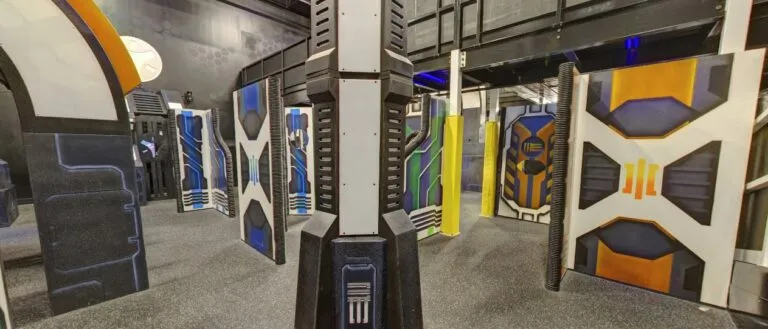
The 49,000-square-foot center features 22 high-tech bowling lanes, a two-story laser tag arena called Arena 51, gravity ropes with a zip line, billiards, shuffleboard, and an arcade with over 130 games plus virtual reality experiences. The venue offers tailored birthday packages with a dedicated party host, group and corporate event options including full facility buyouts, and school programs like lock-ins and field trips.


A full-service restaurant and bar serve burgers, pizza, wings, and cocktails, while a quick-service café provides lighter fare. The facility also includes private event rooms (Bayou and Bengal), hosts seasonal celebrations, and runs the Play Academy STEAM program. The staff is known for being attentive and accommodating, and the space works well for birthdays, corporate team building, date nights, and family outings.

Indoors
img
from $20
VR

Another World NOLA is located in the Colonial Shopping Center in Harahan, Louisiana, just outside New Orleans.


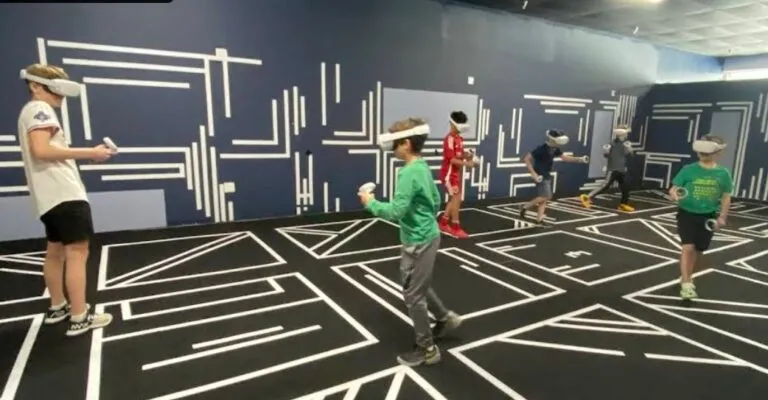
It is Louisiana’s first free-roam virtual reality arena, offering over 20 immersive multiplayer games where players move naturally through a 660-square-foot space wearing wireless Meta Quest 3 headsets. Sessions run 40 minutes and span shooters, sci-fi horror, dance battles, fishing adventures, and more — suitable for ages 6 and up with options for both competitive and cooperative play. The venue is ideal for birthdays, corporate team-building, date nights, and group hangouts, with private arena bookings so your party plays alone.


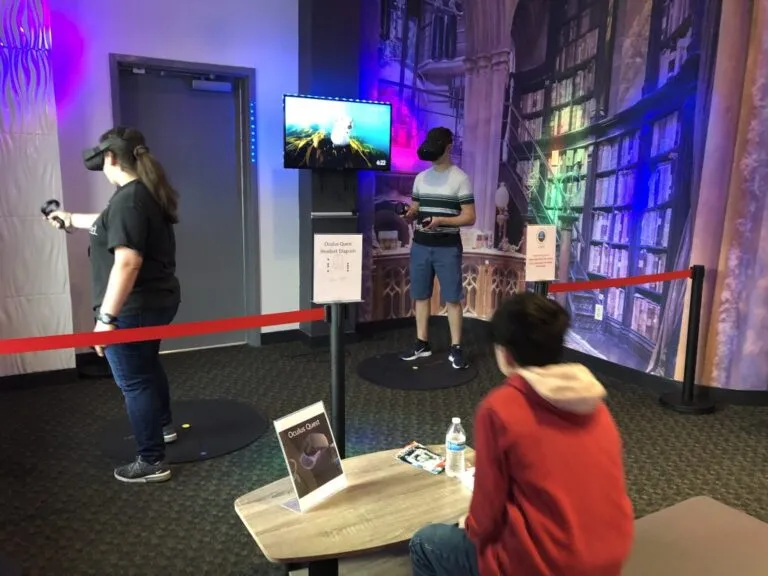
The space includes a comfortable lounge area where guests can bring their own food and drinks to celebrate. The staff handles all technical setup and game guidance, making it easy for first-timers and experienced players alike. Equipment is disinfected after every session, and the simple one-button controls ensure anyone can jump in and start playing within minutes.

Indoors
img
from $15
VR

Lake Area Adventures is located on Country Club Road in Lake Charles, Louisiana, inside a 35,000-square-foot family entertainment center that has been operating since 2016.


The facility offers a two-story laser tag arena, a 10,500-square-foot inflatable AirPark, an indoor ropes course, a bouldering wall, a Gamers Lounge with VR and simulators, and an indoor heated aquatics center. Admission grants access to all attractions except laser tag, which is available as an add-on. Party packages range from common-area tables to private rooms with dedicated hosts, themed decorations, and entry bands for guests. The on-site Terrace Restaurant, run by award-winning chef Amanda Cusey, serves Italian-inspired dishes and does not require a play pass to enter.


Beyond the indoor fun, the same team runs summer camps, swim lessons, pontoon boat rentals, and guided kayak tours on local waterways. The facility also hosts adults-only Adventure After Dark events on Saturday nights. Memberships are available for individuals and groups, offering unlimited access to the indoor attractions.

Indoors
img
from $20
VR

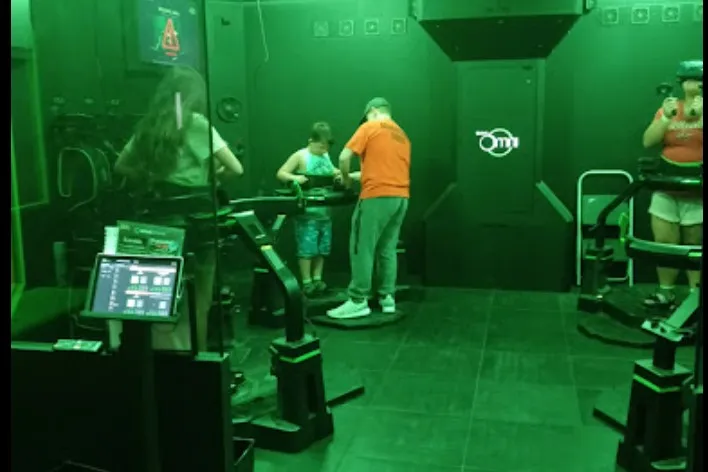
Planet VR is located at 2800 W. Pinhook Rd. in Lafayette, LA, right at the corner of Verot School Road across from Surge Entertainment. This indoor virtual reality amusement park features over 9 attractions and more than 300 games and experiences, including roller coasters, race car simulators, waterslides, flight simulators, hand gliding, a 4-person VR escape room, a motorcycle experience, and full-scale multiplayer rooms. Guests can choose from timed play bands or unlimited access, and the park also offers a mobile VR unit for off-site events.


Beyond the gaming floor, Planet VR provides a private party room, catering options, a lounge and recreation area, and food and drinks on-site. The venue is well-suited for birthday parties, corporate events, team-building activities, and group outings of all kinds. With a friendly and experienced staff, a 4.7-star Facebook rating, and a welcoming atmosphere, it has become a favorite indoor destination for families, friends, and coworkers in the Lafayette area.

Indoors

What Is a Free‑Roam VR Arena?

A free‑roam virtual‑reality arena is a physical space that blends the limitless possibilities of digital worlds with the freedom of real‑world movement. Unlike seated or tethered VR experiences, which restrict the user to a small play area, a free‑roam arena is typically a cleared room or warehouse outfitted with a network of motion‑tracking cameras, infrared sensors, and sometimes floor‑mounted “haptics” that capture a participant’s position and orientation in three dimensions. The participant wears a lightweight, all‑in‑one headset—often a high‑resolution, inside‑out tracked model—that streams the virtual environment in real time. Because the tracking system monitors the user’s entire body, they can walk, duck, jump, and even interact with physical props while remaining safely inside the arena’s boundaries.

The technology behind free‑roam VR has matured rapidly. Modern arenas use a combination of optical tracking (such as Vicon or OptiTrack), LIDAR mapping, and AI‑assisted occlusion handling to maintain a stable, low‑latency link between the headset and the virtual world. The result is a sensation of presence that rivals the immersion of a video game console, yet it adds the kinetic element of real movement. In practice, participants feel as if they have stepped into another world, with their hands reaching for objects that appear to float in mid‑air and their bodies responding to virtual gravity and obstacles.

These arenas are designed for safety as well as spectacle. The floor is often padded, and any obstacles are either removed or clearly marked. Staff members, known as “game masters,” supervise sessions, guide new users through headset fitting, and intervene if a participant strays too close to the physical boundaries (a safety feature known as “chaperone”). The combination of spatial freedom, visual fidelity, and supervised safety makes free‑roam VR a compelling platform for entertainment, education, training, and social events.


Free‑Roam VR Scenarios

The versatility of free‑roam VR is evident in the breadth of scenarios that developers can craft for these spaces. Because users can move unhindered, designers are no longer limited to static, single‑player puzzles; they can orchestrate dynamic, multi‑user adventures that unfold across an entire arena.


Adventure Quest

One popular scenario places participants in a sprawling fantasy realm where they must locate enchanted relics while avoiding mythical guardians. The arena’s layout mirrors a medieval castle, with virtual stone walls, torches, and secret passages projected onto the physical space. As players sprint between “rooms,” the tracking system updates their position, ensuring that virtual obstacles line up precisely with real‑world boundaries.


Escape Room

Free‑roam VR takes the classic escape‑room formula to a new level. Instead of solving riddles on a tabletop, participants walk through a virtual laboratory, manipulate holographic consoles, and physically duck under laser barriers. The multi‑user aspect encourages teamwork; one player might retrieve a key while another disables a security drone, all in real time.


Sports Simulations

From futuristic hoverboard races to recreated soccer matches, sports scenarios leverage the arena’s physical freedom. Players can actually swing a virtual racket, throw a digital ball, or perform a dive without the risk of colliding with hard surfaces. The haptic feedback of floor pads can simulate the feeling of impact, making the experience feel authentic.


Educational Expeditions

Museums and science centers use free‑roam VR to transport visitors to otherwise inaccessible locations. Imagine a classroom where students walk through a scaled‑down model of the human bloodstream, watching red blood cells and viruses swirl around them, or a history lesson that lets learners roam the streets of ancient Rome, hearing market chatter and seeing architecture that would be impossible to reconstruct physically.


Narrative Cinematics

Interactive storytelling is another frontier. In a cinematic thriller, participants become the protagonists, moving through a haunted mansion where ghosts react to their presence. The story adapts based on the path each player chooses, creating a personalized narrative that blends filmic pacing with the agency of gameplay.

These scenarios illustrate that free‑roam VR is not just a novelty; it is a platform capable of delivering content that is physically engaging, socially connective, and creatively limitless.


Who Plays on Free‑Roam VR Arenas?

The user base for free‑roam VR is remarkably diverse, encompassing a range of ages, interests, and professional backgrounds. The technology’s appeal lies in its ability to lower the barrier between the digital and physical worlds, making immersive experiences accessible to people who might otherwise feel constrained by traditional VR setups.


Casual Gamers

Many participants are avid gamers looking for a fresh way to experience their favorite genres. The ability to physically walk, dodge, and interact with a virtual environment adds a visceral dimension to gameplay that consoles and PC rigs cannot replicate. For this group, free‑roam VR is a premium entertainment outing, similar to visiting a theme park ride but with the added immersion of personal agency.


Families

Parents often bring their children to free‑roam venues as a family-friendly activity. The supervised environment eases concerns about motion sickness or safety, while the collaborative nature of many scenarios encourages teamwork and communication. Families appreciate the blend of excitement and physical activity, which contrasts with sedentary screen time.


Corporations and Teams

Companies use arenas for team‑building exercises, product demos, and even recruitment. The shared experience of solving an escape‑room puzzle or completing a strategic mission fosters trust and camaraderie among coworkers. In addition, brands can showcase products in a virtual showroom where attendees interact with 3D models as if they were tangible items.


Educators and Students

Schools and universities are increasingly exploring free‑roam VR as a pedagogical tool. Field trips to ancient civilizations, virtual labs for chemistry, and simulations of complex systems (such as traffic flow or ecological networks) become immersive lessons that engage multiple senses. The hands‑on nature of these experiences helps reinforce learning outcomes.


Special‑Needs Communities

Because the arena environment can be customized for accessibility—adjusting difficulty, providing alternative control schemes, or incorporating assistive devices—people with mobility challenges or sensory processing differences can benefit from tailored experiences. The physical freedom to move at one’s own pace, combined with the option for seated or assisted play, makes free‑roam VR inclusive.

Collectively, these groups illustrate that free‑roam VR has transcended the niche market of early adopters and entered mainstream entertainment and education. Its appeal is rooted in the unique convergence of physical activity, social interaction, and high‑definition digital storytelling.


VR for Kids

When it comes to children, free‑roam VR offers a balanced mix of fun, learning, and physical movement—an antidote to the static nature of many digital games. Designers create age‑appropriate experiences that emphasize bright visuals, simple controls, and clear objectives, ensuring that the technology remains a positive influence rather than a source of overstimulation.


Safety First

Children’s sessions are overseen by trained staff who conduct a quick health screening (checking for vision issues or motion‑sickness susceptibility) and fit the headset securely. The arena’s boundaries are reinforced with soft padding, and the software includes “guardian” alerts that pause gameplay if a child approaches a physical wall.


Educational Content

Many child‑focused scenarios double as learning modules. For example, a “Space Explorer” adventure teaches basic astronomy by having kids navigate a virtual solar system, identifying planets, and collecting “science tokens.” Another popular theme, “Dinosaur Dig,” immerses children in a prehistoric landscape where they unearth fossils and learn about different species through interactive narration.


Physical Development

Because the experience requires walking, reaching, and sometimes crouching, children receive a dose of aerobic activity that complements the cognitive benefits of play. Some venues incorporate mild challenges—such as jumping over virtual lava pits—that promote balance and coordination.


Social Interaction

Group experiences are structured to encourage cooperation. In a “Treasure Hunt” game, small teams must communicate to locate hidden artifacts, fostering teamwork and problem‑solving skills. The shared physical space also allows children to celebrate successes together, creating memorable social moments.

Overall, free‑roam VR for kids is crafted to be a safe, engaging, and educational pastime that leverages the strengths of immersive technology while promoting healthy, active play.


Free‑Roam VR for a Birthday Party, Graduation, Corporate Party

One of the most compelling applications of free‑roam VR is its role as a centerpiece for celebrations and special events. The technology’s ability to transform a plain room into a vibrant, interactive world makes it an attractive alternative to conventional party entertainment.


Birthday Parties

When a birthday celebration incorporates free‑roam VR, the venue becomes a personalized adventure crafted around the honoree’s interests. Whether the child loves superheroes, space exploration, or puzzle solving, a custom scenario can be designed to place the birthday star at the narrative’s core. Guests rotate through short, 15‑minute sessions, ensuring everyone gets a turn without long wait times. The shared excitement of emerging from the arena with stories of triumph and laughter creates lasting memories that extend beyond the typical cake‑and‑games routine.


Graduation Ceremonies

Graduates often seek memorable ways to mark the transition from school to the next phase of life. A free‑roam VR experience can be tailored to symbolize this milestone—perhaps a “Future City” where participants navigate a virtual metropolis representing various career paths, or a “Time‑Capsule” journey that lets them revisit key moments from their academic journey in a fantastical setting. The immersive nature of the experience encourages reflection and celebration simultaneously, and the visual spectacle provides a unique backdrop for photos and videos that capture the event’s spirit.


Corporate Parties and Team‑Building

Corporate gatherings benefit from free‑roam VR in two primary ways: entertainment and strategic development. For a company’s anniversary party, a custom scenario may spotlight the brand’s history, allowing employees to “walk through” pivotal moments and product launches in a gamified environment. For team‑building, structured challenges such as multi‑player escape rooms or cooperative missions promote communication, leadership, and problem solving under pressure. Because the physical movement required is moderate, participants remain energized and engaged throughout the event, avoiding the fatigue that can accompany lengthy seminars or passive presentations.

The logistical advantages are also notable. Unlike traditional party rentals that require extensive setup, a free‑roam arena operates as a self‑contained unit—once the space is cleared and safety checks completed, the technology can be reconfigured quickly for different scenarios. This flexibility enables event planners to offer a suite of experiences within a single venue, catering to diverse guest preferences.


Looking Ahead: The Future of Free‑Roam VR

The trajectory of free‑roam VR points toward deeper integration with other emerging technologies. As haptic suits become more sophisticated, participants will feel texture, resistance, and temperature, further blurring the line between the virtual and physical. Advances in AI‑driven content generation could allow on‑the‑fly scenario customization, meaning that each party or educational session could be uniquely generated based on participants’ input.

Moreover, the expansion of 5G and edge computing promises lower latency and higher visual fidelity, making large‑scale multiplayer experiences viable across geographically dispersed arenas. This could enable simultaneous, networked events where teams in different cities collaborate within a shared virtual space while physically moving in their local arenas.

For now, free‑roam VR arenas continue to serve as vibrant hubs where imagination meets movement. Whether it is a child exploring a dinosaur world, a group of friends battling space pirates, or a corporation forging stronger bonds, the technology offers a flexible, immersive platform that redefines how people gather, learn, and play. As hardware becomes more affordable and content libraries expand, free‑roam VR is poised to become a staple of modern entertainment venues, educational institutions, and corporate event planners alike.