El Monte
 Log in
Log in
Log in

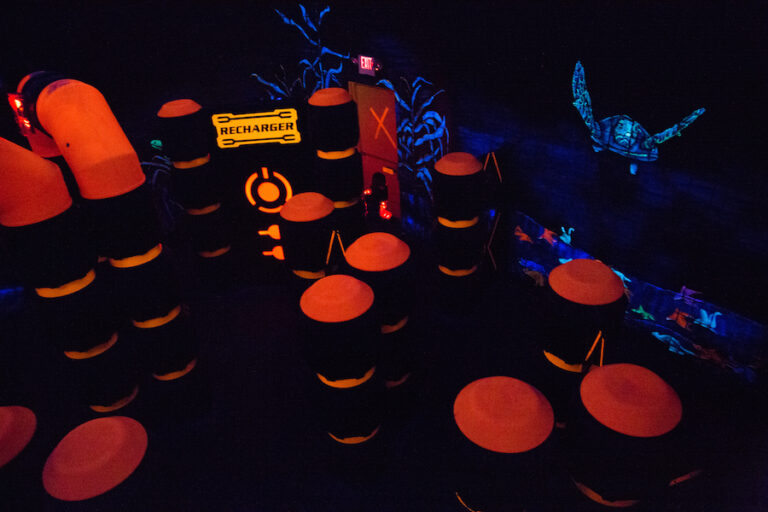
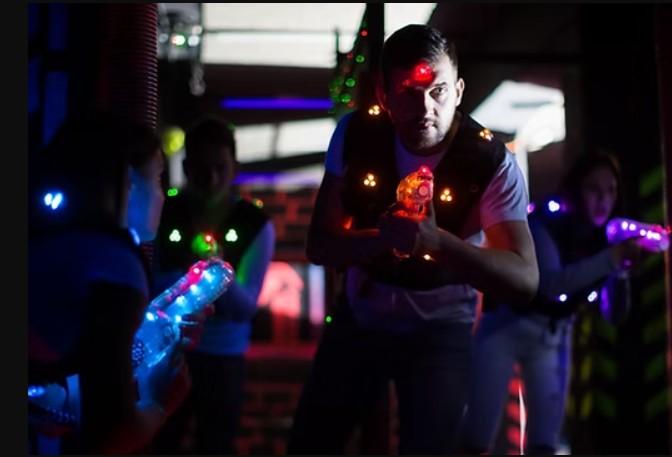
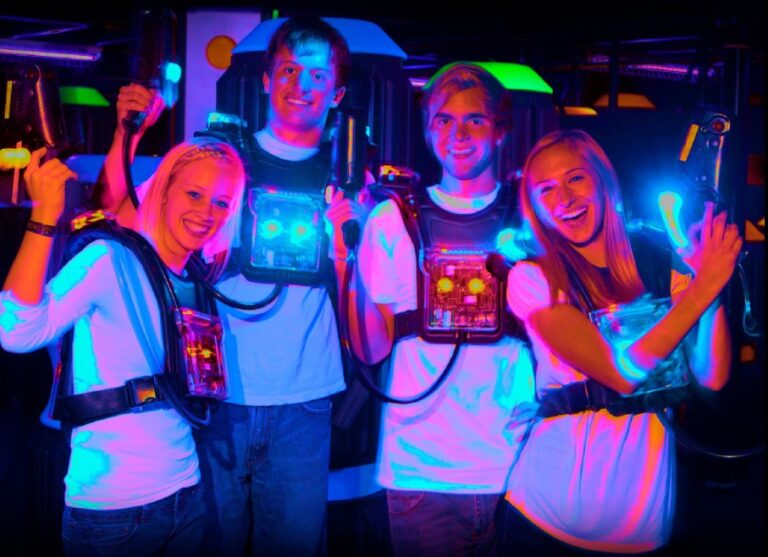
This 50,000-square-foot indoor family fun center is the largest in the Northland, offering multi-level laser tag with multiple game scenarios, a Minnesota-exclusive Omni VR Arena for immersive 360-degree active gameplay, the North Shore 9 mini golf course, three indoor batting cages using the ATEC Major League system, a large video and redemption arcade with over 60 games, and a Kid’s Cove inflatable playground. The center also shares space with Vertical Endeavors rock climbing walls and features an on-site Pizza Cafe for refueling between activities.
Adventure Zone serves as a party headquarters with multiple tiered room locations for birthdays, graduations, lock-ins, and corporate events. Group packages are available for schools (minimum 15 persons), businesses, and sports teams, with team building activities designed to encourage collaboration. The facility can accommodate groups of 45 or more, offers two meeting rooms with on-site catering, and runs community programs like the annual Tickets for Tots toy drive. Daily deals and multi-play passes provide flexible options for casual visitors and regulars alike.
 Indoors
Voxel Virtual Reality Parlour is located in the Vandalia Tower area of St. Paul, Minnesota, easily accessible from the surrounding Twin Cities metro.
The parlour features six VR bays with 12×12 foot play areas, big-screen live-streaming, and a curated library of nearly 30 experiences ranging from adventure and puzzles to art and education. Guests can book individual bays or reserve the entire space for private events. Party packages include dedicated headsets, setup and cleanup, and optional catering add-ons. The knowledgeable staff provides tutorials for first-timers and ensures a smooth, welcoming experience for all skill levels.
Beyond gaming, Voxel offers a comfortable lounge with complimentary popcorn, student discounts, punch passes for regulars, and Mobile VR rentals for off-site events. The space is well-suited for birthdays, corporate team-building, date nights, bar and bat mitzvahs, and any gathering where shared experiences and genuine connection are the goal. The event coordinator works closely with groups to customize every detail.
IndoorsSandbox VR Indoor Center is located in Eden Prairie, MN.
This is a full-body virtual reality venue where groups of up to six players step into private holodecks equipped with motion capture and haptic vests. The experience lineup includes Squid Game Virtuals, Stranger Things: Catalyst, Deadwood Valley zombie adventures, Age of Dinosaurs, and more. Each 60-minute session includes gearing up, playing, and receiving a personalized cinematic highlight reel. The space is clean, modern, and designed for shared adventures rather than solo play.
The venue features a dedicated party room for celebrations and works well for birthdays, corporate team building, bachelor parties, and date nights. The staff is known for being attentive and helpful, guiding guests through the technology and safety protocols. Gift cards and occasional promotions are available, and a replay discount can be requested on-site for return visits. The experience is active — guests are advised to wear tennis shoes and breathable clothing.
IndoorsSandbox VR is located inside the Rosedale Center in Roseville, Minnesota, just off Highway 36 between Minneapolis and Saint Paul.
The venue offers full-body, free-roam virtual reality experiences using motion capture and haptic vests for groups of up to six. Players can choose from a rotating lineup of immersive adventures including Squid Game Virtuals, Stranger Things: Catalyst, Age of Dinosaurs, Deadwood PHOBIA, and several other story-driven worlds. Each session runs about 60 minutes and includes a free personalized cinematic highlight reel.
A dedicated Party Room is available for birthdays, corporate events, and team-building gatherings. The Gold Package bundles two experiences for up to six guests with snacks and beverages. The staff is known for being attentive and flexible — willing to switch games mid-session if needed. A lounge and recreation area provide space to relax before or after the experience.
IndoorsGrand Slam Family Fun Center is located in Coon Rapids, Minnesota, just north of Minneapolis.
With over 45,000 square feet of indoor attractions, the center features a multi-level laser tag arena, an 18-hole themed mini golf course, a two-story Play Zone for kids 12 and under, bumper cars, a ninja obstacle course, and the Valo Arena mixed-reality gaming experience. The arcade offers more than 50 games, and four batting cages accommodate baseball and softball players of all skill levels. Walk-in unlimited packages and single-play pricing give guests flexibility in how they experience the venue.
The facility is a popular choice for birthday parties with reserved tables and three-hour celebration windows, as well as for school groups, sports teams, and corporate outings. After-hours private events can accommodate up to 80 participants with full access to all attractions. A snack bar serves pizza, burgers, and other favorites. There is no entry fee for spectators, and the staff is consistently praised for being friendly and accommodating. Socks are required for the Ninja Course, Play Zone, and Valo Arena; waivers are needed only for the Ninja Course.
IndoorsREM5 Virtual Reality Laboratory is located in the St. Louis Park neighborhood of the Twin Cities metro area, just a few minutes west of downtown Minneapolis.
The lab operates around the concept of renting semi-private VR Pods, each equipped with a high-end headset and a curated library of games and simulations. Groups of two to five people share a Pod, taking turns exploring worlds that range from action-packed adventures to creative and educational experiences. A dedicated concierge assists throughout the session, and guests can order food and drinks — including pizza and local craft beer — right to their Pod. The space is also used for corporate team-building, leadership training, and school field trips through its REM5 For Good program.
Beyond open play, REM5 serves as a full-service event venue for birthdays, corporate parties, and private celebrations, accommodating up to 150 guests. The on-site kitchen prepares made-in-house dishes, and the lounge area provides a comfortable space to gather before or after a session. The staff is known for being welcoming and knowledgeable, making the experience accessible to first-time VR users and seasoned players alike.
IndoorsThe Fun Lab is located in the North Metro area of the Twin Cities, in Blaine, Minnesota, inside a converted 22,500-square-foot space.
The Fun Lab offers a wide range of attractions including a 5,000-square-foot multi-level laser tag arena, Hologate virtual reality, ValoArena interactive gaming, spinning bumper cars, a three-story ropes course, XD Dark Ride, laser maze, Ballocity soft play zone, and over 45 arcade games. Birthday parties come in three packages (High Voltage at $349.99, Nitro at $399.99, and Super Nova at $469.99) each including a private party room, dedicated host, pizza, cupcakes, and arcade cards. Field trips start at $12.99 per student with free chaperone admission. Day passes range from the Nutty Professor Pass to the Big Bang All Day Pass, with unlimited attraction passes starting at $19.99.
The on-site Food Lab restaurant serves brick oven pizzas, gourmet burgers, and craft beer and wine in a comfortable setting. The venue hosts corporate events, fundraisers, and group gatherings with customizable packages. There is no admission fee and parking is free. The facility was founded by Jim and Marilyn Webber and their family, with a team of dedicated Funologists managing parties and events. The space also offers a Summer Pass for $59.99 that grants access to both The Fun Lab and Zero Gravity through September 30, 2026. Memberships are available with 12-month billing and 2 months free when paying annually.
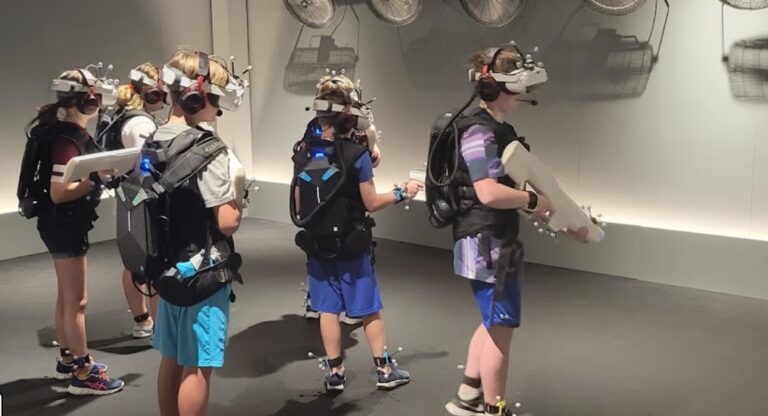
IndoorsA free‑roam virtual‑reality (VR) arena is a physical space that has been transformed into an immersive digital playground where participants can move unrestricted by cables or stationary headsets. Unlike seated or tabletop VR experiences, a free‑roam arena uses wireless, battery‑powered head‑mounted displays (HMDs) combined with motion‑tracking cameras, infrared beacons, or inertial measurement units that constantly map the wearer’s position within a defined volume. The arena itself is typically a room‑sized or warehouse‑sized environment whose walls, floor, and sometimes ceiling are fitted with safety padding, non‑slip flooring, and clear signage to protect users as they dash, duck, and leap through virtual worlds.
The core appeal of a free‑roam arena lies in the removal of physical constraints. Participants are not tethered to a chair or a gaming console; they can sprint across a digital battlefield, climb a virtual tower, or collaborate on a puzzle that requires genuine, full‑body interaction. The technology behind the scenes—inside‑out tracking, high‑capacity Wi‑Fi, and low‑latency rendering—ensures that the virtual world updates in real time, preserving the illusion that the user is truly inside the simulation.
Free‑roam arenas are versatile platforms that can host a wide array of scenarios, each tailored to different audiences and objectives. Some of the most common categories include:
Adventure and Exploration – Users can wander through sprawling alien landscapes, ancient ruins, or underwater cities. The sense of scale is dramatically enhanced when the user’s physical steps translate directly into virtual movement.
Action and Combat – Laser‑tag‑style games, zombie survival runs, and futuristic duels thrive in free‑roam settings. Because participants can physically duck behind cover or swing a virtual weapon, the adrenaline rush is comparable to real‑life sport.
Puzzle and Escape‑Room Experiences – Designers embed clues in the virtual environment that require teamwork, spatial reasoning, and physical manipulation of objects. The integration of haptic feedback devices—such as vibration‑enabled controllers or wearable suits—adds a tactile dimension that deepens immersion.
Training Simulations – First‑responders, medical personnel, and industrial workers can rehearse high‑risk procedures in a safe, repeatable format. The ability to physically walk through a virtual fire‑scene or operate a simulated crane provides muscle memory that is hard to achieve with traditional desktop simulations.
Creative and Artistic Studios – Some venues offer “VR paint” or “3‑D sculpt” sessions where participants use motion‑tracked brushes to create three‑dimensional art in midair. The collaborative nature of free‑roam allows multiple artists to work on the same piece simultaneously, fostering a shared creative process.
Each scenario is built on a foundation of modular software that can be swapped in minutes, allowing arena operators to refresh the experience menu regularly and keep repeat visitors engaged.
The demographic reach of free‑roam VR has broadened far beyond the core gaming community that initially drove the technology. Today, a diverse spectrum of users steps into these arenas:
Families and Friends – Groups of parents, teenagers, and younger siblings often book sessions for a shared adventure. The ability to cooperate or compete in a physical space adds a social layer absent from solitary home VR setups.
Teenagers and Young Adults – For this age group, the kinetic energy of free‑roam matches the desire for high‑octane entertainment. Competitive leagues have sprung up around e‑sports titles that use full‑body movement, and many participants treat the arena as a modern arcade.
Corporate Teams – Companies leverage free‑roam VR for team‑building exercises, leadership workshops, and innovation labs. The physical collaboration required to solve a virtual escape‑room puzzle, for instance, mirrors the communication challenges faced in real projects.
Educational Institutions – Schools and universities experiment with immersive field trips—such as virtual archaeology digs or historical reenactments—that let students “walk through” content rather than read about it.
Special‑Needs Communities – Therapists have begun to incorporate free‑roam VR into occupational and physical therapy programs, using gentle, gamified movements to improve balance, coordination, and confidence.
The common denominator across these groups is a desire for embodied interaction: the ability to see one’s own body moving in sync with the digital world, producing an experience that feels both fun and meaningful.
When children are introduced to free‑roam VR, safety becomes the foremost priority. Operators typically enforce the following safeguards:
Age‑Appropriate Sessions – Many arenas set a minimum age—often eight or ten years—based on the child’s ability to follow safety instructions and handle the weight of the headset.
Supervisory Presence – Staff members or parents stay within the arena, equipped with a “coach” headset that provides an overhead view of all participants. This perspective allows them to intervene instantly if a child drifts toward a wall or loses balance.
Protective Gear – Soft wrist guards, padded headbands, and non‑slip floor mats reduce the risk of minor bumps and bruises. The headsets themselves are designed with adjustable straps and lightweight frames to accommodate smaller heads.
Sanitation Protocols – Disposable facial covers and regular UV‑light cleaning cycles keep hygiene at a high standard, an especially important consideration for younger users who may be more prone to skin sensitivities.
Beyond safety, free‑roam VR offers significant educational advantages for children:
Spatial Reasoning – Navigating three‑dimensional virtual environments hones the ability to visualize objects from multiple perspectives, a skill that translates to mathematics, engineering, and architecture.
Collaboration Skills – Team‑based puzzles require clear communication, role assignment, and collective problem‑solving, reinforcing social competence in a low‑stakes setting.
Creative Expression – Artistic scenarios let kids paint with light, sculpt with virtual clay, or compose music by moving through a sound‑mapped space, fostering imagination and multimodal learning.
Physical Activity – Unlike sedentary screen time, free‑roam VR encourages cardio‑like movement—dodging, lunging, and reaching—providing a playful avenue for exercise that can appeal to kids who resist traditional sports.
When these safeguards and learning opportunities are combined, free‑roam VR becomes a compelling tool for parents and educators seeking a balance between fun and development.
The immersive nature of free‑roam VR makes it an increasingly popular venue for milestone celebrations and corporate gatherings. Each type of event benefits from distinct advantages that traditional party halls or conference rooms cannot match.
Kids’ birthday parties in a free‑roam arena turn a simple gathering into an epic quest. Organizers can design a custom storyline—perhaps a treasure hunt across a haunted pirate island—where the birthday child assumes the role of hero. The ability to invite a small group of friends, each equipped with a headset, creates a shared narrative that culminates in a collective victory, yielding a memorable experience far beyond the conventional cake‑and‑games routine. Parents also appreciate the built‑in safety infrastructure, knowing that the environment is monitored and child‑friendly.
Graduating high‑school seniors or college students often look for unconventional ways to mark the transition to adulthood. A free‑roam VR celebration can blend nostalgia and forward‑thinking by offering themed rooms that reflect the graduates’ field of study—such as a virtual laboratory for science majors or a design studio for art students. The “graduation ceremony” can be streamed live to an external audience, allowing family members who cannot attend in person to watch the virtual cap‑throw in real time, all while participants enjoy a dynamic, interactive party.
Corporate events traditionally rely on cocktail receptions or conference‑style presentations. Free‑roam VR injects an element of novelty that breaks down hierarchical barriers. Teams can compete in a corporate‑branded obstacle course, solve a brand‑related escape‑room, or collaborate on a virtual product prototype using 3‑D modeling tools built into the arena. The physicality of the experience encourages networking that feels organic—participants naturally converse while navigating the same space, rather than standing in isolated clusters. Moreover, analytics built into the software can generate post‑event reports on team performance, cooperation metrics, and individual engagement levels, providing tangible ROI for HR departments.
Across all these celebrations, the flexibility of the software stack allows event planners to personalize lighting, soundtracks, and visual motifs, ensuring the ambiance aligns perfectly with the occasion’s theme. The result is an immersive celebration that participants will recount for years, reinforcing the venue’s reputation as a cutting‑edge event destination.
As hardware continues to shrink and battery life extends, free‑roam VR arenas are poised to become even more accessible. Emerging technologies such as foveated rendering—which concentrates processing power where the user’s eyes are focused—will reduce latency and improve visual fidelity, making large‑scale environments feel more lifelike. Simultaneously, advancements in haptic suits and tactile feedback gloves will introduce a new dimension of touch, allowing users to feel the texture of virtual objects or the impact of a simulated punch.
The integration of artificial intelligence will also reshape scenario design. AI‑driven characters can adapt to player strategies on the fly, providing a dynamic challenge level that scales with the group’s skill. Procedurally generated landscapes may allow venues to offer an endless supply of fresh worlds without the need for manual content creation.
From a commercial perspective, the rise of subscription‑based access models could democratize entry, enabling schools, community centers, and smaller businesses to book regular time slots without prohibitive upfront costs. This democratization will likely expand the user base further, cementing free‑roam VR as a mainstream form of entertainment, education, and corporate training.
Free‑roam VR arenas represent a convergence of cutting‑edge technology and human‑scale interaction. By eliminating physical constraints, they transform ordinary rooms into boundless digital realms where adventure, learning, and celebration coexist. The versatility of scenarios—from high‑energy combat to delicate artistic expression—caters to a broad audience that includes families, teenagers, corporate teams, and educational institutions. For children, the carefully managed safety protocols combine with rich educational benefits, making the experience both enjoyable and developmental.
Celebrations such as birthdays, graduations, and corporate parties find a fresh canvas in these arenas, offering immersive narratives that surpass traditional event formats. As hardware advances, software becomes more intelligent, and access models evolve, free‑roam VR is set to become an integral part of the cultural fabric, redefining how people play, learn, and gather. The future, it seems, is not just virtual—it is freely roamed.


 329 S Lake Ave, Duluth, MN 55802, United States