El Monte
 Log in
Log in
Log in

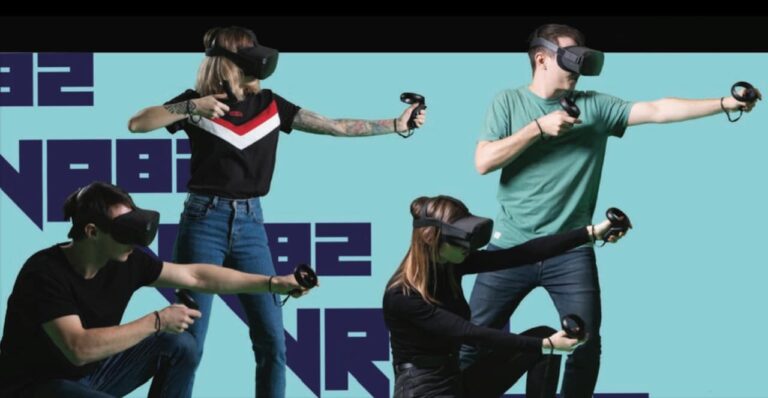
VR82 is located in Gatineau, Québec, just across the river from Ottawa.
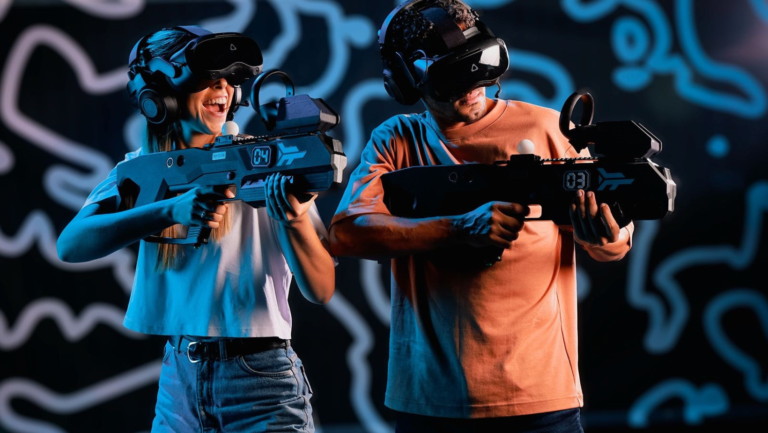
This modern arcade specializes in free-roam virtual reality games where players physically move through a large arena to battle zombies, compete in space shooters, or solve Ubisoft VR escape room puzzles. They also offer solo VR stations with over 50 games and real axe throwing lanes for a physical challenge.
The venue is designed for group events like corporate team building, birthday parties, and friendly gatherings. It features a lounge area with a slushie bar offering 18 flavors, a private room with a liquor permit for parties, and monthly axe-throwing tournaments. The staff provides guidance for beginners, making the high-tech experience accessible to all.
 Indoors
Zero Latency Ottawa is located in Ottawa’s east end, in the industrial park area off Lancaster Road, easily accessible by car with free on-site parking.
This is Ottawa’s flagship free-roam VR arena, offering wireless multiplayer sessions for up to eight players across a 1,800-square-foot space. The game library includes zombie survival titles like Outbreak and Outbreak 2: Mall Mayhem, the tactical sci-fi shooter Warhammer 40,000: Space Marine VR, the puzzle-based Engineerium, and the horror experience Haunted. Each session runs 30 to 45 minutes and requires real physical movement, teamwork, and communication. The venue accommodates private events for up to 24 players.
The space is well-suited for birthdays, corporate team-building events, bachelor parties, graduations, and family outings. The staff provide complimentary photos and videos of each session, and the lounge area allows groups to gather before and after gameplay. Free parking is available on site, and the facility can host events outside regular hours by arrangement.
IndoorsVRAdventures.ZONE is located in the Nepean area of Ottawa, along Merivale Road near the intersection with Meadowlands Drive, in a commercial strip that is easily accessible from the surrounding suburbs.
The centre offers high-end virtual reality experiences with free-roam multiplayer arenas where players can move freely and interact with each other in digital worlds, as well as single-player stations with a library of titles ranging from adventure and puzzle games to horror and racing simulations. Trained VR guides assist guests with equipment and orientation, making the experience accessible to both first-time users and experienced players.
Private party rooms and group packages are available for birthday parties, corporate team-building events, and other celebrations, with staff helping to select appropriate experiences based on the group’s preferences. A lounge area with seating and snacks provides a space to relax between sessions, making the centre suitable for extended visits by families, friends, and colleagues.
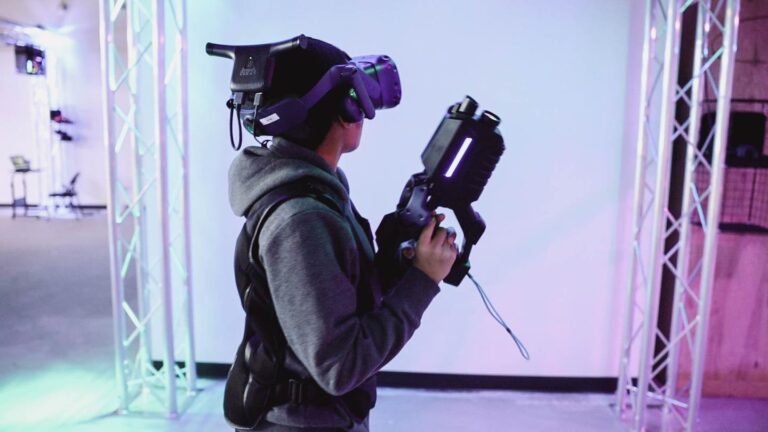
IndoorsA free‑roam virtual‑reality (VR) arena is a purpose‑built physical space that lets users move unhindered while wearing an untethered headset. Unlike seated or room‑scale setups that constrain motion to a few square metres, a free‑roam arena can span dozens or even hundreds of square metres, with motion‑tracking systems covering the entire volume. The technology typically combines high‑precision infrared or lidar tracking, wireless power solutions, and robust safety measures such as padded walls and floor‑level barriers.
Inside the arena, participants are free to walk, run, crouch, jump, and interact with virtual objects as if they were in the real world. The environment can be a replica of a physical location (e.g., a warehouse converted into a gaming hub) or a custom‑designed space where the virtual world and physical layout are perfectly aligned. Because the headset is wireless, users are not limited by cables or external sensors, allowing experiences that feel truly immersive and kinetic.
The concept originated from research labs that wanted to study human movement in VR without the risk of collision. Commercial operators soon recognized its entertainment potential, and today free‑roam VR arenas are popping up in malls, theme parks, and dedicated entertainment centers worldwide.
The versatility of free‑roam technology gives rise to a broad spectrum of scenarios, each exploiting the ability to move freely in three dimensions. Below are some of the most popular categories:
Players can embark on quests that span entire virtual continents, from ancient ruins hidden deep in a jungle to futuristic cities floating in the sky. Because the arena can be re‑mapped on the fly, developers can stitch together multiple physical zones to simulate vast distances.
Games that mimic real‑world sports—such as sword‑fighting duels, futuristic dodgeball, or zero‑gravity arena combat—benefit from the kinetic feedback that only free‑roam can provide. Teams compete head‑to‑head, and spectators can watch on large screens that display live data and replays.
Groups work together to manipulate oversized virtual mechanisms, solve riddles that require physical positioning, or navigate mazes that change in response to collective actions. The shared physical space encourages teamwork and communication beyond the headset.
Students can walk through a reconstructed archaeological dig, explore the anatomy of a human heart at a one‑to‑one scale, or pilot a spacecraft while feeling the gravity of distant planets. The tactile immersion boosts retention and sparks curiosity.
Immersive theater experiences place participants inside a story where they become characters. Actors in motion‑capture suits interact with the players, while the virtual environment reacts dynamically to the choices made on the fly.
These scenarios are only limited by imagination and the technical capacity of the arena’s tracking infrastructure. As hardware becomes lighter and batteries last longer, designers are able to craft longer, more complex experiences that keep participants engaged for an hour or more.
Free‑roam VR appeals to a remarkably diverse audience, ranging from seasoned gamers to corporate teams seeking innovative training tools. One segment that has seen rapid growth is the younger demographic—children and early‑teenagers—who view the technology as a modern playground.
Operators typically segment their offerings into “Kid Zones” and “Adult Zones.” Kid‑focused experiences feature bright, cartoon‑style graphics, simplified controls, and shorter session lengths (usually 10‑15 minutes) to accommodate shorter attention spans. Safety measures are amplified: headsets are fitted with lightweight foam and adjustable straps, and the arena floor is covered with soft, anti‑slip mats.
Parents often ask about motion sickness and eye strain. Modern headsets incorporate high refresh rates (90 Hz or higher) and low latency tracking, dramatically reducing the likelihood of nausea. Sessions are monitored by staff who can pause or end gameplay at any sign of discomfort. Additionally, the arenas enforce strict hygiene protocols: headsets are sanitized between uses, and users are required to wear disposable facial covers during peak periods.
Overall, the kid‑friendly market has transformed free‑roam VR from a niche novelty into a mainstream family attraction, with many facilities reporting that children under ten now make up more than 40 % of daily visitors.
Event planners have embraced free‑roam VR as a fresh alternative to conventional party activities. The technology’s ability to adapt to different group sizes, themes, and objectives makes it a natural fit for celebrations and corporate gatherings alike.
A birthday party in a free‑roam arena typically starts with a brief safety briefing, followed by a curated game path. Packages often include:
Parents appreciate the convenience of a single venue that handles equipment, staff, and cleanup, while kids enjoy an adventure that feels far more memorable than a standard cake‑and‑games routine.
Universities and high schools have started to use free‑roam VR to mark the transition from student life to the professional world. Some popular formats include:
These experiences add a futuristic flair to a milestone that traditionally relies on speeches and photographs.
Corporate clients leverage free‑roam VR for both celebratory and training purposes. The technology aligns well with company values centered on innovation, agility, and employee well‑being.
Because the arena can be branded with corporate colors and logos, the experience feels seamless and reinforces brand identity.
The rapid expansion of free‑roam VR has attracted considerable interest from academic researchers and industry analysts alike. Their perspectives shed light on both the promise and the challenges that lie ahead.
Human‑factors specialists note that free‑roam environments provide a unique testbed for studying embodiment—the sense that a virtual body is one’s own. Experiments have demonstrated that when participants can physically walk through a virtual space, their spatial memory and navigation skills improve dramatically compared to seated VR. This has implications for rehabilitation therapies, where patients recovering from stroke can practice walking in a safe, controlled environment.
Medical researchers are investigating the cardiovascular and musculoskeletal effects of extended free‑roam sessions. Preliminary data suggest moderate increases in heart rate comparable to brisk walking, indicating that the technology can serve as a low‑impact cardio workout. However, experts caution that long‑duration play (beyond 30 minutes) may lead to fatigue or joint strain, especially in users who are not accustomed to vigorous movement.
Market analysts predict that the global free‑roam VR segment will surpass USD 5 billion within the next five years. Growth drivers include decreasing hardware costs, the rollout of 5G networks that facilitate low‑latency streaming of high‑resolution content, and an expanding consumer appetite for experiential entertainment. Analysts also highlight the potential for cross‑industry collaborations, where automotive manufacturers, architectural firms, and educational institutions co‑create bespoke scenarios.
Ethicists raise concerns about data privacy, as the tracking systems collect detailed movement patterns that could be used to infer personal habits. They advocate for transparent data policies and opt‑in mechanisms for users. Safety regulators emphasize the importance of maintaining clear exit routes and emergency stop functions, especially as arenas become larger and more crowded.
Overall, the consensus among scientists and experts is that free‑roam VR is a transformative medium that bridges the gap between digital and physical realities. While technical and ethical hurdles remain, the trajectory points toward broader adoption across entertainment, education, health, and corporate sectors.
As hardware continues to shrink and battery life extends, the physical footprint required for a free‑roam arena may shrink as well. Emerging technologies such as inside‑out tracking with AI‑enhanced occlusion handling could eliminate the need for dozens of ceiling‑mounted sensors, making it feasible to convert ordinary spaces—like community centers or school gyms—into temporary VR playgrounds.
Moreover, the integration of haptic suits and omnidirectional treadmills promises richer sensory feedback, allowing users not only to see and hear but also to feel wind, impact, and texture. This multi‑sensory approach could revolutionize training simulations for firefighters, surgeons, and pilots, providing a level of realism that static VR cannot match.
Lastly, the social dimension of free‑roam VR is set to deepen. Future platforms may support persistent virtual worlds that persist beyond a single session, letting groups of friends reconvene in a shared digital neighborhood that evolves over time. Such continuity could transform the arena from a one‑off attraction into a community hub where members return regularly, fostering long‑term engagement.
In sum, free‑roam VR arenas have already reshaped the way people play, learn, and celebrate. By marrying unrestricted physical movement with immersive digital content, they unlock experiences that were once confined to the realm of science fiction. As research, technology, and market forces converge, the next decade promises an even more vibrant ecosystem where the line between the real and the virtual becomes delightfully blurred.


 79 Bd de la Gappe C4 Gatineau, Québec J8T 0B5