Log in
Advanced Action Sports is located in West Warwick, RI.
Advanced Action Sports: Action-Packed Entertainment in West Warwick, RI
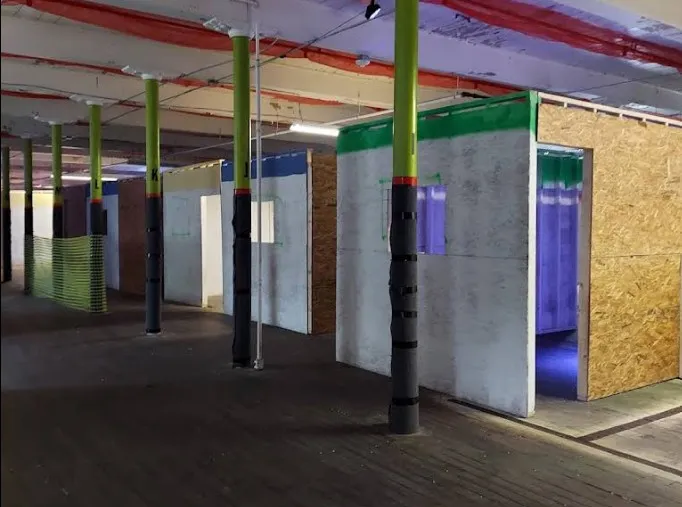
Located strategically just 20 minutes south of Providence, Advanced Action Sports offers an unparalleled entertainment experience. Its 32,000 square foot indoor action sports center stands as the largest of its kind in New England, measured by gross square footage. The West Warwick location provides a diverse array of activities, including airsoft, reball paintball, laser tag, retail options, and dedicated spaces for parties and group outings. It’s designed to be a complete destination for thrill-seekers and those looking for unique entertainment options.
IndoorsBase Station VR Indoor Arcade is located in Pawtucket, RI.
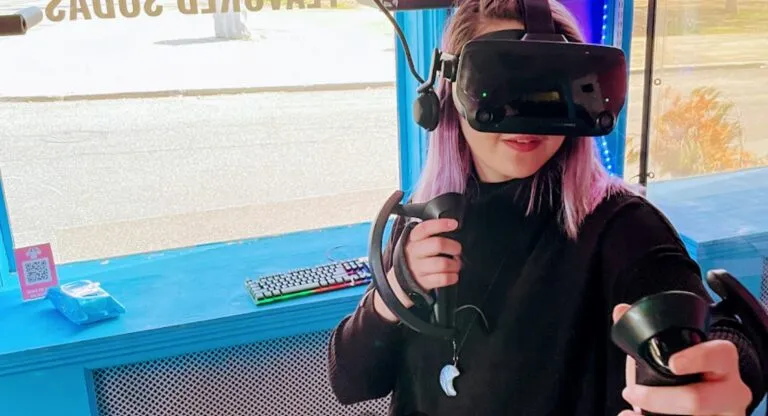
Base Station VR is a virtual reality gaming center located in Pawtucket, Rhode Island. They offer a variety of immersive experiences for gamers of all ages, including multiplayer games, racing simulators, and escape room challenges. Base Station VR provides top-of-the-line virtual reality equipment, with high resolution displays and responsive controllers that allow players to fully immerse themselves in the game world. Whether you’re looking to compete with friends, play solo, or simply try out virtual reality for the first time, Base Station VR is a great option for anyone in the Pawtucket area.
IndoorsThe Bubbler VR Indoor Arcade is located in Providence, RI.
The Bubbler VR, located in Providence, RI, offers virtual reality experiences for individuals and groups. Guests can choose from a variety of games and simulations, including virtual job training, arcade-style games, and even experiences that take them to far-off destinations. The state-of-the-art VR equipment and immersive technology provide an unforgettable experience for visitors of all ages. The Bubbler VR is perfect for birthday parties, team-building events, or simply a fun outing with friends and family. Book your session today and jump into a whole new world of virtual reality.
Indoors
For decades, the concept of virtual reality was confined to living rooms, tethered by thick cables and limited by the small, physical footprint of a carpeted den. Players sat in chairs, staring at screens strapped to their faces, often feeling the dissonance of wanting to walk forward while their bodies remained anchored. The emergence of free-roam VR arenas has shattered these constraints, transforming virtual reality from a sedentary hobby into a full-body, kinetic experience that mimics the fluidity of real life.
A free-roam VR arena is an expansive physical space designed to allow multiple users to walk, run, and interact naturally within a simulated environment. Unlike home-based setups that use stationary sensors or seated controls, a free-roam arena utilizes advanced tracking technology—often a combination of ceiling-mounted infrared cameras, specialized beacons, and high-performance wireless headsets.
In these arenas, the boundaries of the digital world are mapped to the physical dimensions of a large, open floor plan. When a participant takes a step in the real world, they take an identical step in the virtual one. This “one-to-one” tracking eliminates the motion sickness often associated with artificial locomotion, such as using a joystick to move while the body remains still. The result is a profound sense of presence where the brain stops questioning the reality of the simulation, allowing for complete immersion in digital architecture, expansive landscapes, and high-stakes scenarios.
The versatility of free-roam VR is perhaps its most compelling feature. Because the experience is software-driven, the setting can change in an instant, transitioning from a gritty science-fiction corridor to a serene, impossible forest.
Popular scenarios range from high-octane competitive gameplay to cooperative puzzle-solving. In zombie defense scenarios, players must physically barricade doors, scavenge for ammunition, and coordinate defensive maneuvers as a team. The physical act of ducking behind a virtual crate or leaning around a corner to fire a weapon adds an element of tactical engagement that traditional gaming simply cannot replicate.
Beyond gaming, there are “escape room” scenarios designed to challenge critical thinking and communication. Players might find themselves stranded on a sinking starship or investigating a haunted manor, where they must manipulate objects in 3D space to solve riddles. These scenarios emphasize environmental storytelling, where the user isn’t just watching a movie; they are the protagonist of a living, breathing narrative.
The demographic for free-roam VR is surprisingly broad, spanning from tech-curious teenagers to adventurous seniors. However, one of the fastest-growing segments is the youth market. For children, free-roam VR serves as a “digital playground” that promotes physical activity and social interaction.
While home VR can be isolating, free-roam arenas are inherently social. Children play alongside their friends, shouting instructions, strategizing, and sharing the excitement of the virtual world in real-time. Safety protocols are built into the design, with virtual “guardian” walls that prevent players from colliding with physical boundaries. This environment provides a safe, controlled space for kids to explore complex worlds, fostering teamwork and spatial awareness in a way that is far more engaging than staring at a tablet or console screen.
The “event” economy has embraced free-roam VR as a premier solution for group entertainment. Because these sessions typically last between 30 and 60 minutes, they serve as the perfect anchor for social gatherings.
Birthday Parties: For children and adolescents, a VR party removes the stress of planning activities. The arena provides a high-energy environment that leaves the party-goers exhausted, exhilarated, and bonded through a shared adventure.
Graduations: Celebrating a milestone often requires a unique experience that breaks the mold of traditional dinners or parties. Free-roam VR offers a “moment of awe” that groups can look back on. It acts as a shared memory-making event, where the novelty of the technology adds a sense of excitement to the accomplishment of graduation.
Corporate Parties: For team-building, free-roam VR is unparalleled. In the corporate sector, communication is the primary barrier to efficiency. By placing employees in a high-pressure, cooperative VR scenario, the hierarchy of the office is stripped away. The marketing manager and the software engineer must rely on each other to survive a virtual mission, which naturally breaks down silos and encourages collaboration. It is a powerful icebreaker that leaves teams feeling more cohesive than any traditional workshop.
The academic and professional interest in free-roam VR extends far beyond its entertainment value. Scientists studying human-computer interaction (HCI) view these arenas as the ultimate testing ground for how humans perceive space and interact with digital objects.
Industry experts note that free-roam VR is effectively the “training ground of the future.” The ability to manipulate the laws of physics or recreate hazardous environments with 100% safety makes it an essential tool for high-stakes industries. Firefighters, for instance, can practice navigating burning buildings without the risk of smoke inhalation or structural collapse. Surgeons can rehearse complex procedures in a room-scale environment that mimics the exact layout of their operating theater.
From a psychological perspective, researchers are observing how “embodied cognition”—the theory that our thoughts are shaped by our physical movements—is amplified in free-roam VR. When a user physically leans or reaches, their brain retains information about that space more effectively than if they had merely observed it on a screen.
Furthermore, developers are currently pushing for greater haptic integration. Experts predict that the next generation of free-roam VR will incorporate subtle sensory feedback—such as vibrations on vests or wind simulations—which will further blur the line between the virtual and the physical. As technology scales, the consensus among experts is that free-roam VR is not merely a passing trend, but a foundational shift in how humans will work, learn, and socialize in the coming decades.
In conclusion, the free-roam VR arena represents a pivotal evolution in human experience. By moving the digital world into the physical space, it provides a sense of freedom and agency that was impossible only a decade ago. Whether used for the simple joy of a birthday game or the rigorous demands of professional training, the arena creates an environment where the only limit is the imagination of the creator and the courage of the participant.