
 El Monte
 Log in
Log in
Log in

NOLA Paintball is located in St. Rose, Louisiana, just west of New Orleans along Airline Highway. The park features three distinct fields on two acres — a speedball field with tournament-style inflatable bunkers, a concept field for recreational play, and a jellyball field designed for younger children ages five and up using soft, water-filled capsules. The park offers private party and event packages with dedicated referees, equipment rentals, and HPA air fills, along with walk-on play on weekends. Seasonal events include Zombie Hunts with glow paintballs and “King of the South” tournaments.
Beyond the fields, NOLA Paintball provides outdoor seating and a lounge area for relaxing between games. The park is well-suited for birthday parties, corporate team building, and group outings, with experienced staff led by owner Ryan Chartin, a 20-year paintball veteran who also runs Pelican Paintball Pro Shop in Metairie. Airsoft Sundays are offered as well, and the facility accepts cash, credit cards, PayPal, and Venmo.
 Outdoors
Gelly ball is a fast‑growing, hybrid sport that blends elements of dodgeball, volleyball, and ultimate Frisbee, but replaces the traditional rubber or foam spheres with soft, jellied rubber balls. These translucent, pastel‑colored spheres are lightweight enough to be safely tossed in close‑quarter play yet resilient enough to bounce off walls, tables, and even the occasional obstacle. The game’s origins trace back to community recreation centers in the Pacific Northwest, where teachers and youth leaders sought a low‑impact activity that could be enjoyed by people of all ages and fitness levels. Over the past decade, the sport has migrated to schools, corporate wellness programs, and party venues across the globe, evolving into a recognizable brand characterized by bright‑colored equipment, modular playing zones, and a set of simple, inclusive rules.
At its core, Gelly ball is a team‑oriented game in which two squads aim to strike the opposing side’s “target zone” with a gelly ball while simultaneously defending their own. A standard match features 6‑8 players per side, though the numbers can be adjusted for smaller spaces or larger groups.
Playing Area – The court is a rectangular space, typically 20 × 30 feet for indoor play and up to 30 × 45 feet for outdoor venues. The surface can be hardwood, carpet, grass, or artificial turf, provided it offers enough traction to prevent slipping. Each end of the court contains a target zone, usually a padded rectangle or a low net positioned 3–4 feet off the ground.
Equipment – The game employs a set of 5–7 gelly balls, each 8–10 inches in diameter. The balls are made from a silicone‑based gel encased in a thin outer shell, giving them a “squishy” feel that cushions impact and reduces the risk of bruises.
Starting the Match – Play begins with a “launch” in which the balls are placed in a central “launch pad.” A designated “launcher” from each team simultaneously throws a ball toward the opponent’s target zone. After the initial throws, the game proceeds in a continuous flow.
Movement and Passing – Players may run, jump, and pivot freely within their half of the court. The ball can be passed using one‑handed tosses, underhand lobs, or even bounce passes off the floor or walls. Unlike traditional dodgeball, the ball cannot be eliminated from play by catching; instead, any ball that touches the ground becomes “dead” and must be retrieved before the next throw.
Scoring – A point is awarded each time a ball lands cleanly inside the opponent’s target zone without first touching the ground. Defensive players may block or deflect incoming balls with their hands or body, but contact with the opponent’s ball does not result in penalties. The first team to reach a pre‑determined score (commonly 15 or 20 points) wins, or the team with the most points after a timed interval (often 10 minutes) claims victory.
Substitutions and Rotations – Because the game emphasizes rotation and inclusion, teams often rotate players after each scoring play. Substitutions can be made on the fly, allowing younger participants or less experienced players to enter without disrupting the flow.
The simplicity of the rule set means that a new group can learn the basics within ten minutes, yet the strategic depth—such as using angles, feints, and coordinated team movements—keeps seasoned players engaged.
Gelly ball’s popularity is not merely a fad; it offers a suite of physical, mental, and social advantages that make it an attractive option for schools, fitness centers, and event planners.
Collectively, these benefits make Gelly ball an appealing activity for health‑focused curricula, corporate wellness initiatives, and family gatherings alike.
One of Gelly ball’s defining strengths is its universal accessibility. The sport’s design eliminates many barriers that traditionally separate participants by age, gender, or athletic ability.
Because the equipment is lightweight and the rules are easy to modify, organizers can tailor the experience to match the participants’ skill level, ensuring that everyone—from the novice to the seasoned athlete—finds the game rewarding.
When planning a memorable celebration, hosts often search for activities that engage guests, spark conversation, and create lasting memories. Gelly ball fulfills all of these criteria, making it an increasingly popular choice for birthday parties, family reunions, and corporate celebrations.
The bright colors of the gelly balls instantly attract attention, while the fast‑paced nature of the game maintains excitement throughout the event. Unlike passive entertainment (such as a DJ or magician), Gelly ball encourages guests to be physically active and interact directly with one another.
Portable court dividers, inflatable target zones, and compact ball sets can be installed in under an hour. After the party, the equipment folds or deflates neatly, leaving the venue virtually unchanged. This convenience is especially valuable for hosts renting community halls or outdoor pavilions.
Organizers can match the ball colors and target zone designs to the party’s theme—neon pink and teal for a “retro 80s” birthday, pastel hues for a “fairy‑tale” celebration, or corporate colors for a brand‑focused event. The flexibility to add themed music, décor, and even custom‑printed balls enhances the immersive experience.
Because the game relies on teamwork, it naturally breaks ice among guests who may not know each other well. The shared achievement of scoring a point or pulling off a spectacular block creates instant conversation starters and strengthens group cohesion.
For these reasons, many event planners now list Gelly ball as a “signature activity” in their service offerings, highlighting its capacity to transform ordinary gatherings into dynamic, laughter‑filled experiences.
The versatility of Gelly ball shines through its adaptability to a wide range of environments. Whether the goal is to host a corporate wellness day, a school PE class, or a backyard birthday bash, suitable spaces are plentiful.
Because the balls are soft, indoor play does not damage ceilings, walls, or furniture, making it a low‑risk activity for venues concerned about property wear.
Outdoor play adds an element of natural variability—wind, sunlight, and terrain—that can deepen the strategic aspect of the game while providing a refreshing change of scenery.
In recent years, pop‑up Gelly ball installations have appeared at festivals, fairs, and shopping malls. These temporary setups use modular flooring panels and inflatable structures that can be assembled and disassembled within a day. Such flexibility expands the sport’s reach to audiences that might not otherwise encounter it.
Gelly ball has emerged as a dynamic, inclusive sport that bridges the gap between traditional competitive games and casual recreational activities. Its soft, tactile equipment, straightforward rules, and adaptable play spaces make it suitable for participants ranging from toddlers to seniors, and from schoolchildren to corporate teams. The physical benefits of cardio fitness, coordination, and low‑impact exercise combine with mental gains in strategic thinking and social advantages like teamwork and confidence building.
Whether integrated into a school’s physical‑education curriculum, featured as a centerpiece at a birthday celebration, or deployed as a corporate wellness initiative, Gelly ball delivers a unique blend of excitement, accessibility, and community spirit. As more venues—both indoor and outdoor—recognize its value, the sport’s popularity is poised to continue its upward trajectory, turning the simple act of tossing a squishy, rainbow‑hued ball into a catalyst for health, happiness, and connection.


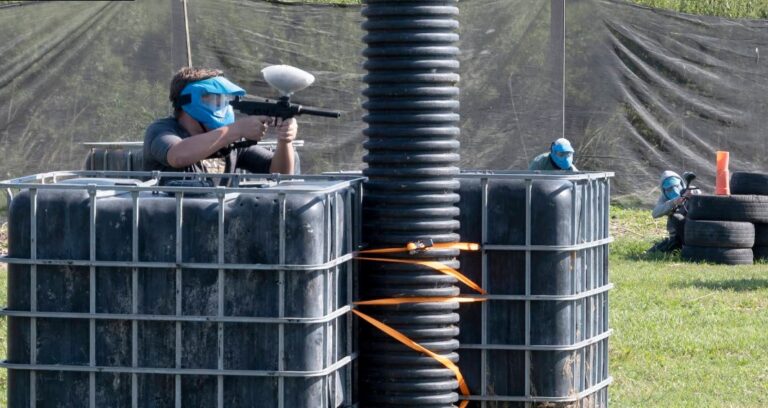
 10390-D, E Airline Hwy, St. Rose, Louisiana