El Monte
 Log in
Log in
Log in

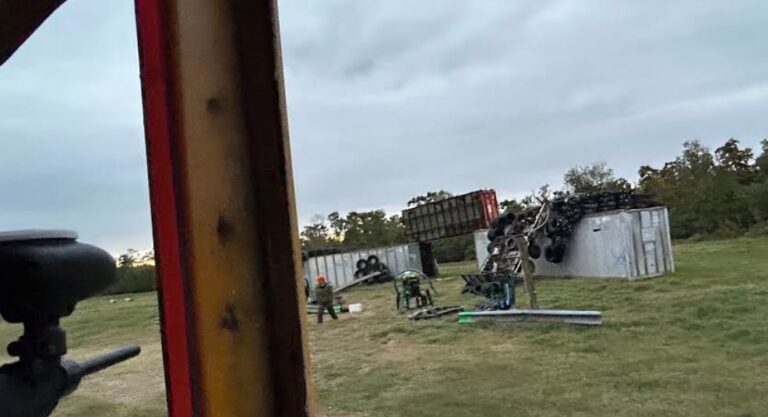
Zombie Paintball at NOLA Motorsports Park is located in Avondale, Louisiana, just outside of New Orleans.
This seasonal Halloween attraction puts guests aboard a battle bus with mounted paintball guns to hunt live zombie actors through themed target stations. The 15-20 minute ride is safe and family-friendly — zombies do not shoot back. The experience also includes go-karting, an 18-hole mini-golf course, axe throwing, an arcade, live music, food trucks, and a festival area with pumpkin carving and face painting.
Private bus packages are available for groups of up to 28 people, making it a great choice for birthday parties, corporate events, bachelor/bachelorette parties, and team-building outings. The park also hosts an Extreme Fright Night for adults seeking a scarier experience. Guests can relax at the Throttle & Swing facility with a craft pizza kitchen, bar, and rooftop dining before or after the ride.
 Outdoors
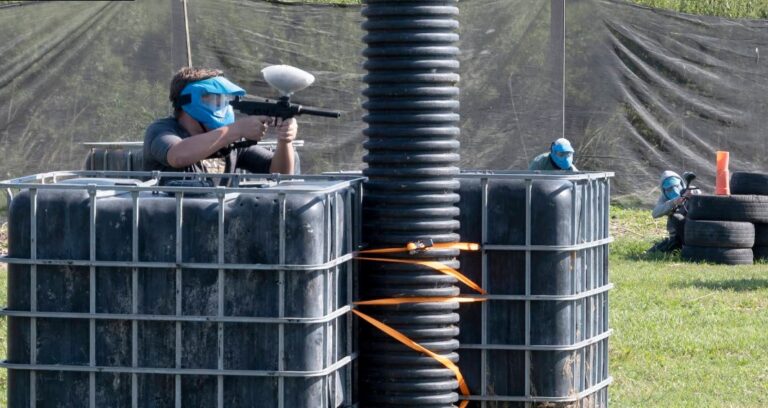
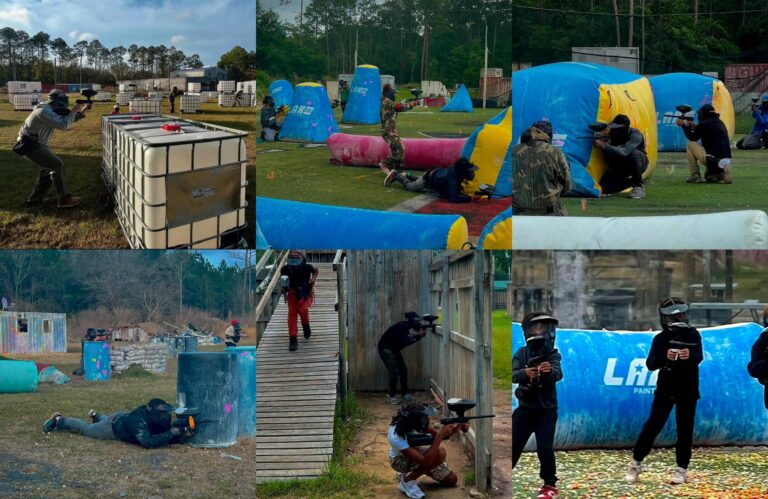
NOLA Paintball is located in St. Rose, Louisiana, just west of New Orleans along Airline Highway. The park features three distinct fields on two acres — a speedball field with tournament-style inflatable bunkers, a concept field for recreational play, and a jellyball field designed for younger children ages five and up using soft, water-filled capsules. The park offers private party and event packages with dedicated referees, equipment rentals, and HPA air fills, along with walk-on play on weekends. Seasonal events include Zombie Hunts with glow paintballs and “King of the South” tournaments.
Beyond the fields, NOLA Paintball provides outdoor seating and a lounge area for relaxing between games. The park is well-suited for birthday parties, corporate team building, and group outings, with experienced staff led by owner Ryan Chartin, a 20-year paintball veteran who also runs Pelican Paintball Pro Shop in Metairie. Airsoft Sundays are offered as well, and the facility accepts cash, credit cards, PayPal, and Venmo.
OutdoorsLA Xtreme Paintball is located in Slidell, Louisiana, just off Dr. T.J. Smith Sr. Expy.
The park features multiple outdoor playing fields including speedball, hyperball, and woodsball, catering to both recreational and tournament-level players. Open play is available on weekends, while private play can be booked during the week for groups of 10 or more. The park provides full rental equipment, operates on a field-paint-only policy, and hosts regular tournaments and events. The staff is known for being knowledgeable and hands-on, with the owner frequently present on game days.
LA Xtreme Paintball is a versatile venue for birthday parties (ages 9+), bachelor and bachelorette parties, corporate team-building events, and church or school group outings. Group discounts are available for weekend bookings, and the shaded staging area with lounge space provides a comfortable setting between games. The facility accepts credit cards and offers a pro shop for paintballs, air fills, and gear.
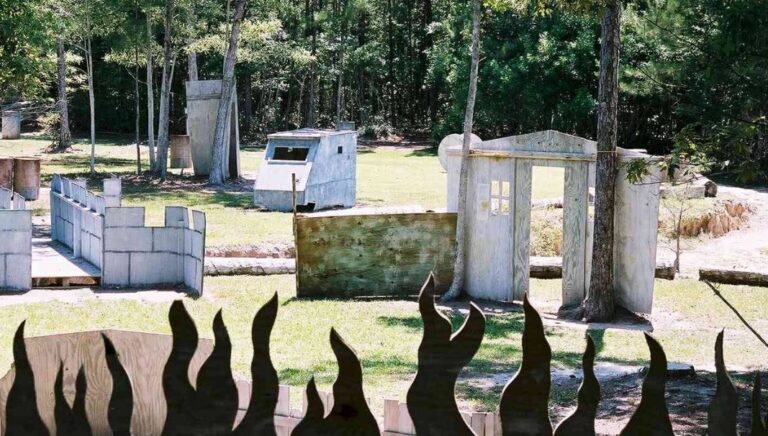
OutdoorsPaintball Command is located in Mandeville, Louisiana, just off Highway 59 near Interstate 12. Operating since 2001 on 40 acres, this full-service outdoor paintball and airsoft facility features four distinct playing fields including a massive scenario field with over three miles of trails, a castle, two-story bunkers, and the famed “slaughter house,” plus a wooded creek-side field, a hyper-ball field, and a regulation NXL tournament field. The club offers a wide variety of game modes, regular tournaments and scenario events, Pee Wee low-impact paintball for ages 8-10, and airsoft play on select Sundays. All referees are formally trained, and the facility has Louisiana’s only PTI-certified paintball referee.
Private group packages start at 10 players and include rental equipment and paintballs. The on-site pro shop carries markers, gear, and offers repair services. The facility is well-suited for birthday parties, corporate team-building, church outings, bachelor parties, and school groups. A spacious staging area with water coolers, snack machines, and lunch service adds to the convenience. Players can bring their own food and non-alcoholic drinks, and pizza delivery is available from nearby restaurants.
OutdoorsPaintball is a fast‑paced team sport in which participants—called “players” or “markers”—use specially designed air‑powered guns, known as paintball markers, to shoot small gelatin capsules filled with non‑toxic, water‑soluble paint. When a capsule strikes a player’s body or equipment, it bursts and leaves a bright, temporary mark, indicating that the player has been “hit” and must leave the field or pause for a short respawn period, depending on the game format.
The sport originated in the early 1980s as a training tool for military and law‑enforcement personnel, but it quickly evolved into a recreational activity embraced by civilians worldwide. Modern paintball equipment is lightweight and highly customizable: barrels can be swapped for different ranges, air tanks (CO₂ or compressed nitrogen) come in various capacities, and electronic triggers allow for rapid fire rates while still conforming to safety regulations. Although the core mechanic—shooting paint‑filled projectiles—remains unchanged, the surrounding ecosystem of fields, scenarios, and community events has grown into a vibrant subculture with its own language, etiquette, and competitive circuits.
While individual venues may tweak certain details to suit their layout or audience, most paintball fields adhere to a common set of fundamental rules designed to keep the game safe, fair, and enjoyable for everyone involved.
Safety Gear Must Be Worn at All Times – Every player is required to wear a full‑face mask that meets ASTM F1497 or ISO 18458 standards, protective goggles (or a mask with integrated eye protection), and appropriate clothing such as long‑sleeve shirts, long pants, and sturdy footwear. Some fields also mandate chest protectors, elbow/knee pads, and gloves, especially for younger or novice participants.
Markers Must Be Regulated – Paintball markers are typically limited to a muzzle velocity of 280–300 feet per second (fps) when using a 12‑gram (0.68 cm³) paintball. This cap reduces the risk of serious injury while still providing a challenging shooting distance. Most fields use chronographs at the entrance to verify compliance; any marker exceeding the limit must be adjusted before play can begin.
Paintball Size and Quality – Only standard 0.68 cm (0.27 in) spherical paintballs are permitted. Fields often provide their own paint to ensure consistency, but players may bring “own‑load” spheres if they meet the size requirement and are not damaged. Damaged or misshapen paintballs are prohibited because they can jam markers or break upon impact, creating hazardous fragments.
Hit Confirmation and Respawn – A hit is confirmed when the paint capsule visibly bursts on a player’s body or equipment. Some venues use “instant‑hit” rules where a player must leave the field as soon as the paint is observed, while others employ a “30‑second respawn” system, allowing the hit player to return after a short timeout. In tournament play, referees may verify hits to prevent disputes.
Boundary and No‑Shot Zones – The playing area is delineated by clearly marked boundaries; crossing them results in a penalty or immediate disqualification. Certain structures—such as bunkers, towers, or ladders—may be designated as “no‑shot zones” to protect players from dangerous angles or to preserve the flow of the game.
Code of Conduct – Unsportsmanlike behavior (e.g., deliberate cheating, harassment, or equipment tampering) is strictly forbidden. Players are expected to respect opponents, field staff, and the environment. Most fields enforce a “three‑strike” policy: a first warning for minor infractions, a second for repeated offenses, and a third resulting in ejection from the match.
By following these core rules, participants help maintain a culture of safety and mutual respect, which allows paintball to remain an accessible, thrilling experience for newcomers and seasoned veterans alike.
Beyond traditional “capture the flag” or “elimination” matches, paintball venues continuously develop new scenarios that blend strategy, storytelling, and varied objectives. These themed games keep the sport fresh and attract players who enjoy role‑playing or tactical challenges.
Players are divided into two teams: “Rescue” forces attempting to infiltrate a hostile base to extract a “hostage” (often a player wearing a bright marker) while the “Defenders” must prevent the extraction. The map is seeded with multiple objectives—such as disabling alarm systems, retrieving keycards, and securing safe zones—that mimic a covert operation. The scenario typically lasts 30–45 minutes, allowing for strategic planning and coordinated assaults.
A small group of “infected” players start as zombies, armed with only paintball pistols and limited ammo. Their goal is to tag human players, converting them into additional zombies. Human survivors must reach a safe haven or complete a series of “resource” checkpoints while avoiding infection. The game’s tension escalates as the zombie count rises, encouraging quick decision‑making and teamwork.
Standard deathmatch rules apply (first team to eliminate the opposing side wins), but each squad includes a designated medic who can “revive” teammates by tagging them with a special marker loaded with a different colored paintball. Revived players return to the battlefield after a short cooldown. This adds a layer of support strategy and encourages players to protect their medic while targeting the opponent’s healer.
A central elevated platform or bunker is designated as the “hill.” Teams earn points for every minute they maintain control of the hill, but the zone is heavily defended with automated “turrets” (paintball launchers) or natural obstacles. The winning team is the one that accumulates the most points within the match’s time limit, promoting aggressive pushes and defensive holds.
Scattered across the field are golden paintball “nuggets” or small tokens. Players retrieve these items and deposit them at their base to score points. The twist: once a player picks up a nugget, they become a high‑value target—opponents receive bonus points for eliminating a nugget‑carrier. This creates dynamic cat‑and‑mouse gameplay, where risk‑taking and escort tactics intersect.
These and countless other scenarios illustrate paintball’s versatility. By altering objectives, introducing specialized roles, or crafting narrative arcs, venues can cater to diverse player preferences—from pure tactical combat to immersive storytelling.
Beyond the sheer excitement of darting behind inflatable bunkers and firing bursts of colorful paint, the sport offers a host of physical, mental, and social benefits.
Running, sprinting, crouching, and climbing are integral to most matches, providing a full‑body workout that improves cardiovascular endurance, muscular strength, and flexibility. Because paintball is high‑intensity yet short‑duration (typically 10‑20‑minute rounds), it mirrors interval training, which research shows to be effective for calorie burning and metabolic conditioning.
Successful paintball relies on coordinated movement, clear calls, and shared strategies. Players learn to delegate roles, cover each other’s blind spots, and adapt on the fly when plans go awry. These teamwork skills transfer directly to workplace environments, where rapid decision‑making and collaborative problem‑solving are prized.
The combination of physical exertion and an adrenaline‑pumping environment can serve as a potent stress outlet. The focus demanded by the game—tracking opponents, managing ammunition, and executing tactics—requires players to stay present, reducing rumination about external worries. Over time, participants often report heightened confidence and improved ability to handle pressure.
Paintball mirrors miniature war games, demanding map awareness, resource management (ammo, paint), and anticipation of enemy moves. Regular players develop a sharpened sense of spatial reasoning and an intuitive grasp of “probability under uncertainty,” which can aid in everyday decision‑making and strategic planning.
Whether joining a local league, attending a corporate team‑building day, or simply gathering with friends for a weekend match, paintball fosters camaraderie. Shared experiences—victories, near‑misses, and humorous mishaps—build strong bonds and create lasting memories.
Collectively, these benefits explain why paintball has grown from a niche hobby into a recognized avenue for fitness, leadership development, and recreational enjoyment.
Paintball’s appeal cuts across age groups, professional backgrounds, and geographic regions, making it a truly inclusive activity.
Many schools and youth organizations incorporate paintball into extracurricular programs to teach leadership, discipline, and safety awareness. Junior leagues often feature modified equipment—lower velocity markers and lighter protective gear—to suit younger participants while preserving the core experience.
Campus clubs and intramural leagues are a staple of university life in many countries. For students, paintball offers a break from academic pressures and an opportunity to forge friendships outside the classroom. The competitive spirit also fuels inter‑college tournaments that draw crowds and sponsorships.
Businesses increasingly turn to paintball for team‑building retreats. The sport’s blend of cooperation, strategic planning, and low‑risk conflict simulation provides a practical laboratory for improving communication, trust, and leadership among employees.
Although paintball originated as a training tool, it remains a cost‑effective way for tactical units to rehearse close‑quarters engagements, room‑clearing drills, and decision‑making under fire without the logistical constraints of live‑fire exercises.
Professional paintball leagues—such as the National Paintball League (NPL) in the United States and the Paintball Sports Federation (PSF) in Europe—feature highly trained athletes who compete in structured tournaments with prize pools. These players often train year‑round, focusing on marker maintenance, physical conditioning, and strategic analysis.
The largest segment consists of individuals and families seeking a day‑out adventure. Many venues cater to beginners with “first‑timer” packages that include introductory lessons, rental equipment, and guided matches. This accessibility has helped paintball maintain steady growth in the leisure market.
By accommodating a spectrum of skill levels, interests, and motivations, paintball sustains a diverse community that fuels the sport’s ongoing evolution.
Choosing the right venue can dramatically shape the paintball experience. Fields are generally categorized as outdoor or indoor, each offering distinct advantages and challenges.
Terrain Variety – Natural landscapes provide a rich canvas for creative course design. Forested areas introduce dense foliage for concealment, while open fields allow long‑range engagements. Hills, streams, and uneven ground add an extra layer of tactical consideration, forcing players to adapt to changing elevations and footing.
Scale and Scope – Outdoor venues often span several acres, enabling the construction of sprawling scenario maps that can accommodate dozens of participants simultaneously. Large‑scale events—such as multi‑hour “military simulation” scenarios—are most feasible in these expansive settings.
Weather Impact – Sun, rain, wind, and temperature can affect marker performance and player comfort. While some players relish the added realism of battling in adverse conditions, others may prefer milder climates or seek shelter during extreme weather.
Examples – Popular outdoor destinations include the “Paintball Park” network in the United States, which features both wooded and desert courses, and the “Parks of Paintball” in the United Kingdom, known for its extensive scenario fields and natural obstacles.
Controlled Environment – Indoor arenas eliminate weather variables, offering a consistent temperature, lighting, and surface condition. This predictability is especially valuable for beginners, tournament organizers, and corporate groups who require a reliable schedule.
Compact Layouts – With limited square footage, indoor fields rely on artificial bunkers, inflatable obstacles, and modular walls to create tight, fast‑paced gameplay. The close quarters encourage rapid reflexes and quick decision‑making, making it an excellent training ground for hand‑eye coordination.
Safety Features – Indoor venues often incorporate soft‑foam padding on walls and ceilings, minimizing the risk of injury from stray paintballs. Additionally, the enclosed space allows for tighter supervision and simplified rule enforcement.
Urban Accessibility – Many indoor fields are located within city centers, facilitating easy access via public transportation and reducing travel time for participants. This convenience boosts participation among office workers and students who may have limited free time.
Examples – Notable indoor complexes include “Extreme Paintball Center” in Canada, renowned for its high‑tech sound‑and‑light effects, and “Battlefield Paintball” in Australia, which offers a modular “arena‑builder” system that can reconfigure the layout between sessions.
Some operators blend the best of both worlds by offering “semi‑indoor” facilities: large, climate‑controlled warehouses with built‑in natural elements (e.g., artificial trees, water features). These hybrid venues give participants the freedom to experience outdoor‑style tactics while retaining the comfort and scheduling reliability of an indoor setting.
Paintball stands at the intersection of sport, strategy, and social interaction. From its origins as a tactical training tool to its modern incarnation as a globally embraced recreation, it provides participants with a unique combination of physical exertion, mental challenge, and community building. Understanding the fundamental definition of the game, adhering to universal safety rules, and exploring the myriad scenarios that keep the experience fresh are essential steps for anyone interested in stepping onto the field.
Beyond fun, paintball contributes to fitness, teamwork, stress reduction, and strategic thinking—benefits that resonate across all ages and professions. Whether a teenager discovering teamwork for the first time, a corporate team seeking cohesion, a military unit honing tactical skills, or a seasoned competitor chasing championship glory, there is a place for them on the paint‑splattered battlefield.
The decision of where to play—outdoor fields that leverage natural terrain or indoor arenas that guarantee a climate‑controlled environment—depends on personal preference, logistical constraints, and the desired style of play. With venues proliferating worldwide and scenario design continually evolving, the sport promises endless opportunities for growth and excitement.
In short, paintball is more than a game of colored pellets; it is a dynamic platform for personal development, shared adventure, and the timeless thrill of outmaneuvering an opponent under the roar of compressed air. For anyone seeking a blend of adrenaline, strategy, and camaraderie, stepping into a paintball arena may just be the next great chapter in their recreational journey.


 11075 Nicolle Blvd, Avondale, LA 70094, United States