Platinum City Gaming is located in Taunton, Massachusetts, along Winthrop Street in a convenient strip mall area.
The 7,300-square-foot facility offers a wide range of interactive entertainment including laser tag, Nerf and Gellyball arenas, a retro arcade, console gaming stations with PS5 and Xbox Series X, half-court basketball, pool tables, bumper cars, and virtual reality experiences. Guests can book private sessions for tactical games or drop in for walk-in arcade and console play. The venue specializes in party packages that combine multiple activities with pizza, drinks, and dedicated party space, making it a popular choice for birthday celebrations, school field trips, and corporate team-building events.
Beyond the core gaming offerings, the club features a Smash Room for stress relief, private and open-stage karaoke, splatter painting, axe throwing, and a full bar with food service. Additional amenities include helium balloon decorations, a gaming truck for off-site rentals, a food cart, and a photo booth. The staff is known for attentive service and community involvement, and the space can be adapted for fundraisers, private events, and large group gatherings with customizable activity rotations and catering options.
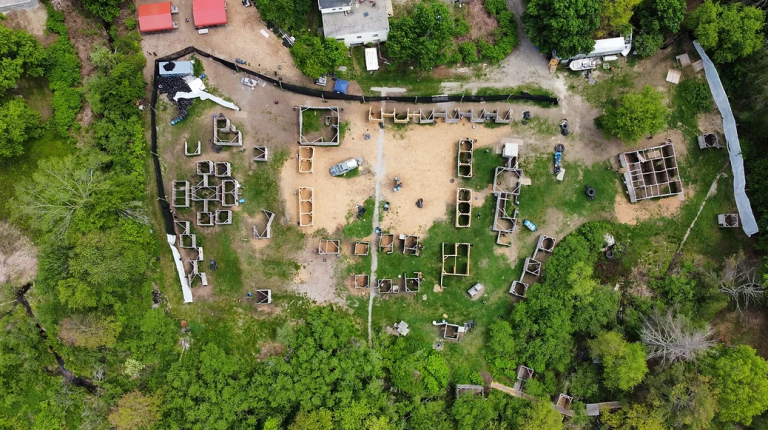
Advanced Action Sports is located in Webster, Massachusetts, just 15 minutes south of Worcester.
This 68,000-square-foot outdoor action sports center offers airsoft, paintball, gel-blaster, and Nerf battles on a forest-surrounded field with hand-built structures, buildings, and a retired truck for cover. Game scenarios include capture the flag, elimination, attack-and-defend, and objective-based missions, with trained supervisors and referees overseeing every session. Rental packages include protective gear, and a separate 400-acre milsim field is available in nearby Granville for scheduled events.
The facility hosts birthday parties, corporate team-building events, and group outings with private staging areas and food options available for purchase. A retail shop on-site sells gear and supplies, and the Fight Club membership program offers regular players ongoing savings. The atmosphere is welcoming to beginners and seasoned players alike, with a strong community focus and staff known for their helpfulness and professionalism.
Gelly ball is a fast‑growing recreational sport that blends elements of dodgeball, ping‑pong, and traditional ball games with a unique, gelatin‑filled projectile. The “gelly” component refers to the soft, jelly‑like core that gives the ball its distinctive bounce and safety profile. Unlike conventional rubber or foam balls, a gelly ball is composed of a pliable outer shell surrounding a semi‑solid gel that absorbs impact while retaining enough elasticity for lively play.
Developed initially as a youth‑friendly alternative to high‑impact ball games, gelly ball quickly spread beyond schoolyards into community centers, corporate team‑building events, and even upscale party venues. Its low‑risk design—no hard surfaces, minimal ricochet, and a low weight typically ranging from 150 g to 250 g—makes it accessible to a broad demographic while still offering enough momentum for competitive, skill‑based gameplay.
How Is Gelly Ball Played?
The basic framework of gelly ball is simple enough for beginners yet customizable for seasoned players seeking strategic depth. A standard match pits two teams of 4–6 participants against each other on a rectangular court, usually 12 m × 6 m, though dimensions can be adapted for space constraints.
Equipment
Gelly Balls: Typically, a set of three to five balls of the same size (about 8–10 cm in diameter).
Boundaries: Portable boundary markers or tape to delineate the playing area.
Protective Gear: Optional lightweight wrist guards or padded headbands for very young players.
Rules Overview
Start of Play: The game begins with the balls placed at the center line. A whistle or countdown signals the start, and each team rushes to retrieve a ball.
Objective: Players aim to strike opponents below the waist with a gelly ball. A successful hit temporarily “eliminates” the target, who must step outside the boundary or sit in a designated “penalty zone.”
Revival Mechanics: If a teammate catches a thrown ball before it touches the ground, the catcher’s team can revive one eliminated player, adding a layer of tactical decision‑making.
Scoring: A round ends when all members of one side are eliminated. Points are awarded based on how many players remain on the winning team, with additional bonuses for catches and quick eliminations.
Time Limits: Competitive leagues often impose a 5‑minute cap per round to keep the tempo high and prevent fatigue.
Variations
Capture the Flag: Integrates a small flag or token that must be retrieved while avoiding hits.
Obstacle Course: Adds cones, low walls, or foam pits that players must navigate, increasing agility demands.
Solo Drills: Focuses on individual skill development—serving, dodging, and rapid ball handling—ideal for practice sessions.
Because the gelly ball’s soft core reduces injury risk, the sport encourages high‑energy play, rapid direction changes, and creative throws (overhand, side‑arm, or even behind‑the‑back flicks). Players quickly learn to read opponents’ body language and anticipate trajectories, sharpening both physical and cognitive reflexes.
Benefits of Gelly Ball
The appeal of gelly ball goes far beyond its novelty. Research into similar low‑impact team sports indicates a suite of physical, mental, and social advantages that gelly ball readily delivers.
Motor Skill Development: Fine motor coordination is honed through precise ball handling, while gross motor skills are enhanced by rapid changes in direction.
Strength and Flexibility: Repetitive throwing motions develop upper‑body strength, and frequent crouching or lunging promotes lower‑body flexibility.
Cognitive Gains
Strategic Thinking: Players must evaluate risk versus reward when deciding whether to attack, defend, or attempt a catch.
Reaction Time: The unpredictable bounces of a gelly ball train the brain to process visual cues and react within fractions of a second.
Spatial Awareness: Navigating a confined court while monitoring teammates and opponents enhances proprioception and environmental mapping.
Social and Emotional Benefits
Team Cohesion: Success hinges on communication and mutual support, fostering trust and collaborative problem‑solving.
Confidence Building: The low‑risk nature of the sport allows participants to experiment with bold moves without fear of injury, boosting self‑esteem.
Inclusivity: The adaptable rules and gentle equipment make it easier for people of varying skill levels to join in, reducing barriers to participation.
Collectively, these benefits make gelly ball an attractive option for schools, community programs, and corporate wellness initiatives seeking a holistic activity that nurtures mind, body, and community.
Who Can Play Gelly Ball?
One of the most compelling aspects of gelly ball is its universal accessibility. The sport’s safety‑first design, flexible rule set, and minimal equipment requirements open the door for a wide spectrum of participants.
Age Groups
Children (5–12 years): The soft ball eliminates most concerns about accidental injuries, while the simple rules provide a gentle introduction to team sports.
Teenagers (13–18 years): Competitive leagues emerge at this stage, with more advanced strategies and faster-paced matches.
Adults (19+ years): Whether for fitness, socializing, or stress relief, adults can enjoy casual pick‑up games or organized tournaments.
Physical Abilities
General Fitness Levels: Since the sport can be scaled—from low‑intensity “fun” sessions to high‑intensity tournaments—players can adjust intensity to match their fitness.
Adaptive Play: Modifications such as wheelchair‑friendly rules, lower net heights, or slower ball release speeds enable participation for individuals with mobility challenges.
Skill Backgrounds
Beginners: No prior experience is required; a brief tutorial covers the basics of throwing and dodging.
Athletes: Those with backgrounds in basketball, volleyball, or other ball sports often transition quickly, applying existing hand‑eye coordination.
Team‑Builders: Corporate groups use gelly ball to break down hierarchical barriers, as the informal environment promotes equal participation.
In short, gelly ball’s design philosophy places inclusivity at its core, allowing virtually anyone—regardless of age, fitness, or skill—to step onto the court and enjoy an engaging, safe, and socially rewarding experience.
Gelly Ball for Birthdays and Parties
When it comes to celebrating milestones, gelly ball offers a dynamic alternative to conventional party activities. Its blend of excitement, physical engagement, and easy setup makes it a crowd‑pleaser for various occasions.
Why Choose Gelly Ball for a Party?
Instant Energy Boost: The rapid pace of the game elevates the party’s energy levels, encouraging guests to mingle and move.
Memorable Experience: Unlike static activities (e.g., board games or photo booths), gelly ball creates lasting memories through shared laughter and friendly competition.
Customizable Themes: Organizers can tailor the court décor, team colors, and even the ball’s appearance to match party themes—superheroes, tropical luau, or retro 80s vibes.
Planning Tips
Space Allocation: Secure a clear area of at least 12 m × 6 m, whether a backyard, community hall, or rented indoor arena.
Equipment Rental: Many vendors offer packaged kits that include gelly balls, boundary markers, and optional scoring boards.
Safety Briefing: A quick 5‑minute rundown of the basic rules and safety guidelines ensures smooth gameplay and reduces accidents.
Team Formation: For larger groups, divide guests into mixed‑age or mixed‑skill teams to promote interaction across social circles.
Reward System: Small prizes—medals, stickers, or themed trinkets—can be awarded for “Most Catches,” “Best Team Spirit,” or “Fastest Elimination.”
Age‑Specific Adaptations
Kids’ Parties: Lower the net height, use oversized gelly balls for easier handling, and keep rounds short (3–4 minutes).
Teen Gatherings: Introduce music playlists, encourage flashy throw styles, and incorporate high‑stakes scoring for a competitive vibe.
Adult Celebrations: Pair the game with a cocktail bar or snack station for a social‑sport hybrid, allowing guests to dip in and out of the action.
By integrating gelly ball into birthday or party itineraries, hosts can transform ordinary gatherings into kinetic celebrations that leave participants buzzing with joy.
Where Can You Play Gelly Ball? Outdoor and Indoor Venues
The versatility of gelly ball stems from its ability to thrive in both open‑air environments and controlled indoor spaces. Below, the most common venue types are outlined, along with practical considerations for each setting.
Outdoor Options
Public Parks: City parks often feature flat grass or paved areas suitable for a quick court layout. Permissions may be required from local authorities for organized events.
School Grounds: After‑school programs can repurpose existing basketball or soccer fields, integrating gelly ball into physical education curricula.
Beachside Boards: The firm sand near boardwalks provides natural traction, though extra care is needed to protect the gelly balls from sand infiltration.
Advantages: Fresh air, natural lighting, and expansive space allow for larger participant numbers and the addition of obstacle features (e.g., cones, inflatable barriers).
Challenges: Weather dependency—rain or high winds can affect ball trajectory and player safety. Portable canopies or tents can mitigate these risks.
Indoor Options
Community Halls: Multi‑purpose rooms equipped with removable flooring (e.g., gym mats) are ideal for year‑round play.
Corporate Offices: Large conference rooms or breakout areas can be transformed into temporary courts for team‑building days.
Specialty Sports Centers: Some facilities now dedicate specific zones to gelly ball, complete with adjustable lighting and acoustic panels to enhance focus.
Advantages: Climate control ensures consistent playing conditions, and acoustic insulation can reduce noise complaints.
Challenges: Space constraints may limit court size; however, a “mini‑court” configuration (8 m × 4 m) works well for small groups or training drills.
Hybrid Venues
Pop‑Up Courts: Mobile units—essentially inflatable walls and portable flooring—enable pop‑up gelly ball experiences at festivals, fairs, or temporary events.
University Recreation Centers: Many colleges adopt gelly ball as an intramural sport, offering both outdoor fields and indoor gymnasiums for flexible scheduling.
Regardless of the setting, the core requirements remain modest: a flat surface, clear boundaries, and enough clearance (at least 2–3 m) around the court to prevent collisions with walls or furniture. The low‑maintenance nature of gelly balls—easily rinsed and disinfected—further simplifies venue preparation and post‑play cleanup.
Gelly ball stands at the intersection of safety, excitement, and inclusivity, making it a compelling addition to the modern recreational landscape. From its soft, jelly‑filled core to its adaptable rule set, the sport delivers physical conditioning, cognitive sharpening, and social bonding in a single, accessible package. Whether a child’s birthday party, a corporate wellness day, or a casual weekend get‑together, gelly ball provides a dynamic, memorable experience that can be enjoyed in parks, gyms, or even pop‑up venues. As communities continue to seek low‑risk, high‑energy activities that cater to diverse participants, gelly ball is poised to roll forward as a staple of contemporary play.

 El Monte
 Log in

 Indoors
 Outdoors


 294 Winthrop St, Taunton, MA 02780, United States