El Monte
 Log in
Log in
Log in

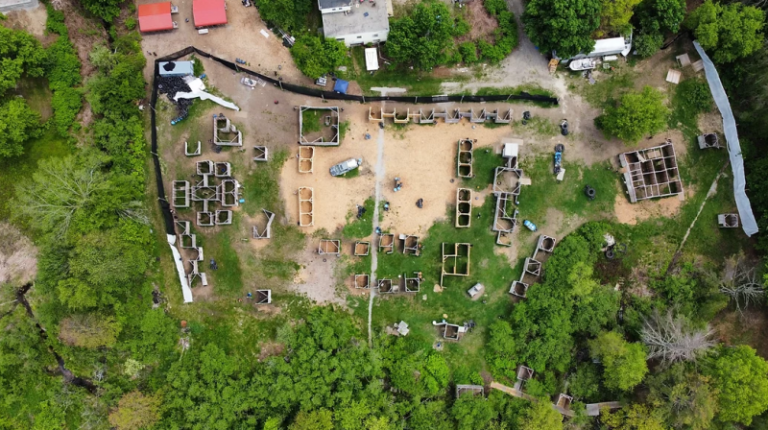
Xtreme Paintball and Airsoft is located in Agawam, Massachusetts, just off Main Street near Six Flags New England.
The facility offers paintball, airsoft, and low-impact paintball across seven distinct outdoor fields, including a Call of Duty-themed Nuketown arena, a fortress-style Fort Xtreme, a Village field, a Tire Field for large tournaments, and smaller Speedball and Short Fields. Private party packages for groups of 10 or more include rental gear, a dedicated referee, and access to all fields. Beginners are welcome on Saturdays with restricted equipment to keep the pace friendly.
On-site amenities include a pro shop, a covered picnic area, a lounge space, and a snack bar selling pizza and drinks. Extra gear such as smoke grenades, riot shields, and chest protectors can be rented. The facility is well-suited for birthday parties, corporate events, bachelor parties, church groups, and school outings.
 Outdoors
Advanced Action Sports is located in Webster, Massachusetts, just 15 minutes south of Worcester.
This 68,000-square-foot outdoor action sports center offers airsoft, paintball, gel-blaster, and Nerf battles on a forest-surrounded field with hand-built structures, buildings, and a retired truck for cover. Game scenarios include capture the flag, elimination, attack-and-defend, and objective-based missions, with trained supervisors and referees overseeing every session. Rental packages include protective gear, and a separate 400-acre milsim field is available in nearby Granville for scheduled events.
The facility hosts birthday parties, corporate team-building events, and group outings with private staging areas and food options available for purchase. A retail shop on-site sells gear and supplies, and the Fight Club membership program offers regular players ongoing savings. The atmosphere is welcoming to beginners and seasoned players alike, with a strong community focus and staff known for their helpfulness and professionalism.
OutdoorsUltimate Battleground is located at 1221 Bedford St in Bridgewater, MA, set in a wide-open natural environment just outside the city. The club features multiple outdoor airsoft maps including Ghost Town, Corona Village, Wood Spools, Bowling Alley, and a Containers CQB map. Full rental gear is available — markers, masks, vests, and accessories — and a pro shop with a tech on staff keeps players equipped. The field hosts walk-on airsoft games on weekends and accommodates players ages 10 and up, with safety briefings and referees ensuring a smooth experience for all skill levels.
Beyond regular play, Ultimate Battleground is a popular destination for birthday parties, corporate team-building, bachelor parties, youth groups, and graduation celebrations. The facility includes a lounge area, snack bar, and space for spectators. Special monthly events with themed scenarios are organized in partnership with local event runners. The club has been named the best airsoft field in Massachusetts by Xylo News and is run by a team that prioritizes safety, fun, and community.
OutdoorsAirsoft is a recreational sport that simulates military or law‑enforcement combat using replica firearms that fire 6 mm plastic BBs propelled by electricity, gas, or springs. Unlike paintball, the projectiles leave little visible trace, which encourages players to focus on tactical movement, realistic engagement, and disciplined communication. The sport’s appeal lies in its blend of realism, teamwork, and strategy, offering a playground where enthusiasts can experience the thrills of combat without the lethal consequences of real weapons.
Modern airsoft replicas are meticulously crafted to mirror the weight, feel, and operation of their real‑world counterparts. From the recoil of a gas‑powered rifle to the click of a spring‑powered pistol, manufacturers strive to reproduce authentic ergonomics and handling characteristics. This realism extends to the accessories—rails, grips, scopes, and suppressors—that can be attached to the platform, allowing players to outfit their “weapon” exactly as a professional soldier or police officer might.
Because engagements take place over large, often intricate fields, airsoft emphasizes coordinated team play. Success rarely depends on a single player’s marksmanship; instead, squads must employ flanking maneuvers, establish fire‑and‑movement tactics, and communicate clearly through hand signals or radios. The sport teaches participants how to plan missions, allocate roles (such as point man, breacher, or medic), and adapt on the fly when the battlefield changes.
Airsoft fields host an extensive menu of scenarios that cater to different skill levels and interests. Classic “Capture the Flag” pits two teams against each other to seize a remote objective, while “Team Deathmatch” revolves around eliminating opponents. More elaborate formats, such as “MilSim” (military simulation) or “Objective‑Based” missions, can span several hours and involve multiple phases—reconnaissance, assault, and extraction—mirroring genuine tactical operations.
One of airsoft’s most compelling aspects is the freedom to modify gear. Players can swap barrels for longer or tighter tolerances, install higher‑capacity magazines, tune hop‑up units to adjust BB trajectory, or outfit their vest with pouches for ammunition and medical kits. This level of personalization not only enhances performance but also deepens the hobbyist’s connection to the sport, as each build reflects the player’s tactical philosophy and aesthetic taste.
Across the globe, a vibrant community supports the sport. Online forums, local clubs, and regional tournaments provide a network where newcomers can receive mentorship and seasoned veterans can share upgrades and field experiences. The community’s culture is founded on mutual respect, safety consciousness, and an unwavering commitment to the “honour system” that underpins fair play.
Entering airsoft for the first time can feel overwhelming, but a core set of protective equipment ensures safety while allowing newcomers to focus on developing their skills.
The most critical piece of gear is a high‑quality pair of impact‑rated goggles or a full‑face mask that meets ANSI Z87.1 or the European CE EN‑166 standard. Since BBs travel at velocities up to 400 fps (feet per second), any lapse in eye protection can cause serious injury. Many players opt for a combination of goggles and a mesh face shield for full coverage.
Durable gloves protect the hands from BB impacts, cold weather, and rough terrain. Tactical gloves with reinforced knuckles and a snug fit allow for precise trigger work while shielding the skin.
Footwear should provide ankle support, slip resistance, and protection against debris. Military‑style combat boots or high‑cut trail shoes are preferred for their durability and ability to handle mud, sand, and uneven ground.
During intense crawls and low‑profile maneuvers, knees and elbows are vulnerable. Lightweight, padded guards absorb impact and prevent bruising, especially on fields with hard surfaces or sharp rocks.
A ballistic‑grade helmet (or a reinforced airsoft replica) guards the head from stray BBs and low‑hanging obstacles. Many helmets feature mounting points for night‑vision devices, lights, or communication headsets, expanding tactical options.
Some players choose full‑face masks that include a lower‑face component, protecting the mouth and chin from accidental hits. When combined with goggles, this setup offers the highest level of facial safety.
Investing in this baseline gear will let new participants enjoy the sport confidently while gradually adding accessories—such as tactical vests or radio systems—as their skill set expands.
Airsoft fields are regulated by a set of universal principles designed to keep gameplay safe, fair, and enjoyable for everyone.
All participants must treat every replica as if it were loaded with live ammunition. Barrels must remain pointed away from people when not actively engaged in a match, and “safety zones”—areas such as the loading bay or staging area—are strictly enforced. Players are required to wear approved eye protection at all times, and any violation can result in immediate removal from the field.
Since airsoft projectiles do not leave a conspicuous mark, the sport relies on an honour system to confirm hits. When a player feels a BB impact, they must call “hit” and raise their weapon in a gesture of surrender. Fellow players verify the hit and assign a “kill” or “out” status, after which the eliminated participant must exit the active play area. This system cultivates integrity, as cheating undermines the collaborative spirit of the game.
Respect for opponents, referees, and field staff is a cornerstone of the community. Verbal abuse, excessive aggression, or equipment tampering is prohibited. Players must also respect the environment, avoiding littering and adhering to any wildlife or property restrictions posted by the venue.
By adhering to these rules, participants help maintain a safe, competitive, and welcoming atmosphere that encourages both newcomers and veterans to return time and again.
Airsoft firearms fall into three principal categories, each defined by its power source and performance characteristics.
AEGs are the most popular class, powered by rechargeable lithium‑ion or NiMH batteries. Inside the gun, a motor drives a gearbox that compresses a spring, propelling BBs at a consistent rate of fire—often between 8 and 15 rounds per second. AEGs excel in reliability, ease of maintenance, and the ability to switch between semi‑automatic and fully automatic firing modes with a simple selector switch. They dominate both casual skirmishes and competitive MilSim events.
Gas‑powered guns use compressed propellants—typically green gas (a propylene‑based mixture) or CO₂—to drive BBs out of the barrel. The gas expands rapidly when a valve is opened, delivering realistic blowback action that mimics the recoil of a real firearm. Gas pistols and rifles tend to have a more authentic feel and can achieve higher muzzle velocities, but they are temperature‑sensitive; performance drops in cold weather. Proper gas management and seal maintenance are essential for optimal operation.
Spring guns rely on a manually cocked spring to store energy. Once the trigger is pulled, the spring releases, launching a single BB. While the rate of fire is limited to one shot per cock, spring rifles—especially bolt‑action sniper platforms—are prized for their accuracy and high muzzle energy. They are also the most budget‑friendly option for beginners and are often allowed in “low‑tech” or historical reenactment scenarios.
Choosing a platform depends on the player’s budget, preferred play style, and the specific rules of the field or event they intend to attend.
Airsoft attracts a remarkably diverse demographic. Teenagers discover the sport through friends or school clubs, drawn by the adrenaline of tactical combat and the camaraderie of team play. Young adults—often veterans of paintball or video‑game enthusiasts—appreciate the deeper strategic layers and realistic equipment options. Even professionals in law enforcement, military, or security fields use airsoft for low‑cost training, honing decision‑making, communication, and squad cohesion without live ammunition.
Beyond the core participants, many hobbyists enjoy the mechanical side of the sport: assembling parts, tuning performance, and customizing gear. This “gearhead” community overlaps with the broader maker movement, fostering a culture of continuous innovation. In short, airsoft’s appeal transcends age, occupation, and geographic region, uniting anyone who craves teamwork, strategy, and a taste of realism.
Finding the right venue is essential for an enjoyable experience. Several types of locations cater to different preferences and skill levels.
Most regions host dedicated airsoft fields that operate under strict safety protocols and insurance coverage. These venues typically provide a variety of built‑in scenarios—urban streets, woodland trails, or abandoned warehouses—and supply essential equipment such as barricades, vehicles, and lighting. Players can rent gear on‑site, making them ideal for beginners who are still building a personal arsenal.
Many cities have organized teams that meet regularly for practice sessions and friendly matches. Clubs often secure private property—such as a farm or industrial lot—to host “closed‑door” games with customized terrain and fewer restrictions than public fields. Joining a club offers mentorship, a consistent group of teammates, and opportunities to participate in regional tournaments.
MilSim (military simulation) events are large‑scale productions that replicate real‑world military missions over several hours or even days. Participants receive briefings, objectives, and supply drops, and must adhere to military‑style rules of engagement. These events are usually hosted at expansive outdoor sites and may involve role‑playing elements like casualty evacuation or intelligence gathering. MilSim provides an immersive experience for players seeking the ultimate blend of realism, teamwork, and endurance.
Regardless of the setting, prospective players should verify that the venue enforces the core safety rules—mandatory eye protection, a clear honour system, and respect for all participants—to ensure a fun and secure environment.
Airsoft stands at the intersection of sport, hobby, and tactical training. Its realistic replica firearms, emphasis on teamwork and strategy, and plethora of game modes create a dynamic playground for anyone eager to experience simulated combat in a safe, respectful environment. By starting with essential protective gear, adhering to universally accepted safety and honour principles, and selecting a suitable firearm—whether an AEG, gas, or spring model—newcomers can quickly become competent participants.
The community’s inclusivity means that players of all ages and backgrounds can find their niche, whether as a frontline shooter, a tactical planner, or a gear‑customization enthusiast. With an expanding network of sanctioned fields, local clubs, and immersive MilSim events, the opportunities to play are as varied as the players themselves.
Ultimately, airsoft’s enduring popularity stems from its ability to deliver realistic combat experiences without compromising safety, fostering camaraderie, and encouraging continual personal and technical growth. For anyone seeking a sport that blends physical activity, strategic thinking, and creative engineering, airsoft offers a compelling and ever‑evolving arena worth exploring.


 365 Main St, Agawam, MA 01001