
 El Monte
 Log in
Log in
Log in

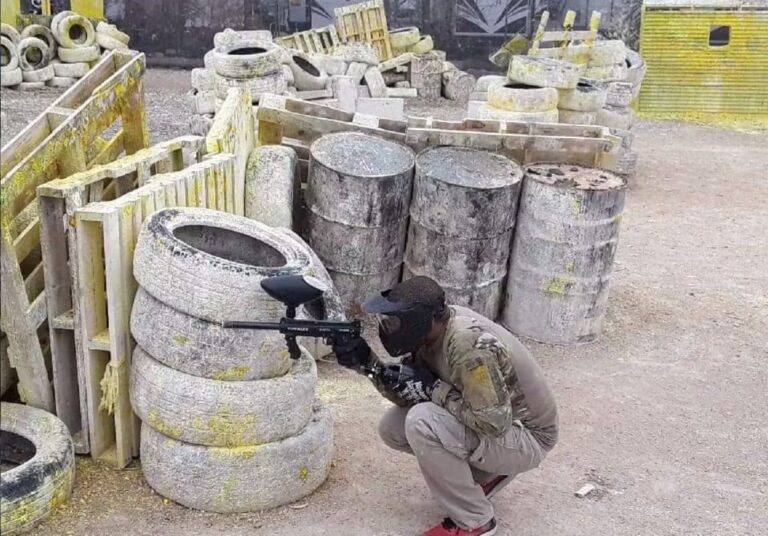
Combat Zone Paintball Inc Outdoor Center is located in Las Vegas, NV.
Combat Zone Paintball Inc, located in the heart of Las Vegas, NV, is a premier paintball destination for thrill-seekers and adrenaline junkies. With over 10 acres of outdoor terrain featuring various obstacles and game scenarios, players can immerse themselves in a realistic combat experience. The facility also offers indoor arenas for rainy days or when the weather is too hot. Combat Zone Paintball Inc provides top-of-the-line equipment and paintballs, as well as experienced staff to ensure safety and fun for all ages. Whether you’re a seasoned player or a newcomer, Combat Zone Paintball Inc is the perfect place to test your skills and have an unforgettable time.
 Outdoors
Gelly Ball is a fast‑growing, high‑energy sport that blends elements of dodgeball, handball, and ultimate frisbee. The game is played with a soft, gelatinous sphere—often called a “gelly”—that is light enough to be tossed with speed yet flexible enough to absorb impact without hurting players. The ball’s unique material, typically a silicone‑based gel encased in a smooth, brightly colored outer shell, gives the game its distinctive feel: it bounces unpredictably on hard surfaces, rolls gently on carpet, and can be caught with a relaxed hand, reducing the risk of injury.
Originally invented in Scandinavia as a recreational activity for community centers, Gelly Ball has spread worldwide as both a school‑yard pastime and a competitive sport. Rules are deliberately simple, allowing anyone to pick up a game within a few minutes, while the underlying strategies—positioning, timing, and teamwork—offer depth for more serious athletes. Because the ball’s elasticity renders it harmless, the sport can be played in a wide range of venues, from gymnasiums and school yards to parks and even corporate break rooms.
The core of Gelly Ball revolves around two teams attempting to eliminate opponents by striking them with the gelly while simultaneously protecting their own players. A standard match consists of two halves, each lasting between ten and fifteen minutes, with a short halftime break. Teams usually comprise five to seven players, though the format can be scaled up or down depending on the available space and the participants’ ages.
A rectangular court, roughly the size of a basketball half‑court, is marked with boundary lines, a central “no‑throw” zone, and two end zones where the team’s “goal” resides. The no‑throw zone, positioned a few meters in front of each goal line, prevents players from crowding the area and encourages movement across the whole field.
Starting Play – At the beginning of each half, the gelly is placed at the center of the court. Two opposing players, one from each team, race to claim the ball. Once a player gains possession, the game is in motion.
Throwing and Catching – Players may throw the gelly at any opponent on the opposing team. A successful hit eliminates the target for the remainder of the half. If a player catches a thrown gelly before it hits the ground, the thrower is eliminated instead, and the catcher’s team gains the advantage of a “revival”—the ability to bring back a previously eliminated teammate.
Movement – Players are allowed to run, pivot, and dodge, but must stay within the court boundaries. Stepping outside the lines results in an automatic foul, and the offending player is temporarily sidelined.
Scoring – The primary objective is elimination, but many leagues award additional points for successfully delivering the gelly into the opponent’s end zone without it being touched. This “goal” element adds a layer of tactical variety, encouraging teams to balance aggressive throws with calculated advances.
Safety Measures – Because the gelly is soft, there are no prohibitions on aiming for the head or torso, but sportsmanship is emphasized. Intentional rough play or excessive physical contact is penalized with warnings or ejection, depending on severity.
Adaptations exist for different age groups and skill levels. Youth versions often limit the number of throws per player and replace the elimination rule with a “tag‑back” system, where a hit player can re‑enter the game after a brief pause. In adult recreational leagues, timed “sprints” replace the half‑court format, turning the sport into a series of short, high‑intensity bouts.
The appeal of Gelly Ball lies not only in its excitement but also in the broad spectrum of physical, mental, and social benefits it delivers.
The sport demands rapid acceleration, lateral shuffling, and sudden changes of direction, providing an excellent cardiovascular workout. Players develop hand‑eye coordination through precise throwing and catching, while the low‑impact nature of the gelly minimizes joint stress, making the activity suitable for participants of varying fitness levels. The quick bursts of effort followed by brief recovery periods mimic high‑intensity interval training (HIIT), which is known to improve aerobic capacity and metabolic health.
Because throws must be timed, aimed, and sometimes feinted, participants engage in real‑time problem solving. Decision‑making speed, spatial awareness, and anticipatory thinking are all sharpened during a match. For younger players, the game reinforces concepts such as counting, geometry (understanding angles and trajectories), and strategic planning.
Teamwork is central to success in Gelly Ball. Players learn to communicate, assign roles, and support one another during high‑pressure moments. The sport’s inclusive design—no heavy protective gear and a forgiving ball—creates an environment where confidence can flourish. Moreover, the shared sense of achievement when a team executes a coordinated play or stages a comeback contributes to a positive group dynamic and builds lasting friendships.
The gelly’s softness dramatically reduces the risk of bruises, fractures, or concussions that are common in contact sports involving hard balls or aggressive tackling. This safety profile allows schools, community centers, and corporate wellness programs to adopt Gelly Ball without extensive medical oversight or expensive protective equipment.
One of the most compelling aspects of Gelly Ball is its universal accessibility. The sport’s rules are straightforward enough for children as young as six to grasp, yet the strategic depth keeps teens, adults, and even senior participants engaged.
For school physical‑education classes, Gelly Ball offers an alternative to traditional ball games that may be too rough for younger students. The game’s emphasis on agility, coordination, and teamwork aligns with developmental objectives outlined in many educational curricula.
High school clubs and university intramural leagues have embraced Gelly Ball as a low‑cost, high‑energy option that fits within limited indoor spaces. The competitive element—especially in league formats that track eliminations and goals—appeals to adolescents seeking a balanced blend of recreation and sport.
In corporate wellness initiatives, Gelly Ball serves as a team‑building exercise that encourages employees to break out of their usual work routines. The game’s short match duration fits comfortably within lunch breaks or after‑work socials, and its non‑contact nature reduces liability concerns.
Because the gelly is soft and the movements can be adjusted for intensity, senior centers and physiotherapy programs incorporate Gelly Ball to promote gentle aerobic activity, improve balance, and foster social interaction. Modifications—such as allowing players to stay within a smaller area or limiting the number of throws—ensure the sport remains enjoyable and safe for participants with mobility constraints.
The dynamic, colorful nature of Gelly Ball makes it an ideal centerpiece for celebrations ranging from children’s birthdays to milestone events for adults.
Event planners often offer “Gelly Ball party packages” that include rental of the necessary equipment (gelly balls, portable nets, boundary markers), a brief instructional session, and a referee to oversee fair play. Packages can be customized to accommodate the size of the gathering, the available space, and the desired level of competition.
Because the court dimensions can be scaled down, Gelly Ball can be set up in community halls, school gyms, backyard patios, or even large living rooms. The ability to adjust the playing area allows hosts to fit the game into venues that might otherwise be unsuitable for conventional sports.
Unlike many party games that favor a particular age group or skill set, Gelly Ball’s low‑impact design invites participation from guests of all ages. Younger children can play in a “mini‑court” with simplified rules, while older attendees can engage in a full‑court match. The shared experience of laughing at missed catches or celebrating surprise revivals creates memorable moments that enhance the overall atmosphere of the event.
Many organizers pair Gelly Ball with complementary activities such as music, snack stations, and themed decorations (e.g., neon lighting for an evening “glow‑in‑the‑dark” version). The versatility of the sport makes it a natural fit for diverse party themes, from sporty “Olympics” celebrations to futuristic “laser‑ball” nights where the gelly is illuminated with LED inserts.
The adaptability of Gelly Ball’s equipment and rules enables the sport to thrive in both indoor and outdoor settings, expanding its reach across communities and seasons.
School Gyms and Community Centers – Standard gymnasiums provide the ideal hard surface for the gelly’s bounce, while existing basketball or volleyball markings can be repurposed as boundary lines. Many schools now include Gelly Ball in their after‑school programs because the sport does not require permanent installations.
Corporate Facilities – Large conference rooms, multipurpose halls, and even empty office floors can be transformed into temporary courts. Portable boundary tape and modular nets allow for quick setup and removal, making the sport compatible with flexible office layouts.
Recreation Halls and Sports Complexes – Dedicated indoor sports venues often allocate time slots for emerging activities. The controlled climate of indoor spaces ensures consistent ball performance, regardless of weather conditions.
Private Homes – For smaller gatherings, a cleared living room or basement can host a compact version of the game. Low‑profile pop‑up nets and removable floor markings keep the setup unobtrusive when the party ends.
School Playgrounds – Asphalt or concrete surfaces provide an excellent bounce for the gelly, and the open space accommodates larger teams. Outdoor play also introduces the element of natural light, which can be pleasant for daytime matches.
Parks and Community Fields – Public parks often have open grassy or paved areas that can be temporarily designated as Gelly Ball courts. Since the gelly is not prone to puncture, the sport can be safely played on grass, sand, or rubberized playground surfaces.
Beachside or Waterfront Areas – On firm sand or boardwalks, the gelly’s lightweight nature makes for a refreshing, breezy variation of the game. Participants can enjoy the added challenge of wind affecting ball trajectories.
Festivals and Fairs – Pop‑up Gelly Ball stations are popular attractions at community festivals, summer fairs, and charity events. Portable equipment and a small enclosed area make it feasible to set up a temporary court within a high‑traffic venue.
During colder months, indoor venues provide a climate‑controlled environment that keeps players comfortable and prevents the gelly from becoming too stiff. In warm weather, outdoor play offers ventilation and the enjoyment of sunlight, though organizers should consider shade structures or early‑evening sessions to avoid excessive heat.
Gelly Ball has emerged as a versatile, inclusive sport that satisfies a broad spectrum of recreational and competitive needs. Its soft, gelatinous ball reduces injury risk while still delivering the excitement of rapid throws, strategic catches, and dynamic movement. The game’s simple yet adaptable rules make it approachable for children, teens, adults, and seniors alike, and its capacity to be set up in both indoor and outdoor venues opens countless opportunities for schools, community groups, corporate wellness programs, and private celebrations.
Beyond the sheer fun, Gelly Ball contributes valuable physical conditioning, sharpens cognitive skills, and fosters teamwork and social bonding—benefits that align with contemporary goals for health, education, and community building. Whether incorporated into a school’s physical‑education curriculum, featured as the centerpiece of a birthday party, or used as a creative ice‑breaker at a corporate retreat, Gelly Ball offers a compelling blend of safety, accessibility, and exhilaration that ensures its place as a mainstay of modern recreational culture.


 13011 S Las Vegas Blvd, Las Vegas, NV 89044, United States