
 El Monte
 Log in
Log in
Log in

Extreme Fun Center Indoor is located in Wasilla, AK
The Extreme Fun Center in Wasilla, AK offers a wide range of activities that guarantee fun for everyone in the family. Enjoy thrilling go-kart racing, laser tag battles, and arcade games. The center also features a 4D theater and a virtual reality experience for an immersive gaming experience. Take a break from all the fun and grab a bite at their snack bar serving pizzas, hot dogs, and beverages. Their accommodating staff ensures that guests have a memorable experience at the center. The Extreme Fun Center is the perfect place to take your family and friends for a fun day out.
 Indoors
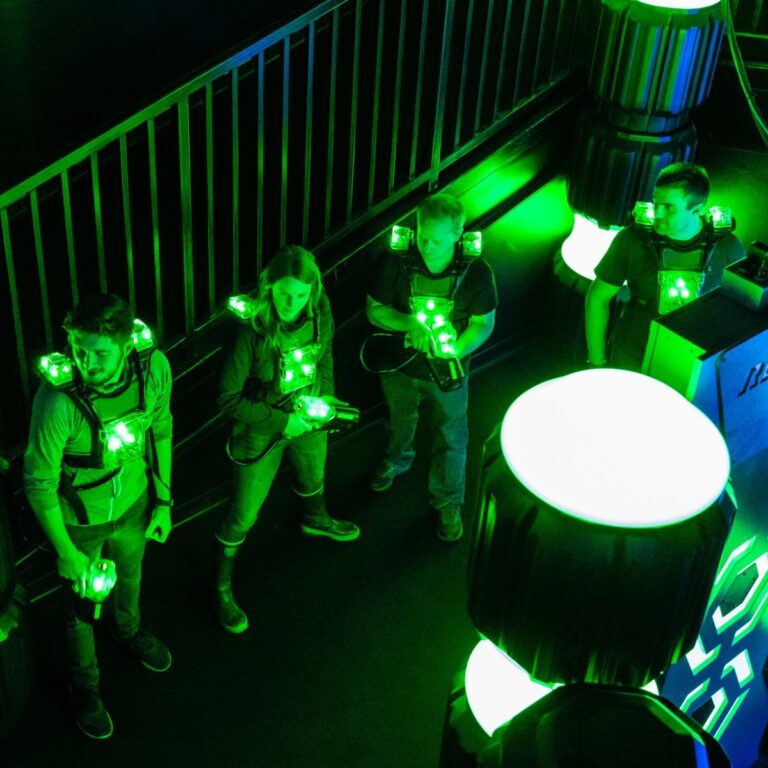
Anchorage, Alaska has seen massive growth in the last decade in regards to businesses and offered activities, and now you can add laser tag to that list! Whether you are a kid, an adult, or a group looking for some indoor fun, laser tag is the perfect activity to bring out the competitive side in you and your friends.
Laser tag is a fast‑paced, team‑oriented game that uses handheld infrared emitters and wearable sensors to simulate combat without any projectile. Players wear a vest or wrist‑mounted receiver that lights up when it is “hit” by a teammate’s or opponent’s infrared beam. The equipment is battery‑powered, silent, and completely safe, allowing participants to dash through darkened corridors, forests, or specially designed arenas while tracking scores on a central console. Because the technology is lightweight and the rules can be customized on the fly, laser tag works equally well as a casual weekend diversion, a structured physical‑education activity, or a corporate teambuilding exercise.
The flexibility of the system makes it easy to craft a wide variety of scenarios, each with its own narrative and tactical twist.
Classic Capture the Flag – Two teams defend their own flag while attempting to infiltrate the opponent’s base. The flag is usually a brightly colored beacon that must be carried back to the home zone without being “tagged.”
Zombie Survival – One or two players start as “infected” and must tag others, converting them into additional zombies. The remaining survivors must reach a safe zone before the infection spreads completely.
Mission Impossible – A single “agent” must navigate a maze, avoid detection, and retrieve a hidden “intel” module while teammates provide covering fire and relay information via radios.
Time‑Attack Battle – The arena is divided into sectors that light up in a rotating pattern. Teams earn extra points for holding active sectors when the timer expires, encouraging rapid movement and strategic positioning.
Scenario‑Based Storylines – Some venues program elaborate backstories—alien invasion, secret spy headquarters, or medieval castle siege—complete with sound effects and lighting cues that change as the game progresses.
Because the rules can be programmed on a laptop or tablet, organizers can blend several ideas into a single session, allowing the same group of players to experience fresh challenges each time they return.
Beyond pure enjoyment, laser tag delivers a suite of physical, mental, and social advantages.
Cardiovascular Fitness – The constant sprinting, ducking, and weaving raise heart rates into the aerobic zone, providing a workout comparable to a moderate jog.
Hand‑Eye Coordination – Aiming an infrared emitter at a moving target improves fine motor control and reaction speed, skills that translate to sports and everyday tasks.
Strategic Thinking – Players must assess terrain, allocate resources, and anticipate opponents’ moves, fostering problem‑solving abilities and adaptive planning.
Teamwork and Communication – Success hinges on clear instructions, role assignment, and trust. The game creates a low‑stakes environment where participants can practice giving and receiving feedback.
Stress Relief – The energetic sprinting and focused attention serve as a natural outlet for tension, while the non‑violent nature ensures the activity remains wholesome for all ages.
Inclusivity – Since the equipment is lightweight and the rules can be scaled for any skill level, individuals with limited mobility or varying physical capabilities can still join the fun.
These benefits have attracted the attention of educators, health professionals, and corporate wellness programs seeking an engaging way to promote active lifestyles and collaborative skills.
Researchers in kinesiology and behavioral science have examined laser tag as a hybrid of sport and simulation. Studies indicate that the intermittent high‑intensity bursts typical of a match produce energy expenditure similar to that of a 30‑minute recreational basketball game. Moreover, the “gamified” nature of laser tag has been shown to increase adherence to regular physical activity among adolescents, who often resist traditional exercise routines.
Industry analysts point out that the market’s growth is driven by advances in sensor accuracy and wireless networking. Modern systems can record precise hit locations, latency under 30 milliseconds, and real‑time leaderboards accessible through smartphones. These data streams enable deeper analytics for coaches and event organizers, who can review heat maps of player movement, identify bottlenecks in arena design, and tailor future scenarios to address observed weaknesses.
Psychologists emphasize the social dimension. Because laser tag requires immediate verbal coordination, participants develop rapid communication skills that are transferrable to high‑pressure professional settings. The non‑violent, “hit‑or‑miss” feedback loop also reduces the risk of aggression while still satisfying competitive drives, making it a valuable tool for teaching conflict resolution in a controlled environment.
The appeal of laser tag cuts across age groups, cultural backgrounds, and interests.
Kids and Teens – For younger players, the bright vests, flashing sensors, and instant score updates feel like a living video game. Schools often schedule laser‑tag sessions as part of physical‑education curricula, using the activity to reinforce teamwork and safe play.
Birthday Parties – A laser‑tag party offers a structured yet flexible format. Parents can choose a theme—space battle, treasure hunt, or superhero showdown—and the venue staff will handle equipment setup, scenario selection, and post‑game photo packages. The format keeps children engaged for the full duration of the party, eliminating the “what‑to‑do next?” lull that can plague more traditional gatherings.
Graduations and Milestones – High‑school graduations, scouting award ceremonies, or university club celebrations increasingly incorporate laser tag as a group‑bonding finale. The activity provides a shared adventure that commemorates the transition while reinforcing the camaraderie built over years of collaboration.
Corporate Groups – Companies book laser‑tag sessions for team‑building retreats, leadership workshops, and employee‑wellness days. The competitive yet non‑threatening environment allows executives to observe natural leadership emergence, practice delegating under pressure, and break down hierarchical barriers.
Adults and Enthusiasts – Many adult leagues meet weekly for ranked matches, treating laser tag as a sport with season standings, MVP awards, and strategy workshops. These groups often experiment with custom rule sets, such as “no‑talk” rounds that force silent coordination, or “capture‑the‑zone” formats that emphasize positional play.
The common thread linking all participants is the desire for an immersive, physically active experience that balances competition with cooperation.
When planning a birthday party, the host can select a venue that offers themed arenas—pirate ships, alien planets, or medieval castles. Packages usually include a set number of game rounds, a private briefing area for cake cutting, and optional add‑ons like photo booths or souvenir laser‑tag medals. The structured timeline ensures that the ceremony, gameplay, and refreshments flow smoothly, keeping the celebration lively from start to finish.
Graduation events benefit from laser tag’s ability to bring large groups together in a single, cohesive activity. Organizers can split the graduating class into “senior teams” that compete for a trophy, fostering friendly rivalry while celebrating the collective achievement. The post‑game ceremony provides a natural moment for speeches and diploma hand‑outs, with the arena’s lighting and sound systems enhancing the atmosphere.
Corporate parties leverage laser tag’s built‑in debriefing tools. After a match, facilitators can project scores and movement heat maps onto a screen, prompting discussions about communication breakdowns, leadership decisions, and risk assessment. The data‑driven feedback turns a fun outing into a measurable development exercise, aligning the experience with corporate learning objectives.

Laser tag flourishes in both controlled indoor arenas and expansive outdoor fields, each offering distinct advantages.
Indoor arenas – Purpose‑built facilities feature darkened rooms, laser‑cut obstacles, fog machines, and synchronized lighting. The confined environment ensures consistent signal reception, allowing precise hit detection even in tight corridors. Indoor venues are ideal for year‑round play, birthday parties, and corporate events because they provide predictable climate conditions, accessible parking, and on‑site catering options.
Outdoor fields – Parks, wooded areas, and abandoned warehouses serve as natural canvases for large‑scale battles. Modern infrared systems now incorporate anti‑interference algorithms, enabling reliable operation across open spaces and under bright daylight. Outdoor setups often include inflatable bunkers, tarps for weather protection, and portable power stations, making them suitable for festivals, summer camps, and community fundraisers.
Many operators offer mobile laser‑tag packages that can be set up at schools, corporate campuses, or private residences. The portable kits include battery‑powered vests, handheld emitters, and a compact control console that syncs wirelessly with participants’ devices. This flexibility expands the reach of laser tag to locations lacking permanent facilities, bringing the excitement directly to the audience.
When selecting a venue, organizers should consider factors such as group size, desired scenario complexity, and logistical needs. Large groups benefit from arenas with multiple lanes or segmented zones, while smaller gatherings may prefer a single‑room layout that encourages close‑quarters tactics. Accessibility features—ramps, wide doorways, and adjustable sensor heights—ensure that all participants can enjoy the experience without barriers.
Laser tag has evolved from a novelty arcade attraction into a multifaceted platform for recreation, education, and professional development. Its core technology—infrared emitters, wearable sensors, and real‑time scoring—offers a safe, adaptable foundation upon which endless scenarios can be built. The activity delivers tangible physical benefits, sharpens strategic thinking, and nurtures teamwork, all while providing an exhilarating, game‑like atmosphere.
Scientists recognize its value as a tool for promoting active lifestyles, and industry experts tout its data‑rich capabilities for performance analysis and event customization. From children’s birthday parties to corporate leadership retreats, laser tag invites participants of all ages to step into a dynamic, collaborative arena where the only limits are imagination and the layout of the playing field. Whether enjoyed under the glow of neon‑lit indoor corridors or amidst the natural obstacles of an outdoor forest, laser tag continues to illuminate the intersection of technology, sport, and social interaction.


 3501 E Old Matanuska Rd, Wasilla, AK 99654, United States