
 El Monte
 Log in
Log in
Log in

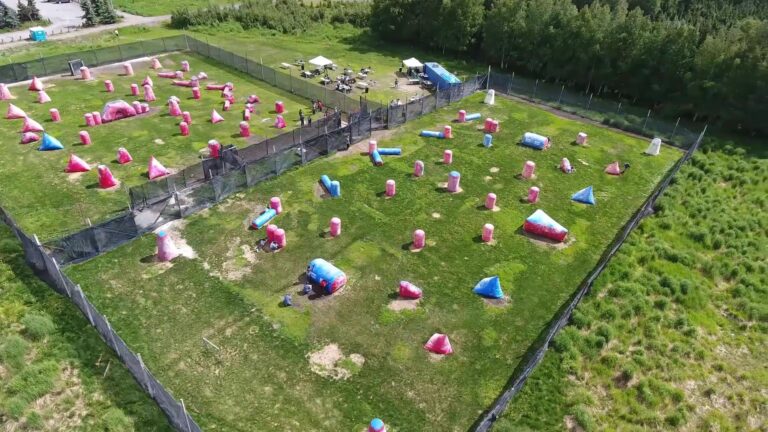
907 Paintball Outdoor field is located in Anchorage, AK
907 Paintball is a thrilling activity provider located in Anchorage, Alaska. The facility offers a variety of outdoor fields suitable for players of all skill levels. The fields are spacious and accommodate groups of any size, making them perfect for birthday parties, corporate events, or team-building activities. Players can rent high-quality equipment, including markers, masks, and air tanks. In addition, the knowledgeable staff offers instruction and guidance, ensuring a safe and enjoyable experience for everyone. Whether you’re a seasoned player or a curious beginner, 907 Paintball is sure to provide an unforgettable adventure.
 Outdoors
Paintball in Anchorage, AK is an exciting and fun adventure for those looking to get away from the hustle and bustle of the city. The landscape and terrain of the area make paintball a truly unforgettable experience. You and your friends can explore the wild backcountry of Alaska’s largest city, while engaging in the thrill of playing paintball in the great outdoors.
Paintball, once a fringe pastime discovered in the early 1980s, has grown into a global sport that blends strategy, physicality, and a splash of colorful chaos. At its core, a paintball game is a simulated combat experience in which participants fire small, gelatin‑encased “paintballs” from pneumatic or compressed‑air markers. When a paintball strikes a player’s clothing or exposed skin, the burst of pigment marks the target as “out.” The simple premise—hit an opponent, stay alive—belies a surprisingly rich tapestry of rules, scenarios, and benefits that have attracted a diverse community of players, researchers, and business innovators.
A paintball marker (often called a gun) propels 0.68‑inch spherical projectiles filled with a water‑based dye. The markers are powered by CO₂ cartridges, compressed air tanks, or hybrid systems that balance temperature stability with recoil‑free shooting. Paintballs themselves are made of a thin, biodegradable shell that bursts on impact, leaving a bright, usually orange or red, splatter that is easy to see on the field.
The sport can be divided into two broad categories:
Speedball – Fast‑paced, symmetrical fields with inflatable bunkers, designed for competitive leagues and televised events.
Scenario or Woodsball – Larger, more immersive environments that mimic military operations, historical battles, or fantasy quests. These games emphasize role‑play, objectives, and long‑range tactics.
Both formats share the same basic equipment, but the terrain, objectives, and tactical considerations differ dramatically, giving paintball a flexibility that keeps it fresh for newcomers and veterans alike.
Although local fields can add custom variations, the sport is governed by a core set of safety and gameplay rules that preserve fairness and protect participants:
Rule Explanation
Age Requirement Most venues enforce a minimum age (typically 12 or 13) with parental consent; some require players to be 18 for adult‑only events.
Protective Gear A full‑face mask (or goggles plus a mask) is mandatory at all times on the field. Padding, gloves, and chest protectors are strongly recommended.
Barrel Plug Markers must be equipped with a barrel plug when not in active play to prevent accidental discharge.
Shooting Distance In most recreational games, shots must be taken from at least 5–6 feet away to avoid injury from high‑velocity impacts.
Elimination A player is out when any part of the paintball’s dye contacts an opponent’s clothing, gear, or skin. In some “no‑paint” formats, a hit on the mask alone suffices.
Refill Protocol – Players may only reload or refill their tanks in designated “safe zones” or at the sidelines, never on the field.
Sportsmanship – Unsportsmanlike conduct, such as falsifying hits, using illegal equipment, or verbally harassing opponents, results in immediate disqualification.
Field Boundaries – Leaving the marked playing area is prohibited; stepping out typically counts as a penalty or automatic elimination.
These rules are reinforced by field staff who carry communication radios, first‑aid kits, and, increasingly, digital tracking systems that log hits in real time for tournament play.
The heart of paintball’s appeal lies in its ability to transform a simple field into a narrative playground. Here are some of the most popular scenarios, each offering a distinct blend of strategy and storytelling:
Capture the Flag (CTF) – Two teams defend a flag while attempting to infiltrate the opponent’s base to retrieve theirs. The fast back‑and‑forth encourages aggressive rushes and careful defensive setups.
Elimination (Last Man Standing) – All players start alive; the objective is simply to be the last individual or team remaining. This format highlights pure marksmanship and survival instincts.
Attack/Defend – One side fortifies a position (often a building or a bunker complex) while the other attempts a coordinated assault. The defending team must allocate resources, set up overlapping fields of fire, and manage limited ammunition.
Zombie Survival – A small number of “infected” players begin the game chasing the “survivors.” When a survivor is hit, they join the infected ranks, creating a growing horde that must overwhelm the remaining humans before time runs out.
Historical Reenactments – Fields are dressed up as battlefields from the Civil War, World War II, or ancient conflicts. Players dress in period‑appropriate gear, and objectives mirror historic tactics, providing an educational twist.
Extraction – A valuable “intel” object is placed in a central zone. Teams must secure the item and transport it to a safe extraction point while defending against enemy interference. This scenario stresses teamwork, communication, and precise navigation.
The breadth of scenarios allows organizers to tailor events for corporate team‑building, charity fundraisers, birthday parties, or professional league contests. Because each game can be customized with props, mission briefings, and timed phases, paintball experiences often feel more akin to an interactive theater than a traditional sport.
Beyond the obvious thrill of darting behind a inflatable bunker, paintball offers tangible benefits across physical, mental, and social dimensions.
Physical Fitness – A typical match involves sprinting, crouching, climbing, and rapid directional changes, delivering a cardiovascular workout comparable to a high‑intensity interval session. Players also develop core strength and agility as they maneuver through uneven terrain.
Strategic Thinking – Successful teams must plan routes, allocate resources, and anticipate opponent moves. This cultivates problem‑solving skills, situational awareness, and the ability to make quick decisions under pressure.
Team Cohesion – Communication is essential; players coordinate fire, cover, and movement in real time. Studies have shown that groups that play paintball together demonstrate improved trust, clearer leadership hierarchies, and heightened collective efficacy.
Stress Relief – The blend of physical exertion and playful aggression provides a healthy outlet for stress. The vivid burst of paint, combined with the camaraderie of teammates, can trigger endorphin release and improve mood.
Hand‑Eye Coordination – Tracking fast‑moving targets and firing accurately develops fine motor skills that translate to other sports, gaming, and even occupational tasks that require precision.
Inclusivity – The sport’s adjustable equipment (e.g., lower‑velocity markers, larger target zones) means it can accommodate a wide range of ages and physical abilities, making it a versatile option for family outings and adaptive recreation programs.
The paintball community is remarkably diverse, encompassing:
Youth and Teens – Many junior leagues introduce the sport as a constructive after‑school activity, teaching teamwork and discipline.
College Students – Campus clubs organize regular matches, often as a social hub and a recruitment pipeline for regional leagues.
Corporate Teams – Companies use paintball for team‑building retreats, leveraging the sport’s emphasis on communication and strategic planning.
Military and Law‑Enforcement Personnel – Tactical training units employ paintball for scenario‑based exercises that replicate close‑quarters combat without lethal risk.
Professional Athletes – Competitive paintball has its own circuit of pro players, with sponsorships, prize pools, and international tournaments.
Recreational Adults – Hobbyists ranging from weekend warriors to retirees enjoy the sport for its adrenaline rush and social interaction.
Demographically, surveys conducted by the International Paintball Federation (IPF) indicate that approximately 55 % of participants are male, while 45 % are female—a gender balance that is higher than many other contact sports. The age distribution peaks in the 25‑34 bracket, but significant participation is recorded among those under 18 and those over 45, underscoring paintball’s broad appeal.
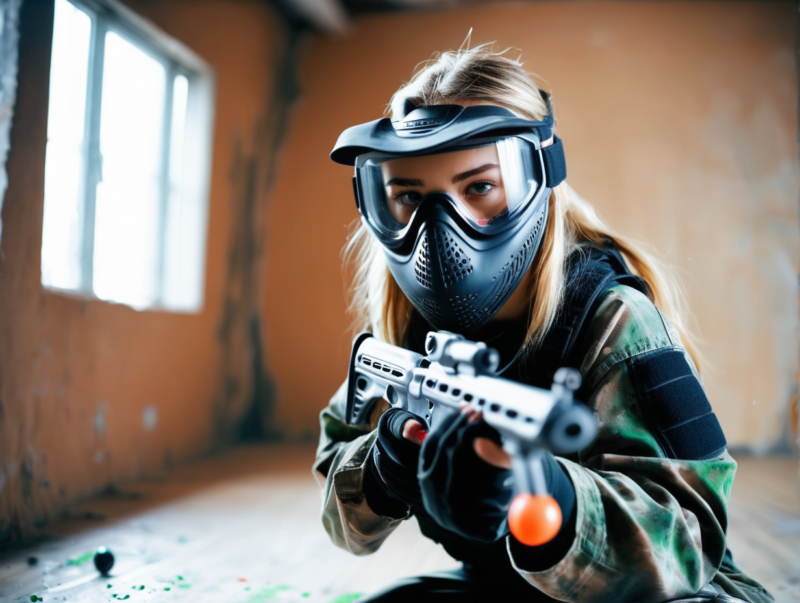
Researchers have examined paintball from several angles, producing insights that influence equipment design, safety standards, and health recommendations.
Biomechanics – Studies published in Sports Engineering have measured the impact forces of paintballs at various velocities, confirming that standard speeds (approximately 280–300 ft/s) generate forces well below injury‑causing thresholds when proper protective gear is used. This research has guided the adoption of velocity caps in many jurisdictions.
Psychology – Experiments in the Journal of Applied Sport Psychology demonstrated that paintball participants exhibit heightened levels of situational confidence and reduced cortisol after a session, suggesting a measurable stress‑relief effect.
Ergonomics – Industry engineers continually refine marker designs to reduce recoil, improve weight distribution, and minimize heat buildup. The latest “smart markers” incorporate Bluetooth connectivity, allowing players to monitor shot count, battery voltage, and even receive real‑time tactical alerts from a team leader’s tablet.
Environmental Impact – Traditional paintball shells were made from non‑biodegradable polymer, raising concerns about litter on outdoor fields. In response, manufacturers have introduced shells composed of a thin, water‑soluble gelatin that breaks down within 30 days, a shift supported by environmental agencies and field operators.
Medical Safety – A review by the American College of Sports Medicine (ACSM) concluded that serious injuries in paintball are exceedingly rare—less than 0.01 % of participants experience fractures or concussions—provided that mask compliance exceeds 98 %. The same report recommends regular mask inspections and mandated replacement after a set number of hits.
Collectively, these findings affirm paintball as a sport that, when regulated and equipped properly, offers a high safety margin while delivering cognitive and physical benefits.
Paintball fields can be found worldwide, ranging from rustic woodland sites to high‑tech indoor arenas. The choice of venue influences game style, equipment requirements, and the overall experience.
Outdoor Fields
Woodsball Forests – Sprawling acres of natural terrain, often with hills, streams, and abandoned structures. Players must carry extra ammunition and protective gear, as exposure to the elements is common. These fields are ideal for long‑range scenarios and tactical drills.
Speedball Pods – Modular, inflatable bunker setups arranged on a flat, well‑drained plot. The uniform layout enables quick turnover between matches and is the standard for competitive leagues. Most outdoor speedball venues also offer night‑time play with illuminated bunkers for a futuristic atmosphere.
Adventure Parks – Some outdoor recreation complexes incorporate paintball into a broader suite of activities, such as zip‑lining, obstacle courses, and laser tag. These hybrid facilities attract families and corporate groups seeking a full‑day outing.
Indoor Arenas
Warehouse‑Style Speedball – Large, climate‑controlled hangars fitted with artificial turf and a network of inflatable cover. Indoor speedball eliminates weather variables, allowing consistent training schedules and year‑round tournaments.
Themed Scenario Rooms – Multi‑room facilities that simulate urban environments, sci‑fi corridors, or historic settings. Advanced lighting, sound effects, and interactive props create immersive narratives that are impossible to replicate outdoors.
Laser‑Paintball Hybrids – Emerging venues blend traditional paintball markers with laser‑based scoring systems. Players fire real paintballs, but hits are recorded electronically, facilitating instant replay, statistical tracking, and reduced cleanup.
When selecting a venue, players should consider the following practical aspects:
Safety Protocols – Certified first‑aid personnel, clear safety briefings, and regulated marker velocity limits.
Equipment Rental – Whether the field provides full‑kit rentals (markers, tanks, masks) or expects players to bring their own.
Field Layout – The size and complexity of the playing area relative to the desired scenario (e.g., a 5‑acre woodsball site versus a 10,000‑sq‑ft indoor arena).
Accessibility – Parking, public transport options, and accommodations for disabled participants.
Community – Active leagues, regular events, and a welcoming culture can greatly enhance the overall experience for newcomers.
8. The Future of Paintball
Looking ahead, paintball is poised to integrate further technology and sustainability practices. Smart markers already feed data to coaching apps, enabling post‑match analysis of shot accuracy, movement heat maps, and team communication patterns. Virtual‑reality overlays could soon augment physical fields, projecting holographic objectives or augmenting realism in scenario play.
Simultaneously, the industry’s commitment to biodegradable shells and recyclable packaging reflects a broader environmental consciousness that appeals to younger, eco‑aware participants. As corporate wellness programs continue to value experiential activities that combine physical exertion with teamwork, paintball’s role as a versatile, high‑impact training tool is likely to expand.
Paintball is more than a colorful game of tag; it is a multidisciplinary sport that fuses physics, strategy, and human interaction. Its fundamental rule set—hit an opponent, stay in the game—provides a universal framework that can be dressed up as a rapid‑fire speedball competition, a sprawling scenario adventure, or a structured corporate training exercise. The activity promotes fitness, mental acuity, and social bonding, appealing to a cross‑generational audience ranging from schoolchildren to seasoned professionals.
Scientific inquiry validates paintball’s safety when proper gear is used, while industry innovations continuously raise the bar for equipment performance and environmental responsibility. Whether on a forested clearing, a high‑tech indoor arena, or a makeshift backyard setup, the experience remains singular: a burst of pigment, a surge of adrenaline, and a shared sense of achievement when the opposing team’s flag finally falls.
For anyone seeking a dynamic blend of sport, strategy, and camaraderie, stepping onto a paintball field offers a vivid reminder that competition can be both exhilarating and constructive—one splatter at a time.


 789 W Klatt Rd, Anchorage, AK 99515, United States