
 El Monte
 Log in
Log in
Log in

Putters Wild Entertainment Indoor Center is located in Anchorage, AK
Putters Wild is a family-friendly entertainment center located in Anchorage, AK. It features a mini-golf course with 18 holes, an arcade room, batting cages, and go-karts. The mini-golf course is crafted with challenging obstacles that entertain players of all expertise levels. Inside the arcade room, there are various games, including pool, air hockey, and several arcade favorites. The batting cages come in different speed levels to accommodate novice to advanced players, and the go-kart track has winding turns and elevated straightaways. Putters Wild is a perfect destination for groups to have fun-filled quality time with family and friends.
 Indoors
Virtual reality (VR) has been gaining traction all over the world as a new and exciting form of entertainment and has now hit Anchorage, Alaska. The city has become home to several virtual reality arenas, offering a variety of unique and exciting experiences for locals and tourists alike.
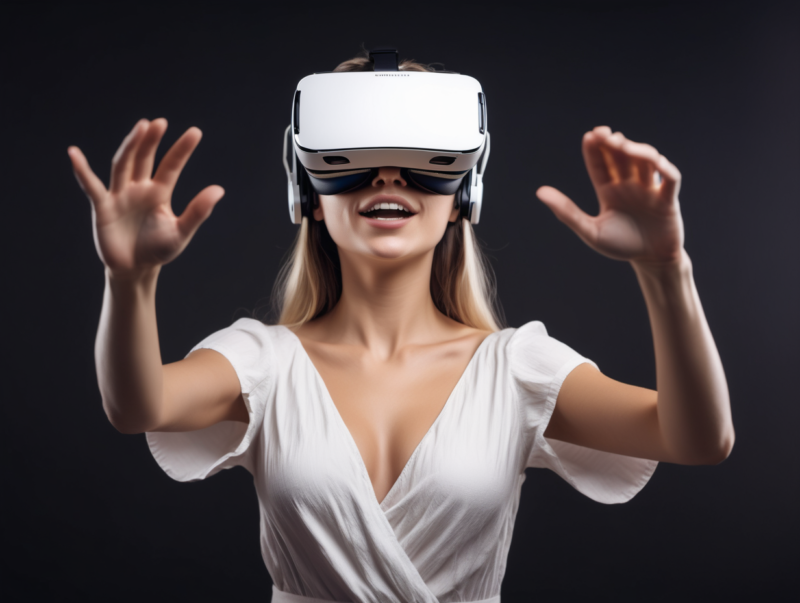
A free‑roam virtual‑reality arena is a physical space that has been transformed into an immersive playground where participants can move unrestricted by wires or external sensors. Unlike seated or tabletop VR, where the user’s avatar mirrors the movements of a controller‑held headset, free‑roam installations outfit the environment with a network of external trackers, motion‑capture cameras, and sometimes infrared beacons. These devices constantly locate each headset and any handheld peripherals, translating the wearer’s real‑world strides, jumps, and gestures into corresponding actions inside a digital world. The result is a seamless blend of physical locomotion and virtual interaction: a participant can sprint across a mock‑up of a medieval castle, duck behind a futuristic barricade, or climb a fabricated rock wall while their avatar mirrors every step in real time. The “arena” part of the term underscores that the experience is designed for multiple users at once, often sharing a single storyline or competing in the same virtual environment.
The open‑ended nature of free‑roam technology invites a wide spectrum of scenarios. Entertainment‑focused experiences tend to emphasize high‑adrenaline gameplay: laser‑tag style battles where glowing projectiles are fired from handheld blasters, cooperative treasure hunts that require teams to solve riddles scattered across a sprawling virtual jungle, or cinematic escape rooms that blend puzzle‑solving with heart‑pounding chase sequences. Because participants can physically walk, duck, and lean, designers can create verticality—multi‑level arenas where a player might climb a ladder to reach a rooftop garden before confronting a virtual dragon.
Educational and training scenarios exploit the same freedom of movement to teach real‑world skills. Medical schools have used free‑roam setups to simulate emergency rooms, allowing students to practice triage while navigating a bustling, three‑dimensional patient flow. Construction firms can place trainees in a virtual building site where they must identify hazards, operate heavy machinery, or coordinate with virtual coworkers—all without the risk of actual injuries. Museums and cultural institutions have experimented with “time‑travel” tours, where visitors walk through a replica of an ancient marketplace while the VR layer overlays historically accurate reconstructions of architecture, clothing, and daily life.
The audience for free‑roam VR is remarkably diverse. In urban centers, teenagers and young adults constitute the core demographic for entertainment‑focused venues, drawn by the novelty of moving freely while battling friends or completing narrative quests. However, the demographic expands rapidly as corporations, educational institutions, and families discover the technology’s broader appeal.
Corporate teams often book sessions for team‑building retreats, using cooperative challenges that demand communication, strategic planning, and trust. Researchers and engineers frequent the arenas for prototyping and user‑experience studies, leveraging the space to test spatial interfaces, haptic feedback devices, or new interaction paradigms. Seniors, too, have begun to explore free‑roam experiences designed specifically for gentle movement and cognitive stimulation, such as virtual garden walks that encourage low‑impact walking and reminiscence.
When children enter a free‑roam arena, safety and accessibility become paramount. Most kid‑focused venues enforce strict age limits, limit session duration, and provide lightweight headsets with adjustable straps and reinforced padding. The play space is often bounded by soft‑foam walls or padded mats to absorb accidental bumps, and the virtual content is curated to avoid intense horror or graphic violence. Instead, designers prioritize bright, whimsical worlds that stimulate imagination: a colorful underwater city populated by friendly sea creatures, a space‑station adventure where players must repair a malfunctioning reactor using simple puzzles, or a fantastical forest where they collect magical artifacts while learning basic math or language concepts.
The tactile freedom inherent in free‑roam VR resonates strongly with children’s innate desire to explore. Unlike traditional console games that confine them to a couch, kids can physically sprint, duck, and climb, which not only burns energy but also reinforces motor‑skill development. Parents appreciate the controlled environment—staff members monitor each session, ensuring that children remain within the safe perimeter and that headset hygiene is maintained through disposable covers and regular sanitation.
Free‑roam VR has emerged as a fresh alternative to conventional party venues, offering memorable experiences that align with the celebratory spirit of birthdays, graduations, and corporate events.
Birthday Parties. A birthday party in a free‑roam arena can be themed around a popular franchise or an original storyline. For instance, a “Space Explorer” birthday might have guests don astronaut helmets and embark on a mission to rescue stranded alien companions across a zero‑gravity simulation. The physical activity ensures that children expend the energy that usually culminates in frantic post‑party clean‑ups, while the immersive narrative makes the event feel like an adventure rather than a routine cake‑and‑games affair.
Graduations. Graduation celebrations leverage the social aspect of free‑roam VR to create collective experiences that symbolize transition and achievement. A graduating class can enter a virtual “journey of the scholars,” navigating through a series of symbolic chambers—each representing a year of study—before arriving at a grand summit where a virtual diploma appears. The shared triumph of completing challenges together reinforces the camaraderie among classmates and provides a unique, photo‑worthy moment that stands out from traditional banquet hall gatherings.
Corporate Parties. Companies looking to impress employees or clients turn to free‑roam VR for its capacity to blend entertainment with branding. A corporate party might feature a custom‑built virtual showcase of the company’s history, where participants walk through milestones projected onto the arena’s walls, interact with holographic prototypes, and then compete in a fast‑paced product‑launch simulation. The physical freedom of movement also encourages networking: strangers are more likely to strike up conversations while standing side‑by‑side on a virtual bridge or collaborating on a team‑based puzzle that requires physical coordination.
The scientific community has taken a keen interest in free‑roam VR, investigating both its technological foundations and its psychological impact. Researchers in human‑computer interaction praise the technology for narrowing the “presence gap” that often plagues seated VR experiences. By aligning vestibular cues (the sense of balance) with visual feedback, free‑roam setups reduce motion sickness and increase the feeling of embodiment, offering a more authentic platform for studying spatial cognition.
Neuroscientists have begun leveraging free‑roam arenas to explore how the brain integrates proprioceptive information (awareness of body position) with virtual stimuli. Early findings suggest that the combination of real‑world movement and synthetic environments can enhance memory retention of virtual tasks, a promising insight for educational applications.
From an industry standpoint, hardware manufacturers view free‑roam arenas as a catalyst for the next generation of headsets. The demand for lighter optics, longer battery life, and more robust inside‑out tracking drives innovation in sensor fusion and edge‑computing. Software developers, meanwhile, appreciate the expanded design canvas that free‑roam offers, allowing them to craft levels that incorporate physical obstacles, multi‑player dynamics, and adaptive difficulty based on a participant’s actual speed and stamina.
Critics, however, caution against over‑reliance on immersive tech without considering accessibility and cost. Free‑roam installations require significant space, high‑precision tracking hardware, and ongoing maintenance—factors that can limit widespread adoption in smaller communities. Nevertheless, the consensus among experts is optimistic: as costs decline and tracking algorithms become more efficient, free‑roam VR is poised to become a mainstream tool for entertainment, training, and social interaction.
Looking ahead, the evolution of free‑roam VR will likely be shaped by three converging trends. First, advancements in wireless power transmission and low‑latency networking will liberate headsets from bulky batteries, extending session lengths and making the experience more comfortable for a broader age range. Second, integration with mixed‑reality technologies—where physical props are augmented with holographic overlays—will blur the line between tangible objects and digital elements, enabling hybrid games that involve both real‑world puzzles and virtual challenges. Third, data analytics derived from movement patterns, physiological sensors, and interaction logs will allow operators to personalize adventures on the fly, tailoring difficulty, narrative arcs, and even ambient lighting to each participant’s preferences and skill level.
As these innovations mature, free‑roam VR arenas are set to become community hubs where families, students, professionals, and hobbyists converge. The spaces will no longer be limited to novelty attractions but will serve as versatile venues for lifelong learning, collaborative problem‑solving, and celebration. Whether a child in a birthday suit dashes through a dinosaur‑infested canyon, a group of engineers rehearses a high‑risk maintenance procedure, or a graduating cohort steps onto a virtual podium bathed in fireworks, the core promise remains the same: a place where the boundaries of the physical world dissolve, allowing imagination and movement to roam free together.


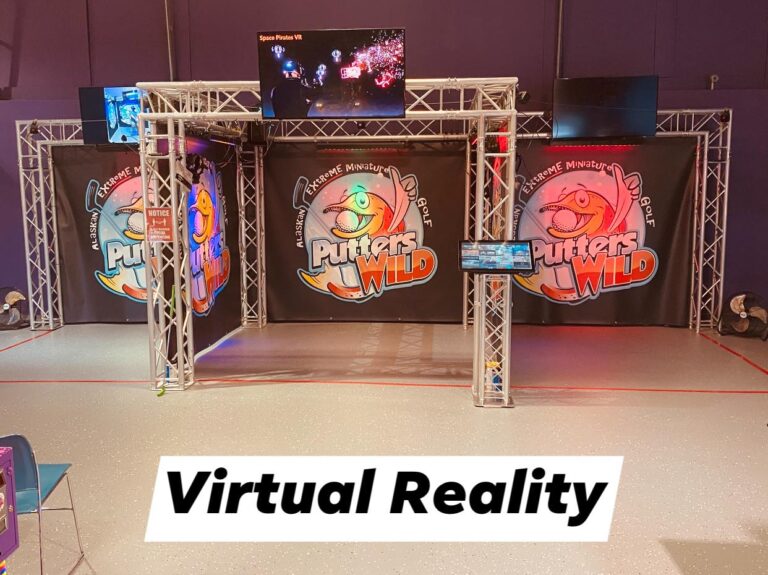
 1230 E 68th Ave #109, Anchorage, AK 99518, United States