
 El Monte
 Log in
Log in
Log in

Ralphie’s Fun Center is located in Glasgow, Kentucky, off Happy Valley Road in the Wedgewood area.
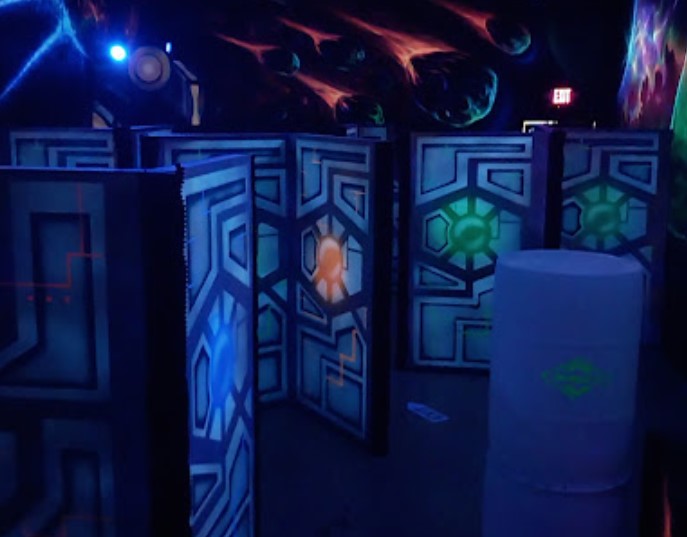
Since opening in 2012, this all-in-one entertainment venue has offered bowling, roller skating, blacklight mini-golf, laser tag, an arcade with over 40 games, inflatables for younger children, and the interactive game Time Freak. Multi-activity wristbands provide unlimited access to most attractions, and dedicated party packages include a private room, a party host, pizza and drinks, and activity time tailored to the group’s choice.
Doc’s Grill serves over 25 menu items on site, and the facility offers group rates for schools, churches, and corporate teams. An auditorium with a stage and sound system is available for meetings and events. The entire venue can be rented for private functions, and the staff — led by owner Jason — is known for being friendly and attentive, making the center a popular choice for birthdays, team-building, and family outings.
 Indoors
Laser Tag is a fun and exciting game that has become popular among people of all ages. It is a shooting game that uses completely safe beams to tag special sensors on the clothes of opposing players. Whether you are a kid, teenager, adult, or of any age, you can enjoy playing laser tag in Glasgow, KY.

LaserTag is a team‑oriented, technology‑driven sport that blends the excitement of hide‑and‑seek with the tactical depth of a modern combat simulation. Players wear lightweight vests equipped with infrared sensors and wield handheld phasers that emit invisible laser beams. When a beam strikes a sensor, the vest registers a “hit” and records points. The arena—whether a dimly lit warehouse, a forest clearing, or a dedicated indoor arena—usually features obstacles, neon lighting, and ambient sound effects that amplify the immersive experience. Unlike paintball or airsoft, LaserTag produces no mess, no recoil, and no risk of projectile injury, making it an accessible choice for a wide range of ages and skill levels.
The appeal of LaserTag lies in the variety of game modes that can be programmed into the system’s central computer. Some of the most common scenarios include:
These scenarios can be adjusted on the fly—changing time limits, hit thresholds, or sensor sensitivity—to keep repeat visits fresh and challenging.
Beyond the obvious fun factor, LaserTag delivers a host of physical, mental, and social advantages:
Researchers in kinesiology and cognitive psychology have begun to examine LaserTag as a novel tool for both fitness and training. A 2022 study from the University of Minnesota’s Department of Exercise Science reported that a single 30‑minute LaserTag session burned an average of 350 calories, placing it in the same energy‑expenditure range as aerobic dance classes. The authors highlighted the sport’s “high enjoyment factor” as a key driver for adherence, noting that participants were more likely to repeat sessions compared to traditional workouts.
From a technological perspective, industry analysts point to LaserTag’s role in the broader “immersive entertainment” market. Gartner’s 2023 report on experiential tech identified LaserTag as a “growth niche” fueled by advances in low‑latency infrared sensors, wireless data analytics, and modular arena design. Experts predict that integration with augmented reality (AR) overlays—projecting digital enemies or mission cues onto the physical environment—could double the market size within five years.
In the realm of education and corporate training, experts argue that LaserTag’s blend of physical movement and real‑time feedback offers a unique platform for “embodied learning.” By translating abstract concepts—such as risk assessment or resource allocation—into tangible actions, participants can experience the consequences of decisions instantly, fostering deeper retention.
LaserTag’s demographic reach is surprisingly broad. While the sport originated in the 1980s as a novelty for teenagers, today it attracts participants across the lifespan:
The sport’s inclusive equipment design—lightweight vests, no‑projectile phasers, and adjustable difficulty settings—ensures that individuals with physical limitations can still join the fray, making LaserTag a genuinely cross‑generational activity.
For children, LaserTag serves as a gateway to active play in an era dominated by screen time. Many venues provide “kids‑only” time slots that limit arena size, reduce sensor sensitivity, and incorporate whimsical themes—such as space adventures or jungle expeditions—to capture imaginations. Because there are no paintballs or BBs, parents can feel confident that their children are safe from burns, bruises, or eye injuries. Additionally, the structured nature of the game encourages children to practice good sportsmanship: taking turns, respecting teammates, and handling both victory and defeat graciously.
A LaserTag birthday party transforms a routine celebration into an action‑packed adventure. Most facilities bundle arena time with private party rooms, snack stations, and customizable decorations. Parents can select a theme—pirates, superheroes, or futuristic combat—that aligns with the birthday child’s interests. The competitive yet cooperative gameplay ensures that all guests remain engaged, while the built‑in scoring system provides an easy way to award “best shooter,” “top strategist,” or “most improved” accolades.
Graduates often look for experiences that feel both memorable and unconventional. A LaserTag session offers a perfect blend of excitement and team bonding, especially for senior classes or university clubs seeking a unique group outing. Some venues accommodate larger groups by partitioning the arena into multiple concurrent matches, allowing entire graduating classes to compete in a friendly tournament format. The post‑game debrief—a chance to review scores, share highlights, and capture group photos—creates lasting memorabilia.
Corporate events increasingly leverage experiential activities to break down hierarchical barriers and nurture collaboration. LaserTag’s fast‑paced, mission‑oriented gameplay mirrors many business challenges: rapid decision‑making, resource allocation, and clear communication under pressure. Companies can request customized scenarios that incorporate branding elements—for example, “capture the company’s secret product prototype”—to reinforce corporate values while keeping the atmosphere playful. Moreover, the objective data collected by the arena’s software—individual hit counts, team scores, and response times—provides actionable metrics for facilitators to discuss after the game, turning fun into measurable learning.
Indoor LaserTag centers dominate urban markets due to their year‑round accessibility. These facilities typically feature modular walls, fog machines, strobe lighting, and sound systems that create a sci‑fi or military ambiance. Because the environment is controlled, operators can calibrate sensor ranges precisely, ensuring consistent gameplay. Many indoor venues also offer additional services—catering, event planning, and equipment rentals—making them ideal for parties, corporate retreats, and league matches.
Outdoor LaserTag brings the sport into natural settings—forests, parks, and even abandoned warehouses repurposed as “battlefields.” The open air introduces variables like terrain elevation, foliage cover, and ambient light, which demand a different tactical approach compared to indoor play. Portable infrared sensors and rugged waterproof vests allow the equipment to withstand weather conditions. Some adventure parks integrate LaserTag into multi‑activity packages, pairing it with zip‑lining, rope courses, or paintball for an all‑day adrenaline experience.
A growing trend is the development of “hybrid” arenas that blend indoor lighting effects with outdoor terrain. For instance, a venue might construct a semi‑enclosed structure in a wooded area, using projection mapping to overlay digital enemies onto real trees. This approach maximizes the immersive potential of LaserTag while maintaining a degree of environmental control.
LaserTag has evolved from a novelty arcade attraction to a versatile, multimodal sport embraced by children, adults, and professionals alike. Its combination of safe, mess‑free technology, adaptable game scenarios, and measurable health benefits makes it a unique platform for recreation, education, and corporate development. Scientific research confirms its efficacy as a moderate‑intensity workout, while industry analysts anticipate rapid growth driven by integration with augmented reality and advanced sensor analytics. Whether celebrated as a birthday adventure, a graduation rite of passage, or a corporate team‑building exercise, LaserTag offers a dynamic environment that fosters physical fitness, strategic thinking, and social connection. As more venues—both indoor and outdoor—continue to innovate, the laser‑lit battlefield will remain a vibrant arena where imagination and teamwork converge.


 702 Happy Valley Rd, Glasgow, KY 42141, United States