
 El Monte
 Log in
Log in
Log in

Sorry. We don’t know any airsoft locations in this city yet
Airsoft is a popular military simulation sport that is becoming increasingly popular in Glasgow, KY. Players use authentic military-style weapons and tactics to engage in mock combat scenarios. Airsoft uses 6mm round BBs made of hard plastic, allowing for a safe and secure environment.
Airsoft is great for people of all ages, including teenagers and adults. It is a great way to get some exercise, while also providing an entertaining and educational experience. It encourages teamwork, tactical thinking, and problem solving, making it a great activity for parties, corporate events, and birthdays.
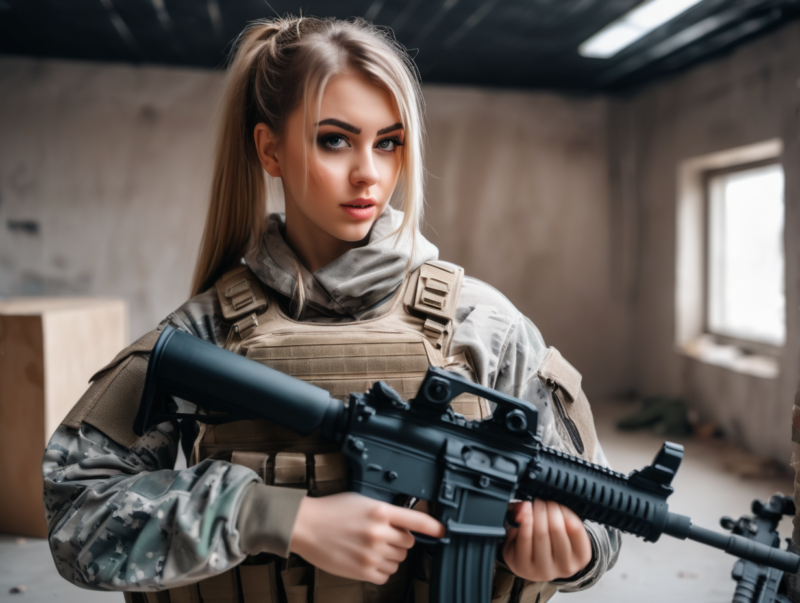
Airsoft is a recreational sport that pits teams against one another in realistic, low‑velocity combat scenarios. Participants use replica firearms that fire 6 mm plastic BBs powered by electricity, compressed gas, or a spring mechanism. Unlike paintball, the projectiles leave no visible mark, which encourages players to rely on tactical awareness, communication, and situational judgment. The sport has grown from a niche hobby into a global phenomenon, offering an experience that blends the thrill of military simulation with the camaraderie of team sport.
Modern airsoft gear is modeled after genuine military and law‑enforcement weapons. Manufacturers replicate external contours, weight distribution, and recoil effects, allowing players to experience a high degree of authenticity. Realistic optics, suppressors, and accessories further deepen immersion, making each match feel like a miniature tactical operation.
Success in airsoft hinges on coordinated movement and clear communication. Squads develop fire‑and‑maneuver plans, designate point‑men, and assign roles such as breacher, sniper, or medic. Strategic elements—flanking, bounding overwatch, and controlled engagements—mirror real‑world combat doctrines, encouraging players to think several steps ahead.
Airsoft fields host a wide range of scenarios, from quick‑draw “Capture the Flag” skirmishes to multi‑hour “MilSim” (military simulation) missions that span entire forests or abandoned industrial sites. Objective‑based games such as “Bomb Defusal,” “King of the Hill,” and “Search and Destroy” keep the experience fresh and challenge players to adapt to differing tactical demands.
Because most airsoft replicas are modular, players can personalize their weapons with rail‑mounted accessories, adjustable hop‑up units, upgraded internals, and custom paint jobs. This level of customization not only improves performance but also allows individuals to express personal style and align their equipment with specific playstyles.
Airsoft culture is supported by a tight‑knit community of enthusiasts, retailers, field owners, and online forums. Regular meet‑ups, trade shows, and collaborative events foster knowledge sharing, mentorship for newcomers, and a sense of belonging that extends beyond the battlefield.
Starting out in airsoft requires a baseline of protective equipment to ensure safety while maintaining mobility.
Investing in quality protective gear early not only minimizes injury risk but also instills the safety mindset required by the sport’s governing rules.
Every sanctioned field enforces a strict safety protocol. Players must keep their firearms on “safe” mode until the referee signals otherwise, never point a gun at anyone other than a designated target, and maintain a minimum engagement distance—typically 5–10 meters for fully automatic weapons. Regular muzzle checks and BB‑fly inspections are routine.
Because airsoft is a “hit‑detect” sport, many fields rely on the honour system to record eliminations. Players wear visible markers (e.g., colored vests or arm bands) that are removed or turned inside‑out when hit. Honesty in acknowledging hits preserves the integrity of the game and encourages mutual respect.
Respect for opponents, referees, field staff, and equipment is a cornerstone of airsoft etiquette. This includes arriving on time for scheduled matches, following briefings precisely, and refraining from any form of harassment or reckless conduct. Violations can result in temporary bans or permanent expulsion from a venue.
AEGs dominate the market due to their reliability and semi‑automatic or fully automatic fire modes. Powered by rechargeable lithium‑ion or NiMH batteries, they drive a gearbox that compresses a spring to propel BBs. Modern AEGs feature adjustable hop‑up, selectable fire rates, and extensive aftermarket support.
Gas‑powered pistols and rifles use compressed propane, green gas, or CO₂ to drive a piston that releases a burst of air. They excel in realism, delivering realistic blowback and recoil. However, performance can be temperature‑sensitive, and gas consumption requires careful management during extended matches.
Simplest of the three, spring guns rely on manual cocking to compress a spring before each shot. While they lack rapid fire capability, they are inexpensive, maintenance‑free, and popular for sniping or entry‑level play. High‑quality sniper rifles can achieve impressive accuracy and range despite the single‑shot limitation.
Researchers in ballistics and injury prevention have examined airsoft projectiles to assess risk. Studies confirm that BBs traveling at 300–400 fps can cause ocular injury if proper eye protection is not worn, underscoring the sport’s emphasis on safety equipment. Meanwhile, ergonomic analyses of replica firearms suggest that realistic weight distribution reduces strain and improves shooter stability during prolonged engagements.
Industry experts highlight airsoft’s role in soft‑skill development. Military and law‑enforcement trainers use airsoft simulations to teach situational awareness, decision‑making under stress, and team cohesion without the logistical and safety challenges of live‑fire exercises. The sport’s growing popularity also fuels innovation in battery technology, polymer materials, and precision engineering, benefitting adjacent sectors such as UAV design and consumer electronics.
The player base spans a broad demographic. Young adults (18–35) constitute the majority, attracted by the blend of physical activity and tactical gameplay. However, veterans, law‑enforcement personnel, and older hobbyists also participate, drawn by the sport’s emphasis on strategy and community. In many regions, airsoft serves as a gateway for newcomers to explore outdoor recreation, teamwork, and technical tinkering.
Dedicated venues provide structured environments with clearly marked boundaries, safety officers, and predefined game scenarios. These fields often feature modular obstacles, night‑vision zones, and built‑in staging areas, ensuring a controlled and enjoyable experience for both novices and veterans.
Grassroots clubs organize regular meet‑ups, training sessions, and intra‑club scrimmages. Joining a local team offers mentorship opportunities, access to shared equipment, and a sense of belonging. Many clubs affiliate with national associations, granting members entry to larger tournaments and ranking systems.
MilSim (military simulation) events replicate large‑scale operations, sometimes lasting 12 hours or more. Participants plan logistics, carry simulated supplies, and execute multi‑objective missions across extensive terrain. These events often incorporate role‑playing elements—command structures, casualty evacuation, and intelligence gathering—delivering an immersive experience that borders on live‑action role‑playing.
Airsoft stands at the intersection of sport, simulation, and community. Its realistic equipment, emphasis on teamwork, and diverse game modes create a dynamic environment where participants can hone tactical skills, forge lasting friendships, and enjoy vigorous physical activity. By adhering to stringent safety standards, respecting the honour system, and investing in appropriate protective gear, players ensure that the experience remains both thrilling and responsible. Whether a newcomer selecting their first AEG, a scientist evaluating projectile safety, or a seasoned veteran joining a MilSim operation, airsoft offers a flexible platform that continually evolves with technology, culture, and the shared passion of its worldwide community.


