
 El Monte
 Log in
Log in
Log in

Sorry. We don’t know any paintball locations in this city yet
Paintball is an exciting and thrilling game for everyone to enjoy with their family, friends, and colleagues. In Glasgow, KY, there is no shortage of paintball fields and arenas for you to choose from, whether you are a teenage or adult.
Paintball is a great way to celebrate birthdays, parties, and corporate events. Not only is the game exciting and thrilling, but it is also quite affordable, so everyone can enjoy it. You can find a range of paintball locations in Glasgow, KY that offer a variety of packages and prices to suit your needs. There are also several paintball fields and arenas that offer special packages for groups and events.
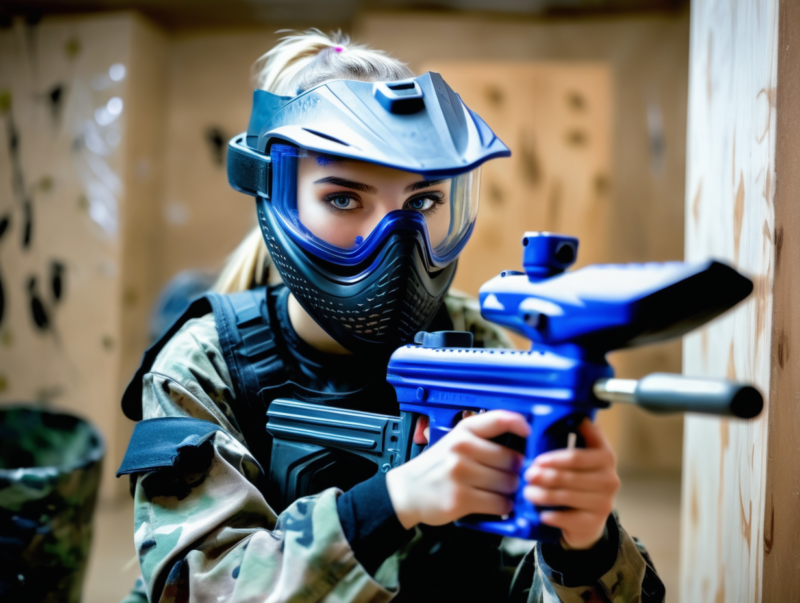
Paintball is a fast‑paced, team‑oriented sport in which participants use low‑velocity air‑propelled markers—commonly called paintball guns or markers—to fire small gelatin capsules filled with non‑toxic, water‑based paint. When a capsule ruptures on impact, it leaves a bright, easily visible mark that signals a hit. The game can be played in a variety of settings, from dense forested fields to purpose‑built indoor arenas, and it accommodates a wide range of formats, from short skirmishes lasting just a few minutes to marathon scenarios that span several hours. While the core equipment—a marker, paintballs, a protective mask, and a basic safety kit—remains constant, the sport’s appeal lies in its adaptability: players can emphasize strategy, physical fitness, role‑play, or pure adrenaline, depending on the chosen scenario.
To keep the game safe and fair, most organized paintball venues enforce a standard set of rules that have been refined over decades of play. The most universally accepted regulations include:
Adhering to these rules helps maintain a controlled environment where participants can focus on tactics and enjoyment rather than worrying about unnecessary hazards.
The richness of paintball stems from the sheer variety of scenarios that can be staged. A scenario, often shortened to “scenario paintball,” refers to a structured narrative or mission that guides player objectives. Below are some of the most popular categories:
Two teams compete to retrieve the opponent’s flag and bring it back to their home base while defending their own flag. The simplicity of CTF makes it a staple for beginners and large‑scale events alike.
All‑out combat where the objective is to eliminate every member of the opposing team. Variations include “last man standing” (every player for themselves) and “team elimination” (teams of varying sizes).
These scenarios mimic military or law‑enforcement operations. Examples include “hostage rescue,” where one team must infiltrate a defended zone to extract a dummy hostage, and “bomb defusal,” where a team must locate and deactivate a mock explosive within a time limit.
Large‑scale events can feature elaborate storylines such as “zombie apocalypse,” “post‑apocalyptic wasteland,” or historical recreations like “World War II skirmishes.” Props, fog machines, and sound effects enhance immersion, and players often adopt roles—medics, engineers, or snipers—to fulfill specific functions within the narrative.
A fast‑paced format played on a compact, inflatable field with highly visible bunkers. Matches are short, usually 6‑minute rounds, emphasizing quick reflexes and aggressive play. Speedball is the standard format for competitive leagues and televised tournaments.
Each scenario demands a distinct blend of strategic planning, communication, and physical execution, ensuring that players continually encounter fresh challenges.
Beyond the obvious thrill of firing paint‑filled capsules at opponents, paintball delivers several tangible benefits that extend into everyday life.
Running, sprinting, crouching behind cover, and lifting equipment all contribute to cardiovascular health, muscular endurance, and overall agility. A typical 30‑minute game can burn as many calories as a moderate jog.
Effective paintball play hinges on clear, concise communication. Players must relay enemy positions, coordinate flanking maneuvers, and allocate resources such as “medkits” or “ammo caches.” These dynamics reinforce collaborative problem‑solving skills that translate into workplace or academic settings.
Scenario paintball forces participants to analyze terrain, assess risk, and adapt tactics in real time. The need to balance offensive aggression with defensive positioning mirrors strategic planning in business and military contexts.
The controlled adrenaline surge and focus required during a match provide an outlet for stress. The endorphin rush post‑match often leaves participants feeling relaxed and satisfied.
Successfully executing a planned maneuver or surviving a high‑intensity bout can boost self‑esteem. For many, paintball serves as a low‑risk environment to practice leadership and decision‑making under pressure.
Collectively, these advantages explain why paintball remains popular across diverse demographic groups.
Paintball’s appeal crosses age, gender, and professional boundaries, creating a vibrant community of participants.
Many schools and youth organizations incorporate paintball into summer camps or extracurricular activities, recognizing its role in fostering teamwork and physical activity.
University clubs often host regular leagues and tournament trips. The social aspect—combining competition with camaraderie—makes paintball a staple of campus life.
Corporate team‑building programs frequently use paintball to encourage cooperation and break down hierarchical barriers. Executives and managers appreciate the opportunity to experience a level playing field outside the office.
Training programs sometimes integrate paintball to simulate urban combat or hostage‑rescue scenarios in a safe, cost‑effective manner. The realism of movement and cover usage provides valuable practice without the logistical complexity of live‑fire exercises.
Older adults enjoy the low‑impact nature of paintball while still seeking excitement. Many venues offer “senior days” with reduced velocity limits and modified rules to accommodate varying physical abilities.
The sport’s inclusivity is reinforced by adaptive equipment—lighter markers, adjustable velocity settings, and wheelchair‑compatible fields—that ensure participants with disabilities can also take part.
Researchers and industry analysts have examined paintball from several perspectives, ranging from safety to economic impact.
Multiple peer‑reviewed studies have concluded that, when proper safety protocols are followed, paintball carries a low injury rate comparable to other contact sports such as soccer or basketball. Most injuries involve minor bruises or superficial skin abrasions, typically resulting from players neglecting mask usage or exceeding recommended velocity limits. Experts recommend mandatory safety briefings and rigorous equipment inspections to maintain low incident rates.
Behavioral scientists have noted that paintball can enhance cognitive flexibility and stress coping mechanisms. Immersive scenarios requiring rapid decision‑making stimulate executive functions, while the collaborative nature of team play improves empathy and social bonding.
Industry analysts estimate that the global paintball market generates billions of dollars annually through equipment sales, venue operations, and tournament sponsorships. The sport’s growth is attributed to expanding indoor facilities, rising popularity of e‑sports cross‑overs, and increasing corporate investment in experiential team‑building activities.
Advancements in marker design—such as electronic firing systems, adjustable gas regulators, and lightweight polymer bodies—have been driven by feedback from professional players and research on ergonomics. Additionally, biodegradable paintballs, introduced to address environmental concerns, reflect the industry’s responsiveness to ecological sustainability.
Overall, the consensus among scientists and experts is that paintball, when responsibly managed, offers significant health, psychological, and economic benefits while posing minimal risk.
Paintball can be enjoyed in a multitude of environments, each offering distinct tactical experiences.
Open‑air venues typically span several acres and are laid out with natural obstacles such as trees, hills, and vegetation. Some fields incorporate man‑made structures like bunkers, trenches, and abandoned vehicles to create varied terrain. Outdoor play emphasizes long‑range engagements, stealth movement, and environmental awareness. Seasonal considerations—rain, heat, or snow—add an extra layer of challenge, compelling players to adapt equipment (e.g., waterproof gear) and tactics (e.g., night‑vision paintballs for low‑light matches).
Indoor paintball arenas are constructed within warehouses or purpose‑built facilities. The playing area is generally smaller, bounded by inflatable bunkers that can be rearranged to create fresh layouts for each match. Because the environment is climate‑controlled, indoor venues allow year‑round operation and attract a high volume of players. The fast‑paced nature of indoor play—often referred to as “speedball”—fosters quick reflexes and aggressive tactics.
Some locations combine outdoor fields with adjoining indoor arenas, granting players the option to switch between environments during a single event. Hybrid setups are ideal for large‑scale scenario matches that begin outdoors (e.g., a “capture the base” trek) and culminate indoors for a final showdown in a controlled arena.
Businesses and private clubs sometimes develop custom paintball courses tailored to specific training objectives or team‑building goals. These bespoke venues may feature specialized props, simulation equipment, or integrated scoring systems to monitor performance metrics.
When selecting a venue, participants should consider factors such as field size, terrain type, marker velocity limits, safety policies, and the availability of equipment rentals. Many venues also provide coaching sessions for newcomers, ensuring that every player—whether a first‑time shooter or seasoned veteran—receives instruction on proper technique and safety practices.
Paintball stands as a multifaceted sport that merges physical exertion, strategic depth, and social interaction within a safe, regulated framework. From its simple origins as a recreational shooting game, it has evolved into a global industry encompassing competitive leagues, immersive scenario events, and professional training applications. Whether played on a sprawling forested field, inside a compact inflatable arena, or within a corporate training facility, paintball continues to captivate a diverse audience, offering benefits that extend far beyond the momentary thrill of a well‑placed shot.


