
 El Monte
 Log in
Log in
Log in

Sorry. We don’t know any vr locations in this city yet
Virtual Reality or VR is quickly becoming the hottest new trend in entertainment, and Glasgow, KY is now home to the first of its kind VR arena. The arena, located in the heart of downtown Glasgow, offers an exciting and unique experience for those looking for a fun and interactive way to spend their time.
At the VR arena, visitors are given the chance to explore different virtual worlds. The arena is packed with a variety of virtual reality games and experiences, as well as a social area with TVs and game consoles. Visitors can choose to play alone or join a team and compete against each other in the virtual world. The arena also has a snack bar, perfect for grabbing a bite to eat while playing.
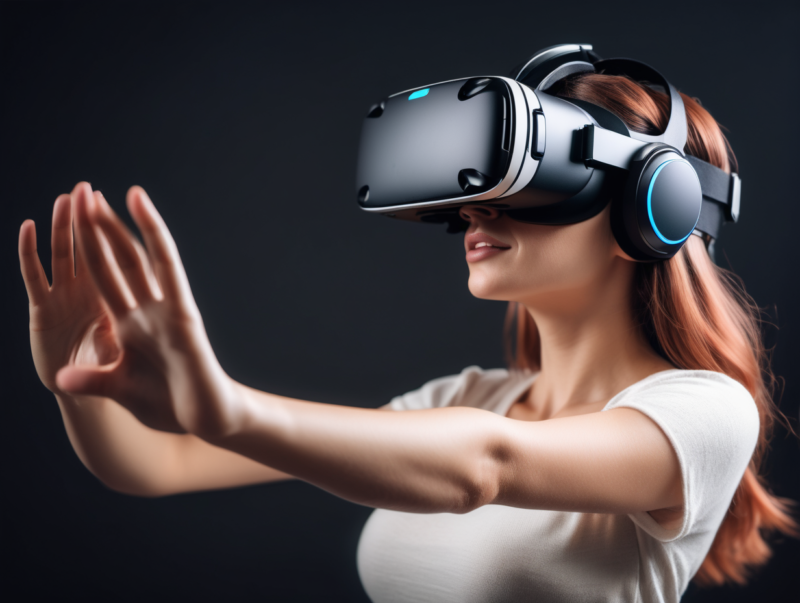
A free‑roam virtual‑reality (VR) arena is a purpose‑built physical space that allows participants to move unhindered while wearing head‑mounted displays (HMDs) and, often, wireless motion‑tracking equipment. Unlike seated or tethered VR experiences, free‑roam arenas give users full three‑dimensional freedom: they can walk, run, crouch, jump, and interact with large‑scale props or set pieces that are mapped into the digital world. The arena itself is usually equipped with an array of external sensors—infrared cameras, lidar scanners, or ultra‑wide‑angle depth cameras—that continuously locate each headset and controller with sub‑centimetre accuracy. This data is fed to a high‑performance computer cluster that renders the virtual environment in real time, synchronising visual, auditory, and haptic feedback for every participant.
From a technical standpoint, free‑roam VR relies on a combination of wireless networking (often 5 GHz Wi‑Fi or dedicated short‑range radio), low‑latency video streaming (typically 90 frames per second or higher), and robust safety systems such as virtual “walls” that appear when a user approaches a real‑world obstacle. The result is an immersive playground where the boundary between the physical and digital collapses, allowing games, training simulations, and storytelling experiences to unfold on a scale that would be impossible in a conventional living‑room setup.
The flexibility of a free‑roam arena supports a broad spectrum of scenarios, each tailored to different goals and audiences.
Adventure and Exploration – Users might find themselves trekking through a dense, alien jungle, scaling a towering cliff face, or navigating a labyrinthine spaceship. The unrestricted movement lets participants physically lean over ledges or duck under low arches, deepening the sense of presence.
Team‑Based Combat – Multiplayer shooters and battle‑royale style games take on a new dimension when players can physically flank opponents, hide behind real‑world obstacles, and use hand‑gestured weapon controls. The arena’s sensor network can differentiate between friendly fire and environmental hazards, creating nuanced tactical gameplay.
Puzzle and Escape Rooms – Designers can embed physical props—locked boxes, pressure plates, or magnetic levers—into the virtual world. Solving a puzzle may require a combination of virtual clues and tangible manipulation, encouraging collaborative problem‑solving.
Educational Simulations – Historical recreations, scientific visualisations, and anatomical explorations benefit from the ability to walk around large‑scale models. Students can peer inside a virtual cell, walk through a reconstructed ancient city, or practice emergency‑response drills in a risk‑free environment.
Fitness and Wellness – High‑intensity interval training, dance routines, or guided meditation can be delivered through immersive scenarios that keep participants motivated by transporting them to energising or calming settings.
Each scenario leverages the arena’s capacity for spatial freedom, precise tracking, and real‑world safety, turning VR from a seated novelty into a full‑body, context‑rich experience.
The user base for free‑roam VR is remarkably diverse, reflecting the technology’s adaptability.
Gamers and Enthusiasts – Early adopters of VR, often members of gaming communities, are drawn to the heightened immersion and social interaction that a shared arena provides. They appreciate the competitive edge that physical movement adds to e‑sports titles and cooperative adventures alike.
Families and Casual Visitors – For many, a free‑roam arena is a gateway to VR without the need to purchase expensive hardware. Parents bring children for a novel outing, while friends gather for a weekend “escape‑room‑meets‑arcade” experience.
Corporate Teams – Companies use the space for team‑building exercises, scenario‑based training, and product demos. The ability to simulate real‑world challenges in a controlled environment makes the arena attractive for leadership development and safety training.
Educators and Researchers – Universities and schools incorporate free‑roam VR into curricula ranging from physics to art history. Researchers study spatial cognition, motion sickness, and human‑computer interaction, taking advantage of the arena’s precise data capture.
Event Organisers – Festivals, conventions, and pop‑culture gatherings often include a free‑roam VR booth as a headline attraction, capitalising on the novelty factor to drive foot traffic.
Overall, the arena’s appeal lies in its capacity to deliver experiences that are simultaneously entertaining, educational, and socially engaging, making it relevant to a wide cross‑section of the population.
When designed with younger users in mind, free‑roam VR arenas become powerful tools for playful learning and safe adventure. Several considerations shape kid‑focused implementations:
Scaled Environments – Virtual worlds are proportionally adjusted so that children can comfortably interact with objects without feeling dwarfed. Low ceilings, child‑size doorways, and appropriately sized avatars foster a sense of agency.
Safety Protocols – Soft padding, rounded corners, and clear visual markers are standard. The arena’s software also includes dynamic “geo‑fencing” that automatically generates virtual barriers when a child approaches a real‑world hazard.
Simplified Controls – Handheld controllers are replaced or supplemented with lightweight motion‑sensing gloves or wand‑style devices that require minimal grip strength. Gestural inputs—such as swiping or pointing—are mapped to in‑game actions.
Educational Content – Curriculum‑aligned modules allow children to explore scientific concepts (e.g., the solar system), historical periods (e.g., ancient Egypt), or artistic techniques (e.g., virtual sculpting) while moving through the space. These modules often incorporate progress tracking for teachers and parents.
Parental Supervision – Staff or guardians can monitor a child’s session through a separate console that displays live sensor data, ensuring that the experience remains within approved time limits and content boundaries.
By marrying physical safety with age‑appropriate immersion, free‑roam VR arenas provide a venue where children can satisfy curiosity, develop motor skills, and collaborate with peers in ways that traditional screen‑based media cannot replicate.
The adaptable nature of free‑roam VR makes it an increasingly popular venue for celebrations and corporate events, offering a fresh alternative to conventional party spaces.
Parents book a session that combines a themed adventure—such as a pirate treasure hunt or a superhero training camp—with party amenities like catering and décor. The experience is structured in time‑boxed “missions” that keep children engaged, with staff guiding them through each stage. After the VR segment, participants often gather in a lounge area for cake and photo‑ops, preserving memories of both the digital and physical festivities.
Universities and schools use the arena to create memorable graduation ceremonies. Graduates can walk through a virtual campus, reliving milestones such as the first lecture hall, the laboratory where they conducted research, or a stylised version of the campus quad. The immersive format allows remote family members to join via live streams, while the graduates themselves experience a symbolic “crossing” from student life to the professional world in a visually striking way.
Companies seeking to impress employees or clients turn to free‑roam VR for product launches, brand activations, and team‑building celebrations. A tech firm might design a scenario that showcases its latest hardware within a futuristic cityscape, letting participants interact with virtual prototypes. Meanwhile, a hospitality brand could host a “world tour” where guests wander through recreated destinations, reinforcing brand identity through experience. The arena’s real‑time analytics also provide organisers with data on participant interaction, helping to evaluate the event’s impact.
In each case, the key advantage lies in the arena’s ability to blend entertainment with narrative, creating a bespoke environment that aligns with the event’s theme and objectives while delivering a memorable, immersive experience.
The academic and professional communities have begun to assess free‑roam VR not only as a form of entertainment but also as a platform for research, training, and therapeutic applications.
Neuroscientists study how unrestricted movement within a virtual space influences spatial memory formation, navigation strategies, and the brain’s allocentric versus egocentric processing. The high‑precision tracking data generated by arena systems enables fine‑grained analysis of head and hand trajectories, opening new avenues for understanding sensorimotor integration.
HCI scholars evaluate the ergonomics of wireless headsets, the latency thresholds that affect presence, and the design principles for intuitive gestural interfaces. Findings from these investigations inform manufacturers seeking to reduce motion sickness and improve comfort for prolonged sessions.
Physical therapists experiment with free‑roam VR as a low‑impact, motivating environment for patients recovering from musculoskeletal injuries or neurological conditions such as stroke. By embedding therapeutic exercises within engaging narratives—like “collecting glowing orbs while walking a gentle path”—practitioners aim to increase adherence and accelerate functional recovery.
Aerospace and automotive manufacturers utilise free‑roam VR to simulate assembly lines, maintenance procedures, and safety drills. Experts highlight the technology’s ability to provide realistic feedback without the costs or hazards associated with live training. The immersive context also facilitates better knowledge retention compared with traditional video‑based instruction.
Philosophers and policy analysts discuss the implications of highly immersive environments on user well‑being, privacy, and data security. The continuous collection of biometric and positional data raises questions about consent and long‑term exposure effects. Industry standards bodies are therefore developing guidelines for session duration, data handling, and accessibility to ensure responsible deployment.
Overall, the consensus among scientists and industry leaders is that free‑roam VR represents a maturing technology with the potential to transform multiple sectors. Continued interdisciplinary collaboration is seen as essential to address technical challenges, optimise user experience, and harness the technology’s societal benefits responsibly.
Free‑roam VR arenas have evolved from niche attractions into multifaceted platforms that blend physical freedom with digital immersion. By offering unrestricted movement, precise tracking, and safety‑focused design, they enable a wide array of scenarios—from high‑octane adventure games to educational simulations and corporate events. The audience spans gamers, families, educators, professionals, and researchers, each finding unique value in the arena’s capabilities. Tailored experiences for children, celebratory events, and serious training underscore the versatility of the medium. Meanwhile, scientists and industry experts are actively exploring the technology’s cognitive, therapeutic, and operational implications, laying the groundwork for broader adoption across society.
As hardware continues to become lighter, wireless networks faster, and content pipelines more sophisticated, free‑roam VR arenas are poised to become staple destinations for immersive experiences. Whether a teenager conquering a virtual dragon, a surgeon practising a delicate procedure, or a team of executives brainstorming in a floating cityscape, the arena’s promise lies in its ability to transform imagination into tangible, shared motion. The future of free‑roam VR therefore rests not only on technical innovation but also on thoughtful integration into the cultural, educational, and professional fabrics of everyday life.


